The Survival of the Fittest: on Experimental Space in Dutch Theatre

By Maarten de Pourcq

image

Last January the Belgian curator Frie Leysen was invited to give the closing keynoteaddress/speech of the Australian Theater Forum. She did not mince her words: ‘We have built theatres and arts centers, and we created festivals to produceand present art works and to welcome audiences in the best possible conditions.
But, during the years, most of these structures and organizations have become
rusted and sclerosized. They have become dinosaurs. (…) Originally meant to
support the artists, they got organized very well, often too well, and so lost
the needed flexibility to respond to the specific needs of specific works. The
artists now have to follow the policy and the rules of the houses instead of
the other way around.’ (The full lecture can be accessed here).

If we take a look at our Dutch playhouses, it is not too
difficult to see what Leysen is getting at: all plays seem to be made to fit
either the big or the small frontal stage; new, let alone experimental, theatre
is hard to find whereas there are plenty of adaptations, mostly of canonical
plays, which fit the classical structure of the play house like a glove.

Leysen knows the Dutch
situation all too well, as she made clear in her acceptance speech for the Dutch
Erasmus Price awarded to her last year. She rebelliously addressed King
Alexander sitting in front of her: ‘Your Majesty, your country has become a
place where the arts can barely breath.’ ‘How is it possible’, she continues, ‘that
one of the richest countries of the world no longer allows artists to
experiment and to think outside of the box?’ She is obviously referring to the
budget cuts of the previous government, effectively discouraging the creation
of new and temporary companies, and to the decision to stop supporting
‘artistic workshops, labs and research centers’. But the cuts go deeper, even
to the production level of the surviving companies. Whereas in the past few
decades theatre makers have had the tendency to look beyond the traditional playhouse
for new and different performance spaces (e.g. Dogtroep or Lotte van den Berg),
the current organization of city theatres no longer seems to embrace this
opportunity and for festivals it ironically almost seems a must to do so, rather
out of lack of performance space than because of it. They stick to the
habitual, fearing the risk more than the dinosaur.

A few months ago, the Arnhem-based theatre company Toneelgroep Oostpool performed ‘The Immortals’ in art house Lux in Nijmegen. At first sight this company seems to have adapted to the dinosaur type: in the past years they have been able to draw large audiences to their well-made adaptations of Shakespeare and modern novels like Virginia Woolf’s Orlando for either the small art house stage or the big playhouse stage. However, since the arrival of the new artistic team led by Marcus Azzini in 2012, its profile has been slightly adjusted. Oostpool still produces crafty adaptations of old and new classics, like ‘Reigen’ (Arthur Schnitzler) and ‘Angels in America’ (Tony Kushner), but it does so in combination with experimental plays mostly made by Suzan Boogaerdt and Bianca van der Schoot. The duo has established its own series called ‘Visual Statements’ which questions the contemporary obsession with visual culture, the spectacular and the self. Their performances, especially Hideous (Wo)men (2013) and The Immortals (2014), have troubled both the press and the usual Oostpool audience with their lack of plot and speech, as well as their ritualist hang-ups, involving many repetitive, gender-focused and abject scenes that disturb our view on television soaps (Hideous (Wo)men) and Youtube (The Immortals).

Interestingly, they also
have made an attempt to adapt and restructure the classical theater stage of
the playhouse to fit the concept of their performances. In Hideous (Wo)men, for instance, the audience has to watch a rotating
platform on which a television set is shown. The main structure remains
frontal, as the audience sits in the auditorium and the actors perform on
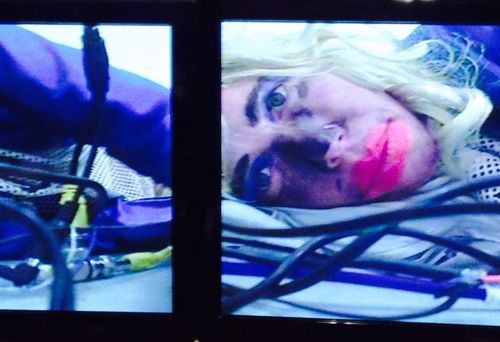
stage. Yet, in The Immortals the
auditorium is no longer used and the audience has to sit on stage trying to
peek into one of four rooms or to watch the flat screens showing what is
happening in the rooms: people broadcasting themselves endlessly. Once the
audience sits in its on-stage auditorium, the classical auditorium is no longer
visible and the classical stage loses its function as a stage. It turns into a
space very similar to what art houses and contemporary museums already have: a
performance room in which the dividing line between the audience and the performers
is less rigid. In other words, the production was performed in a space that was
not made for it. It is an inventive way of bringing their ‘visual statement’ to
the theatrical stage, no matter what that stage looks like, but it is also a
telling example of what Frie Leysen denounced in her keynote to the Australian
Theater Forum: the existing structures no longer adapt to the artists, the
artists have to adapt to the structures. They are obliged to dig around in the intestines
of the dinosaur. One never knows what can be found there, if one looks more
closely, but one does wonder what would be possible if the Dutch playhouses were
more keen on rethinking their structures and on inviting artists to do so as
well.

Image credits: The Immortals, Toneelgroep Oostpool, via http://www.toneelgroepoostpool.nl/nieuws/item/the-immortals-2
The future of Plaster Archeology (Nijmegen)

By Laszlo Muntean

image

Plaster archeology is
a perversion. But a truly scientific one at that. It entails the deep mapping
of architectural facades, that is, observing buildings’ walls for information
that passersby normally wouldn’t notice. An inscription of someone’s
initials, a graffiti that’s barely visible, a fading advertisement of a cosmetic
product that no longer exists.

The plaster
archeologist spends a lot of time walking and staring at walls. The plaster
archeologist prefers walls that are layered, walls with plaster peeling off and
laying bare colors, or texts even that have been plastered over. The plaster
archeologist stops and observes where people normally keep walking, looking
ahead. Consequently, the plaster archeologist runs the risk of being perceived
as a weirdo.

Plaster archeology
also entails the noble quality of self restraint. For instance, decades of
neglect allow a chunk of the outer layer of plaster to fall off from a façade.
Part of the name of a store that used to be there in the late 19th
century is revealed. The plaster archeologist would instantly feel the urgency
to reveal the full name by removing more plaster. But this is to be avoided.
The plaster archeologist may not damage façades. Instead, the plaster
archeologist goes to the archives and goes through vintage photo collections to
decode what remains hidden behind plaster. And if there is no image, it’s all
well and good.

The city of Budapest,
where I grew up, is the ideal place to become a weirdo—and a plaster
archeologist. The bulk of the building stock of the city was built from mid to
late-19th century, when plaster abounded as a means of covering
buildings. Bullet holes from the war and the lack of means to renovate have
supplied me with ample material for years.

What about Nijmegen?
What about a city where walls are covered with brick and plaster is so rare?
Well, up until now I thought it would be a problem for the plaster
archeologist. But it is not so. The city bares the marks of World War II not
only in the absence of its old architecture in the city center but also in the
presence of scars on buildings’ walls, though one might not notice them at
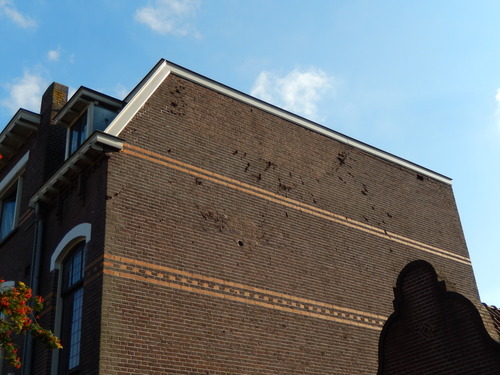
first sight. The side façade of 4 Prins Hendrikstraat is a case in point. Signs
of a massive impact close to the roof, perhaps housing a machine gun position.
Already walled in, but the scars bear witness. Brick is no impediment to
plaster archeology. Quite the contrary, it may open no horizons to dig.

De keuzeparadox

Door Sofie Verburg

image

Is meer minder?Deze vraag werd gesteld tijdens een lezing van Barry Schwartz aan de Radboud
universiteit over wat hij noemt de
keuzeparadox
. In zijn boek The Paradox of Choice. Why more is less. How the Culture
of Abundance robs us of satisfaction
, stelt Schwartz dat,  hoewel een zekere mate van keuzemogelijkheid
bijdraagt aan het gevoel van autonomie, controle en vrijheid, juist een teveel
aan mogelijkheden kan leiden tot verlamming, verwarring en ontevredenheid.

In een aflevering
van “24 uur met”, werd de stelling van Schwartz mooi geïllustreerd. In de
uitzending van 9 januari
was Frans Bauer te gast bij Theo Maassen (vanaf 2m52). Hij vertelde over het
enorme aanbod van aardbeienjam in zijn supermarkt en hoe dat groeiende aanbod
hem vooral veel tijd kost om zijn eigen vertrouwde pot jam te vinden.

Het staat buiten
kijf dat de mogelijkheid om zelf te kunnen kiezen voor een groot gevoel van
vrijheid zorgt en dat deze keuzevrijheid bijdraagt aan ons welzijn.  We bepalen zelf welk model spijkerbroek bij
ons past en of we skinny of bootcut willen dragen. We kiezen
welke aardbeienjam we op ons brood willen smeren en aan welk eisen onze
muziekspeler moet voldoen. Maar er is een dunne grens tussen een prettige
hoeveelheid opties en een onoverzichtelijk aantal mogelijkheden dat verlamt. We
worden ons steeds bewuster van onze keuzemogelijkheden en de consequenties van
de keuzes die we maken. Hoe meer alternatieven, des te hoger de
verwachtingen.  Daarbij zijn we zelf
verantwoordelijk, ook als we achteraf niet zo tevreden blijken te zijn met het
resultaat. Hoe belangrijker het onderwerp is waarover we moeten beslissen, het
groter de stress wordt. Welke bacheloropleiding ga je doen? Voldoet die aan al mijn
wensen en vind ik daarmee een gave baan? Verkeerde studie gekozen? Dan draai je
zelf op voor de kosten. Verkeerde keuzevakken? Dan ben je zelf verantwoordelijk
voor je studievertraging. Welke master kies je vervolgens? Alleen al het kiezen
van een scriptieonderwerp kan enorm stressvol zijn.

Schwartz onderscheidt in zijn boek twee soorten mensen; maximizers en satisfiers.
De maximizer zoekt de allerbeste
optie. Hij bestudeert al zijn mogelijkheden, en steekt veel tijd (geld) en
energie in zijn zoektocht naar de perfecte keus. Omdat hij een duidelijk doel
voor ogen heeft (‘ik wil de beste auto’), zijn de verwachtingen enorm hoog en is
hij er uiteindelijk minder tevreden mee in vergelijking tot de satisfier. Die zoekt namelijk naar “goed
genoeg”, maakt zich geen zorgen over de mogelijk misgelopen betere alternatieven.
Een satisfier is dus altijd meer
tevreden met zijn besluit dan een maximiser.

De keuzestress
die we in onze Westerse maatschappij ervaren, wordt meer en meer erkend en daar
wordt heel handig op in gespeeld. Coaches bieden voor goed geld workshops aan over keuzestress
en Barry Schwartz geeft druk bezochte lezingen. Allemaal springen ze in op de behoefte om te
leren omgaan met die keuzestress in de hoop dat we duidelijk krijgen wat we nou
precies willen zodat we daar heel gericht voor kunnen kiezen. Tot voor kort behoorde de keuzeparadox exclusief tot het werkterrein van
psychologen, maar inmiddels is het ook opgepakt door verschillende creatieven; in maart is in
Nijmegen het eerste, spannende Choice Makers Festival

Bij onze opleiding Kunst en
Cultuurwetenschappen is het aantal scriptie-onderwerpen beperkt tot de grenzen
van het domein van de cultuurwetenschappen; voor studenten biedt dat een enorme
hoeveelheid mogelijke scriptieonderwerpen. Misschien moeten we, omwille van het
reduceren van keuzestress en het helpen van de maximizers, het aantal scriptie-onderwerpen toch gaan beperken?

What if wearable tech were truly wearable?

By Lianne Toussaint

image

“Smart clothes are hot,” stated the Een Vandaag news item last October. According to the television programme, a revolution is taking place in the fashion industry. However, as Anneke Smelik noted in a previous post on this blog, wearable technology is not something that many of us are actually wearing. The question is: why would we?

Currently on show at the Boijmans van Beuningen museum in Rotterdam is the exhibition ‘The Future of Fashion is Now’ (until January 18, 2015), which includes several designs that can be described as wearable technology: the famous laser-beam hat by Hussein Chalayan, the cell phone charging ‘Solar Dress’ by Pauline van Dongen and sound-activated clothing by Ying Gao. These projects are displayed in the museum for a reason: they are visually stunning, technically complex, highly artistic and all raise question as to what fashion is and could be. Yet, although fascinating in its own right, this is not the kind of fashion that you and me would be able to buy and wear. The one-off pieces are but prototypes of a future yet to come and designed to be looked at, rather than worn. Recent developments, however, indicate that wearable tech is on the verge of a breakthrough in a more mundane context as well.

Last December, the collaborative project ‘Zorgzame Bedrijfskleding’ (‘Careful Corporate Clothing’) was presented during a health care conference in Rotterdam. The projected resulted in a collection of sustainable and supportive garments for nurses, including some designs with a posture sensor, gas sensor and antibacterial coating. The posture sensor helps healthcare employees – who often perform physically heavy work – to be more aware of how they use their bodies and prevent any overburden, while the gas sensor can warn them of any harmful gases. Another inspiring example is the ‘Mesopic / Light Jacket’ that Pauline van Dongen developed in collaboration with Philips Research. The jacket contains several LED ribbons that increase the wearer’s visibility and safety in a dark environment. The light strips have been integrated in such a subtle way, that the jacket has a desirable and fashionable look during the day, as well as an aesthetically pleasing functionality during night-time.

Projects like ‘Zorgzame Bedrijfskleding’ and ‘Mesopic’ indicate that the field of wearable technology is rapidly maturing. These examples imagine a time at which technology and fashion have will truly have become one: a time at which clothing will protect, support and care for us, in addition to being a form of expression and adornment. Yet, even if technology will help fashion to become a form of intimate caretaking rather than conspicuous consumption, the key to a proper revolution in the fashion industry is the wearer. Ultimately, if our future clothes will actively nurture, support and soothe us, how shall we treat them in return?

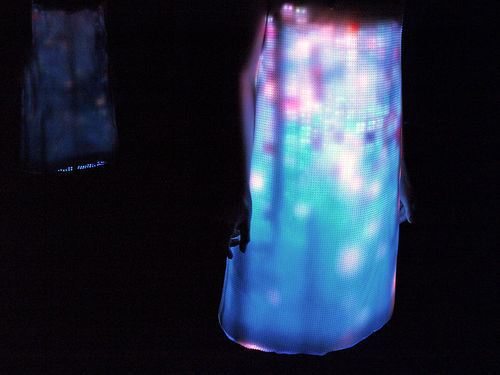
– Image licensed under the Creative Commons Attribution: LED Dress by Hussein Chalayan in collaboration with Swarovski, Autumn/Winter 2007, http://commons.wikimedia.org/wiki/File:LED_dress_by_Hussein_Chalayan.jpg

De kunstenaar als hart van de economie?

Door Martijn Stevens

image

Het concept van de creatieve industrie lijkt paradoxaal. In de Nederlandse taal verwijst ‘industrie’ tenslotte naar de grootschalige en marktgerichte productie van materiële goederen. Creativiteit is daarentegen een persoonskenmerk van individuen. Ze wordt in verband gebracht met intrinsieke motivatie en de innerlijke drang om te creëren, die allebei nadrukkelijk losstaan van economisch gewin of maatschappelijk aanzien.

Sinds de negentiende eeuw wordt creativiteit daarom ook in verband gebracht met vrijheid, zelfbeschikking en authenticiteit. Deze waarden kwamen echter onder druk te staan door de opkomst van het zogeheten ‘fordisme’ in het begin van de twintigste eeuw, dat is genoemd naar de ideeën van autoproducent Henry Ford. De introductie van de assemblagelijn in fabrieken zorgde destijds voor schaalvergroting en efficiëntie bij de productie van auto’s, maar het artistieke proces werd evenzeer gestandaardiseerd. De productie van films in Hollywood werd bijvoorbeeld ‘lopendebandwerk’ en ook de mode-industrie is volledig gebaseerd op massificatie en commercialisering.

In het eerste decennium van de eenentwintigste eeuw heeft een snelle opeenvolging van ecologische en financiële crises evenwel gezorgd voor onrust en onzekerheid in verschillende delen van de wereld. Bedrijven en maatschappelijke organisaties worden hierdoor geconfronteerd met wicked problems, die notoir complex, tegenstrijdig en onvoorspelbaar zijn. Creativiteit en innovatie worden daarom belangrijker geacht dan standaardisering, schaalvergroting en massaconsumptie. Innovatie behelst kortweg de concrete toepassing van nieuwe ideeën met de bedoeling om steeds vernieuwende producten, diensten of processen te ontwikkelen.

Creativiteit wordt doorgaans beschouwd als de bron van deze ideeën en geldt daarom als een drijvende kracht achter innovatie. Hoewel beide concepten op uiteenlopende manieren zijn gedefinieerd en de relatie ertussen allerminst eenduidig is, wordt tegenwoordig alom verondersteld dat creativiteit en innovatie ontegenzeglijk bijdragen tot economische welvaart en maatschappelijk welzijn. Dikwijls wordt zelfs gesuggereerd dat de industriële economie van weleer inmiddels is overgegaan in een creatieve economie. Hiermee wordt niet gedoeld op de voortschrijdende commercialisering van de kunsten of de groeiende belangstelling voor de macro-economische effecten van de culturele sector. De tucht van de markt is daarbij een leidend principe en overheidsingrijpen wordt alleen toegestaan in het geval van marktfalen.

Het fenomeen van de creatieve economie is echter niet zozeer een uitwas van de economisering van kunst en cultuur, als wel van de toenemende ‘culturalisering’ van de economie. De toverwoorden in hedendaagse uitingen van management speak – creativiteit, passie, authenticiteit – zijn tekenend voor deze ontwikkeling. Dergelijke kwalificaties waren oorspronkelijk immers voorbehouden aan het werk van kunstenaars, maar ze lijken inmiddels gangbare eisen bij de vervulling van allerhande functies in het economische verkeer. Hieruit blijkt dat het concept van de creatieve industrie misschien toch niet tegenstrijdig is met zichzelf. In plaats daarvan is het romantische beeld van de kunstenaar die weerstand biedt aan de onderdrukking door sociale, politieke en technische structuren definitief verworden tot een anachronisme of een echo uit het verleden. Als de profielschets van de kunstenaar namelijk perfect tegemoetkomt aan de functie-eisen van de hedendaags economie, betreft de échte innovatie in het domein van de creatieve industrie wellicht vooral kunstenaars zelf – juist wanneer zij zich bewegen van een marginale positie naar het hart van de economie. Welke functies zijn voor hen nog weggelegd in postfordistische tijden? 

Beeld credits: Banksy, Capitalism for Sale, foto Bruce Krasting via https://www.flickr.com/photos/bruce_krasting/7003771293/ via creative commons

Art meets money: a moral panic!

By Tessel M. Bauduin

image

Money, or more specifically, capital, is a hot and controversial issue in the art world. As Jan Baetens noted recently on this blog, commerce in and commercialization of the art world are debated subjects. Magazines and newspapers report record after record in sales: just recently, nine New York auctions of art from the 1950s to today raised (combined) $ 2.230.800.000, with Christies alone raising 853 mil. dollar (682 mil. euro). These sales led to, for instance, the Dutch newspaper the NRC, and international art news outlets such as the Art Newspaper and Art News proclaiming it the greatest auction record in history, and noting that ‘never before has so much money been spent on art in such a short period’.

The fact that for instance Triple Elvis by Andy Warhol was auctioned for $81.9m makes people upset, to say the least. There are complaints about the art market being a bubble. Auctions houses, gallery owners, and buyers are accused of speculating. New billionaire buyers on the art market buy art only as an investment; or, at best, they buy art to increase their social standing. All of this is clearly considered deplorable. As Matthew Slotover, co-founder of influential art platform Frieze stated recently at a panel discussion, ‘Money should follow art. Art should not follow money’.

The panel discussion in question was ‘Art, Capital & Avantgarde’, hosted at Amsterdam discussion venue De Balie as part of the Amsterdam Art Weekend programme (28-11-2014). Other speakers included the new director of the Stedelijk Museum, Beatrix Ruf, artist Zachary Formwalt, and sociology professor Olav Velthuis. The discussion’s description asked whether there still even is ‘critical potential to a painting that has become a market-fetish, a toy for speculative investors and a glaring symbol of the global inequality of wealth?’ Indeed, can one even avoid the ‘pitfall, power and influence of big money’?[1] A similar spirit of fear, distrust and even disgust towards money pervaded the panel. Traces of a moral panic were undeniably tangible. Artists, institutions, galleries and also, collectors and buyers should above all be motivated by the quality of art; or such was the consensus. The presence of capital in the art market—and its related associations of speculation and investment—was clearly considered a horrible development. Young rich buyers acquire art works of Hirst, Koons, Warhol or Richter only to store them; in other words, they don’t even have visual access to their art, let alone any aesthetic enjoyment if it. What horror!

The one really valuable contribution to the panel, in my view, was provided by the one scientist on the panel: sociologist Velthuis from the University of Amsterdam. Using data and statistics, Velthuis made clear that the money-discussion is indeed a moral panic, perpetrated by the media, which has nothing to do with actual developments in the art market. Indeed, corrected for inflation, the total amounts made at art auctions have over the past 30 years hardly kept any pace with the growing number of billionaires worldwide. Whatever those new billionaires are doing with their money, they’re certainly not buying art. Velthuis’s book Talking Prices. Symbolic Meanings of Prices on the Market for Contemporary Art (Princeton University Press, 2005) clearly outlines how the panicky art discourse operates, and subsequently demonstrates why it is based on untruths and distortions by using historical data and insightful statistic analysis.[2] Besides for students of art markets, art sociology, patronage and the arts in general, it should be obligatory reading for members of the art world as well.

In the end, the most important question, which touches upon the roots of this debate, remained unanswered. Why, in fact, are money and capital such “dirty” concepts in the art world? Why should art not follow money? Indeed, already in the art market of the Dutch Golden Age collectors were buying art as an investment, or to raise their social status, besides out of appreciation of its aesthetic qualities. In Renaissance times the Florentine Medici family were great patrons of the arts, and they used their patronage to gain further wealth, influence and power. Art has never stood apart from society and that society’s concerns. Obviously throughout the history of the arts aesthetic quality has been talked about as the major qualifier for discussing, collecting and acquiring art, but in the end, money, social standing and other concerns have always played their part in the real transactions of art. Only a cursory study of contracts between artists and patrons will reveal this. This, clearly, is why cultural historians are such a welcome presence in these debates. If only to point out that the notion that art should remain free of any social or financial worth, but be pure, authentic and original and only judged on its aesthetic worth, goes right back to 19th century art discourses. Thus this ‘moral panic’ about art prices is nothing new—and not even true, at that.


[1] De Balie, ‘Art, Capital & Avantgarde’: http://www.debalie.nl/agenda/programma/kunst,-kapitaal-%26-avant+garde/e_9491548/p_11647645/ (accessed 1-12-2014), my translation. 

[2] Read the introduction here: press.princeton.edu/chapters/i8035.pdf. 

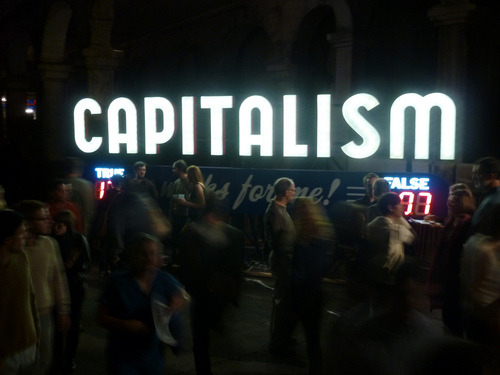
Image credits: Steve Lambert, ‘Capitalism Works for me’ at Spaces Gallery, https://www.flickr.com/photos/spacesgallery/6173517984/in/photostream/ shared under creative commons

Art as cure

By Edwin van Meerkerk

image

With all the fuss about the creative industries and 21st-century skills, it seems to have escaped our attention that the real revolution In the arts is taking place elsewhere: in the world of healthcare. The arts have subtly, to some even unconsciously, changed their slogan. Arts are good for you: they make you happy and healthy, they stimulate your social life and keep you sober, help you overcome your fears and keep you focused. The arts are therapy. And all of this keeps the arts funded – which is more than just a side effect.

Art Therapy was at its peak in the seventies. Theatre groups, like the Dutch Werkteater, staged plays in hospitals and penitentiary institutions with the aim to reform both theatre and society. The belief in the transforming power of the arts seemed unlimited. The dream did not last and from the late 1980s onwards, quality and management became the new standards in the arts world. Recently, however, the tide has changed. This paradigm shift was heralded by philosopher Alain de Botton in his exhibition ‘Art is Therapy’ at the Rijksmuseum (April-September 2014) and the accompanying book Art as Therapy, co-written by art historian John Armstrong – note the difference (is/as) in the titles.

While de Botton is unable to escape the 1970’s Freudian frame of the arts as the expression of the unconscious, a growing number of arts organisations have re-discovered the arts as a hard core medicine, for instance in the treatment of Alzheimer’s disease, or in the treatment of autistic children. Starting from the development of community arts and the proof of the effects of music on intelligence in primary education, the arts are now embracing their effects on social, cognitive, as well as physical health as their principal proof of their relevance to society.

While cuts to art subsidies seem to threaten specialised disability arts organisations the ‘able’ arts organisations are more than anxious to enter the domain of (mental) health care in reaction to the same budget cuts. In a desperate leap forward, arts organisations are claiming the therapeutic effects of the arts (art as therapy), just to keep the money coming. In reality, healthcare is itself the treatment for art’s own disease: poverty. Meanwhile, arts organisations risk changing the very nature of the essence of the arts from distant critic of politics to practical tool for society (art is therapy).

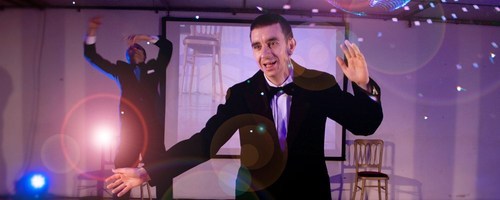
Image credits: ‘Unlimited Traineeship’, Ian Johnston -Dancer, Unlimited Festival 2014. Photographer: Niall Walker. 

Cybercouture: emotional jeans or a twittering sweater

By Anneke Smelik 

image

Wouldn’t it be great if you could generate electricity with your jacket? Or load your mobile in the pocket of your jeans? Or wear a sweater that can send a tweet?

‘Wearable technology’ is the new trend in fashion. To create ‘wearables’ (as they are called), fashion designers and scientists wire complex systems of microprocessors, motors, sensors, solar panels, (O)LEDs or interactive interfaces into the fabric, textile or clothes. Designers experiment with these ‘smart materials’ to create thrilling examples such as a dress that connects you to twitter, a catsuit that visualises your emotions, jeans that change colour or measure your vital functions. This is what I call ‘cybercouture’. Interestingly, Dutch artists and designers like Pauline Van Dongen, Iris Van Herpen, Bart Hess, Daan Roosegaarde, Marina Toeters, and Anouk Wipprecht form the vanguard in the international field of cybercouture. It may all sound like the far future, but it is actually already happening – that is, in the lab or on the catwalk. But wearables hardly appear on the streets or in the shops. While the future of wearable technology has been announced time and again, the praxis lags behind.

The question then is how can we get beyond the stage of mere gadgets and gimmicks. At the Radboud University Nijmegen, together with the Technical University of Eindhoven, and the fashion academy ArtEZ in Arnhem, and six private partners, we have started an interdisciplinary research project, Crafting Wearables, to advance wearable technology to the next stage. The research project is funded by The Netherlands Organization for Scientific Research and brings together people from fashion design, technology, industry, museums and universities. The goal is to develop ‘wearables’ that are robust, fashionable and commercially viable. A nerdy outfit may be technologically cool, but it should also make you look pretty, be easy to wash or comfortable to wear. Moreover, it should add something fundamental and functional to your full wardrobe and the many technological devices that you already own.

As the body of the wearer becomes some kind of interface, there are also some philosophical implications of cybercouture. We have now entered an age in which we use technology with the idea that we can control, improve and enhance both our lives and our own bodies. Technology is one of the major factors in affecting our identity and changing the relation to our own body, and wearable technology even more so because of its closeness to the body. By wearing it directly on our bodies we relate intimately to technical objects and materials, further blurring the boundaries between body and technology. Integrating technology into our clothes will therefore have an impact on how we experience our bodies and our selves. For example, will the t-shirt that monitors my blood pressure make me more aware – or even self-conscious – of my body? How will it affect my friendships if my dress reflects my emotions without me having to express them? It is certain that cybercouture offers an encounter between fashion and technology, opening up to a future world where garments are merged with human skin, body and identity. The research program Crafting Wearables allows the Department of Cultural Studies to explore how wearable technology creates a web of new, complex and dynamic relations between the human being and her body, technology, and society.

=> For information on the research programme, see: http://www.craftingwearables.com/

=> You can download Anneke Smelik’s chapter ‘Draagbare technologie: cybercouture en technomode’ from the book Ik cyborg (in Dutch): http://www.wearable.nl/e-fashion/gratis-download-hoofdstuk-over-wearable-technology-uit-ik-cyborg/

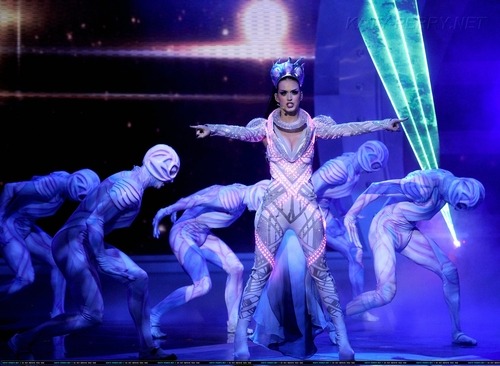
Image credits: Kate Perry CuteCircuit Catsuit for E.T. Live at the American Idol 2011 . Photos by katy-perry.net via: http://cutecircuit.com/media/ 

Poor Investors

images of the financial crisis – 1866 and 2008

By Thomas Smits

image

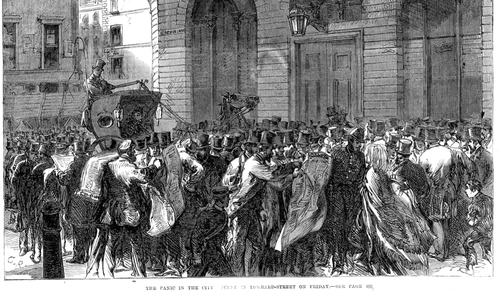
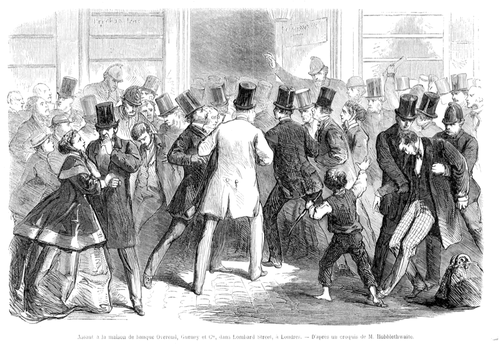
On May 19th 1866 curious images appear on the covers of the Illustrated London News and the French L’Illustration, the most famous illustrated newspapers of the nineteenth century. On the cover of the Illustrated News we see a crowd of top-hat-wearing men looking anxiously in large format newspapers, presumably the Times. The capitation reads: ‘The panic in the city. Scene in Lombard street on Friday’.  The caption of the front page of L’Illustration is set to a different tune: ‘Siege of the office of the bank Overend, Gurney and Cie, Lombard street, in London’. Here we see a real panic: a crowd storming a bank, police trying to control the situation and a fainting man on the foreground. The cause of the ‘panic in Lombard Street’ is maybe already clear. Investors rushed to Lombard Street to get their money from the defaulting banking house of Overend, Gurney and Company.

image

image

It is not hard to compare the crisis of 1866 to the one that we are experiencing today. Overend and Gurney is often described as ‘the bankers bank’. The company dealt in bills of exchange: documents that guaranteed the payment of a specific amount at a specific date. Therefore, the bank can be compared to the financial institutions that caused the collapse of 2008. They were not involved in traditional products, like loans, but in the trade of financial derivatives. Overend and Gurney rose to prominence during the ‘Panic of 1825’, the first economic crisis that is not attributable to an external event, like a war, but mainly to speculative investment in Latin America including the imaginary country of Poyais (read more about it here and here). In 1825 the bank was able to extend loans to other banks that were bound to collapse and hereby started the so-called ‘interbank lending market’, an important component of our current financial system. 

Were did it all go wrong? In the late 1850s the bank invested heavily in railway companies and other long-term loans. Ten years later the owners found that their short-term cash reserve amounted to only one million pounds while their liabilities were estimated at roughly four million (note that financial institutions in our time have far lower cash reserves). The directors of the bank reacted to this problem by turning their business into a limited company. In other words: they gave out stocks.

The newly acquired capital was invested in a rather irresponsible manner, as the early Marxist Henry Hyndman describes it, the directors of the bank “(…) were encouraging and embarking in enterprises of a character which were so unsound in themselves, and so dangerous from the class of people connected with them, that the veriest tyro [an absolute beginner] in finance would have instinctively shrunk from them (…)." Although the directors of Overend and Gurney were put on trial for fraud connected to these high-risk investments, the judge only found them guilty of ‘great error’ rather than criminal behaviour. This, of course, reminds us of the risks that employees in the financial sector are encouraged to take in our time (read the blog of Joris Luyendijk) and the lack of (legal) responsibility ascribed to them after the collapse of 2008.

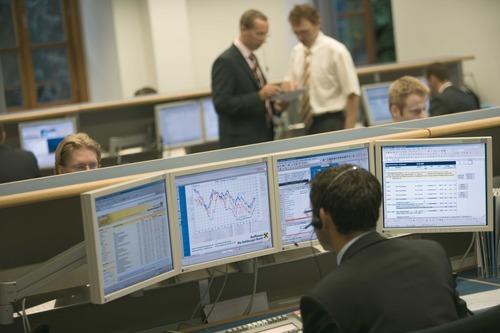
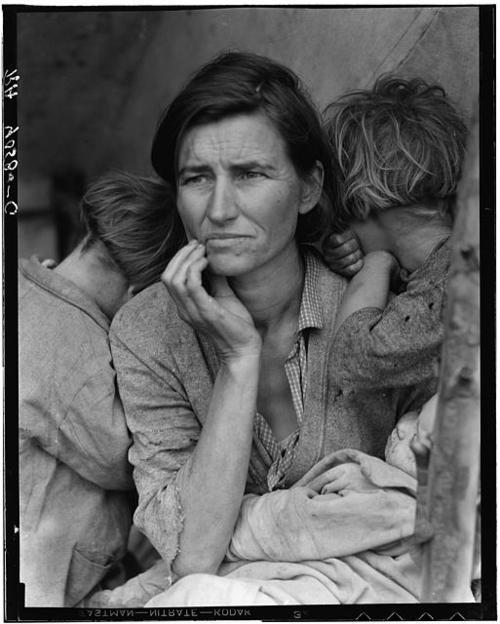
Because of major losses on the risky investments, the bank had to suspend payment on the 10th of May 1866. Shareholders rushed to the office of Overend and Gurney in Lombard Street to get their money and this lead to the chaotic scenes on the covers of the illustrated newspapers.  Lets return to these images. How can we compare the visual coverage of the crisis of 1866 in the two illustrated newspapers to our ‘own crisis’? What and who do we see if we think about the current situation? Which images come to mind? What groups are seen as the victims of financial collapse? Type in ‘Great depression 1930’ on Google Images and you will find Dorothea Lange’s iconic Migrant Mother or a man holding up a sign ‘Work is what I want, not charity’. Personally, when I think of our crisis I see a young man, wearing an expensive suit, sitting behind his desk. He is staring at four, or maybe five, computer screens which all show the same descending red line. In other words: I see a poor investor, just like the ones on the covers of the illustrated newspapers in 1866. How is it that I don’t see an image of a family leaving their foreclosed home? A modern equivalent of Lange’s Migrant Mother? Why is it so hard for us – or at least for me – to imagine these victims of the crisis? 

image

Image credits:

1: "RVS Handelsraum” by Raiffeisenverband Salzburg

2: Detail of: ‘The panic in the city: scene in Lombard street on Friday’, Illustrated London News (19 May 1866).

3: ‘Assaut a la maison de banque Overend, Gurney et Cie, dans Lombard Street, à Londres’, L’Illustration (19 May 1866).

4: D. Lange, ‘Destitute pea pickers in California. Mother of seven children. Age thirty-two. Nipomo, California [Migrant Mother] (1936). Via Library of Congress.

See the original pages of the illustrated newspapers here and here

Images shared under creative commons.

Het (reis)doel heiligt de middelen

Door Tom Sintobin

image

In NRC Weekend van zaterdag 4 & zondag 5 oktober 2014 weet Ivo Weyel het zeker: ‘Ten dollars a day keeps progress away.’ Hij haalt het zinnetje naar eigen zeggen uit ‘een verklaring van de United Nations’ over het zogenaamde Pro-poor Tourism. Weyel citeert Lelei LeLaulu om die gedachte te definiëren. Op een bijeenkomst over klimaatverandering en toerisme uit 2007 stelde die namelijk: ‘Tourism is the most potent anti-poverty tool ever, it is the largest voluntary transfer of resources from the rich to the poor in history’. Pro-poor tourism bewegingen gaan er inderdaad van uit dat toerisme op allerhande manieren kan bijdragen tot het wegwerken van het sociale en economische onevenwicht in de wereld. Er worden immers banen gecreëerd in ontwikkelingslanden, er komt meer onderwijs om die banen ingevuld te krijgen, geïsoleerde en kansarme bestemmingen krijgen zelf ook toegang tot de wereld dankzij het feit dat er infrastructuur komt om ze te ontsluiten, en er komt geld binnen: van (buitenlandse of nationale) investeerders en van bezoekers. Ten minste: als dat toerisme verantwoord georganiseerd wordt. Dat is lang niet altijd het geval, zo blijkt uit onderzoek. Om het geval van Malindi in Kenia maar even te nemen: het toeristische bedrijf daar, zo schrijven Hazel Tucker en John Akama in The Sage Handbook of Tourism Studies (2009), werd vooral door Italianen en met Italiaans geld uitgebouwd –hotels, binnenlandse vluchten, huurwagenbedrijven,… zijn allemaal ‘Italian owned’ –, en onderzoekers hebben geschat dat zo’n 80 procent van de inkomsten terugvloeien naar Italië. Weyel heeft dus een punt als hij dergelijke wantoestanden op de korrel neemt.

Hij opent zijn artikel met een snerende beschrijving van twee rugzaktoeristen die hij op een vliegtuig richting de Filippijnen sprak. Terwijl zij ‘als lastdieren in de meute’, midden in de nacht en bij een temperatuur van dertig graden, ‘Sans airco.’, met het openbare vervoer naar de stad probeerden te geraken om hun vooropgestelde budget van tien euro per dag niet te overschrijden, zoefde hijzelf in geen tijd ‘airconditioned en met een koel flesje water’ naar zijn hotel. Hij slaat zich op de borst: ‘Aangekomen bij het hotel had ik het honderdvoudige uitgegeven aan kruier en taxichauffeur. Inclusief fooi voor de kofferdragers van het hotel, had ik daarmee al heel wat plaatselijke gezinnen in hun levensonderhoud helpen voorzien.’ Zijn stijl van reizen, die hij ‘high spending’ noemt en het beste gedijt in een ‘high-end and exclusive resort’, acht hij dus waardevoller dan andere vormen van toerisme, de backpacker en ‘de toerist die voor een habbekrats in een all-inclusive resort verblijft’ op kop. ‘Het moet’ aldus Weyel, ‘afgelopen zijn met het voor-een-dubbeltje-op-de-eerste-rij-toerisme, want goedkoop massatoerisme – ook het goedkope toerisme dat onder de noemer ecotoerisme valt – is funest voor natuur en plaatselijke bevolking. […] In arme landen en/of beschermde natuurgebieden is niets of niemand gebaat, noch blij, met alleen uw blauwe ogen en vriendelijke o-wat-ben-ik-gezellig-één-met-de-bevolkingblik.’ En hij besluit: ‘Hoe armer het land, hoe meer u (terecht!) wordt gezien en verwelkomd als een oergezonde Hollandse cash cow. Gedraag u dan ook zo.’

In deze tekst gebeuren curieuze dingen. Backpackers en mensen die een all-inclusive trip boeken worden bijvoorbeeld probleemloos op één lijn gezet: het zijn allemaal gierigaards. Als er nu één plek is waar een beetje stielvaste rugzaktoerist nooit een voet zou binnenzetten, dan is het wel in zo’n all-inclusive resort; hij zou er trouwens meteen uitgebonjourd worden door beveiligingspersoneel dat uit zijn doppen kijkt. Weyel blijkt evenmin kennis te hebben van de diverse modellen die binnen toerismestudies zijn opgesteld om te beschrijven hoe een toeristische bestemming zich precies ontwikkelt, zoals bijvoorbeeld dat van de geograaf R.W. Butler. Doorgaans wordt daarin beschreven hoe bestemmingen eerst ontdekt worden door pioniers: reizigers, vaak jongeren, die door hun leeftijd, financiële en sociale toestand etc. geneigd zijn om iets nieuws te proberen. Naarmate hun aantallen toenemen, neemt de bekendheid en de populariteit van de bestemming toe, zodat de betrokkenheid van de locale bevolking en investeerders (lokale en andere), alsmede de infrastructuur, groeit. Na verloop van tijd weet ook de massa de inmiddels netjes geplaveide weg te vinden. Als deze voorstelling van zaken klopt, dan zijn Weyels backpackers, die gebruik maken van het openbare vervoer om ook niet- of minder-toeristische bestemmingen te kunnen bereiken, in vele gevallen geen vrekken, maar de voorhoede van het grote kapitaal. En nog afgezien daarvan: waarom zou een land als Australië zichzelf met zoveel zorg als een backpackersdestination in de markt zetten als daarmee geen AUD te verdienen zou zijn? Met deze reflecties over het slijk der aarde hebben we nog een aspect van Weyels tekst aangeraakt: het contact tussen de gastheer en de bezoeker waardeert hij hoofdzakelijk in economische termen: toerisme moet allereerst een geldstroom op gang brengen. Op dat vlak valt Weyel zelf, of toch zijn vertellende alterego, beslist niets te verwijten, want hij koopt ‘souvenirs bij de vleet’ en geeft ‘fooi dat het een lieve lust is’. Wie wel eens gereisd heeft in een land dat in het verleden door vooral Amerikaanse toeristen is platgegooid met fooien, weet hoe desastreus deze comodificatie van vriendelijkheid kan zijn voor de sociale omgangsvormen. Maar daar hoeft Weyel niet aan te denken, zolang er maar gespendeerd wordt. Het doel heiligt de middelen.

Het ecologische aspect van ‘sustainable tourism’ komt er in de tekst eveneens bekaaid van af. Het komt vrijwel uitsluitend voor in tussenzinnetjes, niet in de vorm van een uitgewerkt argument, en wordt dus overduidelijk als een verplicht nummertje opgevoerd. Het komt door Weyels fascinatie voor airco ook allesbehalve oprecht over. Weyel beroept zich op ‘een schema’ uit een ‘rapport’ om te bewijzen dat high-end tourism het meeste bijdraagt tot de bestrijding van armoede en het behoud van het milieu, en goedkopere vormen van toerisme het minste. Helaas heb ik dat ‘rapport’ niet online kunnen terugvinden, net zo min als de verklaring van de United Nations over Pro-poor tourism, trouwens. Wel vond ik een artikel van Daniel Peak, ‘Is tourism helping to alleviate poverty in the poor southern hemisphere countries’, met een soortgelijk schema. Daaruit blijkt dat niet de meest luxueuze resorts, want daar treedt gewoonlijk veel ‘leakage’ op (het terugvloeien van geld naar het Westen), maar juist het ‘Mass Market resort’ de meeste banen creëert en dus de grootste impact heeft op de locale economie: het door Weyel gelaakte massatoerisme, dus.

Ooit, in een grijs verleden aan een middelbare school, wilden mijn klasgenoten en ik een actie op het getouw zetten om 11 11 11 te steunen. De grootste groep organiseerde een ‘sober maal’ dat amper iets opbracht, een drietal Machiavellistische nozems verkocht hamburgers op de speelplaats en schepte een smerige hoop geld. Eén derde ging naar 11 11 11, met de rest ging het trio uitgebreid op skivakantie. Daar hadden ze geen airco nodig.

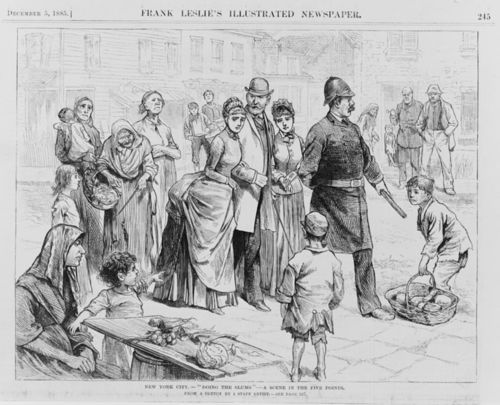
Image credits: Leslie via http://en.wikipedia.org/wiki/Slum_tourism#mediaviewer/File:Leslie_five_points_new_york_1885_3c22660v.jpg Shared under Creative Commons.