The Day of the Cat Tweets

By Puck Wildschut

image

Imagine that about 90% of the world’s human population loses their
eyesight due to a meteorite shower, and that the other 10% has to deal with the
following ethical dilemma: Do we help the vast, visually disabled majority to
survive for a short time, or do we put ourselves first and try to rebuild the
world only with those who can still see? This is the hard choice Bill and
Josella face in John Wyndham’s classic sci-fi novel The Day of the Triffids (1951), soon after catastrophe has hit the
earth. Although Josella doesn’t need that
much convincing to take the apparently a-moral road to survival, she feels that
it isn’t the proper thing to do and tells Bill so: Josella “dug her fingers
into the earth, and let the soil trickle out of her hand. ‘I suppose you’re
right,’ she said. ‘But you’re right when you say I don’t like it.’” And in
comes Bill: “‘Our likes and dislikes as decisive factors have now pretty well disappeared,’
I suggested.” (Penguin Edition, 2000: p.85)

Now imagine that in 2015 the entire western world is in shock over a
terrorist attack in Paris, where 130 people get shot in cold blood, and the
effects of which are clearly felt in people’s daily lives: bands cancel their
shows in Europe out of fear for new attacks, the city of Brussels is nearly
inactive for four days, and people are advised to be ‘extra alert’ when in
crowded places. Of course, you don’t need to imagine that, since sadly this is
no plot out of a suspense novel, but precisely what occurred in the last few
weeks.

With these impactful events still fresh in our minds, all of us who
live in the west, who consider ourselves to be ‘free’ individuals in a part of
the world in which free speech is deemed king, have been prompted to reflect on
our own ‘survival’. We may not be facing the aftermath of planetary apocalypse,
like Bill and Josella in Wyndham’s novel, but we are faced with issues
concerning the survival of our selfhood, of keeping our own identities intact following
an attempt to destruct our ideological habitat. And, in contrast to Bill’s
suggestion when facing his ethical dilemma, our likes and dislikes have
actually become the decisive factors
in our reaction to the current state of affairs.

Who hasn’t liked or shared the facebook post on police dog Diesel who
was killed during a raid on an apartment of a suspected terrorist? Who didn’t
like one of the hundreds, if not thousands, of posts asking users to ‘like this
post if you stand behind France’? There was a lot I myself personally ‘liked’
and shared following the Paris attacks, and it gave me a sense of hope that so
many other people came to a virtual stand condoning the senseless violence.
However, with the possibility to like comes that to dislike: a great number of
people use the attacks as a convenient stepping stone for spreading hate, fear,
and more violence. Since facebook has yet to implement a ‘dislike’ button (will
they ever?), harsh words are spoken in its stead and offer another,
inconclusively a-moral way to our metaphorical survival after a high impact
event in the western world.

The question remains then how to negotiate the outspoken and often
polarized discourse within that highly populated social media universe. Engage
in its discussions? Ignore those parts of it that you don’t like? Well, for now
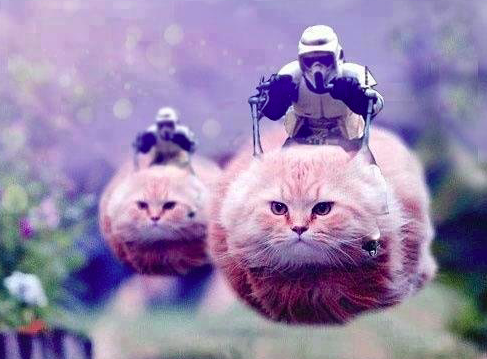
I’ll let the Belgians have the final word …ehhm… meow in this matter.
#BrusselsLockdown

Source: https://uk.news.yahoo.com/belgians-flood-twitter-cat-pics-101133243.html?.tsrc=warhol#UcaVkkN
Naar verluidt…

Door Tom Sintobin

“There is nothing more deadly
than slow growing fear”

Ik weet nog precies waar ik was op 11 september 2001:
in het Vliegend Varken. Het internet op de faculteit was vastgelopen – zoals
zo’n beetje overal in de wereld – zodat ik met twee collega’s naar dit Leuvense
café was gerend om meer te weten te komen over de terreuraanslagen waar de
Verenigde Staten onder te lijden had. Zoals de meeste mensen zijn de beelden
voor altijd in mijn geheugen gegrift. Ik herinner me nog iets anders: de totale
ontsporing van sommige media. Op een bepaald ogenblik werd zelfs beweerd dat er
alles bijeen 17 vliegtuigen verdwenen waren. Minstens. Geen twijfel mogelijk, ‘want
dat hebben we uit goede bron. Het konden er echter ook meer zijn. Naar verluidt.’

Die ontraceerbare sprekende spoken zijn de laatste dagen weer in volle
glorie opgedoken. De Belgische krant De Morgen post op 18 november 2015
om 17:50 op haar Live Blog dat ‘De
Belg Abdelhamid Abaaoud,
het vermoedelijke brein achter de aanslagen in Parijs, zou zijn omgekomen
tijdens de politieactie in de Parijse voorstad Saint-Denis vanmorgen. Dat
schrijft een journalist van Politico op Twitter, op basis van een
“hooggeplaatste Belgische bron die betrokken is bij het onderzoek”.’
Geen uur later, om 18:44, luidt de boodschap dat het zogenaamde ‘brein’
achter de aanslagen ‘zeer waarschijnlijk overleden’ is: ‘Dat vernam onze redactie
uit goede bron, en werd eerder ook al gemeld door een journaliste van online
nieuwsmedium Politico en VTM Nieuws.’ Ze hadden
ook naar Washington Post kunnen
verwijzen, want die verklapte al uren eerder dat ’French police commandos killed the suspected
ringleader of the Paris attacks in a massive predawn raid Wednesday, two senior
European intelligence officials said’. Om 19 uur komt de procureur des Konings François Molins met vreemd nieuws tijdens
zijn persconferentie: hij kan niet bevestigen dat het brein
gestorven is, want de lichamen van de doden zijn onherkenbaar verminkt. Verder
onderzoek is nodig om het met zekerheid te weten.

De avond ervoor werd het geachte aan het internet gekluisterde publiek ook
al helemaal gratis getracteerd op een bloedstollende  thriller. In het voetbalstadium in Hannover
werd ‘een verdacht pakket’ gevonden. ‘Nee, een hele ziekenwagen was het,
tjokvol met springstof! ’ Of nee, bij nader inzien was er ‘toch niets te zien’.
Ik weet niet hoe dat bij u zit, maar van dit soort verslaggeving word ik
nerveus. Bang zelfs. Ik denk nog regelmatig aan die vermiste vliegtuigen. Tot
op de dag van vandaag zijn ze niet terecht – ze zullen vast op mijn hoofd
vallen als ik het het minste verwacht. IS wacht geduldig het juiste, het
apocalyptische moment af om het vliegtuigen te laten regenen.

Ik sta versteld van het totale gebrek aan eergevoel en zelfbeheersing in zoveel
digitale media. Je hebt geen cultuurfilosoof nodig om te begrijpen waar al dat
gespeculeer-voor-de-eer-om-toch-maar-mooi-de-eerste-te-zijn toe leidt. Zelfs de bekende denker Maxi Jazz zong het al: ’Whether
you’re Soaraway Sun or BBC 1/Misinformation is a weapon of mass destruction. ’

Het Vliegend Varken bestaat niet meer. Jammer, want anders had ik de baas
kunnen vragen of hij ‘Fade Out Lines’ nog een keer
zou willen draaien, de door The Avener herwerkte song van Phoebe Killdeer &
The Short Straws. Uiteraard met de juiste, Parijse, videoclip erbij:
https://www.youtube.com/watch?v=hqwU7nv3hTM  Dan kon ik die 13 andere vliegtuigen
misschien voor even vergeten.

Now trending: the transgender model

By Lianne
Toussaint

The May 2015 issue of US Vogue
(Vol. 222) featured the first transgender model in the history (132 years!) of
its existence: Andreja Pejic. That same month, IMG Models – one of the biggest
modelling agencies worldwide – announced transgender actress, writer and model Hari Nef as the
newest addition to its roll. Two months later, H&M sister brand ‘&
Other Stories’ followed the example of brands like Barneys and Make Up For Ever by launching an advertising campaign featuring transgender models Valentijn De Hingh and Hari Nef. And last week, it
was all over the news when Dutch model Loiza Lamers was crowned the first-ever transgender winner of the ‘Next Top Model’ television franchise. Has the fashion industry
suddenly become all trans-friendly?

image

Although the vocabulary used to describe this trend may fool you into believing
otherwise, the presence of transgender models in fashion imagery is not exactly as new as it seems. In the 1960s, after going through the horrors of
bullying, assault, failed suicide attempts, and (electric, drug, hormone)
treatment in a mental institution, April Ashley worked as a professional model in Britain until the
news about her gender confirmation surgery soon made an end to her professional career. In 1991,
the British model Caroline “Tula” Cossey became famous as the first trans women to pose for Playboy.

It may not be
an entirely new phenomenon, but in many ways the recent rise and success of the
transgender model does seem groundbreaking. The increasing visibility of trans
models such as Valentijn De Hingh, Lea T, and Andreja Pejic on the runway, and
in print and media seems to contribute to – or at least coincide with – a broader, cultural and political mainstreaming of
transgender identity
. As there are
but few role models and spokespersons for the transgender community, their
visibility is literally of vital importance in raising awareness and advancing tolerance.

Unfortunately,
the current ‘trans model trend’ also has its downside. Many of the captions,
press releases, interviews, and statements appearing alongside all the
seemingly trans-friendly fashion imagery testify to a less trans-tolerant
climate, to say the least. LGBT (!) news site The Advocate, for example, blatantly notes that the ‘& Other
Stories’ campaign shows “that trans people are beautiful, too”, while Elle headed
that Pejic modelled for a beauty brand “And looks gorgeous doing it”.

As much as I
would love to believe that the recent success of the transgender model is the
definite harbinger of a more gender-diverse fashion industry, I can’t help but
notice the accompanying, stigmatizing discourse of the transgender model as an
‘object of curiosity’. Like Pejic, I nonetheless hope that the trans model trend will
turn out to be much more than just another case of cynical casting, clever
marketing, or fashion tokenism.  

– Lianne
Toussaint is a PhD candidate at the Department of Cultural Studies of the
Radboud University in Nijmegen. Her research is part of collaborative
NWO-funded project ‘Crafting Wearables’.

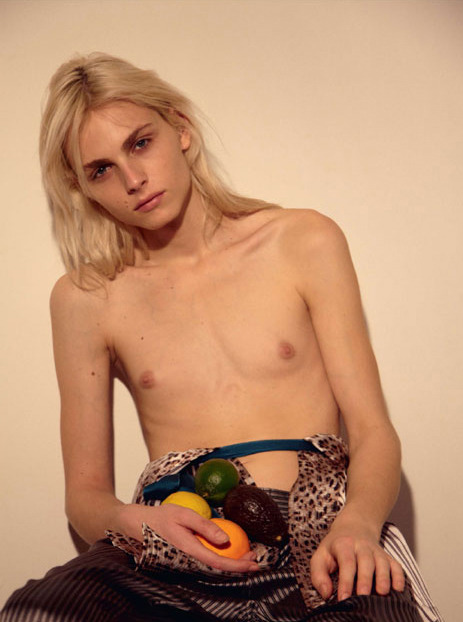
– IMAGE: Andreja
Pejic for Dossier, Issue 7, Spring
2011. Photography by Collier Schorr, Styling by James Valeri, Hair by Holly Smith,
Makeup by Ozzy Salvatierra, Shirts and Pants by Haider Ackermann: https://www.flickr.com/photos/nielleborges/6196657940/in/photostream/

By Timotheus Vermeulen

I enjoy the Indiana Jones franchise as much as the next
person. I mean, I grew up watching Indiana Jones films. As a ten year old, Indy
used to be my role model – topped only, perhaps, by Leslie Nielsen (you know, the guy of Naked Gun fame). However, as Anna
Kendrick’s recent spoof has made clear, the films aren’t what you’d call
progressive – and that’s putting it mildly, I’m afraid. 

The franchise’s attitude to,
well, everyone who is not a white, male, heterosexual American, I guess, is at
best unfortunate, but probably just offensive – I’m not speaking about Indiana
Jones’s attitude towards the Nazis, here, obviously; exploding heads and
melting faces is what they had coming for a long time. If the films value Arabs (often of
unspecified origin), Chinese, Indians or women at all – which they rarely do,
since they are mostly portrayed to be too busy sneaking around, poisoning
people, eating gigantic beetles, monkey brains and eyeball soup, or being
hysterical  – it is as the white man’s lesser
versions: less brave, less clever, less civilized, less strong. Indeed, the
franchise’s entire premise is that Jones saves these crippled creatures, from their
enemies as much as from themselves. 

Of the bunch, Temple of Doom is certainly the most cringeworthy, but Raiders of the Lost Ark is not without
its moments of embarrassment either: the one assertive woman, yes, the single
female with agency, reads like Death of a
Salesman
; all her endeavors end miserably, the spirits lifted only by the
arrival of … well you can guess…. It’s called Indiana Jones, not Jane. 

It may be obvious that my ‘enjoyment’ of
Indiana Jones is troubled, to say the least. It relies on nostalgia, though one
that is waning; on an appreciation of how its well structured, suspenseful
narratives made me feel way back when, increasingly marred by what its representations make
me endure today. My aim here is not to take away anyone else’s enjoyment of the
film, let alone berate you. Everyone is free to derive pleasure from whatever
he or she fancies. But perhaps, the next time you see a promotional poster/DVD cover that
features a white man wearing a noble explorer’s top hat, an adventurer’s torn shirt,
a cowboy’s pants and a gun for a penis whipping exotic foreigners and women
into submission, try and be aware of what it is exactly, that your enjoyment
consists of.

What is art education’s answer to the refugee crisis?

By Edwin van Meerkerk

Over the pas few years the arts sector has found an answer to the austerity measures and the economist paradigms underlying the budget cuts, in the endorsement of the notion of value. Art and culture have, it is claimed, a value that goes beyond monetary output and economic growth. Its value lies on the social level, by the development and promotion of empathy and a sense of community, as well as on a cultural level, by fostering understanding for cultural differences, as well as strengthening cultural self-awareness.

In arts education, these claims have resounded strongly. What is more, they have joined forces with a third positive outcome of engaging in cultural activities: cognitive skills and multiple intelligences. These positive effects of the arts: social, cultural, and cognitive have met with little qualitative opposition, although true curriculum or policy change appears to be much slower than the endorsement of the notion of cultural value.

But now the arts in general, and arts education in particular, are facing a challenge that forces us to stand for our claims. The refugee crisis that holds the Near East, Northern Africa, and Europe in its grip, may well be the greatest challenge to western society since the end of colonialism (or maybe it shows that colonialism has not yet fully ended, but that is another discussion).

The refugee crisis may have deep economic and political causes, yet as a crisis it is predominantly social and cultural in nature. This is the crisis that takes the shape of people crossing borders, people living in camps, but also of angry people on the streets, volunteers distributing clothes, food, and toys. That part of the crisis is nothing but social and cultural. 

The arts, the cultural sector, arts education, has to stand up for its claim to have cultural and social value if this claim is worth anything. But what is it we are to do? How does one foster empathy through art in the middle of a crisis? How can cultural differences be celebrated when one party is hungry, tired, and homesick, and the other is scared, uncertain, even angry?

How can an arts teacher enter her or his class tomorrow and make a beginning in solving the social and cultural crisis that has entered the hearts and minds of the students in class? Where do we begin? I don’t know the answer. What I do know, is that it is a question that must be asked, and it must be asked now, from all of us.

This essay was first published on http://cultwise.tumblr.com/post/131576809544/what-is-arts-educations-answer-to-the-refugee

Cybercouture: twitteren met je trui

image

Door Anneke Smelik

Zou het niet geweldig zijn als je stroom kan
opwekken met je colbertje? Je mobiel kan opladen in de achterzak van je
spijkerbroek? Of kan twitteren met je trui? 

‘Draagbare
technologie’ is de nieuwe mode. Mode-ontwerpers en wetenschappers verwerken elektronica,
vitaminen, microprocessoren, zonnepanelen, LEDs, of interactieve interfaces in kleding.
De toepassing van zulke ‘slimme materialen’ in modeontwerp staan aan de basis
van wat ik ‘cybercouture’ noem. Dat klinkt misschien als toekomstmuziek, maar in
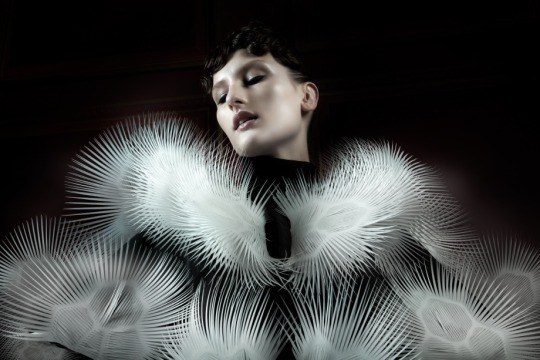
Nederland wordt hier al volop mee geëxperimenteerd. Kunstenaars en ontwerpers, zoals
Pauline van Dongen, Iris van Herpen, Bart Hess, Daan Roosegaarde, Marina
Toeters en Anouk Wipprecht, vormen de avant-garde in het internationale veld
van cybercouture. Toch zien we de cybercouture nog niet terug in de mode op
straat. ‘Wearables’ (zoals draagbare technologie in vaktermen heet) komen
zelden verder dan het laboratorium of de catwalk en blijven te veel hangen in
de sfeer van ‘gadgets’ en ‘gimmicks’.

Daarom zijn we vorig jaar aan
de Radboud Universiteit Nijmegen, samen met de Technische Universiteit
Eindhoven en de modeacademie ArtEZ in Arnhem, een interdisciplinair
onderzoeksproject gestart, ‘Crafting Wearables’, waarin mode, technologie,
industrie, en wetenschappelijk onderzoek samenwerken. We willen wearables
ontwerpen die duurzaam, modieus én commercieel haalbaar zijn. Een ‘nerdy’
outfit mag dan wel een technologisch hoogstandje zijn, maar het moet je ook
goed staan en lekker zitten. En het moet iets toevoegen aan de volle klerenkast
en de vele technologische apparaten die je al hebt. Zou het niet ideaal zijn
als mijn favoriete spijkerjasje op festivals tegelijkertijd als telefoonoplader
dient of als mijn trui warmte afgeeft wanneer het aan het eind van de dag
frisser wordt?

In cybercouture
versmelten het lichaam, de kleding en de technologie. Die intense en intieme
verbondenheid tussen mens en technologie doet iets met onze identiteit. Daarom roept
cybercouture ook filosofische vragen op: word ik me door het t-shirt dat mijn
bloeddruk in de gaten houdt niet ineens veel bewuster van mijn lichaam? Wat
doet het met mijn vriendschappen als mijn jurk mijn emoties weerspiegelt zonder
dat ik ze hoef uit te spreken? Wearables creëren een weefsel van complexe en
mobiele relaties tussen de mens en haar lichaam, technologie, en samenleving.
Zo helpt cybercouture om die relaties te verdiepen, veranderen en
tegelijkertijd kritisch te bevragen.

Image ‘Iris van Herpen’ by Zack Balbino via  https://www.flickr.com/photos/94329551@N07/8832556696 under Creative Commons

Blasted by sounds

by Vincent Meelberg

image

Music has the potentiality
to move us, sometimes quite literally so. It incites us to dance, triggers emotions,
or helps us remember. Music simply makes us feel something. Listening to music
is not only a mental activity, but a physical one as well. This is not only
noticeable when one listens to very loud
music
. Soft music can have
a similar impact as well. Yet, there are people who claim that music does
nothing to them. They believe to be insensitive to the moving powers of music. 

As of today, it might be more
difficult to sustain that claim. Salk Institute scientists have found a way to control the brain
cells of a tiny nematode worm through ultrasound.
No devices needed to be attached to the poor creature; it was all done by
simply blasting ultrasonic waves to the worm. Through these sound bursts the
scientist were able to change the worm’s direction. Neural activity thus was
triggered from a distance, by using sounds that penetrate the worm’s body. The
scientists expect that it will eventually also be possible to do this with
larger animals, including humans. 

The intrusive powers of
music and sound isn’t a recent discovery. Steve Goodman, also known as Kode9, for instance, wrote
an excellent book on sonic warfare. And one only needs
to stand in an elevator and listen to the
music played there
to realize how
intrusive, and nerve wrecking, sound and music can be. The fact, however, that
sound can literally change our physical constitution and manipulate and control
our movements does seem to make the claims regarding the influencing powers of
music on consumers, as articulated by companies such as Mood Media,
much more believable, and a bit scary as well…

Image by https://www.flickr.com/photos/76999192@N06/ via https://flic.kr/p/ezQdZm under creative commons.

Hyper-identiteit

Door Edwin van Meerkerk

Kunst draait om identiteit en authenticiteit. Een zangeres
legt haar ziel in een lied, een acteur geeft zich bloot op het podium, zo wil
het cliché. Juist daarin schuilt, zo menen velen, het verschil tussen hoge en
lage kunst. In de populaire cultuur is die authenticiteit gespeeld, gaat het
niet om identiteit, maar om imago. Zo bezien rekt de populaire peuterpopgroep
K3 de grenzen van de popmuziek weer een stap verder op in het nieuwe
televisieprogramma K3 zoekt K3 (VTM / SBS6). In deze talentenjacht
maken jonge Nederlandse en Vlaamse meisjes kans om in de voetsporen te treden
van deze uiterst succesvolle meidengroep. Is daarmee de fundamentele leegheid
van de populaire cultuur definitief bewezen?

image

Autoriteiten

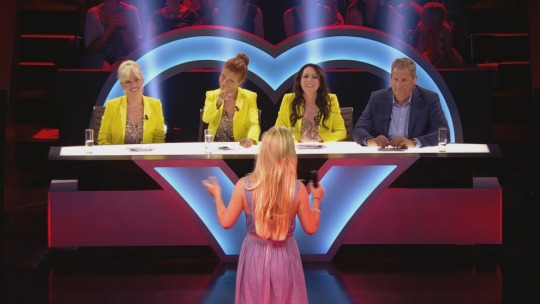
Het programma K3 zoekt
K3
is een hypermoderne potpourri van vorm en inhoud. Vrolijke peuterpop
wordt gebracht in een volwassen setting, die volstrekt ongeschikt is voor de
muzikale doelgroep. Nauwelijks verhulde toespelingen op de seksuele relaties die bedenker en manager Gert Verhulst had met twee van de drie dames, maken, nog los van het tijdstip van de
uitzending, dat het programma duidelijk niet gericht is op de fans, maar op het
brede televisiepubliek dat van talentenjacht naar talentenjacht zapt.

Die wereld van talentenjachten is iconisch voor het
afgelopen decennium. Iedereen kan een ster worden, iedereen wíl een ster
worden. De dominantie van het genre zorgt ervoor dat een aantal patronen in
onze culturele wereld verder inslijten, patronen die soms al lang verdwenen
leken, maar die soms ook hier hun definitieve doorbraak beleven. De
ongenaakbare autoriteit van de jury en de dominantie van het (geseksualiseerde)
uiterlijk behoren tot de eerste categorie. De sterk meritocratische manier
waarop afvallers aan de kant worden gezet en de eis van succesvol en talentvol
zijn tot de tweede. Het is maar goed dat de peuters hier niet naar kijken.

Transformatie

Nog interessanter wordt het als we naar K3 zelf kijken. K3 zoekt K3 is niet het eerste
reality-programma rond de groep. Een paar jaar geleden nog zocht ‘K2’ naar ‘K3’ en werd de Nederlandse Josje gekozen als vervangster voor een van de drie
oorspronkelijke groepsleden, Kathleen. Zonder problemen nam ze de rol over, oude
nummers werden op een nieuwe verzamel-cd ingezongen met exact hetzelfde arrangement,
zodat alleen een trouw fan en geoefend luisteraar het verschil kon horen. Het
enige wat veranderde was de naam van
de blonde zangeres.

Nu is het vervangen van een bandlid door een ander geen
onbekend fenomeen,
maar het vervangen van een complete groep is nog niet eerder vertoond – zeker
niet met de pretentie dat de groep zelf
niet veranderen zal. Sterker nog: het zijn de meisjes die zullen veranderen. Bedenker,
eigenaar en manager Gert Verhulst stelt het in de uitzending met zoveel
woorden: wie wordt verkozen zal haar oude leven achter zich moeten laten en
beginnen aan een nieuw (en “gegarandeerd succesvol”) leven. Daarbij gaat het
niet om uiterlijk, maar om de ‘K3 factor’, aldus Verhulst, die voorts geen
blijk geeft van enige gêne bij het beoordelen van het uiterlijk van de dames.

Simulacra

Daarmee vormt K3 zoekt
K3
als het ware het sluitstuk van het tijdperk van het postmodernisme,
waarin alle culturele uitingen transformeerden in simulacra, tekens die niet
meer naar een achterliggende werkelijkheid verwezen, maar alleen nog maar naar
zichzelf. In die hyperrealiteit (de termen komen van de Franse cultuurfilosoof
Jean Baudrillard)
is alles schijn. Gert Verhulst is erin geslaagd nu ook de menselijke identiteit
tot een hyper-identiteit te transformeren, een identiteit die niets meer te
maken heeft met de persoon die hem draagt. Wie de drie winnaressen worden, is
volstrekt irrelevant. Ze zullen namelijk K3 zijn.

Touching the surface

By Vincent Meelberg

Touch might be the most important sense we
human beings have. Touch puts us in direct, constant contact with the outside
world. And perhaps that might be the reason why this sense is so problematic.
Touch implies intimacy and closeness, and these are phenomena that the
(Western) world finds increasingly difficult to cope with. On the one hand, we
are no longer sure when it is appropriate to touch someone. On
the other hand, however, the temptation to touch is always present. This is one
of the reasons why New York City Assembly Speaker Carl Heastie and Chair of the Task
Force on Women’s Issues Aravella Simotas
recently announced the passage of
legislation
 to assure that a sentence of up to one year of
imprisonment may be imposed for a person “who makes inappropriate physical contact with
another person while traveling on a mode of public transportation.” Apparently people are so eager to touch others, even without consent, that they need a law to hold them back.

Yet, as many studies have shown, physical contact between human beings – provided it is mutually agreed upon – is vital. Physical contact and reassurance will make
people more secure and better able to form relationships. David J. Linden, a neuroscience professor at
Johns Hopkins University School of Medicine and the author of Touch: The
Science of Hand, Heart, and Mind
adds during an interview in The Atlantic: “More
than anything else, what touch conveys is ‘I’m an ally, I’m not a threat.
Touch puts the recipient in a trusting mental state, and anything you can do to
encourage the student to trust the teacher is going to make learning
better.“ And let’s face it: it is often simply very enjoyable to be
touched and to touch someone else.


Interestingly, the way we interact with
non-human entities is increasingly through direct touch as well. Until a few
years ago the way we interacted with phones and computers was by pushing
buttons. And while pushing implies touching too, this interaction remained very
indirect. One never really had the sensation of literally touching the
information that was being manipulated by the touching of buttons. All this
changed with the introduction of the iPhone. One of the reasons this device became such a huge
success was its user interface. Instead of trying to hit the correct tiny
physical buttons in order to write an email, for instance, suddenly the user
could type directly on the screen and had the possibility to literally touch
the Internet via multi-touch. It indeed was a magical experience, as Steve Jobs
liked to stress over and over again.


Nowadays, most phones use multi-touch, and
tablets such as the iPad could not have existed without this technology. So,
what does the fact that we have no problem touching the surface of our devices,
but are very reluctant to touch another person, say about Western society? Have
we arrived at a stage where we are more comfortable
being intimate with our phones than with human beings? When we take into
account that we use these devices to communicate with other people and that
direct personal contact is gradually being superseded by these mediated forms
of communication, the pessimistic conclusion might be that direct interpersonal
relations are indeed becoming increasingly rare, and therefore touching someone
may become the exception rather than the rule.


I think I need a hug…

Bussemaker zet cultuureducatie op de eerste plaats. Toch komt er geen euro bij.

Minister Bussemaker maakt van cultuureducatie beleidsprioriteit nummer één. De vlag, zo is overal te lezen, kan uit! Maar op meer geld hoeft de sector echter niet te rekenen, stelt Edwin van Meerkerk, universitair docent Algemene Cultuurwetenschappen aan de Radboud Universiteit Nijmegen. “Er komt geen euro bij”. Ook blijft er volgens hem onduidelijkheid over de inhoud van cultuuronderwijs. Hij adviseert de sector na de eerste vreugde nog eens goed na te denken. Lees hier zijn hele betoog. 

Bussemaker zet cultuureducatie op de eerste plaats. Toch komt er geen euro bij.