Wearable Surveillance I: GPS Trackers and ‘quantified otherness’

by Lianne Toussaint

Welcome
to the wonderful world of wearable surveillance! Thanks to the wearable GPS
tracker you will “never lose your pet
again
”, and be able to track the location of your dementing relative or wandering child at any time.
No longer having to worry about the safety of our beloved pet, relative or
offspring us caregivers will finally have peace of mind, or so the
techno-utopian marketing story goes. But before you run off to the (web)store
to purchase this technological solution to all your ‘parental nerve’ you might
want to think again. And read this blog post, of course.
According to Belgian philosopher Kathleen
Gabriels
, the “constant, remote, and often covert tracking of the other’s
data engenders a situation of what can be characterized as ‘quantified
otherness
’”. In the specific case of
GPS trackers, this means that the geographic location of a physically distant
other can constantly, remotely, and unobtrusively be traced. Obviously, there
is little against the heartfelt wish
to care for, protect, and safeguard our beloved ones. The question, however, is
whether wearable GPS trackers are a desirable
and effective
way to canalize and act upon this philanthropic inclination. Do
these wearables truly help prevent our vulnerable children, pets, and relatives
from getting lost or hurt, or is this the latest example of a surveillance
society
gone mad?

A
few weeks ago, Dutch newspaper De
Volkskrant
published an article entitled ‘Big Mother’, which connects the
parental urge to continuously supervise children to what sociologist Frank
Furedi terms ‘paranoid parenting’. “Today’s parenting style sees safety and
caution as intrinsic virtues”, Furedi
writes
, “[p]aranoid parenting
involves more than exaggerating the dangers facing children. It is driven by
the constant expectation that something really bad is likely to happen to your
youngster”. There is no substantial empirical data suggesting that children wearing
a GPS tracker are indeed safer. After all, the technology will not prevent them
from falling or drowning, from being bullied or hit by a car. Kids trackers, in
other words, do not owe their appeal to their verifiable improvement of child
safety but to their capitalization of paranoid parenting fueled by a generally risk-averse
society
. Depending on how they are
used, however, such wearables may nonetheless have a positive effect on the
parent-child relationship. Just the thought of being able to track a kid’s
location might turn the overprotective parent into a relaxed parent who is willing
to grant the child more autonomy and space for self-development.
Pet trackers relate to a similar phenomenon. On
the one hand, it seems like a win-win situation if these devices effectively
relieve the owner of the constant fear that something might happen to their
domestic companions and, hence, give the pet more freedom of movement. Considering
the omnipresence of heartbreaking “missing pet” posters in the contemporary
urban landscape, there is no doubt about the potential market for these
devices. On the other hand, however, pet owners (and parents/caregivers alike)
should be aware that GPS trackers decrease worries, rather than prevent any
identified danger or probable risk. The GPS technology will tell you where roughly
to look for your pet/child/relative, yet it is not fine-grained enough to identify
the exact location. Civilian GPS
trackers can track locations with a maximum accuracy
of about 8 meters
, which means that
one will still have to search for the missing cat/dog/ferret/parakeet/guinea
pig/elderly/toddler/other within an area of approximately
200 meters
. This is helpful
if that area is a mall or public park but becomes more complicated when it
concerns a crowded multistorey mall or dense forest.

Wearable GPS trackers are effective to the extent
that they can assist in keeping an eye on those we care for and help us to
track their location in precarious situations. In that sense, the technology
may effectively relieve some of the burden of care even if that relief rests on
the illusion of pseudo-safety. Whether their use is also desirable, however, depends on how users deal with the ethical
concerns around privacy, control, dignity, and autonomy that tracking devices
also unavoidably raise. Ultimately, the biggest issue is not if the trackers
work but how they affect the relation between ‘the tracker’ (i.e. parent,
owner, relative) and the tracked (i.e. child, pet, caregiver). The right to privacy
and self-determination is obviously less of an issue in the case of pet
trackers although some self-reflection on whether your paranoia is enough of an
excuse to make your dog “look
like a Silicon Valley asshole’s pet
” seems fair. But if you are considering the option to equip your child
or dementing relative with a GPS tracker there are many other ethical concerns
to deliberate (Michael
et al 2006
; Landau
2012
; Estes
2014
). Will you truly use the
wearable in the best interest of your beloved one, or are you simply being
tricked into buying yet another technological gadget that “resemble[s]
solutions in search of a problem” (Haggerty
and Ericson
2006: 14)?

Image
flickr.com

Cool and Trendy: New Materialism

by Anneke Smelik

image

In case you think that cultural
theory and academic thought are behind the times, think again. For a few years
we have been teaching theories and concepts within the framework of ‘new materialism’ at the Department of Cultural
Studies, and guess what? This autumn the famous trend forecaster Lidewij Edelkoort announced a new trend for the next
year, in fact for the next decade: NEW MATERIALISM.

In capital letters.

Her trend forecasting skills show that
we academics are quite trendy and ahead of times.

What does new
materialism entail? For Edelkoort it involves a return to the materiality of
fabrics and craftsmanship in fashion design: “We are in an age of new
materialism, the making of materials comes first before form, colour, function”.
However, as cultural theorists we think new materialism goes much further than that. At the
heart of it all is ‘matter’. New materialism takes seriously the notion that objects,
art, fashion, even people, are made out of matter. Materiality thus refers to
quite different ‘things’: the designer’s and the wearer’s body, the garment, as
well as the fiber and fabric.

Matter ‘matters’, because
it has a certain force and agency. In other words, matter is not inert but vibrant, as Jane Bennett claims. New materialism looks
at how material powers affect our daily lives. Such a
perspective is productive for the study of art, fashion and culture, because it helps understand
cultural objects as active and meaningful actors in the world.

image

This is even more
important because of the pivotal role of technology today. Take the phenomenon
of ‘wearable technology’, as in the designs of Pauline van Dongen and Iris van Herpen. Clothes usually hang on the body, moving
along with it. But technologies, like solar cells, LED lights, 3D printing, or
electronics, enable the garments to move autonomously irrespective of the
wearer. As Kaori O’Connor aptly remarks: ‘Man-made fibres are not inert, they
have been created to do’ (2005, p.
53). Clothes then take on a life of their own, acquiring non-human agency, entangled with the human body. The
notion of material agency highlights the fact that the technologies establish
interaction between the garments and
the body, between human and non-human entities. Material agency, in other
words, is not located exclusively in the technology, or in the human body, but
in an assemblage of wearer, fashion, and technology.

The body, clothes, and
technologies: all of these things are made up of vibrant matter that ‘act’ and
‘do’. They do so in interactive and interdependent ways; together they become ‘creative entanglements’, as Tim Ingold calls it. To fully
understand the complexity of new materialism means to take into account not
merely the materiality of fabrics, as Lidewij Edelkoort suggests, but equally
the materiality of the humans that design and wear them. New materialism thus points
to a dynamic notion of life in which human bodies, fabrics, objects and
technologies are inextricably entangled.

Talking racism; Or, Getting Under Someone’s Skin

by Tom Idema

If you really want to
get under someone’s skin, reduce everything he does or says to the color of his
skin. Being labeled “white” takes away the comforts of unmarked personhood: the
conditions that allow oneself to simply be a person, a human being, general and
unspecific. Furthermore, to many, whiteness conjures up histories of violence
that shatter the image of the West as the pinnacle of civilization. These
histories, in the plural, render the past uninhabitable—they problematize the cultural imaginary of a singular
national history as a solid ground for ethnic identity. At the other side of
the equation, being labeled “colored” can be interpreted as a reminder that the
privilege of abstract, unmarked personhood is ultimately unattainable, due to
the natural fact of one’s bodily color. And here too, history is evoked as a
site of struggle, a history that all too easily marks the subject in question
as victim. The widespread, common-sense response to racism, then, is not just
to avoid it, but to deny it. When it comes to talking racism, everybody loses. 

image

If you really want to
get under someone’s skin, reduce everything he does or says to the color of his
skin. Being labeled “white” takes away the comforts of unmarked personhood: the
conditions that allow oneself to simply be a person, a human being, general and
unspecific. Furthermore, to many, whiteness conjures up histories of violence
that shatter the image of the West as the pinnacle of civilization. These
histories, in the plural, render the past uninhabitable—they problematize the cultural imaginary of a singular
national history as a solid ground for ethnic identity. At the other side of
the equation, being labeled “colored” can be interpreted as a reminder that the
privilege of abstract, unmarked personhood is ultimately unattainable, due to
the natural fact of one’s bodily color. And here too, history is evoked as a
site of struggle, a history that all too easily marks the subject in question
as victim. The widespread, common-sense response to racism, then, is not just
to avoid it, but to deny it. When it comes to talking racism, everybody loses.

But getting under our skin is just what
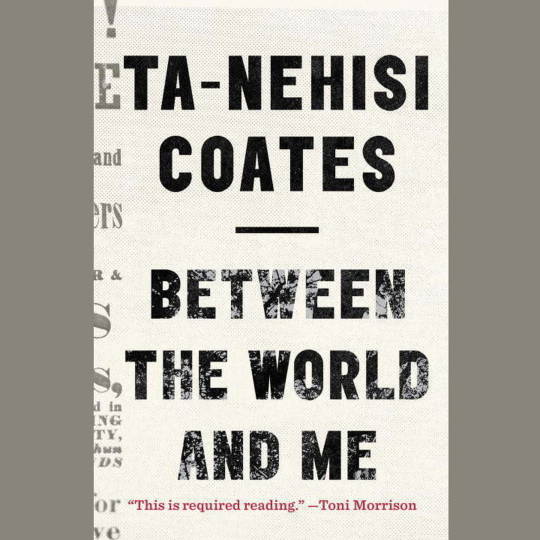
Ta-Nehisi Coates wants to achieve in his 2015 manifesto-cum-epistolary
non-fiction book Between the World and Me.
Coates, MacArthur Genius Award-winning
journalist of The Atlantic,
has found a way to turn his anger about racism in US society into a form that
is at times literary. Addressed to his 14 year-old son, and written in the
second person, the author awkwardly relates to the reader as a father. I would
argue that it is Coats’s ability to bring racism to life through a combination
of writing strategies—dramatic anecdotes, historical surveys, news facts, and
passionate appeals—that has led to the wide acclaim for his book, which won the
2015 National Book award
 and was a finalist for the 2016 Pullitzer
prize
.

Unavoidably, I think,
the mixing of history and autobiography, factual analysis and passionate critique,
gets under the skin of some commentators. Perhaps it is a common response to this
kind of text: who are you to tell me about my world, my society? Writing for
The Guardian, Sukhdev Sandhu complains that “his
prose seems increasingly ventriloquized and his insistence
on Afro-American exceptionalism a kind of parochialism
”.  In a review in the New York Times, Michiko Kakutani observes that “There is
a Manichaean tone to some of the passages in this book, and at times, a
hazardous tendency to generalize
”. Even if we acknowledge these criticisms, I think they
expose a practical impossibility of being African-American: one must vanish
into the melting pot (rather than promote racial exceptionalism and
parochialism), but one must also refrain from “generalizing”—laying claim on Americanness.

Critics are
right that Coates is unabashedly inward looking, culturally as well as
personally, and that the book is not without elements of self-aggrandizement. Coates
deliberately projects himself on the firmament of Afro-American cultural,
academic and political icons, quoting from W.E.B. Dubois, James Baldwin,
Richard Wright, Malcolm X, Toni Morrison, Nas, and KRS one. His happy
reminiscences of his time as a student at the predominantly black Howard
University are indeed parochial, celebrating his love and knowledge of
literature, philosophy, history, and other fields. Having learned about
Coates’s tough early life in the streets of Baltimore,  one can imagine the exhilaration of being
able to follow one’s curiosity while feeling safe, at home.

But besides
the many citations, Coates also invents aphorisms of his own. Here’s one: “Race is the child of racism, not the father” (7). Paraphrasing
virtually all the canonical Afro-American thinkers, Coates hammers home the
point that the color of one’s skin and the texture of one’s hair only come to
be connoted as negative because of racist ideology. He reminds us that if racism makes no sense from the vantage point of liberal
democracy. At the same time, however, Between
the World and Me
shows that racism literally makes sense: it is a key marker of difference that allows us to
create cultural, social, economic, and psychological meanings. Both capitalism
and the state were built on and through racism, and the strategy of racism denial
has been essential for these systems to keep functioning in the wake of the
abolition of slavery and the various emancipatory waves. The sorting mechanisms
of our societal systems (who gets to be, have, do, and say what) still work on
the software of racism (and sexism), disguised as the hardware of race (and
sex).

Coates has understood
well the necessity of writing a book on racism that is both rhetorically
appealing and palatable to a large audience. The aesthetic dimension is just as
important as the message: “poetry aims for an economy of truth—loose and
useless words must be discarded, and I found that these loose and useless words
were not separate from loose and useless thoughts” (510). The paradox is that
exactly by bringing in literary suppleness and subtlety, Coates has been able
to communicate the raw violence of racism in the US.

image

Even if not all ideas in
Between the World and Me are
refreshing, the creative weaving together of history and biography, literature
and manifesto, is compelling, and the appeal to talking about racism again is
urgent considering the continued devaluation of non-white lives in the US and
elsewhere. For Coates, the most pernicious idea is the belief in our own
innocence, the unquestioned, simple rationality of one’s own ideas, and
ultimately the idea of just being oneself.
If race is not of our own making, the same goes for our ideas about race: they are
the products of impersonal systems. And so an honest appreciation of the problem
of racism does not so much require moral introspection: “’Good intention’ is a
hall pass through history, a sleeping pill that ensures the Dream” (33). An
honest appreciation of the problem of racism, instead, means reading, writing, talking,
producing, buying, voting, governing, and so on, in full awareness of racial
inequality as constitutive of US society. Thus, the white American may
recognize that his father is, at least in part, black.

Sick Sounds: Hospitals as Acoustic Environments

by Vincent Meelberg

image

Designing and constructing a new building is a major undertaking. The building needs to meet the requirements of its future occupants, comply with government regulations, and at the same time look aesthetically pleasing. Increasingly, buildings are expected to look spectacular.

Builldings, however, not only have a look, but a sound – or rather, sounds – as well. All buildings have acoustic identities. These identities are shaped by the ways in which the rooms are shaped and decorated, which determines its acoustics. The fact that a room sound reverberant, shrill, hollow, dark, or dampened codetermines the atmosphere, or ambiance, of that room. This aural architecture, as Barry Blesser and Linda-Ruth Salter call it in their book Spaces Speak: Are You Listening? (MIT
Press 2007), can also have a social meaning: 

For example, the bare marble floors and walls of an office lobby loudly announce the arrival of visitors by the resounding echoes of their footsteps. In contrast, thick carpeting, upholstered furniture, and heavy draperies, all of which suppress incident or reflected sounds, would mute that announcement. The aural architecture of the lobby thus determines whether entering is a public or private event. (Blesser & Salter 2007: 3) 

Yet, the inhabitants of a space also contribute to the acoustic
identities of a building. In his TED Talk, sound consultant Julian Treasure
explains how the acoustic environments we live and work in influence the way we function:

Sound thus seems to be extremely important when designing a new building and proper attention needs to be given to the acoustic environments.

This is particularly true when that building is a hospital. Sounds are extremely important in a hospital, as they contain important information concerning the health of patients. The hospital staff needs to be able to properly listen to the auditory signals produced by the medical equipment. If they are not able to, this may lead to dangerous and sometimes even life-threatening situations for patients. It is all the more surprising, then, that only fairly recently hospitals and medical equipment manufacturers are paying attention to the manners in which medical devices sound alarms.

The acoustic environments in hospitals affect patients as well. In some cases, they may even be harmful to them. Therefore, the acoustic environment of a hospital needs to strike a balance between auditory signals that the staff needs to hear, without overwhelming them with sounds, and at the same time not being too stressful for the patients, perhaps even be soothing to them. In any case, the acoustic environment should not aggrevate the patient’s condition.The Japanese electronic musician Yoko K. wondered if the acoustic environment in hospitals could be improved:

The Future of Hospital Sound from Yoko K. on Vimeo.

One of the manners in which Yoko K. intends to improve the hospital’s acoustic environment by making sure the sounds produced by medical equipment are more or less consonant, in tune. And although that would perhaps improve the acoustic environment, the question is whether or not it would diminish the signal value of the sounds. In other words: will these sounds still be noticed by the medical staff, because the different sounds blend to well?

It is because of these conflicting sonic conditions that designing the sonic environment of a hospital is so complicated. At this moment a new children’s hospital is being built in Utrecht, and this time sound is a concern. Together with soundbranding agency Blckbrd and the Radboud University the hospital will investigate the manners in which the acoustic environment in the hospital can be optimised. This hospital will not only look spectacular, but sound the part as well.

Have yourself a Meelberg summer

By Vincent Meelberg

– Groove: A Phenomenology of Rhythmic
Nuance
– Tiger C. Roholt (New York: Bloomsbury 214). A phenomenological study of
what I consider one of the most important aspects of music: groove.

– In the Blink of an Ear: Toward a
Non-Cochlear Sonic Art
– Seth
Kim-Cohen (New York: Bloomsbury 2009). And: 
The Tone of Our Times: Sound, Sense,
Economy, and Ecology
(Cambridge: MIT Press 2014). Two books on sound, but
discussed from different perspectives: art and ecology, respectively.

– Speaking Code: Coding as Aesthetic and
Political Expression
– Geoff Cox (Cambridge: MIT Press 2013). And: Code/Space: Software and Everyday Life – Rob
Kitchin and Martin Dodge (Cambridge: MIT Press 2011). 
Two books on another phenomenon
that I am fascinated with: software. These books approach software from a
cultural studies perspective.

Summertime!

By Timotheus Vermeulen

Alright, here’s
my summer reading list. It features books I imagine readers might actually
enjoy reading whilst lying on the beach or gazing across the mountain valleys
or – in case you are holidaying in the Netherlands – hiding from the rain in
your camper van or tent (as opposed to those books I personally always think,
or hope, rather, I might want to read but inevitably, and not without relief,
keep pushing to the bottom of my suitcase).

Changing my mind, Zadie Smith

What Judith
Naeff said
. Thoughtful in a mostly intuitive way; emotional in a contemplative
manner, meandering and measured, exploring the cosmically great and the intimately small. This is one
of the most talented authors of our moment at her best. (I would recommend
starting your holidays with this book; it will put your mind to a kind of
inspired, meditative serenity).


I am Zlatan Ibrahimovic, Zlatan Ibrahimovic & David
Lagercrantz

The, ahum,
autobiography of Zlatan Ibrahimovic, not just ghost paraphrased but “ghost imagined”,
if that’s a thing, by David Lagencrantz, is, simply put, splendid fun. There
really is no other way to describe it: it’s splendid fun: intentionally (there
are spot-on characterisations of other players and coaches in football) and
unintentionally (in its apparent lack of self-reflection) hilarious, gripping
(it’s a rags to riches story, after all), suspenseful (which fight will break
out next) and superbly written. I’ve read it two summers in a row and look
forward to getting into it again this august. (Best on the beach or next to the
pool, if you ask me).


10:04, Ben Lerner

I think
this may well be my favourite book of the past decade: moving seamlessly between
life-writing and (meta-)fiction, farce and melodrama, cultural philosophy and anecdotal
kitsch, in a prose that is lively and spot-on, the novel at once reflects on
the ills of contemporary society and contemplates the more and less effective cures.
(A good second holiday book).

Can’t and won’t, Lydia Davis

Everything Lydia
Davis writes, regardless of what it is or is about, is the best American
literature has to offer. Period. (Wonderful for reading out loud to your fellow
travellers on long journeys by car, train or plane)

Precision and Soul, by Robert Musil

Precision and Soul is a collection of essays written by Musil
between 1911 and 1937. The essays are, without exception, mind-blowing, each of them in and of themselves timeless intuitive philosophy. (Indeed, if you begin your holidays with
Smith, book-end it with this companion piece by Musil.) If the collection is
timeless however, it is also exceptionally pertinent to our current moment.
These essays read like they might have been written today, dealing with the
simultaneous bureaucratization and monetarization of thought, the perverse
obsession with measuring everything, and rising fascism. Scary stuff, but essential
stuff.

Dennis Kersten’s summer reads

By Dennis Kersten

image

This Summer, I hope to finish
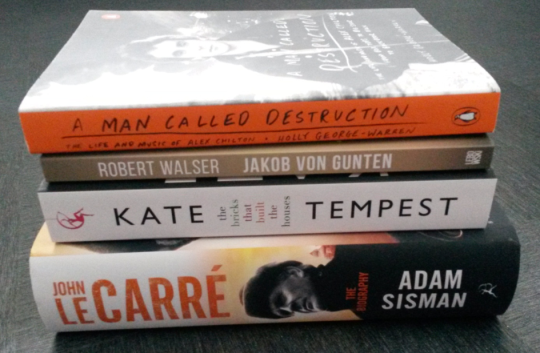
reading Adam Sisman’s biography of novelist and former British intelligence
officer John le Carré. I always read at least one big book: they slow you down,
which is the point of a holiday. I’m looking forward to reading Kate Tempest’s debut
novel, The Bricks that Built the Houses.
I was already impressed with her Mercury Prize nominated rap album Everybody Down; the novel is said to be
its companion piece. She is also compared to Virginia Woolf. I have heard that
one before, but that won’t stop me. Next on my list, and staying with biography
and pop music, is A Man Called
Destruction
, Holly George-Warren’s life of Alex Chilton, who fronted the
influential 1970s power pop band Big Star. Last, I will read the new Dutch
translation of Robert Walser’s Jakob von
Gunten
.

Culture weekly presents: our very own summer reading lists!

Still mulling over what to read this summer? Hoping this might finally be the year you pick that Proust you never managed to read from the shelves? Zlatan Ibrahimovic’s autobiography? The latest collection of essays by Zadie Smith? Ugh – if only there was someone to help you make up your mind. Oh dear, you’re in for a treat! The next few weeks, our staff members will share their insider’s literary tips for this summer, ranging from the most exciting contemporary novels to rare philosophy books you never heard about but should have, to, yes, indeed, that Zlatan biography. Watch this space!

The Day of the Cat Tweets

By Puck Wildschut

image

Imagine that about 90% of the world’s human population loses their
eyesight due to a meteorite shower, and that the other 10% has to deal with the
following ethical dilemma: Do we help the vast, visually disabled majority to
survive for a short time, or do we put ourselves first and try to rebuild the
world only with those who can still see? This is the hard choice Bill and
Josella face in John Wyndham’s classic sci-fi novel The Day of the Triffids (1951), soon after catastrophe has hit the
earth. Although Josella doesn’t need that
much convincing to take the apparently a-moral road to survival, she feels that
it isn’t the proper thing to do and tells Bill so: Josella “dug her fingers
into the earth, and let the soil trickle out of her hand. ‘I suppose you’re
right,’ she said. ‘But you’re right when you say I don’t like it.’” And in
comes Bill: “‘Our likes and dislikes as decisive factors have now pretty well disappeared,’
I suggested.” (Penguin Edition, 2000: p.85)

Now imagine that in 2015 the entire western world is in shock over a
terrorist attack in Paris, where 130 people get shot in cold blood, and the
effects of which are clearly felt in people’s daily lives: bands cancel their
shows in Europe out of fear for new attacks, the city of Brussels is nearly
inactive for four days, and people are advised to be ‘extra alert’ when in
crowded places. Of course, you don’t need to imagine that, since sadly this is
no plot out of a suspense novel, but precisely what occurred in the last few
weeks.

With these impactful events still fresh in our minds, all of us who
live in the west, who consider ourselves to be ‘free’ individuals in a part of
the world in which free speech is deemed king, have been prompted to reflect on
our own ‘survival’. We may not be facing the aftermath of planetary apocalypse,
like Bill and Josella in Wyndham’s novel, but we are faced with issues
concerning the survival of our selfhood, of keeping our own identities intact following
an attempt to destruct our ideological habitat. And, in contrast to Bill’s
suggestion when facing his ethical dilemma, our likes and dislikes have
actually become the decisive factors
in our reaction to the current state of affairs.

Who hasn’t liked or shared the facebook post on police dog Diesel who
was killed during a raid on an apartment of a suspected terrorist? Who didn’t
like one of the hundreds, if not thousands, of posts asking users to ‘like this
post if you stand behind France’? There was a lot I myself personally ‘liked’
and shared following the Paris attacks, and it gave me a sense of hope that so
many other people came to a virtual stand condoning the senseless violence.
However, with the possibility to like comes that to dislike: a great number of
people use the attacks as a convenient stepping stone for spreading hate, fear,
and more violence. Since facebook has yet to implement a ‘dislike’ button (will
they ever?), harsh words are spoken in its stead and offer another,
inconclusively a-moral way to our metaphorical survival after a high impact
event in the western world.

The question remains then how to negotiate the outspoken and often
polarized discourse within that highly populated social media universe. Engage
in its discussions? Ignore those parts of it that you don’t like? Well, for now
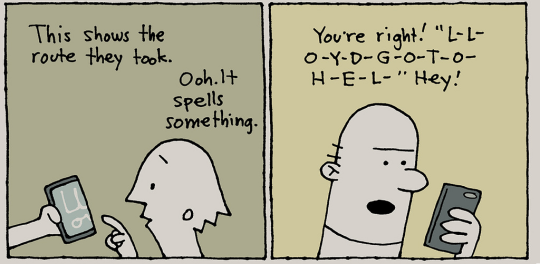
I’ll let the Belgians have the final word …ehhm… meow in this matter.
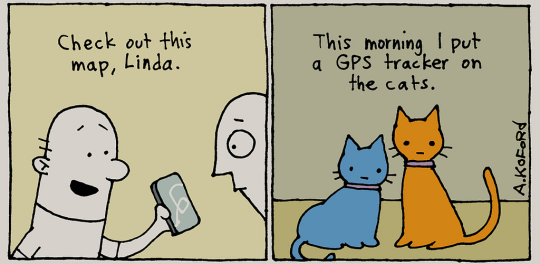
#BrusselsLockdown

Source: https://uk.news.yahoo.com/belgians-flood-twitter-cat-pics-101133243.html?.tsrc=warhol#UcaVkkN

Now trending: the transgender model

By Lianne
Toussaint

The May 2015 issue of US Vogue
(Vol. 222) featured the first transgender model in the history (132 years!) of
its existence: Andreja Pejic. That same month, IMG Models – one of the biggest
modelling agencies worldwide – announced transgender actress, writer and model Hari Nef as the
newest addition to its roll. Two months later, H&M sister brand ‘&
Other Stories’ followed the example of brands like Barneys and Make Up For Ever by launching an advertising campaign featuring transgender models Valentijn De Hingh and Hari Nef. And last week, it
was all over the news when Dutch model Loiza Lamers was crowned the first-ever transgender winner of the ‘Next Top Model’ television franchise. Has the fashion industry
suddenly become all trans-friendly?

image

Although the vocabulary used to describe this trend may fool you into believing
otherwise, the presence of transgender models in fashion imagery is not exactly as new as it seems. In the 1960s, after going through the horrors of
bullying, assault, failed suicide attempts, and (electric, drug, hormone)
treatment in a mental institution, April Ashley worked as a professional model in Britain until the
news about her gender confirmation surgery soon made an end to her professional career. In 1991,
the British model Caroline “Tula” Cossey became famous as the first trans women to pose for Playboy.

It may not be
an entirely new phenomenon, but in many ways the recent rise and success of the
transgender model does seem groundbreaking. The increasing visibility of trans
models such as Valentijn De Hingh, Lea T, and Andreja Pejic on the runway, and
in print and media seems to contribute to – or at least coincide with – a broader, cultural and political mainstreaming of
transgender identity
. As there are
but few role models and spokespersons for the transgender community, their
visibility is literally of vital importance in raising awareness and advancing tolerance.

Unfortunately,
the current ‘trans model trend’ also has its downside. Many of the captions,
press releases, interviews, and statements appearing alongside all the
seemingly trans-friendly fashion imagery testify to a less trans-tolerant
climate, to say the least. LGBT (!) news site The Advocate, for example, blatantly notes that the ‘& Other
Stories’ campaign shows “that trans people are beautiful, too”, while Elle headed
that Pejic modelled for a beauty brand “And looks gorgeous doing it”.

As much as I
would love to believe that the recent success of the transgender model is the
definite harbinger of a more gender-diverse fashion industry, I can’t help but
notice the accompanying, stigmatizing discourse of the transgender model as an
‘object of curiosity’. Like Pejic, I nonetheless hope that the trans model trend will
turn out to be much more than just another case of cynical casting, clever
marketing, or fashion tokenism.  

– Lianne
Toussaint is a PhD candidate at the Department of Cultural Studies of the
Radboud University in Nijmegen. Her research is part of collaborative
NWO-funded project ‘Crafting Wearables’.

– IMAGE: Andreja
Pejic for Dossier, Issue 7, Spring
2011. Photography by Collier Schorr, Styling by James Valeri, Hair by Holly Smith,
Makeup by Ozzy Salvatierra, Shirts and Pants by Haider Ackermann: https://www.flickr.com/photos/nielleborges/6196657940/in/photostream/