Tourists go/come home

Door Tom Sintobin

In de zomer van 1959 komt de Britse journalist Alan Brien in een bijdrage aan Spectator met een interessant concept op de proppen: ‘tourist angst’. Dat definieert hij als ‘a gnawing suspicion that after all […] you are still a tourist like every other tourist’ (geciteerd in Paul Fussell’s boek Abroad. British Literary Traveling between the wars uit 1980). De drang om niet precies hetzelfde te doen als de anderen speelt een belangrijke rol binnen het toeristische bedrijf. Men gaat immers niet zomaar voor de lol op reis, nee – men bouwt zich al reizende een unieke identiteit als reiziger. Men laat zien dat men eruit springt, dat men zijn wereld kent, dat men Iemand is.

De drang zich te onderscheiden valt dan ook overal te observeren op eender welke toeristische site. Een goed voorbeeld is het ritueel van fotograferen. Sommige mensen wringen zich in duizend bochten om een unieke foto te kunnen posten. Ze gaan ervoor uit de kleren op  werelderfgoedsites – soms met arrestaties tot gevolg. Of ze wagen zich op de uiterste rand van een of ander ravijn of ruïne, om er dan vervolgens niet zelden in te vallen (Mehmet Dokur, M.D., Emine Petekkaya, Mehmet Karadağ, ‘Media-based clinical research on selfie-related injuries and deaths’). Anderen gaan op citytrip naar Charleroi – na een peiling door de Volkskrant in 2008 tot de lelijkste stad van Europa bestempeld. Er zijn er die naar plaatsen van rampspoed gaan – het zogenaamde ‘dark tourism’ of ‘thanatourism’ – waar velen niet durven te komen. De Mexicaanse grens,
bijvoorbeeld, of Chernobyl. Onlangs ging er een golf van verontwaardiging over het internet omtrent die laatste plek omdat een of andere influencer het blijkbaar klaargespeeld had om er uit haar beschermende pak te springen en in haar ondergoed te poseren.

image


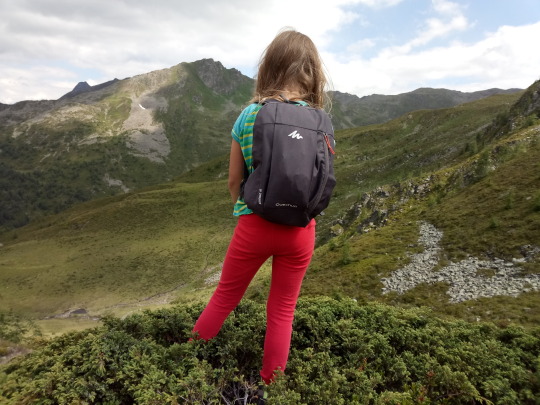
Boldly go where no man has gone before – Captain James T. Kirk wist het al. Ook wie er niet per se behoefte aan heeft om naakt tussen het radioactieve afval te dartelen, gedraagt zich vaak naar Kirks devies. Wie het woord ‘traveler’ ingeeft in Google Images ziet al snel een zeer herkenbaar sjabloon opdoemen: een persoon die helemaal alleen voor een of ander overweldigend natuurfenomeen staat – een vallei, een oceaan, de savanne. Die persoon kan mannelijk of vrouwelijk, volwassen of nog jeugdig zijn, maar dat is dan ook het enige echte verschil met de legger van dit sjabloon: Der Wanderer über dem Nebelmeer van de Duitse kunstschilder Caspar David Friedrich uit het begin van de negentiende eeuw. Eenzaam sublieme ervaringen beleven: hedendaagse reizigers zijn diep doordrongen van dit
eeuwenoude romantische ideaal. De paradox dat je een fotograaf nodig hebt die jou daar in je eenzaamheid fotografeert, en sociale netwerken om die metaforen voor je identiteit vervolgens of, als er wifi is zelfs simultaan de wereld in te sturen, is net zo hoog als de berg waarop je staat.

Maar waar je ook gaat, je vindt er je diepste ‘tourist angst’ bevestigd want je treft er anderen. Al ploeter je helemaal naar het dak van de wereld, naar de top van de Mount Everest bijvoorbeeld, je zult er allerminst alleen zijn
want de toeristische industrie heeft tentakels die zich niet snel laten
tegenhouden. Zelfs in Charleroi is er een tour operator actief die je meeneemt op safari door de stadsjungle.

Een courante, heel specifieke fantasie over het paradijs behelst een verlaten strand met palmbomen. Een romantische partner erbij is een must, maar voorts zijn er geen pottenkijkers gewenst: ‘two makes a company, three makes a crowd.’ Op een goedlachse local na dan, want die mag de
cocktails serveren, en ’s avonds de vis van de dag grillen in een pittoresk
restaurantje in het pittoreske dorpje aan de pittoreske zee. De nachtmerrie is een strook zand vol zwetende lichamen, een zee die grijs ziet van de
afgespoelde zonnebrandolie, tegen de achtergrond van een rij wolkenkrabbers. Dat schrikbeeld zijn we in Europa bij uitstek met de Spaanse costa’s gaan associëren. Vanaf de jaren 50 werden die, toen nog onder Franco, uitgebouwd als toeristische bestemmingen. Ze werden makkelijk bereikbaar gemaakt door de aanleg van wegen en luchthavens, hotels en andere voorzieningen schoten als paddenstoelen uit de grond, wetgevingen werden aangepast om de streek aantrekkelijker te maken voor toeristen. In 1959 wist de burgemeester van Benidorm Franco er bijvoorbeeld van te overtuigen dat bikini’s – te lande verboden – wél legaal moesten worden gemaakt op de stranden om toeristen aan te trekken (Giles Tremlett, Ghosts of Spain: Travels Through a Country’s Hidden Past 2008). Het uiteindelijke resultaat, althans in het collectieve bewustzijn, is een oerlelijke en volslagen inauthentieke ‘non-place’: misbruikt, zielloos, een te betreuren slachtoffer van het internationale massatoerisme.

In zijn boek The Moralisation of Tourism: Sun, Sand… and Saving the World uit 2003 biedt Jim Butcher weerwerk tegen die demonisering van grootschalig toerisme. Hij betoogt bijvoorbeeld dat de Spaanse stranden dankzij dat toerisme brandschoon zijn en dat ook de lokale bevolking kan genieten van tal van nieuwe faciliteiten en de met het toerisme samenhangende werkgelegenheid. Bovendien wijst hij erop dat heel veel
vakantiegangers aldaar Spanjaarden zijn, ‘domestic tourists’ dus, wat de
evaluatie van deze evolutie volgens hem een stuk complexer maakt dan de klassieke bewering dat internationaal toerisme de boosdoener is. Een aanverwante redenering ontwikkelt hij over niet-Westerse, doorgaans ‘Third World’ bestemmingen. Die worden door wat hij ‘New Moral Tourists’ noemt vaak neergezet als kwetsbare systemen die te allen prijze beschermd moeten worden zodat ze hun authenticiteit kunnen bewaren. Op zich lijkt dat een verstandig en goed bedoeld idee, maar Butcher wijst erop dat ‘de Ander’ zo de toegang ontzegd wordt tot moderniteit en opgesloten in een oeroud Westers ideaalbeeld van de ‘noble savage’. Dat zo’n reductie de immense en acute problemen van sommige van die regio’s – schrijnende armoede, hoge kindersterfte,… – niet oplost en dat zij zelf een enorm zware ecologische voetafdruk neerzetten om die exotische ander op zijn rol te gaan wijzen, schijnt New Moral Tourists niet op te vallen. ‘[T]he problem is not too much development,’ aldus de auteur, ‘but too little, and perhaps not too many tourists, but too few.’ Zijn argument kadert deels in het zogenaamde ‘pro-poor tourism’, een optimistische stroming binnen toerismestudies die ervan overtuigd is dat een goed doordacht toerisme de wereld beter kan maken omdat het de grootste vrijwillige transactie van middelen van rijk naar arm ooit is. Het laat zich daar echter niet toe reduceren, want reizen, aldus Butcher, moet in de eerste plaats iets leuks
zijn, niet iets waarvoor je je hoort te schamen.

Butchers boek is van 2003. Is er sedertdien iets veranderd? Er zijn sowieso nog veel meer toeristen nu, dat maken de ‘Tourism Barometers’ die UNWTO World Tourism Organisation online plaatst wel duidelijk. En de gevolgen daarvan zijn her en der wel heel erg duidelijk geworden. Een paar jaar geleden doken in nogal wat trekpleisters heftige boodschappen op in het
straatbeeld. ‘Tourist Go Home!’, ‘Turisme és misèria’, Tourism kills the city’, ‘You are destroying Barcelona. Tourist go home!’ De lokale bewoners kunnen de eindeloze stroom aan bezoekers niet meer aan, zoals ook duidelijk blijkt uit documentaires over Venetië en ‘Bye Bye’ Barcelona.
Veelgehoorde klachten zijn dat massatoerisme de steden onleefbaar maakt en catastrofaal is voor de beleving van het erfgoed. Een van Butchers redeneringen is dat de zogenaamde ‘carrying capacity’ van een bestemming – het aantal bezoekers dat een plek aankan – niet vast ligt maar kan worden uitgebreid. Het is nog maar de vraag of dat altijd nog kan. Barcelona, zo vertelt iemand in de documentaire, is als ruimte  doodeenvoudig niet berekend op zulke mensenmassa’s. Maar wat moeten we dan? Je kunt de Sagrada Família of het San Marcoplein niet groter maken dan ze zijn. Moet toerisme exclusiever worden – door de prijzen van toegangskaartjes omhoog te halen, door een maximaal aantal bezoekers in te stellen? Een andere oplossing waar toerismeplanners tegenwoordig hun hoop op hebben gesteld, is de verspreiding van toeristen over grotere gebieden. Ze zetten wegwijzers naar naburige steden, waar het ‘minder druk maar ook zeer mooi’ is. Volgens sommigen werkt dit niet. ‘De massa volgt de massa en dat ga je niet veranderen,’ vertelde ‘toerismedeskundige’ en directeur van LA Group/Amsterdam in Progress Stephen Hodes op 4 april 2018 in Algemeen Dagblad, want ‘Amsterdam is een uniek toeristisch product, dáár willen de meeste mensen heen. Niet naar Den Haag of Rotterdam, hoeveel moois die steden ook te bieden hebben.’ Misschien heeft hij gelijk. Maar toch wil ik de denkpiste over een betere verspreiding niet zomaar aan de kant schuiven. Is het met het bezienswaardige niet net zoals met voedsel: er is er genoeg van voor twee tot drie keer het aantal mensen op de planeet, maar het is slecht verdeeld?

Het komt er volgens mij dan ook op aan om beter duidelijk te maken waarom andere plekken eveneens een bezoek waard zijn. Zoals de geschiedenis ons keer op keer laat zien, kunnen mensen gemobiliseerd worden door verhalen: verhalen over het beloofde land, waar dat ook mag liggen, leiden tot ruimtelijke verplaatsingen. Dat is in de wereld van het toerisme niet anders. De verfilming van Lord of the Rings maakte mensen nieuwsgierig naar ‘Middle Earth’ en dat gevoel voerde hen uiteindelijk naar Nieuw Zeeland. Maar liefst 13 procent van alle internationale bezoekers, zo wees onderzoek uit dat tussen 2013 en 2014 werd verricht, gaf aan dat The Hobbit een rol had gespeeld bij de keuze voor hun bestemming. Wat we mijns inziens dan ook nodig hebben om toeristen beter te verdelen, zijn verhalen die mensen in beweging kunnen zetten. ‘Verleiden met verhalen,’ zo noemt het NBTC Holland Marketing het op haar website: ‘Met aantrekkelijke verhalen verleiden we internationale bezoekers tot het bezoeken van nieuwe plekken. Hierbij koppelen we Nederlandse plaatsen aan elkaar via een gemeenschappelijk thema.’ Daarbij volstaat uiteraard niet zomaar het standaard verkooppraatje op basis van het handjevol conventionele overkoepelende stereotypen (‘het paradijselijke strand’, ‘het hoge Noorden’, ‘de nobele wilde’), maar is er nood aan intelligente, geïnformeerde, doordachte, respectvolle, sprankelende en op menselijke maat gemaakte narratieven. Dat is dan ook wat de masteropleiding Tourism and Culture van deze universiteit ambieert: studenten bekwamen in
het vertellen van nieuwe verhalen over nieuwe bestemmingen.

De strijd om de torenspits – hoe nu verder met de Notre-Dame?

Door Maaike Koffeman

image

Foto: Indra van Leersum

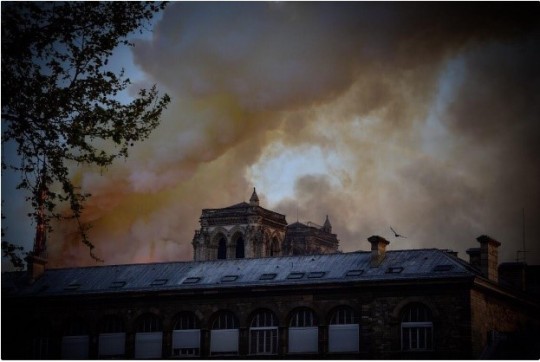
Een maand geleden liep ik met een groep studenten over het Ile de la Cité in Parijs. Bij de Notre-Dame stuitten we op een onafzienbare wachtrij. Van de 13 miljoen jaarlijkse bezoekers had blijkbaar een groot deel juist deze maandagmiddag in april uitgekozen om de kathedraal te bezoeken. We besloten aan het begin van de avond terug te komen voor een tweede
poging. Het kwam er niet meer van – anderhalf uur later zagen we hoe de vlammen uit de kathedraal sloegen.

Niet alleen wij keken die avond toe hoe het dak en de beroemde torenspits van de Notre Dame werden vernietigd – via televisie en sociale media was de hele wereld er getuige van. De volgende dag zagen we hoe de bruggen rond het Ile de la Cité in beslag waren genomen door reporters uit alle landen, die op dramatische toon verslag deden van de ramp. Uit de mondiale impact van de gebeurtenis bleek dat de Notre-Dame een krachtig en veelzijdig icoon is, als katholiek pelgrimsoord, monument van gotische architectuur, toeristische topattractie en decor van een populaire Disneyfilm.

Op een kort moment van eendrachtige ontzetting en rouw volgden echter al snel felle debatten over hoe het nu verder moet met Notre-Dame. Het eerste dat daarbij opviel, was dat deze gebeurtenis vrijwel onmiddellijk een politieke dimensie kreeg. Dat is niet verrassend voor een land waarin politiek en cultuur altijd innig verstrengeld zijn geweest. In dit geval was de timing bijzonder saillant omdat president Macron op de avond van de brand een toespraak had zullen houden in reactie op de gelehesjesprotesten van de afgelopen maanden. Complotdenkers suggereerden dat de brand hem verdacht goed uitkwam. Macron, op zijn beurt, greep het gebeuren aan om sentimenten van nationale eenheid en trots aan te wakkeren: de heldhaftige brandweerlieden die het vuur tot stilstand brachten, stonden in zijn discours symbool voor de veerkracht van het land. Met zijn kenmerkende bravoure beloofde de president om de kathedraal binnen vijf jaar te herbouwen. Op die manier hoopt hij  waarschijnlijk – net als zijn illustere voorgangers – zijn naam te verbinden aan een iconisch monument en de geschiedenis in te gaan als de president die de Notre-Dame uit de as deed herrijzen.

De cruciale vraag is natuurlijk: wie gaat dat betalen? De Franse staat, die eigenaar is van de Notre-Dame, kon de 150 miljoen euro die voorafgaand aan de brand nodig was voor urgente reparaties aan de kathedraal al niet opbrengen en probeerde via een internationale campagne rijke Amerikanen te verleiden tot een donatie. Dat model, waarbij particulier mecenaat het primaat krijgt over publieke financiering, is tamelijk ongebruikelijk in Frankrijk. Des te opmerkelijker was het dat meteen na de brand een aantal schatrijke Fransen beloofden mee te betalen aan de restauratie. François-Henri Pinault, eigenaar van een concern dat luxemerken als Gucci en Yves Saint-Laurent omvat, zegde 100 miljoen euro toe en werd onmiddellijk overtroefd door Bernard Arnault (Louis Vuitton Moët Hennessy) die maar liefst 200 miljoen doneerde. Je kunt je afvragen wat deze weldoeners beweegt: oprechte liefde voor middeleeuwse architectuur of opschepperige
rivaliteit tussen twee puissant rijke industriëlen? Wat hebben zij hierbij te
winnen? We weten uit onderzoek naar de motieven van weldoeners in de kunst (onder meer van Helleke van den Braber) dat mecenaat nooit geheel onbaatzuchtig is. Mecenassen genieten ervan om mee te spelen in de kunstwereld en hopen beloond te worden in termen van naamsbekendheid en een positief imago.

François Pinault sr. en Bernard Arnault zijn hiervan een uitstekend voorbeeld: beiden combineren hun zakelijke activiteiten met het verzamelen van kunst, die te zien is in private musea op toplocaties. Zo verrees in het Bois de Boulogne de spectaculaire Fondation Vuitton van starchitect Frank Gehry en is de Fondation Pinault actief in Venetië en binnenkort ook in Parijs, waar de Bourse de Commerce wordt omgebouwd tot museum. Deze voorbeelden laten zien dat ook in Frankrijk het culturele veld steeds meer wordt gedomineerd door het grootkapitaal. Dat valt bij veel Fransen in slechte aarde, zoals ook de miljoenentoezeggingen voor de restauratie van Notre-Dame fel bekritiseerd werden door mensen die zich afvroegen of met dat geld geen urgentere maatschappelijke problemen zouden kunnen worden opgelost.

Hoe het ook zij, de schade aan de Notre-Dame lijkt mee te vallen: de stenen constructie en het interieur lijken nog intact. Voor de restauratie van het dak en de torenspits zullen snel plannen moeten worden gemaakt, als Macron zijn deadline wil halen. Daarbij rijzen een aantal lastige vragen: wat betekent restaureren in dit geval? Moet het een kopie worden van de
Notre-Dame zoals we die kenden voor de brand, of van de kathedraal zoals hij was na zijn voltooiing in de 14e eeuw? Zoals de meeste middeleeuwse
monumenten heeft de Notre-Dame in de loop van de eeuwen nogal wat
transformaties ondergaan. Aan het begin van de 19e eeuw lang hij er
uitgewoond en verwaarloosd bij. Als Victor Hugo met zijn roman Notre-Dame de Paris niet de ogen geopend had voor de verborgen schoonheid en historische waarde van de kathedraal, was hij waarschijnlijk gesloopt.

image

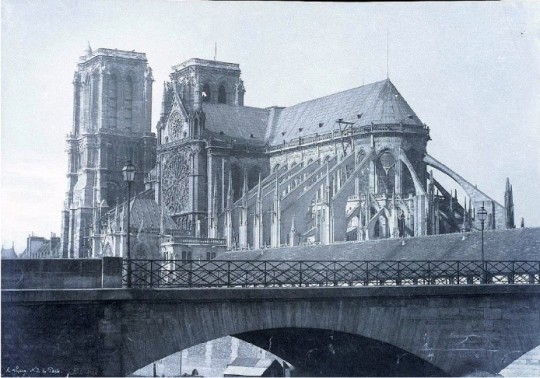
De Notre Dame in 1851, zonder torenspits

In plaats daarvan kwam een ingrijpend restauratieprogramma op gang, waarbij architect Viollet-le-Duc zich nogal wat artistieke vrijheden veroorloofde. De torenspits zoals wij die kennen is aan zijn fantasie ontsproten en kan daarom niet als authentiek worden beschouwd. Een ander discussiepunt betreft de keuze van materialen: moeten de
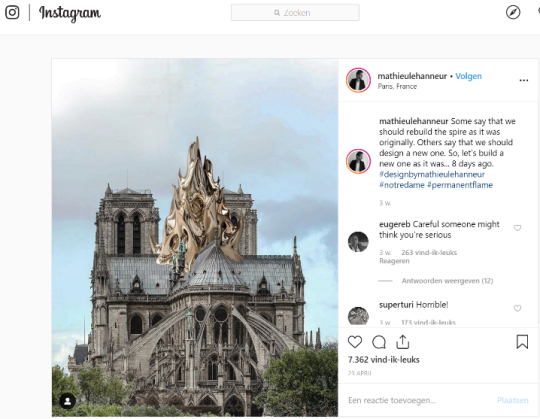
restaurateurs zich beperken tot de materialen en technieken die in de middeleeuwen voorhanden waren, of mogen de nieuwe dakspanten ook wel van beton of metaal zijn (veel praktischer èn brandveiliger)? Met andere woorden: het is nog niet eenvoudig om te bepalen wat het betekent om de Notre-Dame in haar oude glorie te herstellen. Er gaan daarom stemmen op om juist het tegenovergestelde te doen en de kerk te verrijken met een radicaal 21e-eeuwse toevoeging. Nadat de Franse regering aankondigde dat er een concours zou worden uitgeschreven voor een nieuw ontwerp van dak en torenspits, gingen internetters hier onmiddellijk mee aan de haal. Onder de hashtag #UneFlechePourNotreDame presenteerden ze voorstellen die refereren aan omstreden kwesties als de miljoenendonatie van LMVH (een champagnefles van Moët & Chandon), de prestigeprojecten van president Mitterrand (de Pyramide van het Louvre) of de invloed van de Amerikaanse populaire cultuur (een Disneykasteel). Een van de plannen toont vergulde vlammen die uit het dak slaan, oorspronkelijk bedoeld als een satirisch
commentaar op de restauratiediscussie, maar naar het schijnt inmiddels
uitgegroeid tot een serieus plan. Het wordt althans genoemd tussen voorstellen van serieuze architectenkantoren en designbureaus. Deze zijn weliswaar een stuk minder uitzinnig dan de satirische denkoefeningen op Instagram, maar ze kiezen zonder uitzondering voor radicaal 21e-eeuwse vormen en materialen.

image

Idee van Mathieu Lehanneur

Het is te verwachten dat de reacties op zo’n moderne toevoeging aan een middeleeuws bouwwerk heftig zullen zijn. De Fransen discussiëren graag fel over hun geliefde cultuurgoed en zijn gemiddeld genomen nogal  behoudzuchtig. Aan de andere kant is het misschien wel juist in de geest van Notre-Dame om het verloop van de geschiedenis te tonen in de nieuwe onderdelen, in plaats van een illusionaire authenticiteit na te streven. Het laatste woord is hier nog niet over gezegd.

De witte tempel van Baudet

Door Maarten De Pourcq

image

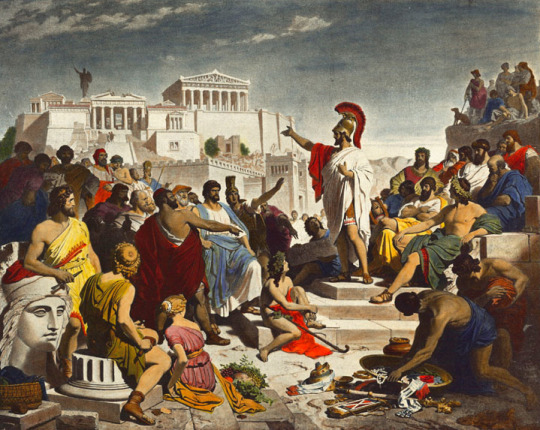
Witte tempels zijn bijzonder. In het logo van de nieuwe partij Forum voor Democratie staat er zo een. De afbeelding is slim gekozen: in de combinatie met het woord ‘democratie’ verwijst de tempel ons door naar het klassieke Athene van Pericles en uiteraard naar het Parthenon, waarnaar Pericles op het schilderij hierboven verwijst. Door deze referentie aan Athene als de welbekende ‘bakermat van de democratie’ – maar ook aan alle opvolgers en navolgers ervan: veel parlementsgebouwen hebben die  neoclassicistische stijl immers overgenomen, het is duidelijk een claim
to power
– lijkt het logo een eerzaam doel te hebben: het roept ons op om
ons te herbronnen over wat democratie voor ons betekent en dus over wat representatie voor ons betekent. Laten we dat dan ook echt eens doen.

Het logo geeft ons een aantal aanwijzingen, bewust en onbewust, gewild en ongewild, want dat is hoe beelden werken: ze brengen associaties teweeg en in onze huidige mediacratie zijn die associaties vaak toonaangevender dan de politieke inhoud. Laten we het logo dus even onder de loep houden. Wat zien we?

image

Allereerst zijn daar de kloeke en stoere zuilen, zonder franjes en krullen. Het zijn de zogenaamd Dorische zuilen, die – anders dan de Korinthische en de Ionische zuilen – streng en sober ogen, volgens sommigen (bv. Wikipedia!) zelfs wat soldatesk. Diezelfde Dorische zuilen schragen het originele Parthenon in Athene. Waarom is het Parthenon nu zo een belangrijke tempel voor de democratie? De tempel werd gebouwd op de plaats waar het Perzische leger ferm had huisgehouden tijdens de laatste Perzische Oorlog, een oorlog die uiteindelijk door de Atheners werd gewonnen. De tempel functioneert dus als een zegeteken tegen de barbaren én als uitdrukking van de macht van het democratische Athene, een macht die weliswaar op zijn beurt met onderdrukking, uitsluiting en uitbuiting gepaard ging. Het geld dat daarmee werd gewonnen, maakte deze tempel mogelijk. De briljante kunstenaar en architect Phidias werd
aan het werk gezet en creëerde een mijlpaal voor de westerse architectuur.

In het logo zien we een witte tempel op een rood veld. De combinatie rood-wit is een heel archetypische kleurencombinatie voor de oudheid, bijvoorbeeld in de weergave van soldaten of in beruchte films zoals 300. Maar waarover ik het vooral wil hebben, is die witte tempel. Velen onder ons weten dat het originele Parthenon geen marmeren baken van wit licht was, maar een kleurrijk gebouw. De Grieken hadden geen hoge dunk van de kleur ‘wit’. In hun kleurensysteem stond wit zelfs vaak gelijk aan ziekte en dood, desintegratie dus – het stond niet voor harmonie of orde. Meer nog, harmonie drukte zich net uit in het perfecte samenspel van kleuren, de zogenaamde ‘poikilia harmonia’. Een historisch correct logo van het Forum voor Democratie zou dus net heel kleurrijk moeten zijn.

Het is op dit punt dat deze tempel ons een goed aanknopingspunt geeft om stil te staan bij onze eigen verbeelding van de oudheid. Want die witte tempel is natuurlijk wel een standaard onderdeel van onze verbeelding van de klassieke stad. We moeten hier een onderscheid maken tussen de Griekse oudheid als een historische periode en de Griekse oudheid als
een esthetisch repertoire, als een voorraad van beelden die we gedurende vele eeuwen hebben gehamsterd en die niet noodzakelijk historisch correct zijn – en misschien ook niet hoeven te zijn. In onze populaire cultuur blijft dat beeld van de witte tempel immers gehandhaafd: bijvoorbeeld in strips zoals De kadulle Cupido van Suske en Wiske waarin je op de cover een witte tempel in het antieke Griekenland ziet. Onze musea doen er zelfs aan mee, zoals in de toptentoonstelling ‘Poèmes de marbre’ – een tentoonstelling over de oudste Griekse kunst met op de affiche een beeldje dat oorspronkelijk vermiljoen was gekleurd. En toch wordt het ons aangeprezen
als witmarmeren poëzie. De toerisme-industrie in Griekenland wil niet liever dan dat wij wegdromen bij het beeld van een azuurblauwe hemel en een witte tempel, alsof het wit een metonymisch verband heeft met het strand waarop je je benen mag uitstrekken en je tenen in het zand begraven. Meer nog, de architectuur van de begindagen van de moderne Griekse natie stond juist niet in het teken van de antieke poikilia harmonia maar van de eenheid en het universalisme dat de witmarmeren architectuur moest uitstralen – een witte architectuur die vooral moest
refereren aan de Europese Renaissance en dus aan de aansluiting van het moderne Griekenland op het oude Europa (en niet het Ottomaanse Rijk uit wiens ketenen het volk net was gered). In de begindagen van het moderne Griekenland werden de stenen van het Parthenon zelfs extra gewit zodat niet de kleurenrijkdom maar wel de droom van een wit Griekenland centraal kwam te staan. Nationale identiteit en een verlangen naar eenheid komen in dit beeld van het witte Parthenon samen – ook bij het Forum voor Democratie.

De klassieke oudheid levert dus niet alleen een esthetisch repertoire
– zowel voor elitaire als voor populaire cultuur – maar ook een moreel en een politiek repertoire. Er is geen noodzakelijk maar wel een nauw verband tussen moraliteit en esthetiek, en het is precies dit verband – dit hele moeilijke en vaak stiekeme verband – dat in een beeldcultuur als de onze zo belangrijk is geworden. Want geef toe: het stralend witte marmer oefent een grote aantrekkingskracht uit, ook op ons – denk maar aan het moderne minimalistisch wit van onze eigen interieurs. Ik kan me goed voorstellen dat weinige musea staan te springen om alle Griekse beeldcollecties een kleurtje te geven.

Maar we zitten wel met een probleem. Het wit wordt geclaimd door alt-right met zijn slogan ‘white power’ en tegelijk wordt het stevig ter discussie gesteld door aanklachten zoals ‘white innocence’. We staan als liefhebbers van het klassieke verleden tussen twee vuren: aan de ene kant is er
het witte marmer als een gedeelde herinnering; aan de andere kant is er het verlangen naar een meer representatieve esthetiek, een esthetiek die inclusief is en kleur toelaat.

Dit dilemma stond vorig jaar centraal in een artistieke en museale interventie die heel wat stof deed opwaaien. Het schilderij ‘Hylas en de nimfen’ van J.W. Waterhouse werd tijdelijk weggehaald uit de Manchester Art Gallery met de vraag aan het publiek of men zich nog steeds kon verzoenen met het feit dat vooral dit soort schilderijen worden getoond in musea. Bezoekers konden hun visie en suggesties achterlaten via post-its op de muur. Deel van de vraag was of een museum vooral schilderijen
moet tonen waarop de mannelijke heteroseksuele blik te zien is gericht op
vrouwelijk porselein. Het werd heel snel een twitter- en mediarel. ‘Blote
borsten verboden’; ‘De nieuwe preutsheid rukt op’; ‘Zelfcensuur in onze musea’ – de term ‘oikofobie’ viel nog net niet.

Wat nauwelijks aandacht kreeg, was dat de kunstenares Sonia Boyce, van wie de interventie uitging, overigens de eerste zwarte Britse kunstenares die werd toegelaten tot de Royal Academy (in 2016, by the way), een uitgebreide performance in datzelfde museum had opgezet waarin de esthetiek van de getoonde schilderijen werd gecounterd door een
nieuwe esthetiek: een waarin bijvoorbeeld de homoseksualiteit van het
mannelijke personage Hylas meer in de verf kwam te staan. Met andere woorden, het verleden werd niet op de brandstapel gegooid, zoals vaak door retropolitici als Baudet wordt beweerd, maar het wordt opnieuw geïnterpreteerd: we knutselen ermee verder, we geven het glitters, we maken iets nieuws.

Marjoleine de Vos schreef ooit dat het contact met het nieuwe ons ook nieuw maakt. Daarom is het zo een bijzondere ervaring. Het is potentieel
ook een verwarrende ervaring. De dialoog met het oude én het nieuwe aangaan vraagt durf, nuancering en creativiteit. Dat is wat Sonia Boyce deed in Manchester: ze gooide het oude niet weg, ze stelde vragen en deed voorstellen, ze liet het oude tijdelijk overnemen door het nieuwe, in dit geval helemaal in de stijl van de poikilia harmonia. De mediacratie nam selectief de verontwaardiging over en liet de ideeën achterwege. Daarom wordt het steeds belangrijker om aandacht te vragen voor wat niet wordt
verteld of wordt overschreeuwd – daarom is het net ook aan onze makers en instituties – de musea én de stripwereld – om van die klassieke witte tempels en beeldjes op een originele manier een nieuw kleurboek maken. Phidias, de maker van het originele Parthenon, legt zich dan misschien weer goed in zijn graf.

Deze bijdrage was onderdeel van de debatavond Elitair populisme: van Pericles tot Baudet in Spui 25 in Amsterdam op 4 april 2019.

Life Writing in the Picture: Using Infographics in Biography

by Dennis Kersten

There is more to biography than books, you know – but not much more. Indeed, book-length prose narrative seems the medium of choice in life writing. Not surprisingly perhaps, since it has proven to be a strikingly versatile form. However, for the telling of life stories, it continues to pose serious problems as well. Conventionally linear and chronological, biographical narratives may be seen to artificially create order in fundamentally chaotic lives and so suggest meaning where there
may not be any.

In an effort to overcome the limitations of narrative, the protagonist of Julian Barnes’ famous metabiographical novel Flaubert’s Parrot (1984) decides to present the “facts” of the life of the author of Madame Bovary in,
respectively, a chronology, a bestiary, a “train-spotter’s guide”, a dictionary
and an examination paper. He never learns who the “real” Gustave Flaubert is, but his go at biography does teach him how one life may be told in a seemingly inexhaustible variety of ways, all true to historical fact. If only Flaubert’s biographers could have used digital designer tools and capture the man’s life and work in a series of infographics! Surely, if Flaubert’s Parrot had been written today, it would have included a chapter with visualized biographical data.

Ammonite Press have published a series of short life writing books, titled Biographic, each part of which represents the lives of cultural icons through tables, graphs, pie charts and other impressively designed visuals. So far, the series has spawned instalments about Coco Chanel, Albert Einstein, Jimi Hendrix, Vincent van Gogh and William Shakespeare, amongst 15 others. There is even one about a completely fictional figure: Sherlock Holmes.

The aim is to convey these subjects’ “essence” and “defining facts” by visualizing their “thoughts, habits and achievements” and, thus, create “vivid snapshots” of them. Which is not to say that there is no narrative at all in the Biographic books: the opening pages of many parts in the series, in which the above mentioned objectives are described, are quite “texty”. And in the chapters to come, readers are guided through the infographics by sometimes quite elaborate explanatory notes. In fact, some of the visuals are text illustrations rather than infographics. Still, the combination of word and image in Biographic calls for a reading of its writing of lives from the perspective of intermediality.

Infographics may be used to great effect, especially when they document data in both an efficient and aesthetically pleasing manner – a point emphasized by books like David McCandless’ Information is Beautiful (2009). In some cases, there is no more impactful way to present facts than to visualize them in one single image. A great example would be Pop Chart Lab’s poster of who played what on which song by The Beatles (2018). With each instrument represented by a unique colour, it is immediately obvious that Beatle songs became increasingly complex instrumentation-wise as
the Sixties progressed, and that that process went hand-in-hand with Paul McCartney’s growing dominance as a player. His “Yesterday” suddenly appears a true turning point in this context.

In Biographic Bowie, infographics are used to a similar end. For instance, the track listing of David Bowie’s Hunky Dory (1971) is presented with
colours for the themes dealt with in the songs it contains. Thanks to that, you instantly realize that the songs about “American heroes” such as Warhol and Dylan are grouped together on side B, like a mini-concept album-within-an-album. The faces of Bowie’s many characters (from Major Tom to the Thin White Duke), but also his changing fashion styles: these are, indeed, best visualized. Shown in one spread, the evolution of both is dramatically highlighted.

Okay, so the use of two consecutive pages to illustrate a quote from one of Winston Churchill’s war memoirs with the door of 10 Downing Street may not be the most efficient or aesthetically pleasing way to get information across in the biography of the British former-PM. Does the repetition of cigars, bowler hats and Spitfires across 50 “defining” Churchillian facts not risk his reduction to caricature? The Aladdin Sane lightning bolt almost
becomes a brand in Biographic Bowie. More generally, why is the series focused on the usual suspects amongst “great lives”? Why is it especially interested in artists? And where are the female icons? Only three of its twenty parts are devoted to women: Jane Austen, Chanel and Frida Kahlo.

Life writing is beautiful, but not only because biographical information is. It also shows how biographers try to make sense of the “facts” they bring together by giving shape to stories about lives that are, essentially, shapeless. In that sense, the Biographic books, which must have been challenging to write and design, are fascinating study material for life writing watchers. With their playful and “fun” appearance, they will undoubtedly attract new readers to life stories that have been documented extensively already – an achievement in itself.

They also raise new questions. Can such happily colourful books also represent the darker pages in an historical figure’s life? And would their infographic approach work for the writing of lives that may be iconic, but the opposite of “great” in all other respects? Dictators leave trails of data, too, of course. What about marginalized and largely unknown subjects? Can the “essence” of their legacy be captured in maximally 50 icons? Perhaps future experiments in life writing along the lines of Biographic will answer these questions. Oscar Wilde once almost said, “Everybody is clever with infographics nowadays,” which may be true for a time in which everybody with a personal computer can be a graphic designer. The Biographic
books stand out, though. A fan of their intermedial life writing, c’est moi.

Muze, mecenas, minnares: de ‘moeder de vrouw’ naast de kunstenaar

Door Helleke van den Braber

Over een paar dagen begint de Boekenweek. Dit jaar is gekozen voor het thema ‘de moeder de vrouw’, en het is niet moeilijk te bedenken waarom daar veel over te doen is. ‘De moeder de vrouw’ zou oubollig zijn, en  regressief, en vrouwen reduceren tot hun aloude rol van verzorgende
en onzichtbare
echtgenote en moeder. Alsof schrijvers tegenwoordig
niet iets moderners te zeggen hebben over het (zelf)beeld van vrouwen; alsof ze hun vrouwelijke personages tegenwoordig geen boeiender rol zouden kunnen geven dan die van ‘de echtgenote van’ of ‘de vrouw achter’. Het roept een beeld van passieve dienstbaarheid op die z’n tijd allang gehad heeft. Nu we midden in de vierde feministische golf zitten hebben
we het liever niet meer over de vrouw als zichzelf wegcijferende gever en passieve ondersteuner van mannen, maar liever over haar zelfstandige rol en waarde.

De discussies in de media gingen tot nu toe vooral over het (wenselijke of onwenselijke, moderne of oubollige) vrouwbeeld in door mannen geschreven literaire teksten. Zelf zou ik de kwestie graag wat breder trekken
en de vraag willen stellen hoe het eigenlijk zit met de rol van vrouwen bij het totstandkomen van door mannen gemaakte kunst. Stonden er inderdaad moeders-de-vrouw achter de succesvolle schrijvers en kunstenaars van de afgelopen eeuw, en zo ja, wat was dan hun rol? Waren zij inderdaad stuk voor stuk dienstbare gevers, of zat de verhouding tussen scheppend genie en vrouwelijke provider complexer – en interessanter – in elkaar?

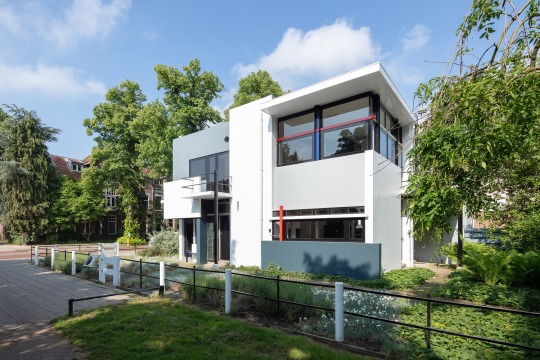
Een half jaar geleden verscheen een mooi boek dat inzoomt op zo’n prominente vrouw-achter-de-kunstenaar, en dat op veel van deze vragen een intrigerend antwoord geeft. In I love you, Rietveld (2018) schetst cultuurhistoricus Jessica van Geel een gedetailleerd beeld van de dynamiek tussen Gerrit Rietveld en Truus Schröder-Schräder. Zij maakte als vrouw achter de schermen Rietvelds kunstenaarschap mogelijk, en hielp hem niet alleen bij het ontwikkelen van zijn ideeën, maar gaf hem ook het geld om die ideeën uit te voeren. Haar steun aan Rietveld begon in 1911 en eindigde met zijn dood in 1964. Samen bouwden ze in 1925 het Rietveld-Schröderhuis
in Utrecht, en samen noemden ze zich in de jaren daarna ‘Schröder en Rietveld, architecten’. De dienstbare vrouw achter Rietveld was, bij tijden, dus ook de actieve vrouw naast Rietveld. Ze was behalve zijn steun en toeverlaat ook zijn muze, mecenas en minnares.

image

Rietveld Schröderhuis (collectie Centraal Museum, Utrecht).

Toch was dat ‘samen doen’ maar betrekkelijk. In de relatie tussen Rietveld en de vrouw achter de schermen (saillant feit: beiden waren getrouwd, maar niet met elkaar) had hij consequent de rol van ontvanger en uitvoerder, en zij die van gever en mogelijkmaker. In die zin was Truus Schröder-Schräder een echte moeder de vrouw, die haar onzichtbare faciliterende taak uiterst serieus nam. Ze bewaakte de ‘klare lijn’ in zijn ideeën en zorgde dat hij zijn oor niet teveel liet hangen naar zijn opdrachtgevers. ‘Dan ging Truus op Gerrits strepen staan’, zoals Van Geel het treffend verwoordt (226). Maar haar zorgende taak ging verder: zo praatte ze hem moed in als het tegenzat, onderhield ze met haar geld zijn gezin, en haalde ze via haar netwerk een deel van zijn opdrachten binnen.

De een gaf, de ander ontving. Ondanks deze heldere taakverdeling zorgde de (dis)balans tussen geven en ontvangen voortdurend voor spanning. Rietveld erkende aan de ene kant ruiterlijk dat de inspiratie achter zijn werk niet alleen van hemzelf kwam, maar ook van haar. “Jij strooit ideeën
om je heen”, vertelde hij Truus. “Ze zeggen dat ik veel ideeën heb, jij veel
meer. Ik vang ze bij jou op. Niet zoo maar ideetjes, je weet waar je heen moet” (151). Maar anderzijds vond hij zijn afhankelijkheid maar moeilijk te
accepteren, en zou hij meermalen proberen zich voorzichtig los te maken. Ook Truus zelf was ambivalent. Haar faciliterende rol lag haar goed, maar alleen maar geven viel haar soms zwaar: ze vond het “akelig” als Rietveld “alles alleen maar van mij moest hebben. Verantwoordelijkheid te groot” (228).

Nog moeilijker voor haar was het lot dat alle moeders-de-vrouw treft: veel erkenning voor haar ondersteunende taak heeft Truus Schröder-Schräder van de buitenwereld niet gekregen. Ze moest toezien hoe Rietvelds werk na zijn dood wereldfaam verwierf, terwijl zij niet meer bleef dan een schaduwfiguur op de achtergrond. Hoe aan anderen uit te leggen dat een
baanbrekend kunstwerk als het Rietveld-Schröderhuis niet zomaar was ontstaan, maar een product was van hun subtiele spel van geven en ontvangen? Hoe duidelijk te maken dat haar ideeën als muze, mecenas en minnares een bijzondere symbiose waren aangegaan met die van hem? Hoe aan de ene kant bescheiden te blijven, en aan de andere kant erkenning te claimen? Het is interessant hoezeer Schröder worstelde met dit eeuwigdurende dilemma van de moeder de vrouw. Terugkijkend
na zijn dood (379) wist ze hun complexe uitwisseling uiteindelijk zo te verwoorden: “het is een huis helemaal uit mijn geest, door Rietveld opgevangen. En prachtig vertaald.”

On W. B. Yeats’s ‘The Cat and the Moon’

By Frederik van Dam

As 2018 drew to a close, the Irish College in Belgium hosted a
conference on innovation and experiment in contemporary Irish fiction
.
It was a lively gathering, with many inspiring speakers; the interest in and
relevance of global climate change was striking and, of course, apposite. The animating force behind this gathering was Hedwig Schwall, for whom the conference was also the celebration of her retirement. Instead of briefly
recapitulating my own modest contribution to this conference, I thought I’d pay homage to Hedwig by providing a short reading that takes its cue from her work.

This is a belated reading. Years ago, when I was scanning the field for a possible research topic for my BA dissertation, I mentioned to my tutor that I was fascinated by the poetry of W. B. Yeats. To pursue that interest, he replied, I should seek out our in-house expert on the subject. I did not heed his advice. Instead of writing on Yeats, I soon found myself working on the novels of Anthony Trollope. But this decision was only a delay. Among many other things, Trollope’s early novels, which are set in Ireland, made me more attentive to the tangled tale of Irish literature in the Victorian age. As a result, I was brought – inevitably – into Hedwig’s ken. What would I have approached her with, though, had I listened more attentively to Yeats’s fanciful poems and not been lured away by Trollope’s earth-bound prose?

I might have tried to impress Hedwig with some reflections about Yeats’s ‘The Cat and the Moon’ (first published in The Wild Swans at Coole, 1919). The poem’s title signals that it will revolve around a psychological duality that Hedwig has so often tackled in her literary criticism; a Schwallian duality, as it were. Incorrigibly and incurably self-willed, cats are conventionally seen as conscious creatures, while the moon, at once dark and faintly illuminated, is a traditional trope for the unconscious. The poem itself, however, dissolves the opposition between the conscious and the unconscious even before it has been created, and instead emphasizes similarity more than difference. The first stanza presents the comparison between the feline and Selene in the lucid terms of a family resemblance:

The cat
went here and there
And the
moon spun round like a top,
And the
nearest kin of the moon,
The creeping
cat, looked up.

(Yeats,
p. 167, ll. 1-4)

Initially, Yeats’s cat is ‘creeping’, which suggests that without the moon it is a mere beast of the earth. As the poem continues, however, the bond between the animal and the moon is moved into the register of the aesthetic. ‘When two close kindred meet’, the poet asks, ‘What better than
call a dance’ (p. 167, ll. 12-13)? A creature whose pupils range ‘from round to
crescent, / From crescent to round’ (p. 168, ll. 23-24), Minnaloushe is
‘[a]lone, important, and wise’ (p. 168, l. 26). By staring at the moon, in
other words, the cat’s spirit is raised, elevated. Significantly, the speaker
is excluded from the dance that he observes. The poet is the passive witness of an aesthetic spectacle that seems to take place on the other side of knowledge, a spectacle from which he, as a thinking being, is excluded. The sentiment is not unlike that found in many of Matsuo Basho’s haiku, such as the following:

Though the
moon is full
There seems
an absence –
Suma in summer.

(Aitken
31)

This particular haiku expresses a sense of unfulfillment in the presence the moon, a kind of yearning for self-forgetfulness. Yeats adds a second layer to this experience by introducing a creature into the scene. It is not the moon itself but a creature staring at the moon that makes the poet (and, at a remove, the reader) feel that sense of unfulfillment, that absence, which suggests a possible cause: by virtue of the presence of the cat, the poet
is made aware, if nothing more than that, of the animalistic part of his being from which he has been separated. Without wanting to suggest that this proto-existentialist sentiment is characteristically Irish, it is a testimony to Yeats’s influence that it can be found in the many contemporary works of Irish literature of which Hedwig has been active promotor and studious scholar. Sara Baume’s A Line Made by Walking (2017) provides one of the most recent articulations of this experience.

I look up
to the turbine, which doesn’t appear to go to sleep as the flower-heads do. It
stays up at night, continues to spin. Two white lights glow from the generator
at its axis, a set of cat’s eyes, but each of the blades remains unlit. […]
It
feels as if the cat’s eyes are looking down, looking back at me. Watching over
the garden, the bungalow. But I’ve never been good at judging the distance or
size or position of objects in the sky. I remember riding in the back of my
mother’s Ford Estate: I was four, it was night-time, and the moon was full. I
was gazing out the window, and I couldn’t understand why it moved through the
sky at the same pace as the car along the road, why we never managed to leave
it behind. ‘Drive faster!’ I commanded my mother, but refused to tell her why,
and so, she didn’t.
I
turn my attention back to the tuck-up petals.
How
do the flowers know it’s night-time? Why is the moon everywhere?

(Baume 171)

As in Yeats’s poem, two instantly recognizable images – the eyes of the cat and the light of the moon – mutually reinforce one another in order to power a reflection on the strange and alien quality of the world that surrounds us. I like to imagine that a research proposal on the reception of Yeatsian tropes, as found Baume’s novel, would have appealed to
Hedwig’s heretic side. After such knowledge, she would have said (channelling Herman Servotte, channelling T. S. Eliot), what forgiveness?


Aitken,
Robert. A Zen Wave: Basho’s Haiku and Zen, 2003. Washington: Shoemaker & Hoard,

Baume, Sara. A Line Made by Walking. Boston and New York: Houghton Mifflin Harcourt, 2017.

Yeats, William Butler. The Collected Poems. Ed. Richard J. Finneran. Second edition. New York: Scribner, 1996.

Bertolucci’s autonomy of art revisited

by Marcel van den Haak

A few weeks ago, the acclaimed film director Bernardo Bertolucci died. He not only wrote and directed such grand epic films as Novecento (1976) and The Last Emperor (1987) and the stylistically innovative Il conformista (1970), but also the highly erotic Last Tango in Paris. In this 1972 film, a 45-year-old recently turned widower played by Marlon Brando and a 19-year-old engaged woman, Maria Schneider, have a series of sexual encounters in an empty apartment that they both wish to rent, without exchanging personal information. It was very controversial at the time – and it still is, yet for different reasons. This shift in moral concerns marks a broader turn in discussions on art that I will explore.

The film’s graphic sex scenes, the anonymity of the encounters and even the overt bisexuality of the young lead actress led to much moral condemnation at the time. Wikipedia gives an astonishing overview. Some critics called it “pornography disguised as art”; British censors gave it an X rating, which was still too light for some conservatives; New York moviegoers were threatened by bystanders calling them ‘perverts’ and ‘homos’; several countries such as Spain banned the film completely; and in Italy the main actors involved (including Bertolucci and Brando) were even given suspended prison sentences.[1]

image

At the same time, the movie was hailed by critics and audiences as a ground-breaking masterpiece. One of the most famous film critics ever, Pauline Kael, wrote one of her most famous reviews on precisely this film. She gave an in-depth interpretation of the story, particularly of the innovative look at sex in film – not portraying it as merely a mechanical act but as the expression of the characters’ drives – as well as the powerful debunking of American masculinity. She discussed the gliding camera style and the “sequences that are like arias,” and she reasonably compared Bertolucci to many great filmmakers of the past: Renoir, Vigo, Carné, Von Sternberg, Ophüls.[2] Other reviewers, such as Roger Ebert, later added the realness of the acting, including coughs and disconnected sentences.[3] In
other words, the reviewers touched upon all those elements of a piece of art that make it just that, art.

Last Tango in Paris is a fine example of an artwork in which aesthetics and ethics collide. In the art world, it is common practice that art is judged solely with aesthetic criteria, such as the innovativeness in form and style, the complexity or depth of the content, and perhaps the authenticity of what is portrayed. Moral judgements, that others in society might have, should be put aside. This idea originated in the nineteenth century. It stems from a misconception of Kant’s and Schiller’s ideas on the distinction between the Beautiful (aesthetics) and the Good (ethics). These great, eighteenth-century German thinkers analytically separated these two concepts, yet without disconnecting them entirely: the Beautiful should be at the benefit of the Good, art is meant to improve human beings. Thinkers in post-revolutionary France adopted this distinction between domains, but interpreted it as a full autonomy of the arts, regardless of possible moral benefits or objections. Art should be for art’s sake, not for morality’s (or money’s) sake.[4] This idea lies at the core of modernism, which reached its height in the early twentieth century, such as in literature (Woolf), visual arts (Kandinsky) and music (Stravinsky). It is still strong today, although societal benefits of the arts are often deemed important, too. Strikingly, Pauline Kael compared both the shocked and the astonished reactions at the first US screening of Last Tango in Paris in 1972 with the riot at the premiere of Stravinsky’s Le sacre du printemps in 1913, often exemplified
as the ultimate artistic revolution against the bourgeois establishment.

This maxim – art for art’s sake, form over content, aesthetics over ethics – serves as an ideal defence mechanism against any moral objections towards art. Art is a free place in which the rules of society ‘out there’ do not matter. Within the walls of a museum or a theatre you can do whatever you like; the audience will perceive it as something sacred in itself: Art. Moreover, art is the place to push the boundaries, to break taboos, to act like an iconoclast. Conservative, reactionary, religious and prudish critics can object all they want, but in the art world we don’t care.

This ‘system’ works as long as the artists see themselves as progressive – as is often the case – and their moral critics whom they can ignore as conservative. Bertolucci was a Marxist and an iconoclast, whereas his critics propagated family values and resisted licentious sex. What we see lately, however, is a steep rise of moral objections against artworks from a progressive standpoint. Art that is deemed sexist, racist, homophobic or culturally appropriative has increasingly come under fire. Art can be aesthetically beautiful, a comedian’s joke can have an original punchline, but when it in one way or the other denounces women, people of colour or LGBT persons, it is put under a magnifying glass. Often it is not the art itself that has an issue, but the artist who produced it. Can we, for instance, still watch a Kevin Spacey movie without second thoughts? Art works are also criticised in retrospect. Mozart’s opera The Magic Flute is stripped of its most misogynist and racist scenes, an 1896 painting by J.W. Waterhouse was recently removed from Manchester Art Gallery because of similarities with #MeToo situations (though this soon turned out to be a publicity stunt); and even Friends fans are re-evaluating their favourite yet homophobic episodes from the 1990s. Of course, such debates are not entirely new – e.g., already in 1972 a feminist group criticised Last Tango for “male domination”, as the same Wikipedia page shows – but the strength, scope and impact of the current discussions are expanding.

Another point of this type of criticism is the way an artwork came into being. Here we return to Last Tango in Paris. Decades after the film’s release, in 2006, actress Maria Schneider revealed how Bernardo Bertolucci and Marlon Brando had sexually humiliated her, particularly in an anal rape scene.[5] Without her prior knowledge (or only just before) and certainly without her consent, Brando had used butter as a lubricant. Schneider felt raped and held Bertolucci accountable. Hence, Last Tango became controversial again. This story has come back in the limelight several
times: after Schneider’s death in 2011, and particularly when a semi-remorseful interview with Bertolucci on Dutch TV (College Tour, 2013) had found its international way in 2016.[6] He stated that he felt guilty towards her, but that he did not regret his decision. He wanted to capture her pure
reaction rather than let her act humiliation and rage. Hence, he expressed his guilt as a person, not as an artist. And he explained further: “To make movies, sometimes, to obtain something, I think that we have to be completely free.”

In other words, in order to make something aesthetically beautiful, in this case something authentic, one can put ethical issues aside. It is the modernist defence mechanism against moral objections to art that we got to know so well in the past century. However, when the critics are from the same – progressive – side of the spectrum as most artists are, this standpoint gets more uncomfortable. Moreover, if participants within the art world itself are protesting, such as actors Jessica Chastain and Chris Evans after seeing the Bertolucci interview, it seems to get untenable.[7] Many artists still emphasize the autonomy of their art (“we have to be completely free”) when encountered with moral criticisms on sexism and the like, and they refuse to ‘censor’ themselves. Some even regretfully say that prudishness is back, only a few decades after the ‘liberating’ 1970s, without realising that the current critique is of an entirely different type.

image

However, more and more artists are taking these increasing critiques into account, be it out of fear for Twitter storms and consumer boycotts – yes, social media can greatly escalate the impact of such critiques – or due to true awareness. This might differ per occasion, but in general, I sense that a shift is taking place. Can we still defend art as a purely autonomous place that does not have to abide to the norms of the rest of society? Are the current debates putting an end to this modernist paradigm that has endured for so long? Or is it just a strong but temporary storm? For now, these are open questions.

So, can we still watch Last Tango in Paris? In her obituary, Dutch cultural columnist Joyce Roodnat – herself a #MeToo accuser of another recently deceased acclaimed filmmaker, Claude Lanzmann – thinks we can: “Thank you Bernardo Bertolucci. Your films changed my life. I forgive you everything.”[8] Well, that might go a bit far, but I’d say we can enjoy the film, but with reservation. Nevertheless, present-day directors will no longer get away with it.

[1] https://en.wikipedia.org/wiki/Last_Tango_in_Paris

[2] https://www.criterion.com/current/posts/834-last-tango-in-paris

[3] https://www.rogerebert.com/reviews/great-movie-last-tango-in-paris-1972

[4] Gene H. Bell-Villada (1996), Art for art’s sake and literary life. How
politics and markets helped shape the ideology & culture of aestheticism
1790-1990
. Lincoln & London: University of Nebraska Press.

[5] https://www.dailymail.co.uk/tvshowbiz/article-469646/I-felt-raped-Brando.html

[6] https://www.youtube.com/watch?v=RMl4xCGcdfA

[7] https://twitter.com/jes_chastain/status/804966641998168064 and https://twitter.com/chrisevans/status/805091489814548480

[8] https://www.nrc.nl/nieuws/2018/11/28/mijn-laatste-tango-met-bernardo-a2779325

A New Chapter in Space Exploration

By László Munteán

This coming July will mark fifty years since the legendary landing on the Moon by the crew of the Apollo 11 on July 20, 1969. Although the upcoming anniversary may not yet be at the forefront of our minds, Damien Chazelle’s First Man, featuring Ryan Gosling as the astronaut Neil Armstrong, is without doubt an early tribute to the mission. Considering the difficulties Armstrong and Buzz Aldrin faced when trying to plant the American flag into the dusty soil of the Moon, an event yielding one of the most iconic photographs in history, the absence of this symbolic event in Chazelle’s film is rather conspicuous. This is not to blame the filmmaker, however. Quite the contrary, in a new era of America First, this lacuna in a Hollywood blockbuster is rather refreshing insofar as it allows Armstrong’s psychological voyage as a man traumatized by the loss of his daughter to take center stage.

As First Man is still playing in movie theaters around the world, images about the successful landing of NASA’s spacecraft InSight on the surface of Mars on November 26 have gone viral. Among a series of objectives, the spacecraft is tasked with gathering information about the material composition of Mars. Instead of drilling a hole for a flagpole, InSight sends a probe deep into Martian soil. After years of trial and error, such an
achievement is, both literally and metaphorically, groundbreaking. The
belligerent rhetoric of Cold War space race that underpinned the Apollo
expeditions and left six American flags on the surface of the Moon has long
been replaced by the legacy of international cooperation in the service of
science.

image

In light of First Man’s silence on the flag raising ceremony and incoming footage of InSight’s activities on Mars, it is particularly intriguing to examine how NASA, a national agency of aerospace research, positions itself in its new promotional video entitled “We Are NASA.”
Less than three minutes long, the video opens with a montage of archival footage of emblematic launches accompanied by bombastic music and a fragment of Kennedy’s famous 1962 speech about sending a man to the Moon. A male voice reminiscent of the one used in Hollywood trailers declares that “we are building the next chapter of American exploration.” This chapter entails “returning to the Moon to stay so we can go beyond to Mars.”

While the rhetoric of “exploration” and the “pioneering spirit” is deeply rooted in the American notion of the frontier and coast-to-coast expansion, a notion which Kennedy upgraded by speaking of space as the final frontier, the voiceover also informs us, so as to underscore the aims for the new chapter, that “This is not hypothetical. This is not about flags and  footprints. This is about sustainable science.” At this point, we see
children looking at a photograph of the Apollo 11 Lunar Module with the American flag. The visual and textual rhetoric that unfolds in this sequence is laden with tension. On one hand, NASA takes pride in its achievements over the past sixty years and gladly embraces the vocabulary of the frontier and exploration. On the other hand, the new chapter of exploration on which it embarks seems to continue with a sentiment that absorbs us in Chazelle’s representation of the Moon landing in First Man: while acknowledging the legacy of American scientific ingenuity and the heroic act of the astronauts, the flag is withheld from anchoring this sentiment exclusively onto the fabric of the nation, as did the 1969 documentary Footprints on the Moon, featuring Wernher von Braun as narrator. If the gesture of refraining from using the national symbol in First Man brings to the fore Armstrong’s personality, “We Are NASA” re-inscribes the rhetoric of the all-American frontier into sustainable science as a means by which “to go farther than humanity has ever been.” At a time when scientific insights are often dismissed as fake at the presidential level, NASA’s new promotional video unmoors scientific goals from nationalism and inscribes science as a national interest.

(Re)Discovering Connie Converse

Music streaming service Spotify has been criticized for making a ‘mindless’ way of listening to music possible. Unlike a record, which you have to turn over, or a cd that stops playing after a while, on Spotify you can endlessly stream one song after the other. The other day, however, a song started playing on my Discover Weekly playlist that utterly grabbed my attention. The song was ‘Father Neptune’ by Connie Converse. It sounded like some home recording by a contemporary ‘New Weird America’-type singer. I
listened to it again, completely struck by the way it sounded and its
self-deprecating, and highly amusing, lyrics. The song features a woman singing about her sailor husband, who quite openly loves the sea more than his wife: ‘When my man goes to sea / He steps so high and free / I think I know as I watch him go / That he has no need for me, for me’. Despite feeling rejected, she prays to ‘Father Neptune’ to keep her husband safe while he’s away at sea. Throughout, the song uses rhyme and repetition to great comic effect, and the delivery and the silly guitar riff in
between the verses make it all the more humorous. Then, there’s a verse that adds great depth to the song: ‘I know it’s a boat / That keeps him afloat / But I like to think it’s me / And if it were not for this / I would sink / To the depths / Of the sea’. All of a sudden, this quirky old-timey song about a sailor and his wife becomes about people’s ability to tell themselves little lies to make their day-to-day existence bearable – and, even worse, to know
that they’re doing this, while continuing to fool themselves nonetheless.

Intrigued by the song, I looked up the album on Spotify. Based on the quirky album artwork and the name of the artist, I thought this must be some vintage-inspired contemporary musician. A Google search revealed, however, that she was a singer from the 1950s, with a fascinating life story. The first hit – her Wikipedia page – tells you her full name (Elizabeth Eaton ‘Connie’ Converse) and her dates (born August 3, 1924 – disappeared 1974). Still further intrigued, I started to read more about this singer, who turned out to be a recently ‘(re)discovered’, but still relatively little-known musician.

image

The main sources of information about Connie Converse’s life are a number of online articles and a 40-minute documentary called We Lived Alone: The Connie Converse Documentary by Andrea Kannes (2014). In these articles, the main facts about her life and her recent rediscovery are listed over and over: she was born in New Hampshire, won a scholarship to Mount Holyoke College in Massachusetts, and left the college after two years to move to New York City. There, she wrote and recorded songs in her Greenwich Village apartment and performed at friends’ dinner parties, accompanying herself on guitar. Halfway through the 1950s, she recorded a set of songs in the kitchen of artist and entertainer Gene Deitch, who held music gatherings at his house. While Deitch and others tried to help her become well-known, her career as a musician never took off. In 1961 – the year Bob Dylan moved to Greenwich Village, and after around 12 years of trying to become well-known for her music – she gave up composing and moved to Ann Arbor, Michigan, where her brother lived. Here, she got a job at the university as editor of an academic journal. Then, in 1974, after writing a set of letters to friends and family, which could be construed as ‘goodbye letters’, she drove off, never to be seen again. To this day, nobody knows what happened to her – whether she ended her life, as her brother suggests on Kannes’ documentary, or whether she decided to start afresh somewhere else. Then, in 2004, Gene Deitch played some of Converse’s songs on a music historian’s radio show, and two listeners were inspired to set up a record label for the sole purpose of making Converse’s music known to the
public. Five years later, a collection of her music was released as How Sad, How Lovely (which you can listen to here: https://connieconverse.bandcamp.com/ or purchase here: http://www.squirrelthing.com/artists/connie-converse).

The common narrative in all the articles is that Connie Converse can be seen as a ‘singer-songwriter’ long before Bob Dylan was doing his thing in Greenwich Village, and as a ‘female singer-songwriter’, writing cleverly composed songs with confessional lyrics, long before anybody like Vashti Bunyan, Karen Dalton or Joni Mitchell came along.

As the articles show us, Connie Converse’s story has all the ingredients for creating a fierce and devoted fanbase: her story is repeatedly told as the story of somebody who was lonely-but-brilliant, independent and intellectual, and who seemed to live in the wrong place at the wrong time. There is a sense that she was ‘wrongfully’ overlooked during her lifetime, and that the large body of work she left behind (only a part of which is currently known to the public) is in desperate need of being uncovered,
written about and recognized. Also, because her songs don’t easily fit into any genre, she functions as a blank screen on which people can project their own labels: she has been classified, for instance, as ‘[a] prototype of the DIY artist’ [1], or as ‘a “singer-songwriter” before that term or style existed’. [2] Labels such as these create the distinct feeling, among her fans, that she was ‘ahead of her times’, which is another feature of the ‘textbook cult artist’ [3] that Connie Converse has been described as.

One thing the writers have in common is that they are all completely bowled over by her music. Also, many of them seem glad that Connie Converse’s music is ‘finally’ getting the recognition it deserves. And here I have to agree: Connie Converse’s music is simply great. The chords are unusual, the lyrics tell wonderful stories, and the songs are incredibly moving, as well as very, very funny. Her repertoire is very diverse, and includes songs in which she humorously criticizes the restrictions women faced in the 1950s (‘Roving Woman’), profound songs about loneliness and isolation (‘One By One’) and songs that feature surrealist humour, like ‘Unknown (A Little Louder, Love)’, which starts: ‘Once there was a trumpeter / Blew his love a ballad / That was not enough for her / So he blew her a lobster salad’. She plays around with rhythm, melody and pauses to create emotional effect, and while telling stories about domesticity and love, her songs also explore the darker side of life. This goes, for instance, for ‘Talkin’ Like You (Two Tall Mountains)’. This song is about a woman living on her own in a valley that people call ‘lonesome’, who states that she isn’t ‘lonesome’ at all. After the opening, there is a beautiful melody and the speaker sings about a whippoorwill ‘sitting on [her] windowsill’ and a ‘brook running by [her] kitchen door’. We get the idea she is perfectly happy being there by herself. Then, there is a humorous twist: it turns out that everything there is ‘talking’ at her, like her lover used to do. ‘See that brook
running by my kitchen door / Well, it couldn’t talk no more / If it was you //
Up that tree there’s sort of a squirrel thing / Sounds just like we did when we were quarrelling / In the yard I keep a pig or two / They drop in for dinner like you used to do’.
This is the reason she isn’t lonely there: she has
all sorts of creatures and things reminding her of her annoying ex-lover. By
the time the song ends, she no longer ‘goes’ to the valley, as she sings in the beginning of the song, but ‘lives’ there: ‘In between two tall mountains / There’s a place they call “lonesome” / Don’t see why they call it lonesome / I’m never lonesome now I live there’. Despite the humour, there’s a sense here that the speaker can’t escape her somewhat tormented mental state – and that she is kidding herself in thinking that she isn’t lonely. Several of the songs on How Sad, How Lovely feature characters like this, with complex inner lives.

image

Of course, Connie Converse’s story is not unique. Elements of it are similar to the stories of singers like Sibylle Baier or Eva Cassidy. Also, music critics have pointed out similarities between her music and that of her female contemporaries, such as Peggy Seeger and Susan Reed. One reason why Connie Converse’s story is interesting, though, is that it shows us how a new discovery can change existing periodizations and, with this, our view of music history. Indeed, the ‘discovery’ of Connie Converse sheds new light on singer-songwriters and folk artists such as Bob Dylan, female
singer-songwriters and their precursors, and the music scene in 1950s New York. This reminds us, once again, that the periods that scholars, music historians and journalists refer to in their work, and that we teach to students, are not fixed entities with clear-cut boundaries, but are artificial constructions, made on the basis of the cases at our disposal. What’s more, the story of Connie Converse shows us that becoming ‘famous’ does not necessarily depend on talent, but relies on a combination of many factors: connections, reviewers, record labels, music journalists, scholars, luck, and timing.

[1] In press releases for Howard Fishman’s play on Converse’s life, A Star Has Burnt My Eye (2015).

[2] Spinning on Air podcast (2009, https://www.wnyc.org/story/62099-connie-converse-walking-in-the-dark/).

[3] New York Times review (2016) of Fishman’s play (https://www.nytimes.com/2016/11/11/theater/a-star-has-burnt-my-eye-review.html).

“All that is solid melts into air”: Cultural Analytics and Julian Rosefeldt’s Manifesto (2015)

By Roel Smeets

These months, research brought me to autumnal Montréal, Canada, where I am a visiting scholar at McGill University’s .txtLAB. Montréal is the geographical centre of cultural analytics, a quickly evolving discipline that uses the methods of data science for the study of culture. The young and blossoming Journal of Cultural Analytics is hosted here, which is one the leading platforms in this field of study.

In the cold and rainy atmospheres of the city I daily think and talk about devising and fine tuning methods to analyse novels on a larger scale than literary scholars commonly do. I like to think that I am not doing this because I am perverted by a neoliberal logic in which everything, including works of art, have to be measured and classified. I rather tell myself that my algorithmic approach to the contemporary Dutch novel serves a higher goal: revealing patterns of literary representation that are not visible to the human eye. Turning art into data thus becomes a means to a noble end –
or so I believe.

Last weekend, I took a break from research and went to see Julian Rosefeldt’s video installation Manifesto (2015), which was exhibited at the Musée d’art contemporain de Montréal (MAC). In the first room of the exhibition, excerpts from a diverse collection of manifestos are shown on panels, ranging from Marx’ and Engels’ Communist Manifesto (1848), to Filippo Tommaso Marinetti’s Manifesto of Futurism (1909), to Lars
von Trier’s and Thomas Vinterberg’s Dogme 95 Manifesto (1995). In the next room, thirteen short movies are shown in which actress Cate Blanchett utters lines from these manifesto’s while performing various roles such as factory worker, homeless man and schoolteacher.

Manifesto: https://www.youtube.com/watch?v=sOA6ramO1aw

Upon entering the room, I hear Blanchett’s voice orchestrated through a cacophony of sound. I hear the words from the different manifesto’s being uttered all at once. At first glance, it feels as if every short movie expresses radically different statements on the workings and uses of art, culture and society. As if everyone disagrees. But at the end of each short movie, out of the blue, a moment of apparent harmony emerges. All of Blanchett’s characters start to synchronously utter words that all sound very much alike despite their difference in meaning. It is as if all manifesto writers are suddenly on the same page, as if there is nothing but one shared belief, although it remains unclear what that might entail.

The first video features lines from the Communist Manifesto. The chief point of focus lies with the words “All that is solid melts into air”, taken from the
first section of the manifesto. Unhampered by what Marx and Engels might have meant by this, the words serve as metaphor for the seemingly inviolability of the idealistic convictions of all the manifesto’s portrayed in the exhibition. Listening to the concepts and ideas expressed in each individual manifesto, I had the experience of listening to clearly defined, impregnable beliefs, carved in stone. But listening to all these manifestos at once, the apparent solidity of each manifesto melted into air. What seemed solid at first, turned out to be unstable, relative, hilarious almost.

I see Rosefeldt’s Manifesto (2015) as a metaphor for my own research practices. Turning culture into data creates an illusion of solidity. Numbers instead of words, statistics instead of speculation. But a numerical representation of a novel is still a representation, a perspective, a point of view, and therefore not necessarily more true than other representations. I picture a future exhibition where excerpts from dissertations are read out loud with an air of solidity, seemingly disagreeing, but sounding alike. Words on a page melting into thin air.

image