By Fenne van Beek, Jildou de Jong, Niko Oussoren, and Puck Gregoor
We, Fenne van Beek, Jildou de Jong, Niko Oussoren, and Puck Gregoor, are excited to present to you our short documentary, Banden met Barrels. It is a documentary created for the second-year course ‘Moving Documentaries’ as part of our bachelor’s program in Art and Cultural Studies at Radboud University. As four Dutch students, we wanted to shed light on bicycles, particularly student bicycles. Because where would the average student actually be without their bike? It may seem like a simple, ordinary object, and it is, but the bicycle is also a significant cultural phenomenon whose importance we often overlook. Bicycles are essential in Dutch student life for their practicality and reliability, despite their worn-out appearance. As will become evident in this documentary, the student bicycle can serve as a starting point for many conversations and two-wheeled journeys. We hope Banden met Barrels sparks nostalgia and prompts audiences to pause and appreciate the humble bicycle as more than just a mode of transportation, but as a symbol of freedom, community, and adventure.
The documentary Banden met Barrels was created in the BA course Moving Documentaries.
By Rosa Floris, Lotte Lammers, Marta Ora, Laury van de Ven and Tim Wiesner
In Dutch, the word ‘knuffels’ holds a charming dual meaning, referring to both plush toys and hugs, and thus embodying a sense of comfort and care in a single term. Etymologically rooted in ‘knuffen’, meaning to bump or shove, the term ‘knuffels’ connotes a form of affection that entails both a gentle embrace and a playful nudge, driving home the idea of a push-and-pull, perpetually dynamic bond. This bond is at the center of our documentary, Knuffels, and explored through various interviews with Arts and Culture students of Radboud University. Knuffels pertains to the ambiguity of affection towards plush toys, and attempts to formulate an answer to the question: how do individuals attribute meaning to plushies within the context of ownership, and what psychological, emotional, and symbolic significance do these objects hold for their owners?
Knuffels aims to show truths; the audience is shown small aspects of the documentary’s construction, but not enough to betray the true extent of our involvement or to problematize the notion of truth. Instead, these few elements of construction work to disarm suspicion in the viewer and therefore aid in framing the contents of the documentary as truthful. The presentation of several voices, which at times contradict each other, serves this purpose. Subsequently, we have chosen to make fabric the common denominator in all shots and scenes, which vitalizes a soft aesthetic that fits, frames and harmonizes these oftentimes nostalgic sentiments expressed in the interviews.
As for the documentary in its entirety, the viewer could consider the footage a tapestry that we have carefully woven in collaboration with the interviewees, and from which we later cut and sewed together different pieces to make our final product – the visuals do not fabricate, the fabrics merely visualise. As a result, Knuffels quite literally embraces a storytelling predicated on multiplicity, be it in terms of lived experiences, perspectives, or the very essence of affection itself.
The documentary Knuffels was created in the BA course Moving Documentaries.
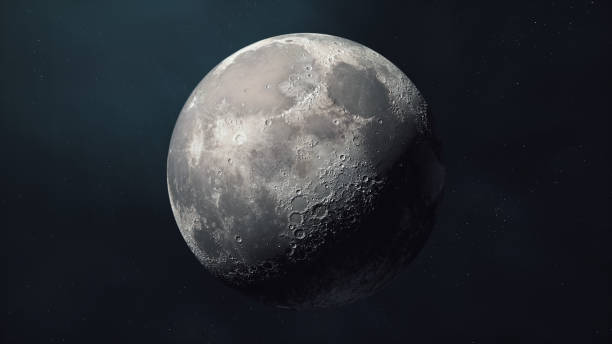
On my recent journey to Suriname, I have been thinking something that I have thought many times before, every time I am separated from a loved one. I see the moon and I am comforted by the fact that, however far away the other person, the same moon shines on both of us. And I am not the only one with this thought. As an historian of travel, I come across it again and again.
This is the thought: However many miles are between us, and however many hours of travel, however many obstacles – sometimes even the bend of the globe prevents us from seeing one another – we are nonetheless united by a single glance at the moon in the sky. We only need to look up and we see the same, very real, physical thing, at the same time.
I am not the first to think this. In my work, I come across many historical travellers with similar experiences. In 1877, German lady’s maid Auguste Schlüter travelled with her British employers to Ireland.
It is Sunday night, the moon sends her silvery light across the ocean, and carries me far away, home to my dear ones and to my dear Hawarden home, and to another spot on earth which I need not name, for Thou knowest all my thoughts.1
In Ireland, the moon reminded Schlüter of her loved ones in Germany and Britain, and of a mysterious unnamed person – her lover? So, what I am finding in my work about nineteenth-century Europeans is that, because the moon was visible from very different locations at same time, it made travellers feel connected to their (other) homes and their beloved. The moon took away the distance for a moment. Sometimes, this was followed immediately by a sense of even greater distance because of the contrast between the moon that seemed so close as to be touchable, and the loved one who was both out of sight and out of touch.
Now, as an historian, I am trained to focus on historical and cultural differences. I am asked to describe how people in the nineteenth century were different from ourselves, for example. But sometimes, I cannot help but espy similarities. Between myself and someone in the nineteenth century. Or someone in a vastly different time and place.
This same moon hangs over Fu-chou. Alone, she’ll lean out her window to watch it.2
So begins one of the famous melancholy poems by Tu Fu about travel, migration and separation. Tu Fu was a Tang-dynasty poet living thirteen centuries ago in what is now central China. In his poem, he describes two protagonists united by the same moon, but yet watching it alone.
It looks like this magical property of the moon to annihilate distances – and then to emphasise them – has been felt across the globe and across the millennia.
These examples are about the moon. I have found travel writing in which the sun accomplishes the same, particularly at special events such as a solar eclipse. And other travellers who talk about the stars. More down-to-earth phenomena also did the same for many: long rivers, for example, and the ocean.
Rivers and the ocean did this in a slightly different way from the moon. Not by enabling distant ones to see one relatively small point at the same time, but by offering the vastness and connectedness of one body of water to both individuals at the same time. The Atlantic Ocean, the Indian Ocean and the Pacific Ocean connected one coast to a completely different one. And so, in the mid-nineteenth-century, the Russian writer Ivan Goncharov was on the island of Madeira in the Atlantic Ocean and seems to have felt connected to Russia through the Madeiran flowers he threw into the water and that might in theory reach Russia.3
Dare I propose that we are dealing with the same experience in every one of these instances?
And dare I propose also, therefore, that the moon brings together Tu Fu, Auguste Schlüter, and myself?
Immediately we have to admit that the story is not that neat. In Suriname, I sadly missed the opportunity of looking at the moon when it was full and when I knew certain people far away would also be looking at it. The rainy season covered up the moon. A week or so later, I saw a vivid bright waning moon. The same moon as was visible at the other side of the world, yes, but also a different one. While in Europe, my waning moon is balancing on its point. In Suriname, I see a calmly lying moon. In the same way, Tu Fu’s moon, Schlüter’s, and mine will have looked slightly different, because of our different positions on earth. What is more, our moons will have looked different because the moon has aged. The craters and seas on its surface may be a little worse for wear now compared to more than a thousand years ago, and there’s certainly been more human impact in recent years. My point is that the idea that we are looking at the same thing is perhaps a little bit of an illusion. But an influential and comforting illusion nonetheless.
Recently, while attending a PhD writing retreat I connected with my peers about our hobbies outside of academia. I told my colleagues that in my free time I, of course, like to do bird watching. I was faced with curiosity and interest: “Oh really? Did you start it during Covid? It was a big trend back then.” Some friends also commented on it being a retired peoples’ hobby. I was utterly confused – doesn’t everyone casually birdwatch? What does it have to do with being old? Aren’t we all curious about identifying the species around us in the natural world? After receiving three bird books for my birthday, I am now in the acceptance phase of realising that maybe it’s a bit of a nerdy niche to birdwatch in your 20’s. But it’s one that I highly recommend.
I did not start bird watching during the pandemic. In fact, I was indoctrinated from a young age by my parents. Growing up in South-Eastern Finland, the forest is your backyard, quite literally. Our father would play us bird sound cassettes and test our knowledge on nature walks. Not only birds, but we were expected to learn how to identify mushrooms, plants, berries, species of trees – everything in the natural world around us. It was part of being one with and respecting nature, and also to learn what was safe to gather for eating.
However, I was only moderately enthusiastic about birds, until I moved abroad and realised how different the species were in other countries, even within Europe. The storks, grey herons and meerkoets that are so common in the Dutch landscapes were more of a rarity back home. And while most species are the same, they have different cycles. My internal clock was quite baffled hearing some birds singing in February in Nijmegen that mark the beginning of summer in Finland, or seeing the Egyptian geese with little goslings (yes, that’s geese babies) as early as April. Naturally, I reported all these Western European wonders back to my family in the arctic tundra.
On a more cultural level, this pastime is relatively young in its current form. Interest in birds was much more destructive up until 100 years ago. In the 18th and 19th century it was still common to kill and collect birds, as well as other wildlife, for studying their biology or merely displaying them in curiosity cabinets.1 The development of binoculars as well as advocacy of ornithologists Edmund Selous impacted the hobby. In his diary entry from 1898, Selous had an awakening when he displayed remorse for the past killing of birds and urged people to put down their guns, and observe the birds in their natural habitat instead.2 Several decades later, birdwatching was boosted during the Second World War following the 1940 publication of Watching Birds by James Fishers. Surprisingly, (as much as I tried to steer away from my research topic of Heritage on Nazi Persecution) birdwatching was also practised on German Prisoner of War Camps: for instance British PoWs led by John Buxton started their own ornithological society, tracking and illustrating birds and distributing weekly bulletins on the camp’s ‘nature news’.3 Birdwatching offered a welcome distraction to the prisoners, perhaps releasing stress, and a connection to the outside world during their entrapment.
Especially now, during the high intensity period of working on my PhD research, I find a lot of comfort in going out to Ooijpolder with my binoculars. It gives an incentive to go on a walk outdoors and quiets down my brain in the process. I enjoy pretending to be a 19th century ornithologist while studying the features of birds, trying to trace some elements of their dinosaur ancestors in their movements and sounds (if you have seen videos of the East-African shoebill, you know what I am talking about). I use Smart BirdID to note down the species I see and it gives me a cool sticker to my collection for each new bird – kind of like catching Pokémon, or creating a digital (and much more ethical) cabinet of curiosities.
A sticker collection of some of my identified birds on BirdID
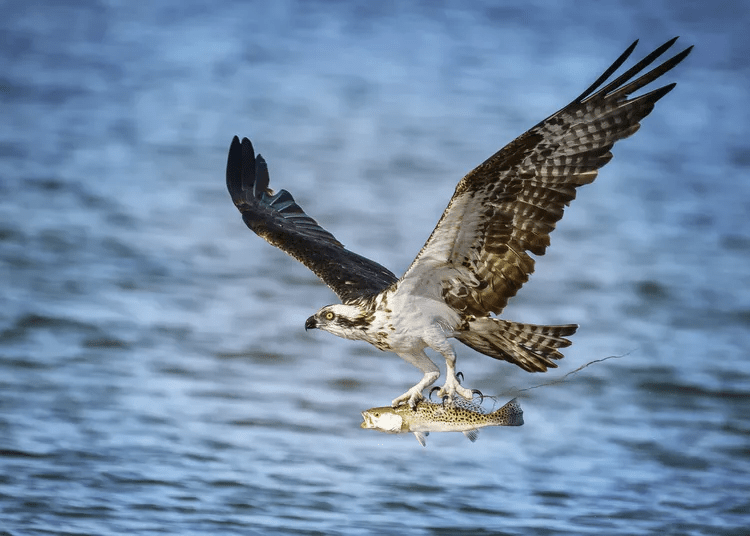
Recently, I received news from my (bird-crazy) family that there is a rather rare osprey couple nesting on an island at our summer house. This was not a coincidence, but an effort of nature conservators who built a man-made nesting platform last autumn. Now our weekly phone calls go: “How are you doing? And how are the ospreys? Have their eggs hatched yet?” Things even took a dramatic turn resulting in a boat chase: as my stepfather saw a boat lingering around the nesting island he jumped onto his boat and chased down the unaware fishermen. I was not there, but I imagine it looked like something out of Baywatch. Once the fishers spotted him, they started drifting away with their boat, but he caught up and ordered them to turn off their motor. The frightened Russian fishers immediately offered their fishing licences. “I don’t care about your licences, but could you please let the ospreys nest in peace?” my stepfather pleaded. They took the hint and left for calmer waters. All was well again in the osprey paradise.
The famous nesting ospreys at our summer house in Torsansalo, Finland.
Regardless, if sitting still for hours with a pair of binoculars is a bit too hardcore for you, you can also sit still on the comfort of your couch for 51 minutes while watching Dancing with the Birdson Netflix or watch a live-camera stream of a bird’s nest. I simply encourage you to take a moment to appreciate the wonderful range of species and nature around us that we often take for granted.
By Eva Schellingerhout, student in Arts and Culture Studies
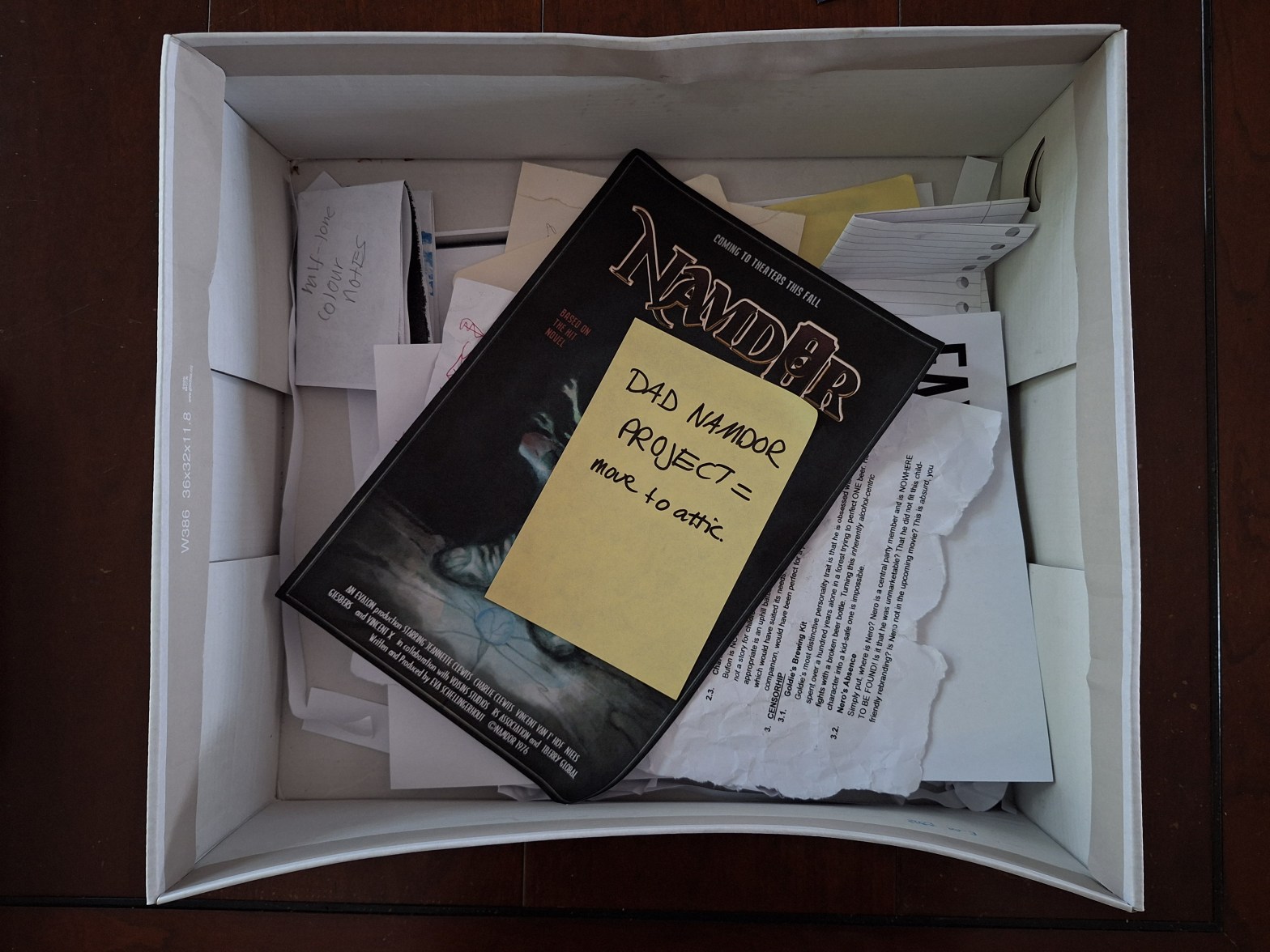
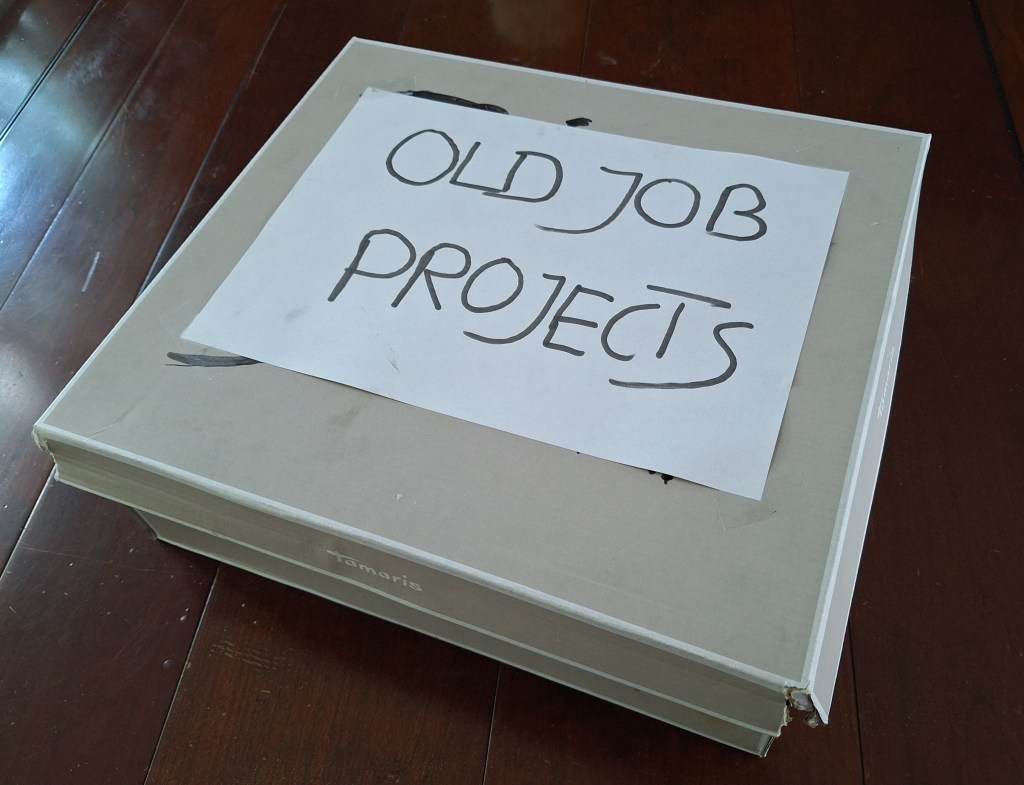
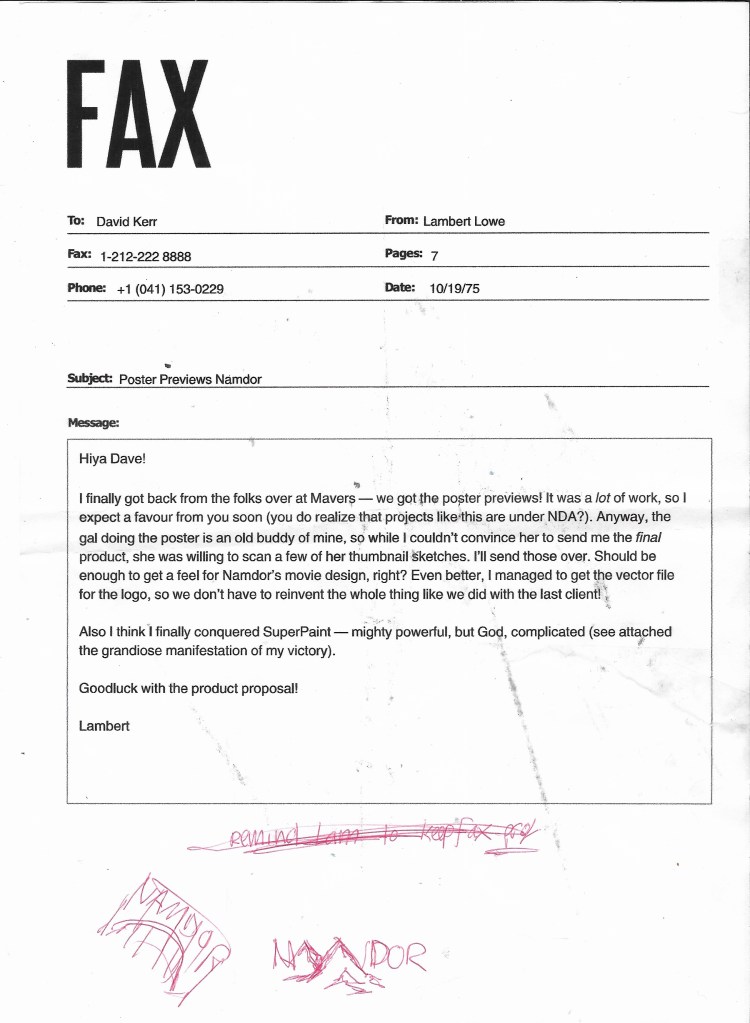
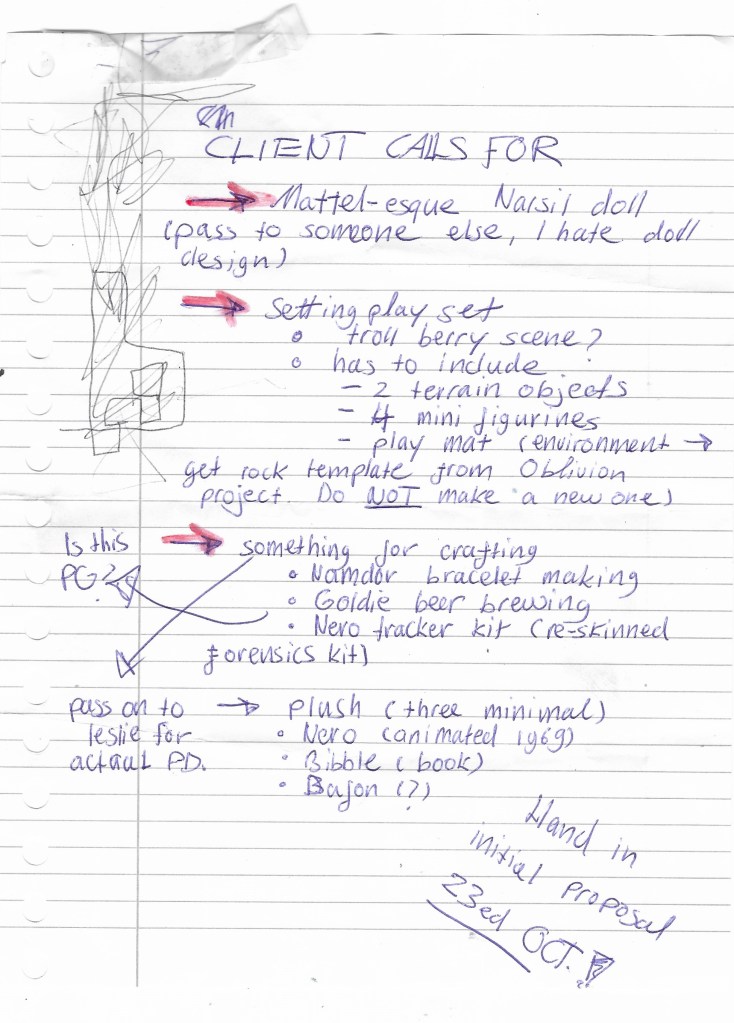
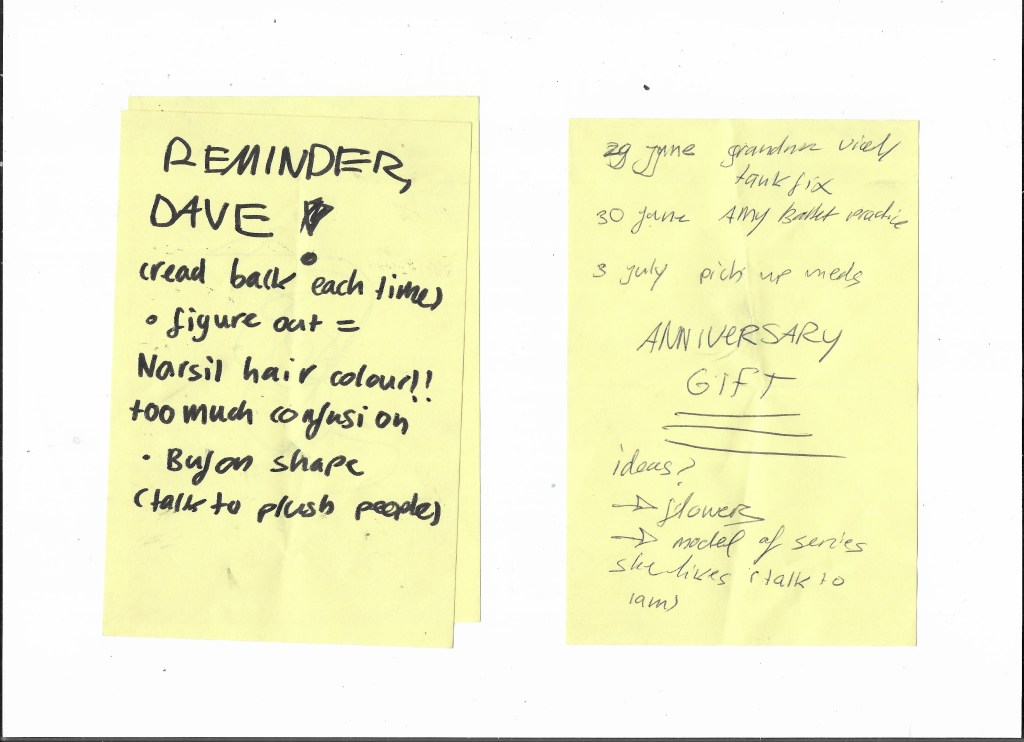
I got introduced to the cut-throat world of copyright and intellectual property at the tender age of eleven, watching a mini-documentary series with my father, called The Toys That Made Us. The series, in its attempt to follow the genealogy of famous childhood toys, exposed the bureaucratic slap-fight that occurred in the 70s and 80s over the merchandising rights to the latest Star Wars or He-Man. Corporate espionage, stolen trademarks, leaked product designs — it was a wild, dangerous world that endlessly intrigued me. This interest resurfaced when I was tasked with making my own transmedia story — I was going to create my own slap-fight, a company that would have competed with the likes of Kenner and Mattel at the heights of this ‘Toy War’. In the end, it became less a company, and more of a living, breathing person: David Kerr, a fictional toy product developer in the 70s, is contracted by a franchise to create a toy line, to accompany their upcoming film and collects his mementos of the work project in an archive box, where they sit, forgotten, for decades. The objects in the box are myriad: through advertisement blurbs, communication between the product designer and the client company, editor notes and sketches, the failings of a bled-dry franchise can be pieced together, alongside details about David’s personal life.
The archive brings two different branches of intermedial storytelling together: the ‘classical’ model of intermediality, Jenkin’s spatial transmedia “commercial franchise” and David Kerr’s personal life, which interacts with thing theory, archives and personal memory (Ryan 4).
Following Heersmink’s model, my archive functions as an ‘autopography’, a “network of evocative objects” which “provides stability and continuity for … autobiographical memory and narrative self” and through interacting with these objects “we construct … our personal identity” or the “narrative self” (1846; 1830). I.e. by interacting with the evocative objects in the storage box, we construct a narrative for the product developer. During the process, the viewer endows objects with autobiographical meaning, imagining the relation between human actor and object. To promote this ‘endowing’ I aged the objects, scrunched up and tore the complaint letter and left out specific information. On a larger scale, how the ‘viewer’ chooses to construct the narratives they find in the box, whether this is the first or second branch or a combination of both, can be seen as cryptographic narratives being at play. The cryptographic narrative was conceptualised for video games that obscure a secondary, parallel story in their text not necessary for game completion, which can only be accessed through dedicated effort (Paklons and Tratseart 168). Because my project is also interactive and deals with constructing narratives out of “disparate plot points”, in a co-creation process between author and viewer, but also never confirms whether the constructed narrative is ‘correct’, the cryptographic narrative is a useful framework (Paklons and Tratseart 170).
Superficially, the storage box forms two branches of theory, or rather, invites two different modes of interaction, as I suggested earlier: the viewer can either connect with the commercial franchise, in the form of adverts and film posters, or with David Kerr, via grocery lists and sticky notes. In practice, this is a crude simplification of the inner workings of the box. Naturally, I cannot dictate which ‘story’ the viewer will find interesting. In essence, all objects can become a part of an infinite number of theoretical cryptographic narratives, at the whims of the viewer, since there exists no hierarchy, or even true division, between plot elements. The theory, therefore, that I outlined above, can be applied to all objects: the two branches exist simultaneously, it all depends on how the viewer interacts with the objects. Does the viewer acknowledge the constructed nature of the archive box and therefore treat the ‘personal memories’ of the product developer as clues instead of real memories, taking a cryptographic approach? Does the viewer see the representations of the commercial franchise as an extension of the narrative self of the product designer? And so on and so forth.
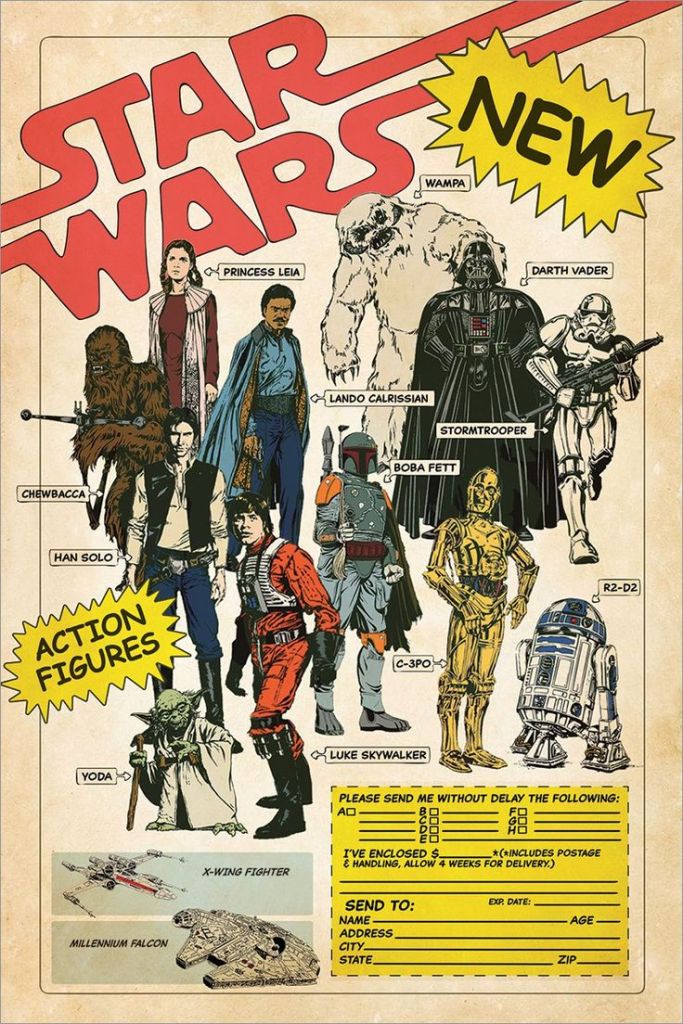
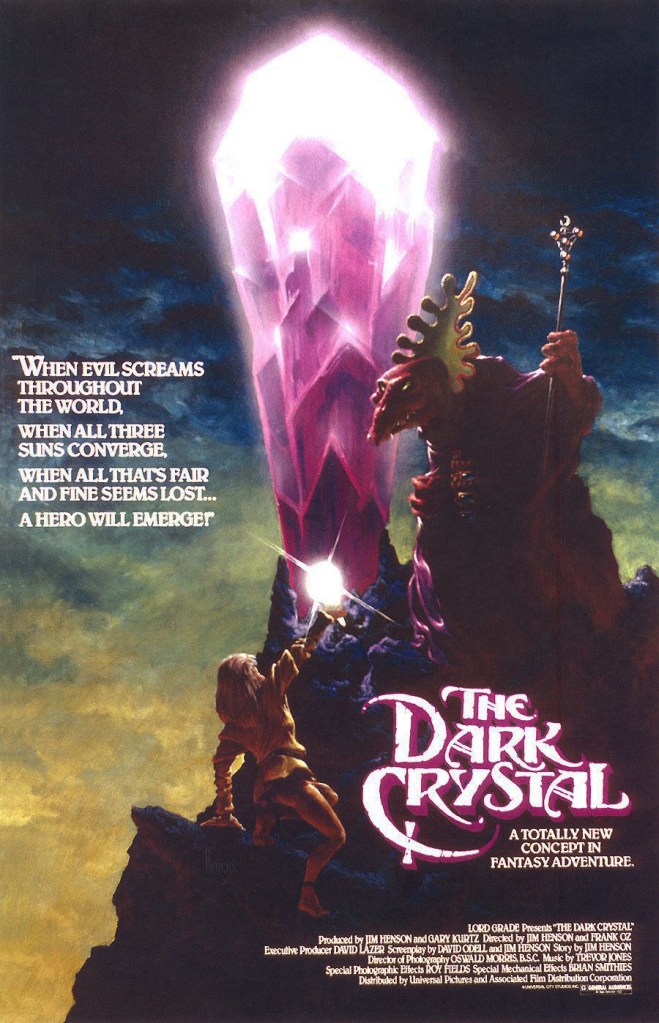
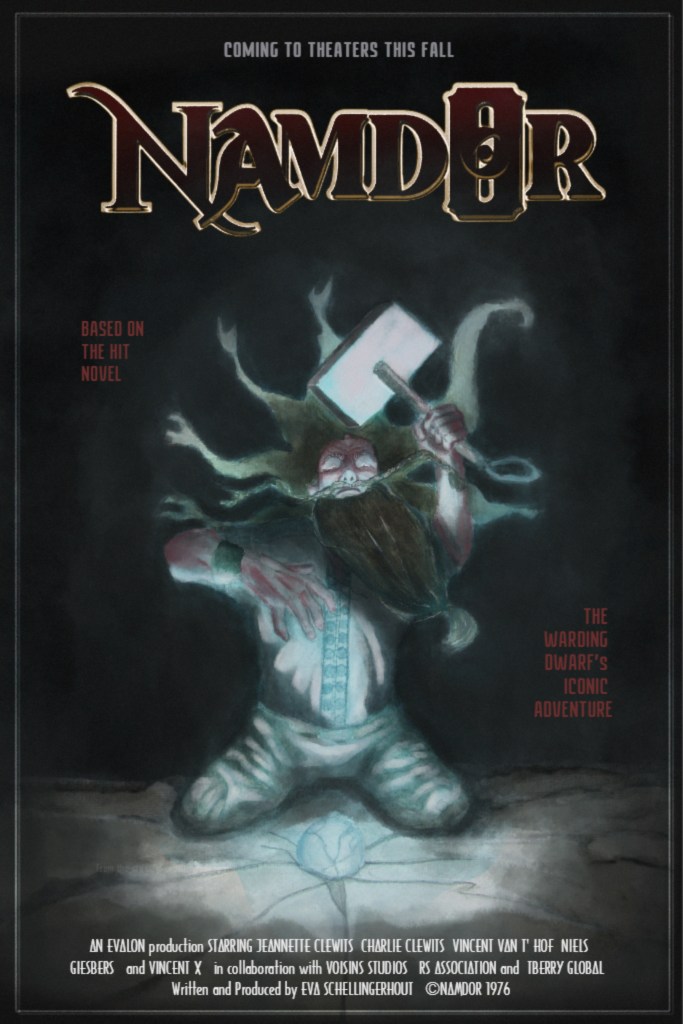
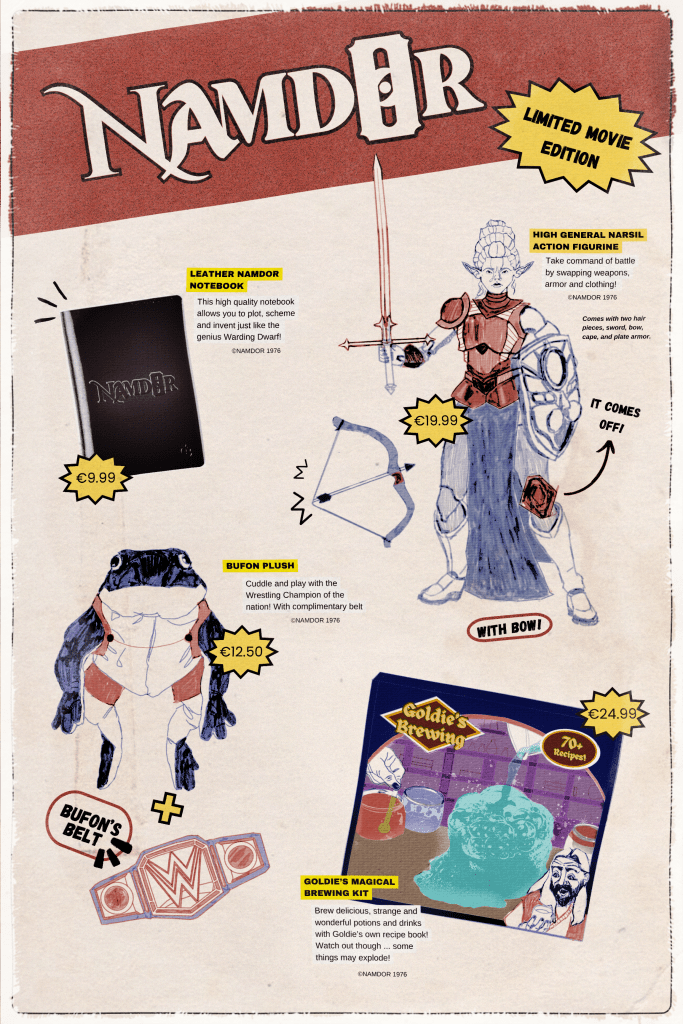
For the actual contents of the box, I compared archival documents, like old Star Wars, Transformers, Marvel, He-Man and Mattel adverts, and how they constructed their brand identity across multiple media (see the first image below this paragraph). For the poster, I drew from 80s fantasy films, like The Dark Crystal,The Labyrinth and The NeverEnding Story (see images 2 and 3). Once I started researching 70s and 80s idiosyncrasies, it became near compulsory to check each detail. It began with googling 1980s travel brochures — at this point my itinerary was much more ambitious — and ended with frantically searching for the computer standard typeface for word processors in the 1970s. It’s Helvetica, for those curious (image 4). All of this was endlessly fascinating to me, but I’ll stop myself, before I start waxing poetry about film poster composition, gauche colouring and standard 70s printing practices. Essentially, the viewer should be able to deduce a vague time estimate based on typography, colour, texture, ‘style’, and composition (image 5).
The biggest problem was verisimilitude — breaking the contract, stepping past David Kerr and inserting emphasis where none would have existed, proclaiming “Yes! This is what you should be looking at!”. An over-reliance on the cryptographic elements would train the viewer to only engage with the objects as potential clues, which would limit their engagement to a very narrow range of emotional investment (images below this paragraph).
The toys, especially, formed a roadblock. I was not just trying to create appealing designs — they would have to fit 70s sensibilities, while also reflecting the restraints David Kerr would have battled with, like time, budget and investor desires (images below this paragraph). When I went back to theory, I was able to put my worries to rest. Wolf writes, “Adaptation into a physical playset [or toy] … involves not so much the adaptation of a narrative, but rather the settings, objects, vehicles, and characters from which a narrative can be interactively recreated by the user” (169). Flattening these characters was integral to making a toy, I realized, which is a great narrative tool for my project at large.
Then, it was just a matter of shackling myself to my desk until my eyes went red and David Kerr had substantially come to life.
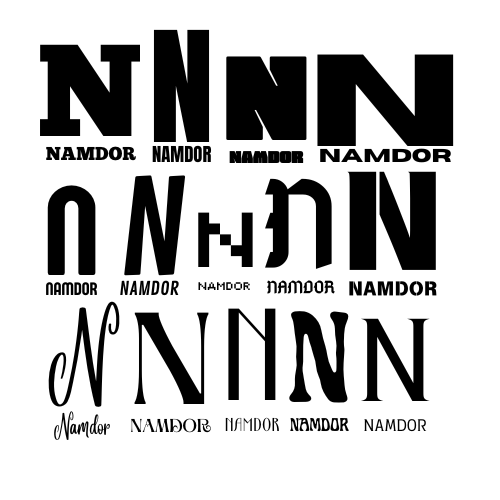
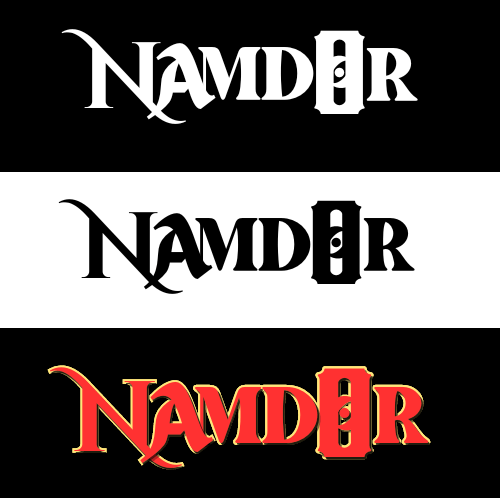
There is so much more I could mention about this project. How I arranged the objects in the box, how I re-folded and un-folded paper, the intricacies of all the scrapped product designs and rejected archive objects, how the Namdor logo is made from five typefaces and took an entire day (see image) — but alas.
The Namdor Archive box now rests behind my curtain, buried by a few sunhats, pillows and a children’s microscope. It has ironically, become a truer archive than it had ever previously been — the papers have bent beneath their own weight and some knickknacks from 2024 have found their final resting place inside. The box has already begun to fade from memory. I wait for someone to rediscover Me and David Kerr inside.
Works Cited
Heersmink, Richard. “The Narrative Self, Distributed Memory, and Evocative Objects.” Philosophical Studies: An International Journal for Philosophy in the Analytic Tradition, vol. 175, no. 8, 2018, pp. 1829–49. JSTOR, www.jstor.org/stable/45094122.
Hescox, Richard. “The Dark Crystal.” N.d., Pinterest, pin.it/5AYWXOEcU.
Paklons, Ana and An-Sofie Tratsaert. “The Cryptographic Narrative in Video Games: The Player as Detective.” Mediating Vulnerability: Comparative Approaches and Questions of Genre, edited by Anneleen Masschelein et al., UCL Press, 2021, pp. 168–84. JSTOR, doi.org/10.2307/j.ctv1nnwhjt.14.
Ryan, Marie-Laure. “Transmedia Storytelling: Industry Buzzword or New Narrative Experience?” Storyworlds: A Journal of Narrative Studies, vol. 7, no. 2, 2015, pp. 1–19. JSTOR, doi.org/10.5250/storyworlds.7.2.0001.
Wolf, Mark J. P. “Adapting the Death Star into LEGO: The Case of LEGO Set #10188.” Star Wars and the History of Transmedia Storytelling, edited by Sean Guynes and Dan Hassler-Forest, Amsterdam UP, 2018, pp. 169–86. JSTOR, doi.org/10.2307/j.ctt207g5dd.16.
With summer vacation having started for many and drawing closer for others, we thought it would be a good time to ask our staff in Arts and Culture Studies about the cultural things they’ll be enjoying this vacation. If you’re on the lookout for a book, a podcast, an album or an activity to spend your summertime on, look no further, because ACW has some suggestions for you!
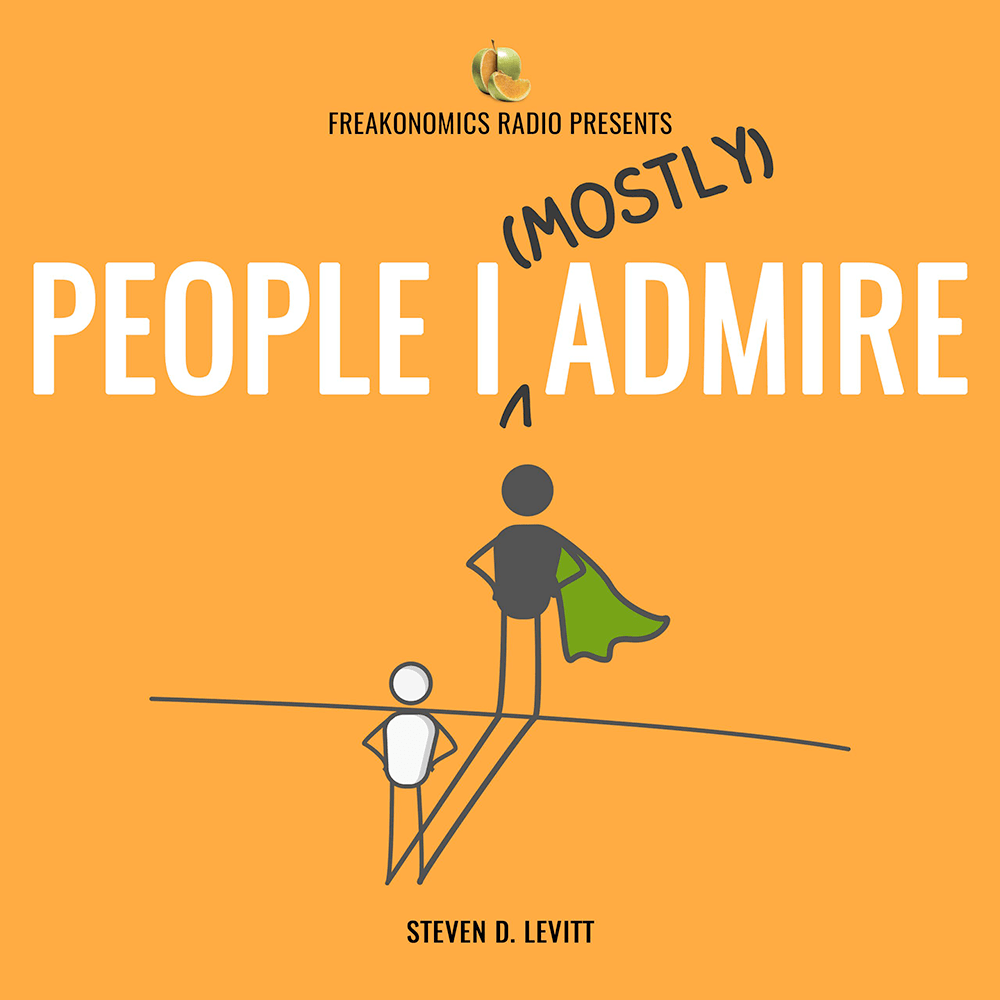
Podcast: People I (Mostly) Admire by Steven D. Levitt Episode: Maya Shankar Is Changing People’s Behavior — and Her Own I love listening to behavioral scientists and how their tiniest intervention can make a change in social systems. This episode talks about different ways in which behavioral economics was applied to increase voter’s turnout (among other fascinating examples) and how as people, embracing change can be daunting but is quite necessary. The entire podcast has a stellar guestlist, and its my cooking companion! Apoorva Nanjangud, Postdoctoral researcher, MTC
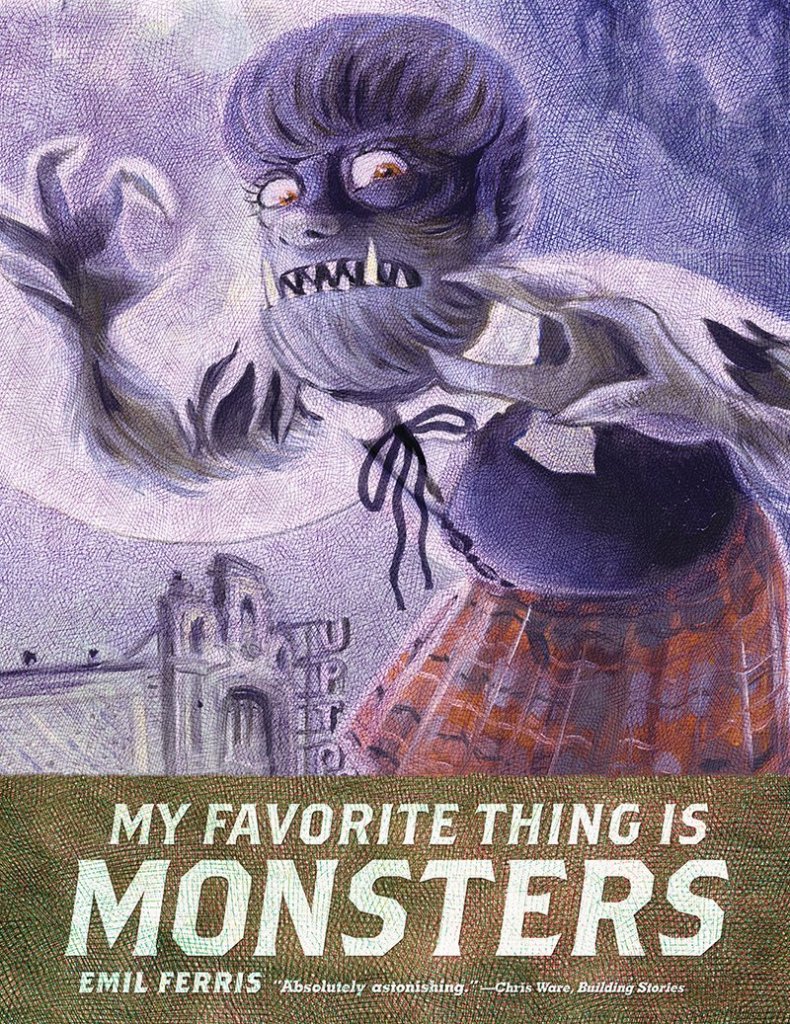
Graphic Novel: My Favorite Thing is Monsters – Emil Ferris This two-volume graphic novel is a mind-blowing read about a monster-like girl growing up in the vibrant and violent city life of Chicago in the 1960s. The book is one of those rare cases where excellent script writing and intricate graphic storytelling come together. It is also the debut of a 50+ American writer who has spent over two decades working on it. Maarten de Pourcq
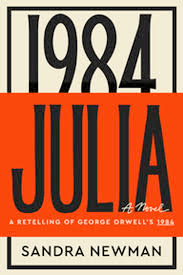
Novel: Julia – Sandra Newman It takes great courage to re-write a classic novel like Orwell’s 1984, and Newman pulls it off. This retelling of the story from the perspective of Julia is fantastic, especially where dialogues from the original have been copied literally and still manage to twist the original plot. Edwin van Meerkerk
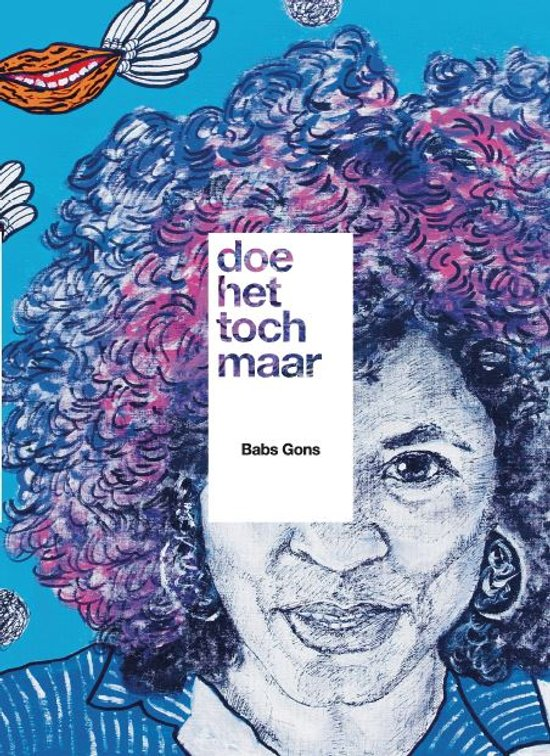
Poems: Doe het toch maar – Babs Gons, and a novel: Jaguarman – Raoul de Jong Bookworms who have turned their hobby into their job have a problem: as children, they tried to make each book last as long as possible, but now that reading is their work, the tower of texts that must be read seems to rise in direct proportion to their falling quality, which makes speedy reading both necessary and desired. Not with these two books. Their optimistic realism and real mystique made me want to stay with them. Anna Geurts, teacher in cultural studies and historian of Dutch and Surinamese travel.
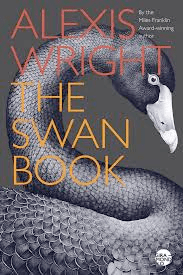
Novel: The Swan Book – Alexis Wright I would like to recommend this energetic as well as poetic novel from 2013 by the Nobel Prize-worthy Indigenous Australian author Alexis Wright. It has just been translated to Dutch as Het boek van de zwaan, presumably because of its highly topical theme. It’s a sci-fi story about climate change and the injustices inflicted upon Aboriginal people (and how the two are related). I will be reading Praiseworthy, Wright’s latest novel, this summer myself. Or I will try, as it’s 800 pages long! The Swan Book is easier to read on the train to the beach or in your tent in the woods. I wouldn’t exactly call it light reading, but it’s a great reminder of the power of literature and that’s always welcome – in any location. Dennis Kersten, Lecturer Arts and Culture Studies/ Algemene Cultuurwetenschappen
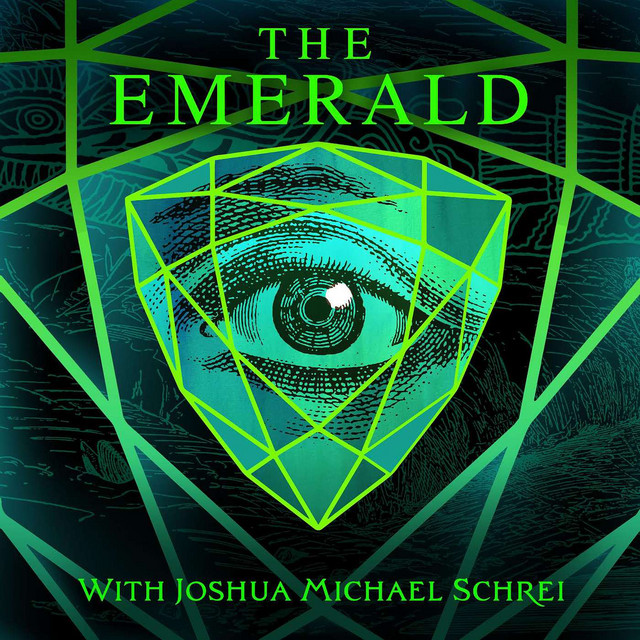
The Emerald Podcast For the past few years, I’ve been diving deep into ancient myths, and last year I stumbled upon a podcast that has completely captivated me since. The Emerald podcast is a mesmerising blend of myth, story, music, and imagination, creating an immersive experience (best described as a “sonic journey”) that hooked me from the first episode. This podcast reminds us of the importance of reviving the imaginative and poetic essence of human experience, celebrated by cultures for thousands of years, to address today’s unprecedented challenges. Britt Broekhaus, project coordinator
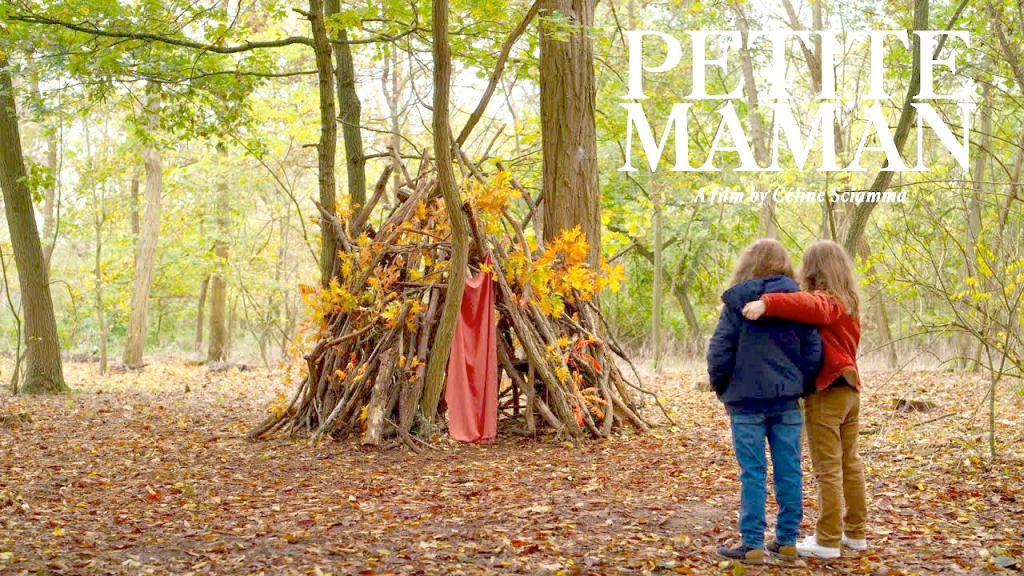
Film: Petite Maman, a 2021 French fantasy drama, written and directed by Céline Sciamma Why I would recommend it: always wished you could have met your parents when they were much younger – or even the same age as you? The film follows a young girl who experiences just that. She copes with the death of her maternal grandmother by bonding with her mother – who she meets in the woods, and who is eight years old, just like she is. It does not take long before she quietly realizes that this stranger is actually her mother in a much younger version. The film is beautifully shot, lovely to look at, thought-provoking, psychologically well constructed and (somehow) strangely credible. It stayed with me for weeks after I saw it. Petite Maman is available on Pathé Thuis. Helleke van den Braber
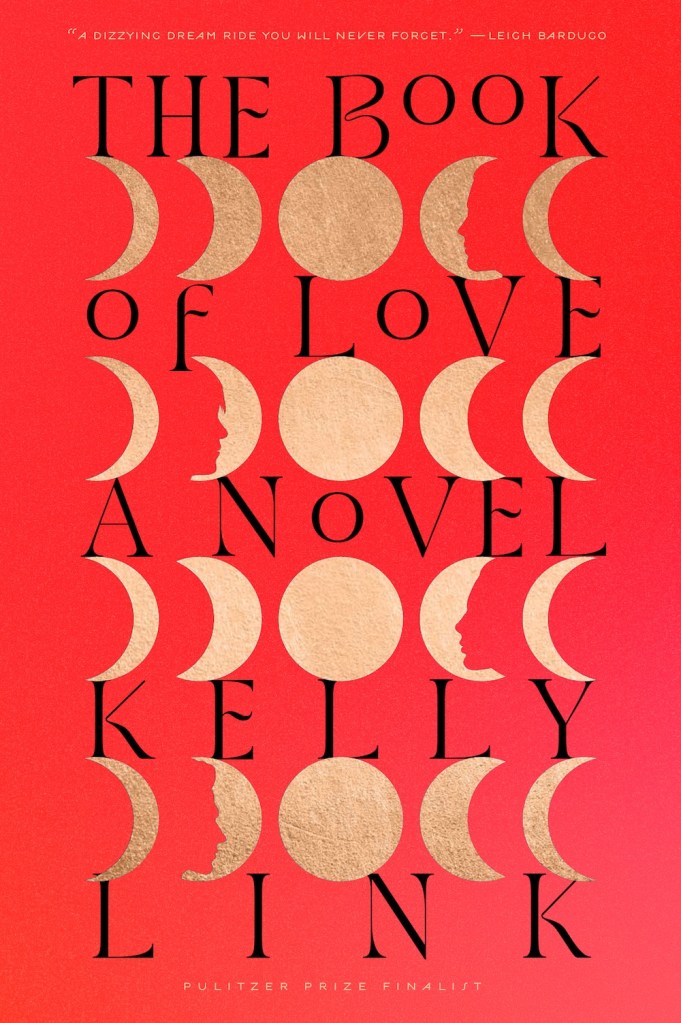
Novel: The Book of Love – Kelly Link I recommend The Book of Love because it is captivatingly strange. I spent the first half of the book having my expectations defied and wondering where on earth the plot was going, and the second half deeply impressed with the way all these widely diverging threads of plot were woven into a coherent whole. This is a book for people who enjoy magical realism, interpersonal drama, and carefully wrought prose. Julia Neugarten, PhD candidate
Album: ‘The Shape of Fluidity’ – DOOL This album was put into the world in April 2024 and since then I have been loving it, as it touched something in me. As the artists themselves say: “The theme of the album pitches the concept of identity against the backdrop of a world in constant flux, and deals with change. […] We have to be as fluid as water to navigate ourselves through this ocean of possibilities and uncertainties – and make peace with chaos and impermanence.” Demi Storm, PhD candidate
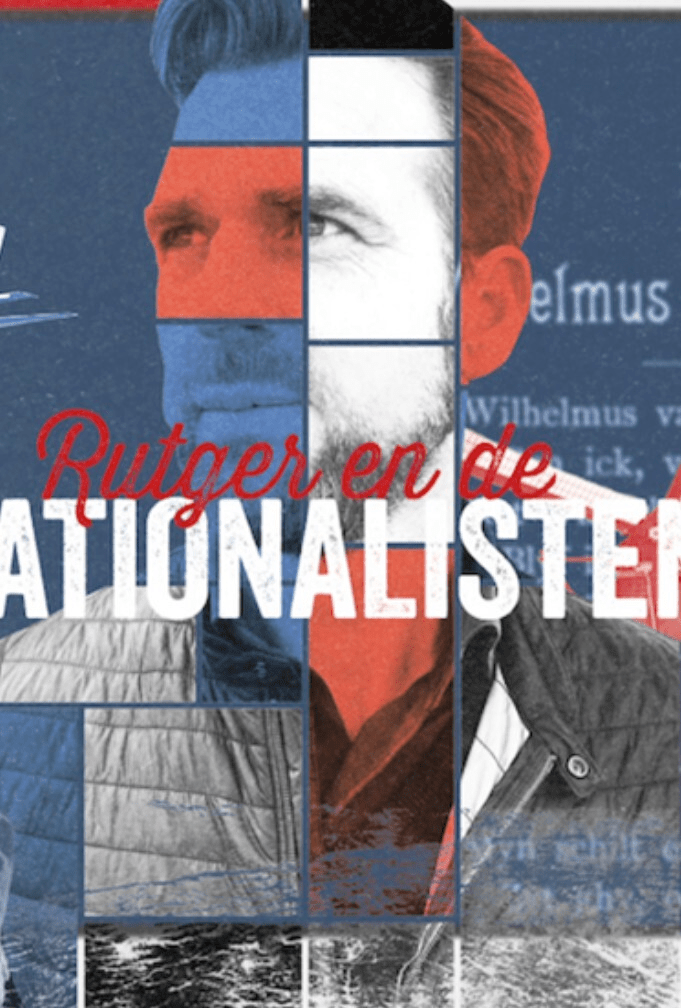
TV Program: Rutger en de Nationalisten (2023) In case your summer is too relaxing, and you are afraid of getting too optimistic about the future, I’d recommend the NPO series Rutger en de Nationalisten (2023). In this series, Rutger Castricum (PowNed) follows a number of nationalists of different flavours in their daily lives and work – from anti-vaxx conspiracist, farmer, politician, or local neighbourhood watch to student association and Friesian car mechanic. The series gives a good and disconcerting insight into a world that might seem far away, but that surrounds us every day. Happy watching! Anonymous Contributor
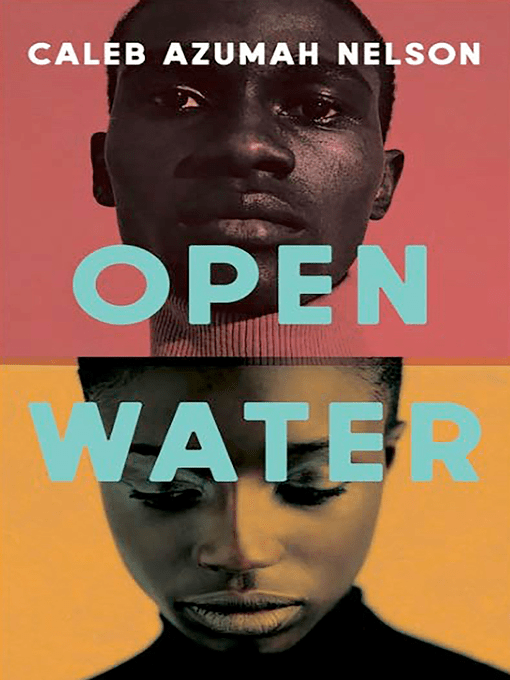
Novella: Open Water – Caleb Azumah Nelson Both intimate and brutal, Open Water is a beautifully written novella that has made a great impact on me despite its short length. At first glance, it is mostly a love story between a photographer and dancer in London, but unfolds into careful examinations of Black artistry, racial injustice, police brutality and mental health. I love the lyrical prose and musical influence, and have re-read many passages since my first read; it’s the perfect slow read for summer! Joy Koopman, PhD candidate
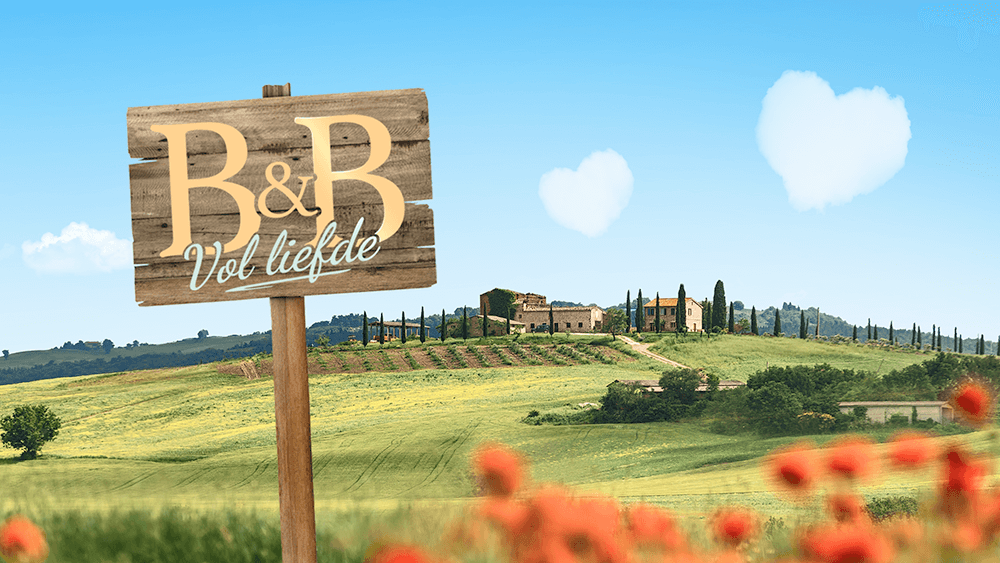
TV Program: B&B Vol Liefde Ja kijk, ik kan nu heel cultureel verantwoord gaan doen, maar we willen deze zomer gewoon allemaal B&B Vol Liefde kijken toch? De afgelopen 3 zomers was dit dé zomerbesteding. Ik was oprecht verdrietig op vakantie omdat ik toen 10 dagen moest missen. Het is super wholesome hoe al die mensen met elkaar omgaan, er zijn vaak mooie natuurbeelden, er komen iconische memes uit en de afleveringen zijn ook lekker lang (ongeveer een uur en dat dan 5x per week) dus dat is perfect. Lekker met je hoofd voor de ventilator als het snikheet is, wijntje erbij. Maaike van Leendert, lecturer
Exhibition: Spot On – Hairytales in museum Kunstpalast, Düsseldorf This exhibition is just a small room in a large museum, but it showcases a particularly interesting subject. The way that hair is styled tells us something about social status and belonging to societal groups. Cuts and hairdos expose notions of gender and body image of their time. They reflect norms and are an expression of political protest and resistance. “Hairytales” opens up perspectives on this intimate, symbolic material. Jeanine Belger, Teacher in Residence
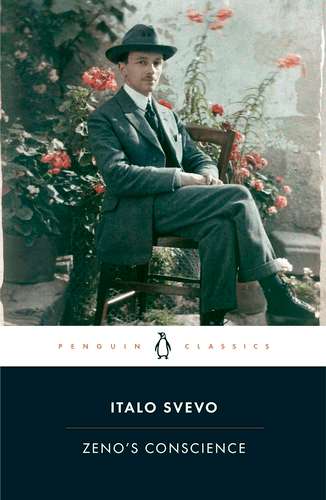
Novel: Zeno’s Conscience by Italo Svevo At the moment I am (re)reading this classic and I’m just smiling and crying and applauding all the time. Originally published in Italy in 1923 (as La coscienza di Zeno), this novel hasn’t lost anything of its power and ingenuity. Memorable protagonist, a continuous embarassing self-analysis. Every sentence is to be savoured. Natascha Veldhorst
Concert on September 26/27: Nick Cave & the Bad Seeds “The Wild God Tour” in Amsterdam’s Ziggo Dome. The 26th is already sold out but there are still tickets available for the 27th. Cave’s approach to culture and literature has been an inspiration to me as a student and later as a teacher. Rarely do I come across a band or a song where music and lyrics so powerfully transform one another, yielding layers of meaning that are as much scary as they are uplifting, often bordering on the sublime. I always enjoy coming back to his art, which is why recommend this upcoming concert. Laszlo Muntean, assistant professor of visual culture and some other stuff
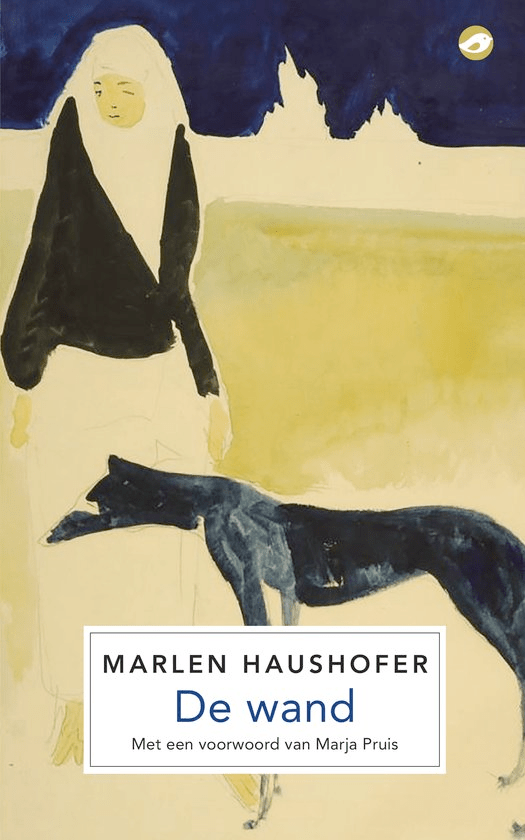
Novel: The Wall (Die Wand) – Marlen Haushofer (1963) My recommendation is one of my favorite novels of all time: The Wall by Austrian writer Marlen Haushofer. This is an ecofeminist novel about a woman who wakes up in a cabin in the woods to realize she is separated from the rest of the world by a transparent wall. The forest and a few animals are her only companions, creating difficult conditions for survival, but also stimulating her to document her daily activities and thoughts about being the only human among nonhumans. The world the book creates is, despite its dystopian elements, a wonderful place to immerse oneself in during a summer break. After reading, you can also enjoy the film adaption (Pösler, 2012), but I would recommend you to first imagine the world this moving book creates by yourself. Rianne Riemens, PhD candidate
The header image for this blogpost was created by Courtney McGough and shared on Flickr under a CC BY-NC-ND 2.0 license.
According to her parents, Amy Winehouse was quite a private person before she became famous as the voice of her generation. As a young girl she’d spend ages in her bedroom writing and drawing stuff she’d typically keep to herself. Even as an artist she would never play her family a new song before it was absolutely perfect. You’d think, then, that Winehouse would have dreaded the prospect of the publication of her juvenilia after her death. Little did anyone know that it would come so soon, after a short but commercially as well as critically successful career, which spawned two studio albums, a number of hit singles and many iconic live performances. As last year’s publication of Amy WinehouseIn Her Words suggests, there was little difference between public and private Amy. It shows how her early writing actually prepared for the daring candor and self-deprecating humour of her songs.
The book’s arrival was perhaps inevitable as well: posthumous releases of musicians’ private papers have become something of a staple of pop life writing. The last couple of decades have seen the publication of Kurt Cobain’s Journals (2002), The John Lennon Letters (2012), Jimi Hendrix’ Starting at Zero: His Own Story (2013), Ian Curtis’ So This Is Permanence (2014) and Prince’s The Beautiful Ones (2019). Some of these piece together a more or less complete autobiographical narrative by carefully sequencing extant journal fragments, quotes from interviews and song lyrics (Hendrix), while others bring together facsimile of letters, notebooks and other memorabilia without too much interference from curators or editors (Curtis). Amy Winehouse’s book falls in between these categories and most resembles Prince’s memoir, which supplements His Purpleness’ own writing with editorial commentary and pre-fame photographs from family albums.
In Her Words was compiled by Winehouse’s parents and is divided into several sections, from “Early Years” and “School Days” to “Fame” and “Legacy”. All of these are prefaced by short biographical chapters by Janis Winehouse-Collins and Mitch Winehouse, who also provide commentary to the visual material. The latter confirms that Winehouse was an “obsessive documenter” (16) of her own life from an early age onwards. She loved making lists: of words to describe herself (“loud, bright, bold, DRAMATIC, MELODRAMATIC”), but also of her “trademarks” as an artist (“walking bass, sweet jazz chords, hip hop beats”). Some of her notes can be read as memos to herself (“New rule: always track m8’s/ layer harmonies over em”). We learn that Winehouse was given the nickname of “Nooge” by her mother, “a Yiddish word that means she was always pushing the boundaries” (37). Even funnier is the letter in which the gobby young Amy tells the story of how she is nicknamed “Main Mouth” by a boy she meets on holiday, who subsequently christens her two best friends “Mouth 2” and “Mouth 3” (93).
The closer Winehouse gets to adulthood, the longer and more seriously self-reflective her writing becomes. Some reviewers have called In Her Words a “sanitised” portrait, a criticism Janis and Mitch anticipate by writing that “Despite what many people presume or have written about Amy’s life in the past, we’re hard-pressed to find much torment or misery in any of her writings” (15). There are definitely stories missing and Janis and Mitch sometimes seem at a loss as to how to read the prose poems and diary-like pages from their daughter’s (late-)adolescence. They comment less frequently on texts from this period, which does leave room for readers to interpret these more emotional texts independently. On the whole, the book is a treat for fans, who are having a field day anyway, with the recent release of Sam Taylor-Wood’s biopic Back to Black, starring Marisa Abela.
A Losing Game
Naturally, any book about a tempestuous life like Amy Winehouse’s – or, indeed, any human life – will have to make compromises as to what to include and what not, even if its title or its whole paratextual presentation may imply that readers will get the whole truth and nothing but the truth. In the end, even life writing texts that “simply” let their auto/biographical subjects speak through the private papers they left behind only offer interpretations of those people’s life stories – or especially such texts, as the material they share with the world is necessarily curated and, thus, an inevitable framing of fact. It’s the eternal dilemma facing all auto/biographers: it’s impossible to represent “the whole truth” without form, but form has the nasty habit of shaping meaning.
So if, as Winehouse sang, love is a losing game, then life writing is at least… complicated. Perhaps the more so in biographies, texts that write the lives of others, even if the biographical and autobiographical are never easily separated (hence, the use of the slash in “auto/biography” by life writing scholars). Indeed, as Joanna Biggs writes in her LRB review of Catherine Lacey’s novel Biography of X (2023), “The problem with biography is that it’s impossible.” Of course, all depends on what you expect life narratives to do, but the representation of actual people in writing is never as perfectly factual, objective and disinterested as some auto/biographies want us to believe.
The “problem” of biography may actually explain many readers’ fascination for “real life” stories, but perhaps also why biofiction – the merging of fact and fiction in, for example, novels about historical individuals – remains one of life writing’s most popular sub-genres. Fiction is form shaping meaning without fixing it. Or, to borrow from Michel Foucault, fiction is form shaping a proliferation of meaning. Biofiction, especially when it writes the lives of artists, also offers the opportunity to refer to the work of its subjects without suggesting one-to-one correspondences between life and art. In fictionalised life narratives about authors, you can let their own fiction speak again (and for itself), raising fundamental questions about the relation between life and art as well as the very process of life writing itself. The strongest scenes in Taylor-Wood’s Back to Black may be those in which Amy/ Marisa Abela is seen in action as a singer and performer. Winehouse’s songs and how they are delivered say it all, really. The more so since the film – perhaps deliberately, then – spends more time on Amy’s life beyond the studio and the stage.
Playing with Chronology
As a life writing text, In Her Words has an intriguing and meaningful shape as well. The order in which the story is told contributes to the image it construes of, as it says on the back cover, a “girl who became a legend”. It tries to create a more or less coherent and auto/biographically fairly conventional narrative with, among other things, chronologically organised chapters on childhood, school, professional life etc. The book emphasises certain topics while skipping others and there is an interesting dynamic at work in the interaction between the visual material and the accompanying commentary – especially when some writings and/ or photographs are explained and others aren’t.
The book spends quite some time on Winehouse’s childhood and adolescence, while the “Fame” section only starts on p. 230 (of 288) and contains more photographs than personal notes; a result, her parents write, of her touring schedule, a lack of privacy and the impact of her addictions. A striking absence is Blake Fielder-Civil, Winehouse’s former husband. When reading In Her Words – Winehouse’s notes as well as her parents’ commentary – you’d think he never even crossed paths with his wife, while Taylor-Wood’s film turns their love affair into one of its focal points. In their foreword, her parents do once mention the “ill-fated relationship” documented by the Back to Black album (26), but they refrain from naming Fielder-Civil.
In Her Words may be structured rather traditionally chapter-wise, it does play with chronology in a number of significant ways. The highlighted quotes from Winehouse’s writings on spreads of pages not only function to link and comment on parts of her life story, they also generate emotional responses when their dramatic irony is recognised. For example, the final quote of the book reads: “I’ve got all this time to make that happen… I’ve got years to do music”, sentences that acquire the weight of “famous last words” as a consequence of their appearance as some sort of book conclusion. Sometimes, a phrase from a letter or a note is anachronistically superimposed on a photograph from another, often earlier source. One instance is the handwritten Michael Jackson reference “You know Im bad Im bad Im bad” projected onto a picture of a moody young Amy (67), which creates a humorous effect by appealing to readers’ knowledge of Winehouse’s later life.
Apart from these ironic anachronisms, there are also quotes that acquire a specific meaning when taken out of context. In “Early Years”, amid memorabilia of her childhood, Winehouse comments: “Seeing as I was very young, I don’t remember much. But I do remember being an angel” (74). As becomes clear one section later, this apparent retrospective reflection on her younger self is actually lifted from a primary school scrapbook chronicling her appearance in a nativity play as, well, angel (87).
The Genuine Article
Without explaining anything away, In Her Words makes you want to revisit her two studio albums, Frank and Back to Black, as well as wonder about the connections between Winehouse’s private writing and her songs. As said, the book adds to the suggestion that her song lyrics organically developed from the autobiographical dimension of her private writing, but it does so while raising the question if Winehouse’s songs should also be listened to as further exploring that writing’s note-to-self aspect. Which is not to say that she’s wasn’t interested in communicating with an audience, or that it’s difficult to identify with the very personal emotions she processed through songs like “What Is It About Men” and “You Know I’m No Good”. She was never so pretentious as to present her own experiences as symbolising the “human condition” – to put it MELODRAMATICALLY. But even without intentionally universalising personal pain, Winehouse clearly struck a chord with fans who love her music not only because they recognise themselves in her stories, but also because she told these with such brutal honesty.
She certainly wasn’t some kind of ten-a-penny, sweet-talking singer-songwriter; “Main Mouth” could be tough as well – both on others and herself. In fact, most music fans’ first introduction to Amy Winehouse will have been her debut single and Frank opening track “Stronger Than Me”, in which she effectively disses a “weak” boyfriend by, among other things, asking him if he is gay. (Fittingly, in Taylor-Wood’s film, Winehouse’s harder side is first revealed via the scene in which she dumps said boyfriend.) Equally vulnerable and defiant, she was real: in an industry in which authenticity is so often just another performance, Amy Winehouse stood out as the genuine article. To her parents’ credit, In Her Words doesn’t hammer home the message. But then again, there’s no need with the kind of material it so beautifully presents.
For the past year and a half I have had a series of intensive talks with lecturers and students all over campus. This is part of an educational innovation project on sustainability in education. Since I am specialized in – and fascinated by – teaching and learning, this project is also a way to dive more deeply into the question what we are talking about when we’re talking about education – or rather: what are we doing when we’re ‘doing education’? For this project, we visited every nook and cranny of our campus and met with staff and students from 38 bachelor’s programmes. And while our ‘sample’ of lecturers and students is not statistically representative, some patterns are starting to emerge that go beyond the specific group of people we talked to.
We started our first interview by asking students and lecturers to describe their programme in two or three sentences – as if they were at a family gathering and an aunt or uncle asks “what is it you’re studying again?” All save one of our 76 interviewees answered by describing the content of the curriculum: “my study is about …” That may seem logical, but it is highly problematic, given that in the subsequent interviews and workshops we organized, we found a consistent pattern of focus on the content (also referred to as “the basis” or “the core”) and a disturbing silence when it came to identifying what students are able to do with that content. Both lecturers and students found it very hard to tell which skills, attitudes, or competencies students learn. Digging deeper into this matter, we found that (luckily) students actually do learn important skills, but that in many cases these skills were not assessed or given feedback on. We call this the hidden curriculum.
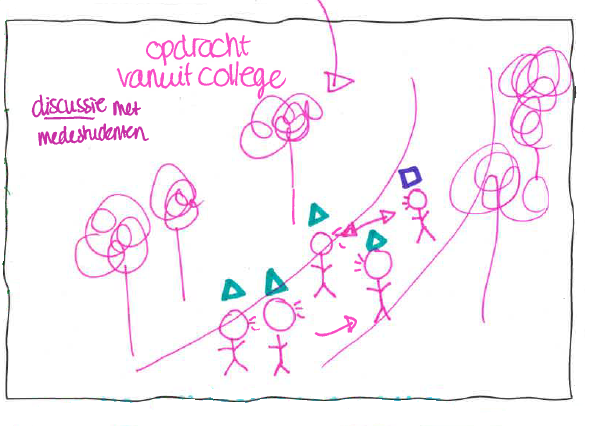
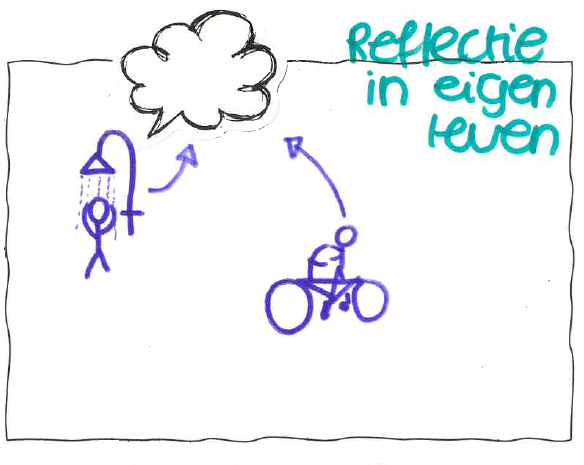
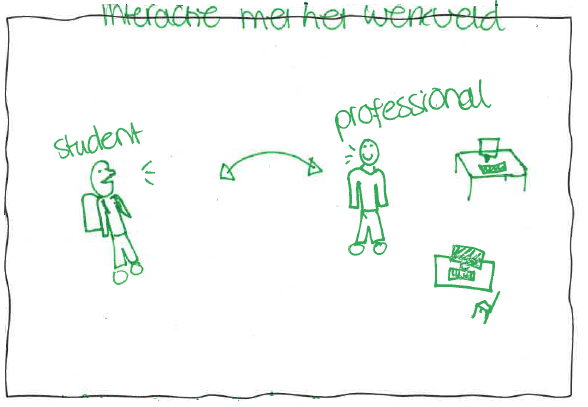
This hidden curriculum at universities is a curriculum that, in the words of one of the participant lecturers, was “who we really are”. Students across disciplines affirmed that they could recognise fellow students by these skills and attitudes as different from students in other disciplines. But how do students acquire these skills? As one lecturer put it, between classes “magic happens”, without the lecturers explicitly guiding or steering students in this learning process. We then tried to make this explicit by asking lecturers and students to make a storyboard of the learning process, visualising student activity during a course. This proved to be a difficult, but often revealing exercise. Reflecting on one’s learning process, developing critical thinking skills, learning to work in teams are key objectives, yet they very likely happen outside our lecture halls.
It is time that we recognise that the most important aspect of our discipline is not what it is about, but what we want our students to be able to do with the content we are treating in class. Only then can we answer why it is important for cultural students to be able to analyse films, songs, visual art, theatre, and poetry; why it is extremely relevant for students (and for society) that people are trained to critically analyse cultural practices and policy. Because we are just as relevant as any other discipline, from Economy to Physics, from Computing Science to Psychology. The world needs public servants, journalists, educators, and other professionals who are able to critically reflect on the cultural aspect of the global crises we are in the middle of: climate, migration, housing, social safety, discrimination, and war. And we do teach them that – we just don’t always know how.
Do you want to think with us in opening up our hidden curriculum? Send me a message at edwin.vanmeerkerk@ru.nl.
When I am feeling down, I watch an episode of Gilmore Girls, an early-2000’s dramedy about a mother, her teenage daughter, and their romantic entanglements in the idyllic town of Stars Hollow. Now, before you point out all the ways that Gilmore Girls has aged poorly – and yes, it has classist and fatphobic undertones and the way it portrays Korean Americans leaves much to be desired – I want to note that the show is also optimistic, kind-hearted, clever, funny, and female-centric. In short, Gilmore Girls is (almost) everything I look for in a feel-good show.
Here’s something else I tend to do when I’m feeling low: I read fanfiction – or fic – on Archive of Our Own, one of the largest English-language fanfiction websites. Because of the way the archive is structured, I can look for stories that either allow me to wallow in my self-pity (which we call angst in fanfiction-jargon) or stories that pick me up and fill me with warm fuzzy feelings (which we call fluff). Natalia Samutina described fanfiction as “emotional landscapes of reading,” because it lets readers curate their emotional trajectory this way.1My own recent research also shows that some responses to fanfiction praise stories for their capacity to bring about specific emotions, especially comfort.
I am satisfied with my coping strategies. I’m sure everyone feels sad from time to time, but a Gilmore Girls + fanfic double whammy never fails to cheer me up, which is why I find it strange that very little fanfiction has been written about Gilmore Girls. And since I am a data-driven scholar of fanfiction, I decided to quantify this matter: which TV shows generate a lot of fanfiction? Which generate almost none? What could explain the difference in fanfiction production between these shows?
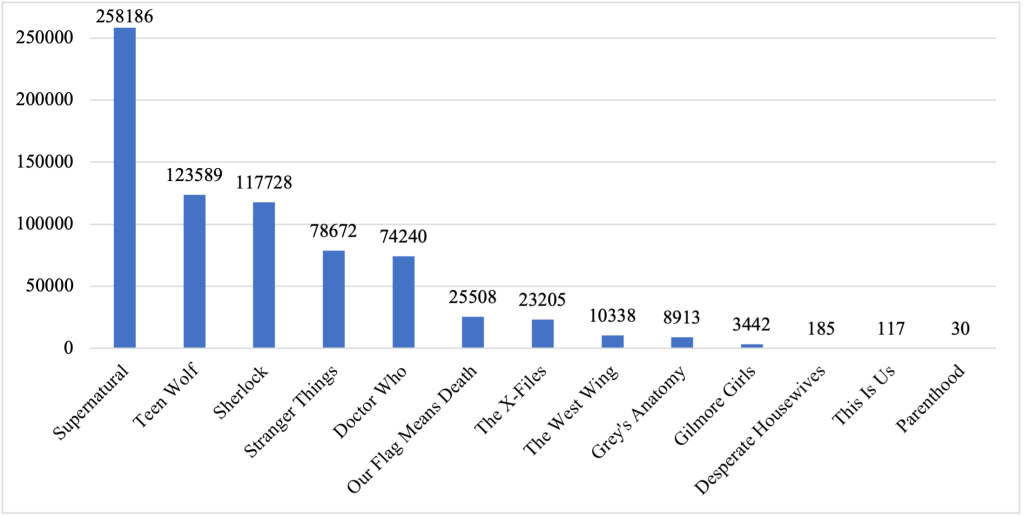
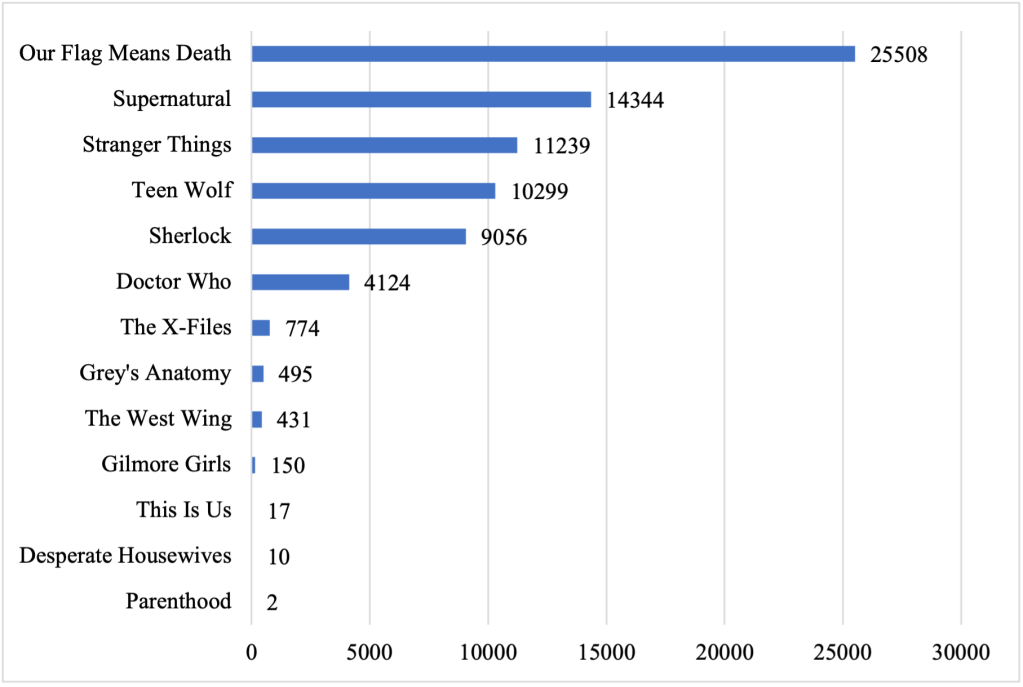
Here are some TV shows I randomly hand-picked, visualized with the number of fanfics written about them on Archive of Our Own as counted at the start of 2024.2
How many stories?
Works of fanfiction per TV fandom
If you’re familiar with TV fandom, the numbers I found probably don’t surprise you. After all, some of these shows have had much more time to accrue a committed fanbase than others, and some also have many more episodes. So, let’s divide the number of stories written about each show by the number of years that have passed since it first aired; that’s the amount of time they’ve had to accrue fanfiction.
Fanfiction Production Over Time, Seasons, and Episodes
Works of fanfiction per year
Our Flag Means Death comes out as the clear winner here. Since its inception in 2022, this show has had a very active and vocal fanbase. But Our Flag Means. Death has only had two seasons; what is the effect of that?
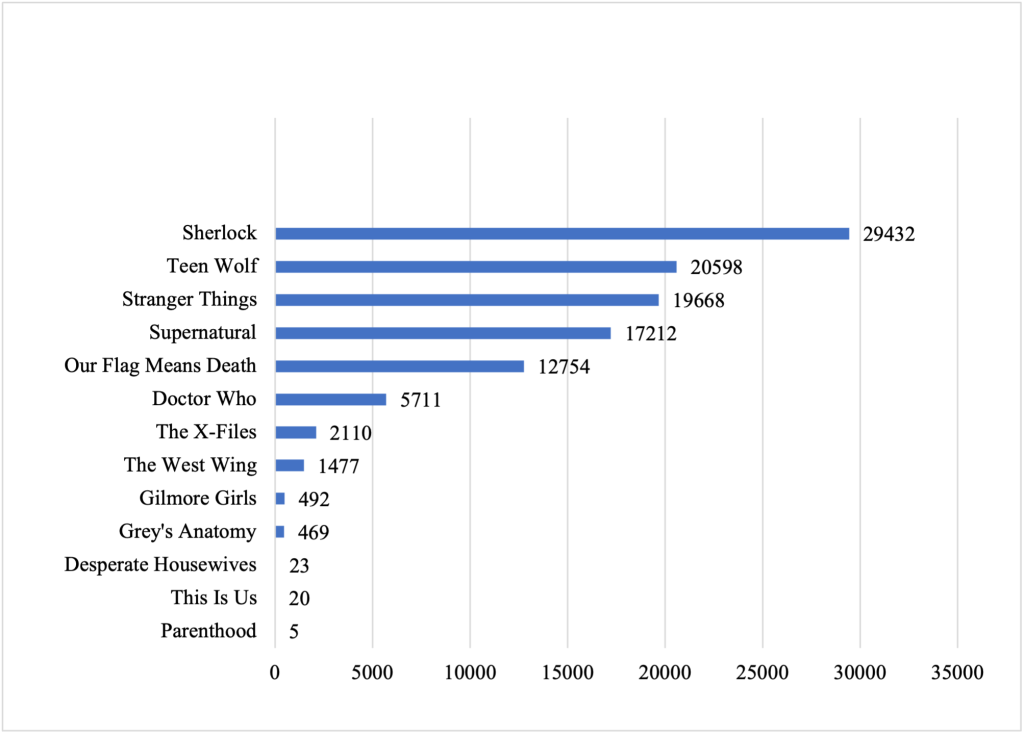
Works of fanfiction per show’s seasons
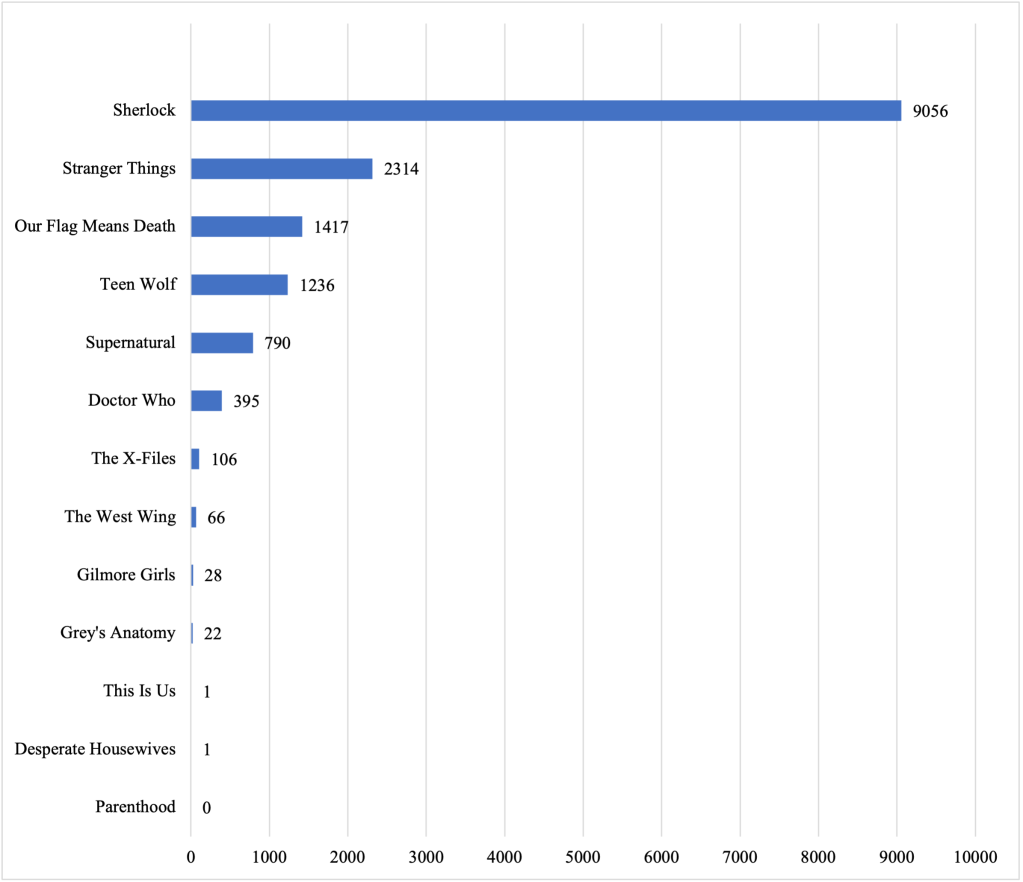
In this comparison, the clear winner is Sherlock, which has a meager four seasons. Sherlock generated an impressive 29.000 works of fanfiction per season, almost 30% more than the runner up, Teen Wolf, which averages a little more than 20.000 stories per season over six seasons.3 When looking at the average number of stories produced per episode, Sherlock also comes out as the clear winner with more than 9.000. Runner-up Stranger Things has a little over 2.000. This could be due to Sherlock’s unusual format, which consisted of very few episodes per season, all of which were movie-length.
Works of fanfiction per episode
We can conclude that Sherlock fandom has been unusually industrious. But Sherlock isn’t the reason I decided to run these numbers; Gilmore Girls is. In all these comparisons, Parenthood, Desperate Housewives, This Is Us, Grey’s Anatomy and Gilmore Girls are consistently the lowest scorers. These shows have inspired fewest fics overall, fewest works per episode, per season, and per year. Why? What do these shows have in common?
Introducing Ficcability
To explain this phenomenon, I propose the concept of ficcability: the extent to which a particular tv show or other narrative invites, inspires, and encourages the production of fanfiction. This concept builds on Henry Jenkins’ idea of drillability.4
“the ability for a person to explore, in-depth, a deep well of narrative extensions when they stumble upon a fiction that truly captures their attention.”
Jenkins’ notion of drillability calls attention to the fact that not all stories are equally open to interventions and extensions from the audience, and that formal features of the story, such as the perceived depth and extensibility of the narrative, can either invite or discourage rewriting and transformation.
The Unficcable: Emotions-Only Shows
So, what makes a story ficcable? In her 2008 analysis of fan discourse around the TV show Roswell, Louisa Ellen Stein found that fans distinguished between two types of shows, which they called Emotions-Only and Special People-shows.5 As explained by a fan:
“Special People programs focus on talented individuals who face conflict from without, whereas Emotions-Only programs feature ‘normal’ characters whose conflicts come from within themselves and from their relationships with each other.”
And what do all shows that inspired relatively little fanfiction – Parenthood, Desperate Housewives, This Is Us, Grey’s Anatomy and Gilmore Girls – have in common? That’s right; they are Emotions-Only shows. These shows are about families, colleagues, neighbors, and lovers, about the (mis)communications that structure our social world, our desire to be recognized and understood, to share, to connect, to belong. They are comfort shows, in the sense that their emphasis on emotional trajectories can be comforting to watch. These shows help us navigate our feelings and desires by showing us characters who struggle to negotiate social situations we may recognize from our own lives. Additionally, these shows tend to emphasize emotional fulfillment and happy endings for their characters, essentially closing off the narrative. This focus makes narratives such as Gilmore Girls emotionally satisfying. I hypothesize that this makes fanfiction less necessary to give audiences the emotional and narrative closure they seek.
The Ficcable: Special People Shows
By contrast, shows that inspire a lot of fanfiction – Supernatural, Sherlock, Teen Wolf, and Stranger Things – are Special People programs. Their protagonists are monster hunters, genius detectives, werewolves or members of a select group who have access to another world. These shows emphasize action over feeling, plot over person, exterior action over interior character development. These are shows where the narrative tension and structure comes from dramatic encounters with monsters, villains, and crimes, where personal and emotional responses to these dramas are sidelined to make room for action and excitement. Supernatural rarely lingers on the emotional strain of hunting monsters. Later seasons of Sherlock turned attention to the relationship between Sherlock and John, but complicated murder mysteries always remained more central to the plot than feelings. Because of their emphasis on plot, these shows leave an emotional gap that fanfiction communities are then inspired to fill.
Storyworld: An Additional Aspect of Ficcability
Ficcability is also impacted by the construction of a storyworld. In shows structured around monsters and mysteries, the plot is endlessly extensible. In the world of a show like the X-Files or Supernatural, there is always a new monster to fight, a new mystery to solve. As a result, these storyworlds capture the imagination, inviting fanfiction communities to come up with their own fantastical creatures and improbable situations. These adventurous worlds might invite more fanfiction than the ostensibly realistic storyworld – small-town America – of a show like Gilmore Girls.
So ficcability is a property of a TV show that relates both to the imaginative potential of its storyworld and to the show’s position on an axis that goes from emotion-oriented to action-oriented.
Problematizing Ficcability
A closer look at Our Flag Means Death (OFMD), the clear winner in the Fics/Year-category, problematizes the concept of ficcability. OFMD is a show about pirates. It’s heavy on the action and its storyworld is full of adventure. At the same time, interpersonal relationships are central to the show, and the comedy largely comes from the clash between adventure-oriented characters and storylines and the strain these fast-paced plots put on interpersonal relationships.
In one of the funniest moments of the show’s second season, a group of enemy pirates decides not to torture and kill the protagonists. Instead, the enemies mutiny, because they no longer feel that their captain is providing them with an emotionally nurturing work environment. That’s right. An emotionally nurturing work environment. On a pirate ship.
In this scene, OFMD explicitly stages the incompatibility of fictional characters’ emotional fulfillment and their adventurous lifestyles and storyworld. Perhaps it is the show’s acknowledgement of their characters’ emotional needs – in the face of their adrenaline-fueled adventures – that makes it so incredibly ficcable, and perhaps Our Flag Means Death is exploring possibilities for a different kind of TV show – and associated fandom – that combines the ficcable with the emotionally resonant.
This aligns with the observation, taken from Stein’s case study, that some fans praise TV shows’ ability to transcend strict genre categorizations. I hope to see many more transgeneric shows on TV in the future, because they seem eminently ficcable to me!
Many thanks to Fenna Geelhoed for giving feedback on an earlier draft of this blogpost.
Footnotes
Samutina, Natalia. “Emotional Landscapes of Reading: Fan Fiction in the Context of Contemporary Reading Practices.” International Journal of Cultural Studies, vol. 20, no. 3, 2017, pp. 253–69, https://doi.org/10.1177/1367877916628238. ↩︎
I am sure other fanfiction platforms, such as Fanfiction.net or Wattpad, have very different distributions over fandoms. ↩︎
This comparison does not account for the fact that fanfiction production is unlikely to be stable over time. ↩︎
Stein, Louisa Ellen. “‘Emotions-Only’ versus ‘Special People’: Genre in Fan Discourse.” Transformative Works and Cultures, vol. 1, Sept. 2008. URL: https://doi.org/10.3983/twc.2008.043. ↩︎
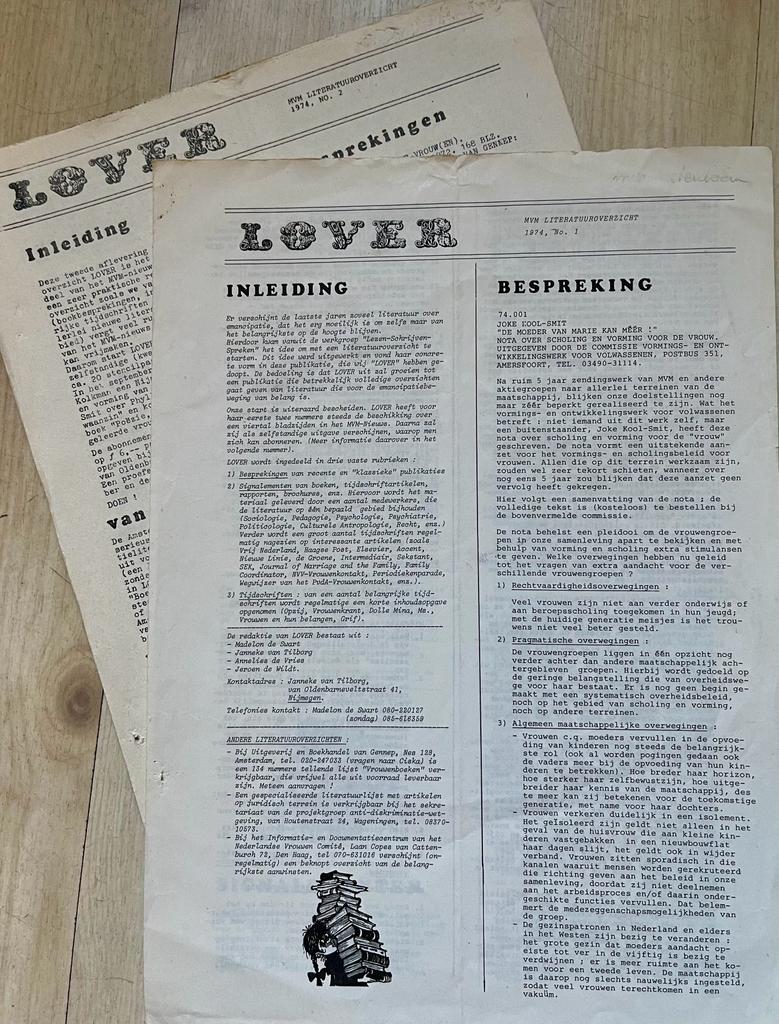
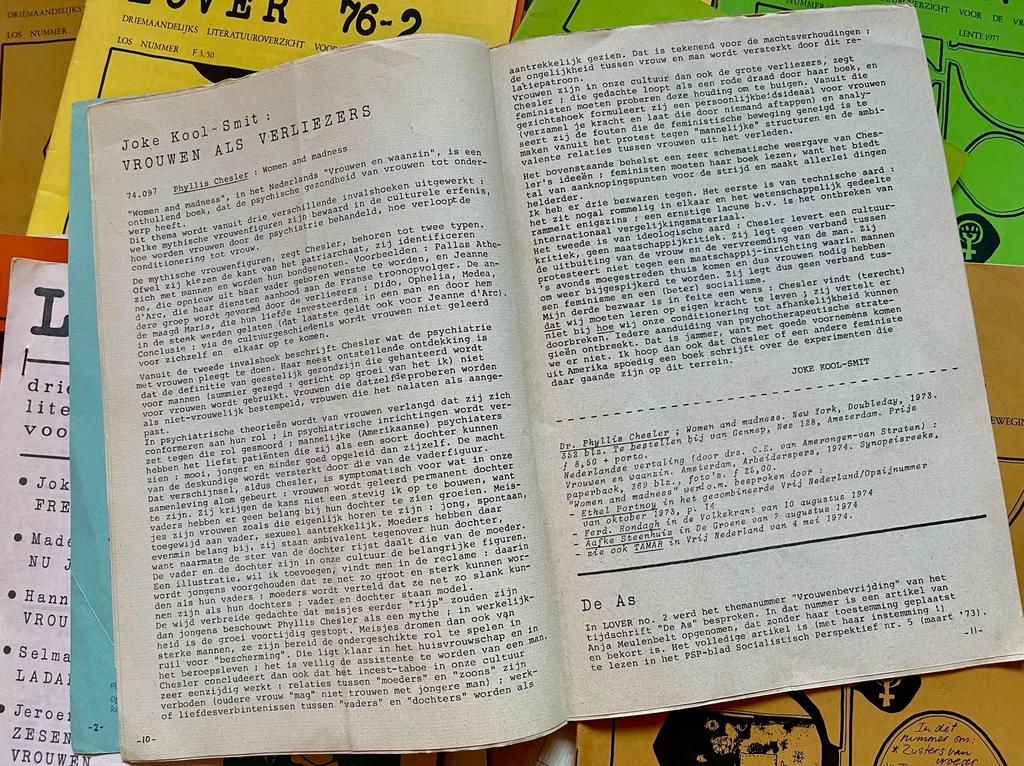
Anno 2024 is informatie over feminisme overal te vinden, bijvoorbeeld op TikTok en Instagram of in mainstream tijdschriften als LINDA. Dat was in 1974, toen Tijdschrift LOVER werd opgericht, wel anders. Het tijdschrift viert dit jaar haar vijftigjarig jubileum. Tijd voor een korte geschiedenis.
Tijdschrift LOVER ontstond in 1974, in de hoogtijdagen van de tweede feministische golf. Waar de eerste golf zich eind negentiende en begin twintigste eeuw vooral richtte op scholing, arbeid en politieke rechten voor vrouwen, stonden in de tweede golf zaken als legale abortus, recht op kinderopvang en een afschaffing van de wettelijke discriminatie van vrouwen centraal. In Nederland waren er verschillende groepen die zich hard maakten voor deze zaken, zoals de actiegroep Dolle Mina. LOVER was verbonden aan een andere groep: de Man-Vrouw-Maatschappij. In 1974 werd LOVER voor het eerst uitgebracht, toen als bijlage van de MVM-nieuwsbrief. Er was in die tijd behoefte aan structuur in de grote hoeveelheid feministische geschriften die uitkwamen, dus kwam MVM met een LiteratuurOVERzicht: LOVER was geboren (en spreek je tot op de dag van vandaag dus uit als lóóver).
Binnen enkele maanden bleek LOVER zo populair te zijn dat het uitgroeide tot een volwaardig tijdschrift. In eerste instantie bestond het tijdschrift slechts uit twee rubrieken: ‘signalementen’ – tientallen pagina’s aan bronvermeldingen – en ‘teksten’ – recensies van een aantal van die publicaties. Na een paar jaar veranderde dit langzaam. In 1977 stelde prominente feministe Andreas Burnier dat het feminisme geen visie had, een one-issue-beweging werd en te veel in de schuldvraag bleef hangen. Hierover werd gediscussieerd in volgende LOVER-uitgaves, waardoor LOVER van literatuuroverzicht steeds meer in een discussieforum veranderde. Verschillende ‘grote namen’ binnen het Nederlandse feminisme, zoals Maaike Meijer, Anja Meulenbelt en Gloria Wekker, publiceerden in LOVER. Begin jaren tachtig had het tijdschrift zo’n 3000 abonnees en werd het daarnaast in zestig boekhandels door heel Nederland verkocht.
In de loop van de jaren tachtig ontstond er langzaam meer discussie en bewustzijn over de invloed van bijvoorbeeld racisme, en werd steeds duidelijker dat ‘vrouwen’ niet altijd over een kam geschoren konden worden. LOVER ging ook steeds verder naar buiten kijken. Zo werd in 1986 de rubriek ‘Feministische Tijdschriften Internationaal’ geïntroduceerd, waarin niet alleen de tijdschriften uit andere landen besproken werden, maar ook inzicht werd gegeven in de feministische bewegingen buiten Nederland en ook buiten het westen. Tegenwoordig richt LOVER zich op intersectioneel feminisme.
In 1981 vond LOVER een vast onderkomen aan de Keizersgracht in Amsterdam, waar ook het Informatie- en Documentatiecentrum voor de vrouwenbeweging, de Stichting Vrouwen in de Beeldende Kunst en de Van Leeuwenbibliotheek waren ondergebracht. Jarenlang vond het stabiliteit, met een vaste uitgever en abonnees, en redactievergaderingen die wekelijks een hele dag in beslag namen.
Dat is nu wel anders. In 2007 begon LOVER, meegaand met de tijd, ook online te publiceren, en door afnemende abonnee-aantallen besloot het tijdschrift in 2011 volledig te stoppen met de papieren uitgave. Het format veranderde daardoor drastisch: in plaats van vier keer per jaar een uitgave waarvoor betaald moest worden, werd er vanaf 2011 meerdere keren per week een gratis artikel gepubliceerd. Momenteel publiceert LOVER naast artikelen van haar eigen redactieleden ook stukken die tot stand zijn gekomen binnen samenwerkingen met het tijdschrift Raffia en de organisaties Samen naar de Kliniek en Stem Op Een Vrouw.
Vanaf het begin heeft LOVER vooral op vrijwilligers gedraaid en ook anno 2024 werkt iedereen bij LOVER onbezoldigd. Dat brengt de nodige uitdagingen met zich mee: drukke agenda’s staan het tegenwoordig niet meer toe om hele maandagen te vergaderen en nu er ook geen abonnementsgeld meer binnenkomt, is het financieel soms krap. Daarom is LOVER ter ere van het vijftigjarig jubileum een crowdfunding gestart, met als doel nog één keer een fysieke uitgave uit te brengen. Daarin wordt het rijke verleden van het tijdschrift geëerd en is er tevens ruimte voor reflectie op het hedendaagse feministische landschap.
Zonder donaties kan de fysieke uitgave niet gerealiseerd worden. Help jij LOVER bij het behalen van haar doel? De link naar de crowdfunding – die nog tot 22 mei loopt – vind je hier. Neem ook zeker een kijkje bij de tegenprestaties die je voor je gift kunt terugkrijgen.





 Culture Weekly