From Grain to Bread was created as part of the course Material Culture, taught by Liedeke Plate in the BA Arts & Culture Studies at Radboud University.
Artist Statement
Our documentary explores how the transformation of grain into bread reflects broader changes in Dutch culture and community. Bread has long connected people to the land and to each other. While the basic process of turning grain into bread has remained materially similar for thousands of years, the context in which this transformation takes place has shifted from local windmills and communal production to industrialized, outsourced systems that often obscure their material and social origins.
To understand what this shift means, we focused on the Molen van Buursink in Markelo, a functioning 19th-century windmill that once formed the center of local grain processing and still operates today as a heritage monument. By visually following the grain’s transformation, from seed to flour to bread, we sought to capture how material processes shape, and are shaped by, human life. Filming at the mill allowed us to approach material culture through sensory ethnography (Pink 2010). We were listening to the creaking wood, watching how the mill was operated, and observing how visitors can engage with this historical site.
The project draws on Arjun Appadurai’s and Igor Kopytoff’s idea of the social life and cultural biography of things (1986), Tim Ingold’s notion of making as correspondence between humans and materials (2013), and Jane Bennett’s understanding of vibrant matter (2010). Together, these frameworks guided our exploration of how bread and grain possess their own forms of agency and meaning within human and ecological systems.
Ultimately, our documentary argues that mills like Molen van Buursink are more than relics of the past. They are living mediators between people, materials, and landscape. By revisiting the material life of grain, we invite viewers to reflect on how re-engaging with local practices might restore a sense of connection between food, community, and environment.
Works Cited
Appadurai, Arjun, editor. The Social Life of Things: Commodities in Cultural Perspective. 1st ed., Cambridge University Press, 1986. https://doi.org/10.1017/CBO9780511819582.
Bennett, Jane. Vibrant Matter: A Political Ecology of Things. With Project Muse, Duke University Press, 2010.
Ingold, Tim. Making: Anthropology, Archaeology, Art and Architecture. Routledge, Taylor & Francis Group, 2013, https://doi.org/10.4324/9780203559055.
Kopytoff Igor. The cultural biography of things: commoditization as process. In: Appadurai A, ed. The Social Life of Things: Commodities in Cultural Perspective. Cambridge University Press; 1986, pp. 64-92.
By Farijn Janssen, Eline Klaessens, Sofieke de Loos and Zsófia Szigetvari
After a day of putting up and handing out pamphlets, our group of young academics – lovingly named “The Gender Groupies (Don’t Be Sexist!)” – were absolutely ecstatic. We had designed these pamphlets to spark conversation about gender inequality in the music industry. We were filled with many emotions: determination, joy and a certain pensiveness…or perhaps reflectiveness. We hadn’t expected many responses or insights from the strangers we had approached to discuss our topic, because it can be intimidating to talk to students about societal issues and we didn’t want to disturb anyone’s peaceful day. However, to our surprise, a receptionist, a festival organiser, a barman and one of his regulars in a cafe took the topic seriously and were enthusiastic to talk about it with us, sparking interesting discussions. Trying to create change in the face of a systemic issue like gender inequality in the music industry, we were starting to see how a personal approach affected others.
This year’s rise of women at the top of pop music shows artists like Chappell Roan, Sabrina Carpenter and Charli XCX establishing themselves in the Billboard Hot 100 all summer long. Alongside this, this decade’s climb from 20.2% women in the Billboard 100 Year-End Charts in 2020 to 35% in 2023 shows a clear increase in the representation of women in the position of music artist. While the on-stage presence of women is more present, this isn’t the case for women “off-stage”, in the studio: producers and songwriters. The USC Annenberg Inclusion Initiative, an organisation that studies diversity, inclusion, and representation in entertainment and media industries, published their research regarding gender inequality in the recording studio. They found that as of 2022, there still were 3.5 men present in the industry for every woman. When it comes to their specific professions, women made up 30% of artists, 14% of songwriters, 3.4% of producers, and comprised 15.2% of Grammy nominees (Smith et al).1 Even though more women have been entering the music industry over the years, these numbers show that men still make up the large majority of the workforce.
If you’re thinking “this must be better in the Dutch music industry”, you’re going to be disappointed. Researchers Pauwke Berkers, Eefje Smeulders, and Michaël Berghman found that women only made up 13% of BumaStemra members, a Dutch collective society for songwriters, composers, and music producers. In the case of Sena, an organisation concerned with collecting rights for performing artists, the percentage of female members was at 19% (Berkers et al. 28).2 In the live music industry, women are more likely to hold positions in hospitality and marketing, compared to programming, directing and tech work in the Netherlands, according to the Cultuur Monitor, which creates an overview of the most important figures in the Dutch creative sector (Swartjes).3 It’s evident that the Dutch music industry, too, is male dominated.
We started to wonder how our research could actually change something in music, realising we had limited time and resources to do so. After listening to Ani diFranco’s feminist rendition of “Which Side Are You On?” and reading Adrienne Trier-Bieniek & Amanda Pullum’s chapter in Gender & Pop Culture, we thought about consciousness-raising and the role of personal narrative in social movements. Trier-Bieniek and Pullum emphasise that consciousness-raising as a feminist tool for change came from 1970s activism, describing the term as follows:
work done to draw people’s attention to a social problem, increase their understanding of it including how it personally impacts them, and hopefully motivate them to help solve the problem. (85)4
Feminist researchers using feminist standpoint theory have the same perspective. We read the work of Ratna Huirem, Kathiresan Lognathan and Priyanka Patowari, who wrote on feminist standpoint theory in the Journal of Social Work Education and Practice last year. We found it fascinating that this method focuses on centering the experiences of women, mainly by treating women and the testimonies of women more as subjects, rather than objects of study. Feminist researchers often befriend those who partake in their research. They do this in order to give them the safety and freedom to speak openly about their experiences living in the patriarchy. They also encourage their participants to come up with their own suggestions on how to move forward (48-50).5 This approach felt intuitive to us as we reached out to a group of friendly acquaintances we knew working in the industry to carry out a survey of their experiences. This would eventually prompt us to design the pamphlets we mentioned earlier in this blog. We decided to ask them how their gender affected the way they were treated within the industry and asked them to offer advice to those who aspire to follow in their footsteps. Our approach was friendly. We were sending them individual, often personally tailored emails. While we didn’t have the time to delve too deep, we remained understanding of our participants’ individual circumstances, and sent emails to update them on our process long after the surveys had been filled out. We’re even sending them this blog!
We decided to go into the city with the pamphlets made from the responses of the survey to talk to people working at creative places. We were told that our effort to raise consciousness about societal issues is an effective way to achieve change on a greater scale. This further encouraged us to visit as many places as possible. This was our attempt to take our personal approach to institutions, visiting the public library, the Lindenberg Theatre, the Festivalhuis and Cafe De Opstand, among others. Even though we stayed in Nijmegen and only spoke to specific bars and institutions who were already helping women gain visibility and equality, our initiative was still appreciated. We were still able to share our newly-acquired insights and connect them to the general, wide-spread problem. The personal stories that we printed out on our pamphlets resonated with the broader audience (especially with women), who understood the importance of our intervention and wanted to expand our possibilities to raise awareness.
We were offered the opportunity to organise a workshop in the theatre, specifically for women who are already making music (both backstage and onstage). We thought that it would be a great opportunity to present our research to those who should take part in it. There, they could even add to our research project. By creating a safe environment, where women can share their stories without being questioned or judged, it can strengthen the sense of community in them. We would like to empower them with knowledge from our research and advice from those who came before them. This way, they can break away from the stereotypes, – about things like female technicians – and embrace their skills.
It’s sad to see that many talented young girls would rather not pursue a career in music, because they don’t see themselves in those positions. We know that our topic triggers difficult feelings about societal issues of gender, but it’s important to have these discussions in the public sphere. It seems only fitting to us that music should become the vehicle to empower marginalised people, because of how deeply it’s intertwined with social movements.
After our own findings, we looked into Playing for Change: Music and Musicians in the Service of Social Movements by Rosenthal and Flacks to enlighten ourselves on how these personal approaches to music can lead to social change. This work analyses the dynamic role that music plays in social movements, and how music can, intentionally or not, inspire social change. Rosenthal and Flacks argue that music can serve as a tool for mobilisation and as a form of expression to build group identity. Music and social action have always been interconnected; however, the effectiveness of music as a revolutionary tool has often been debated, and the authors of this book argue in favour of its effectiveness. They support this idea by explaining that there is a democratisation of music in movements, which allows anyone to create and adapt songs to reflect their own experiences — a form of grassroots activism. This highlights the importance of looking at individual experiences related to music. Ultimately, music can play a crucial role in shaping and supporting a social call for action due to its emotional resonance and its ability to share values and goals.
When music and activism are combined, they can fight for social change. Rosenthal and Flacks argue that music is not just a reflection of society, but it can also impact social life. So, we need to look at the people who are creating the music and if they are representing the people listening. They quote, “Art is not a mirror held up to reality, but a hammer with which to shape it” (Brecht qtd. in Rosenthal and Flacks 13).6 This leads us to our question of how changes in the music industry can affect human action in the case of gender inequality. The relationship between music and society is dialectical, as it can help to “create, sustain, and alter social reality as well as reflect it” (14). For example, music can be used to maintain values of patriotism, as its ideals are often expressed in songs routinely taught in schools, performed at rituals and celebrated in traditions. This makes sense, if most writers and producers are men. Music can therefore be used to affirm loyalty and guide the behaviour of members of established institutions. Because of this, music can reinforce the hierarchy inherent to a social structure (15). Thus, music can serve to both maintain and disrupt a society and is therefore an essential part of social life. So who is making our music?
“Musicking” is the act of participating in musical experiences in some way (Rosenthal and Flacks 30). This participation can be seen as a political activity as it reflects existing practices. According to C. Wright Mills, political music engenders the “sociological imagination,” which helps listeners to see the social roots in songs, which otherwise might have seemed like individual stories of problems. In this way, music reinforces a collective and structural arrangement of power dynamics (30). This means that music has the potential to change society, as it not only reflects social structures but also contributes to identity expression. It holds power, and through grassroots movements and personal experiences, music can guide us in addressing gender inequality. Thus, to make a change, we need to start at a grassroots level, to make the music industry more female-oriented. So, the way music is made by musicians and experienced by listeners can create a new social order where women are more included in the music scene.
Our personal approach to research has made us feel differently about our function as researchers, as we were much closer to our “subjects” than we had ever been, also considering the feelings of those affected by what we write. We also had to be activistic in our approach. We weren’t just looking on, analysing this phenomenon from afar, but in the middle of it. The result was not just a growing passion on our part, but also on the part of those affected by and able to affect change with us.
Berkers, Pauwke, et al. “Music Creators and Gender Inequality in the Dutch Music Sector.” Tijdschrift Voor Genderstudies, vol. 22, no. 1, May 2019, pp. 27–44. https://doi.org/10.5117/tvgn2019.1.003.berk. ↩︎
Trier-Bieniek, Adrienne and Amanda Pullum. “From Lady Gaga to Consciousness Rap: The Impact of Music on Gender and Social Activism.” Gender & Pop Culture, Sense Publishers, 2014, pp. 81–102. ↩︎
Huirem, Ratna et al. “Feminist Standpoint Theory and Its Importance in Feminist Research.” Journal of Social Work Education and Practice, vol. 5, no. 2, 2023, pp. 46-55. ↩︎
Rosenthal, Rob and Richard Flacks. “An Introduction to the Music-Movement Link”, Playing for Change: Music and Musicians in the Service of Social Movements. London, Routledge, 2011, pp. 1-36. ↩︎
By Talin de Jeu, Miriam Stuefer and Holly van Zoggel
Het Heet Thee originated from a shared interest in tea, gender, and the intersections of the two. With this documentary, we aim to dissect how mythologies surrounding tea and femininity are created and kept alive. By shooting images of the tea habits of ourselves and the people surrounding us, by filming artworks and china, and by collecting additional photographic footage from local archives and movie scenes, we search for intersecting and contradicting aspects of the personal, political and historical.
The documentary roughly follows the making process of tea: starting with ingredients, how they are grown and harvested, moving to the making of tea and the china it is consumed from, followed by the social aspects of drinking tea, and lastly its dregs. The focus on our own hands, shot on handheld phone cameras, emphasises our closeness to the subject but also the situatedness of our narrative. These images are intertwined with different types of archival material. This way, we wanted to underline the vast history and the physical and cultural contexts that all boil down into a single cup of tea. The images in the first chapter show people – predominantly women – working on tea plantations. Even though tea is strongly connected to femininity, the power still lies with men, as they are the ones judging the tea’s quality. We visualised this dichotomy between femininity and masculinity in our tea-culture with the two humorously named teas Decollethee and Theetosteron.
Although we do question the myths through our documentary, the style and nature of the film is subtler than if we had used a voiceover to explain our ideas. We chose this approach because we did not want to teach the viewer how gender(roles) and tea are intertwined. Instead, the documentary is a search for the parallels that constitute the myth, formalized in a way similar to the way myths circulate in our society: with subtlety but ever-present in its details.
The documentary Het Heet Thee was created in the BA course Moving Documentaries.
By Fenne van Beek, Jildou de Jong, Niko Oussoren, and Puck Gregoor
We, Fenne van Beek, Jildou de Jong, Niko Oussoren, and Puck Gregoor, are excited to present to you our short documentary, Banden met Barrels. It is a documentary created for the second-year course ‘Moving Documentaries’ as part of our bachelor’s program in Art and Cultural Studies at Radboud University. As four Dutch students, we wanted to shed light on bicycles, particularly student bicycles. Because where would the average student actually be without their bike? It may seem like a simple, ordinary object, and it is, but the bicycle is also a significant cultural phenomenon whose importance we often overlook. Bicycles are essential in Dutch student life for their practicality and reliability, despite their worn-out appearance. As will become evident in this documentary, the student bicycle can serve as a starting point for many conversations and two-wheeled journeys. We hope Banden met Barrels sparks nostalgia and prompts audiences to pause and appreciate the humble bicycle as more than just a mode of transportation, but as a symbol of freedom, community, and adventure.
The documentary Banden met Barrels was created in the BA course Moving Documentaries.
By Rosa Floris, Lotte Lammers, Marta Ora, Laury van de Ven and Tim Wiesner
In Dutch, the word ‘knuffels’ holds a charming dual meaning, referring to both plush toys and hugs, and thus embodying a sense of comfort and care in a single term. Etymologically rooted in ‘knuffen’, meaning to bump or shove, the term ‘knuffels’ connotes a form of affection that entails both a gentle embrace and a playful nudge, driving home the idea of a push-and-pull, perpetually dynamic bond. This bond is at the center of our documentary, Knuffels, and explored through various interviews with Arts and Culture students of Radboud University. Knuffels pertains to the ambiguity of affection towards plush toys, and attempts to formulate an answer to the question: how do individuals attribute meaning to plushies within the context of ownership, and what psychological, emotional, and symbolic significance do these objects hold for their owners?
Knuffels aims to show truths; the audience is shown small aspects of the documentary’s construction, but not enough to betray the true extent of our involvement or to problematize the notion of truth. Instead, these few elements of construction work to disarm suspicion in the viewer and therefore aid in framing the contents of the documentary as truthful. The presentation of several voices, which at times contradict each other, serves this purpose. Subsequently, we have chosen to make fabric the common denominator in all shots and scenes, which vitalizes a soft aesthetic that fits, frames and harmonizes these oftentimes nostalgic sentiments expressed in the interviews.
As for the documentary in its entirety, the viewer could consider the footage a tapestry that we have carefully woven in collaboration with the interviewees, and from which we later cut and sewed together different pieces to make our final product – the visuals do not fabricate, the fabrics merely visualise. As a result, Knuffels quite literally embraces a storytelling predicated on multiplicity, be it in terms of lived experiences, perspectives, or the very essence of affection itself.
The documentary Knuffels was created in the BA course Moving Documentaries.
Writing is the bread and butter of the humanities scholar. It is our chisel and our marble, our raison d’être, and yet the bane of our existence. With the daunting task of writing a dissertation in the forefront of my mind, I was curious about my colleagues’ writing habits, and so I circulated a questionnaire among the employees of the department of Arts and Culture Studies at Radboud University. The response I got was inspiring and insightful, and whether you’re a student or a scholar, a poet or a playwright, some of it may be helpful to you as well.
How much do we write?
Twelve people responded to the survey. On average, they spend 226 minutes per week writing, or a little under four hours.1 The amount of weekly writing time per person varies by a lot, ranging from 60 to 750 minutes. Together, these 12 people spend 45 hours per week writing.
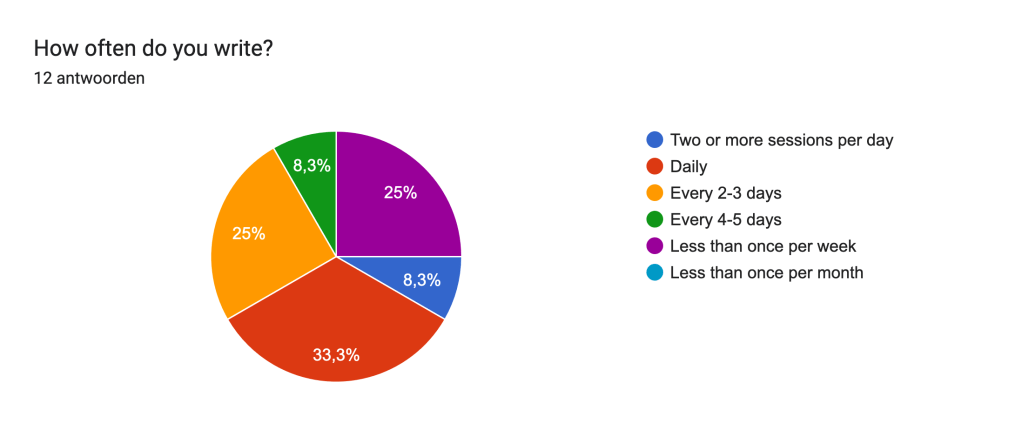
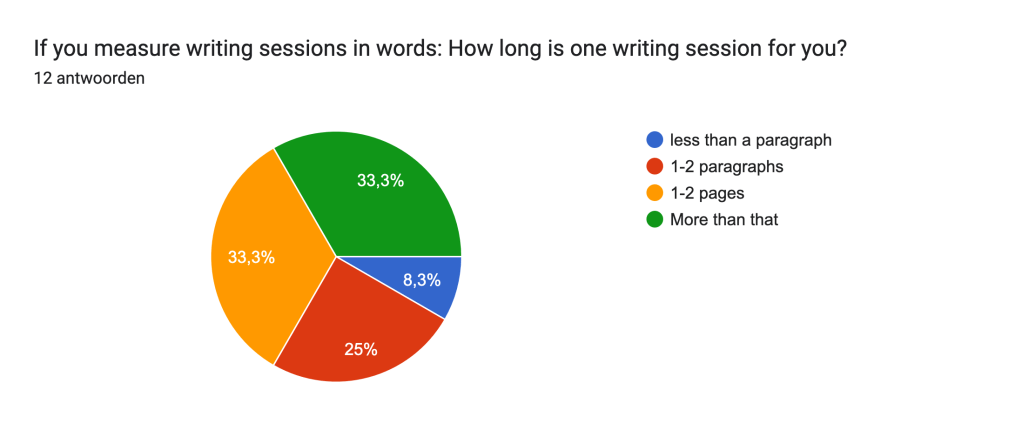
Some people measure writing in time and others measure it in output, so the questionnaire asked about both. Conventional wisdom holds that it is best to write every day,2 and about one-third of respondents do. Shout-out to the person who manages multiple writing sessions per day.
When comparing writing time to word production, interesting differences emerge. One respondent estimates that their writing sessions take longer than 2 hours and results in less than one paragraph of writing. Another estimates that they produce more than two pages in a session of under 30 minutes. Of course these questions do not account for the quality of the writing, or how much actually ends up getting published. This is purely about production.
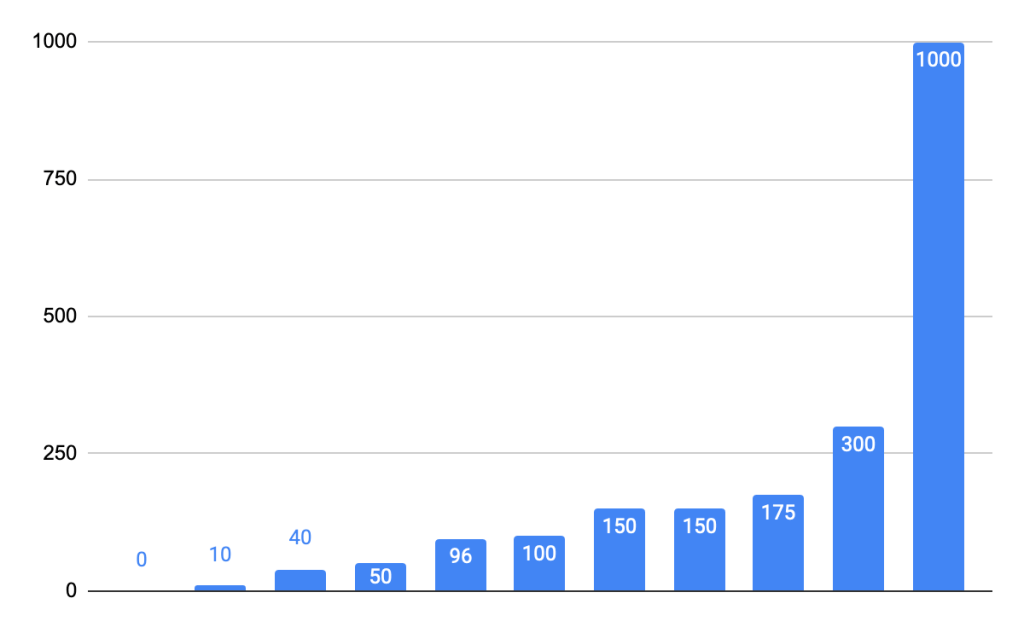
I also asked: How many pages of academic text do you estimate you have written in the past year, assuming a page is around 250 words?3 Here’s the reported response in pages, with each bar representing one respondent.
Notably, the person who estimated their output at 1000 pages a year (actually, their response was ‘more than 1000 pages’) also reported that they were not happy (2 out of 5) with how much they wrote.
How do we feel about writing?
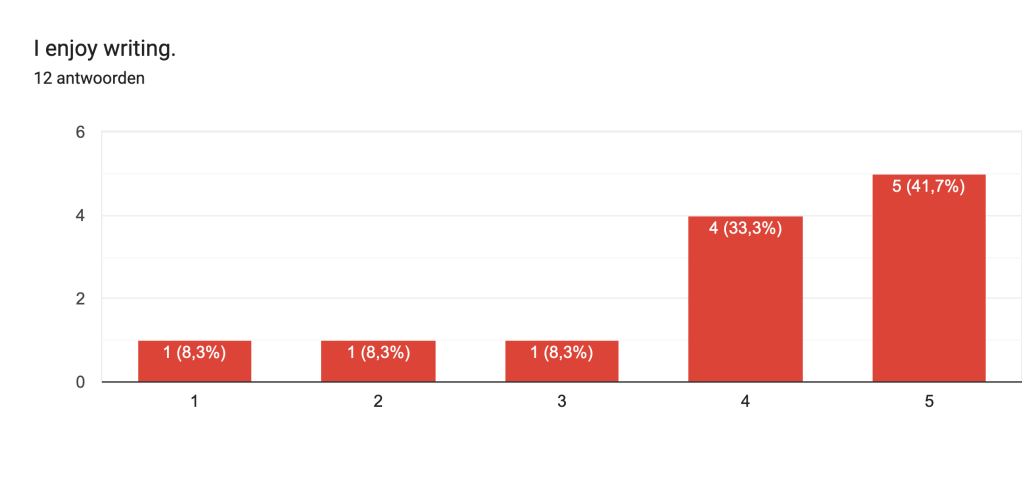
Fortunately, most respondents report that they enjoy writing.
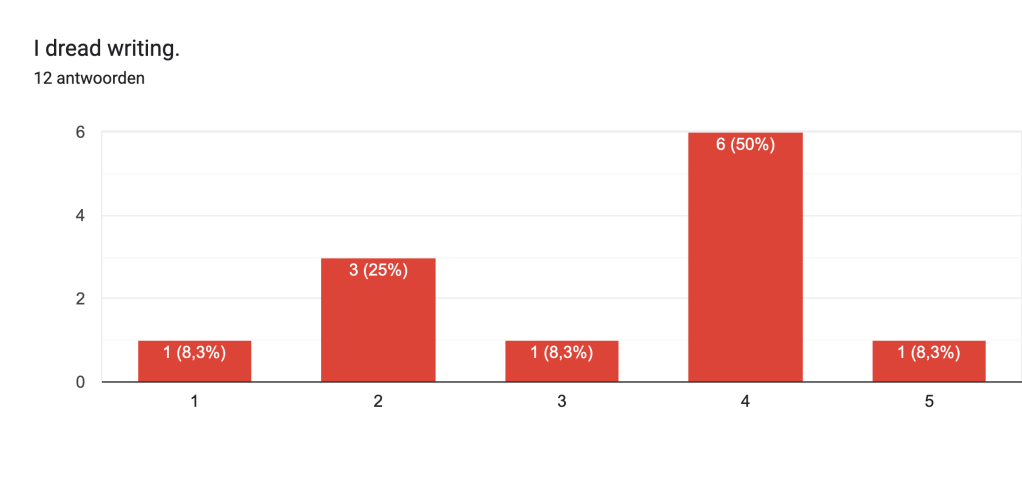
Meanwhile, more than half also report that they dread writing. For example, the person who said they enjoy writing not at all identifies the following phases in their writing process:
pain. agony. suffering. killing. relief.
Interestingly, 4 respondents (1/3) dread and enjoy writing approximately in equal measure, reporting a score of 4 or 5 in response to both questions.
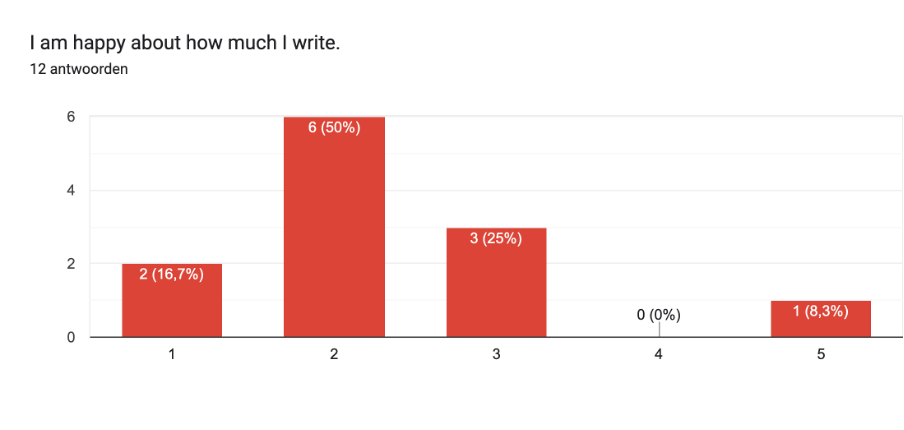
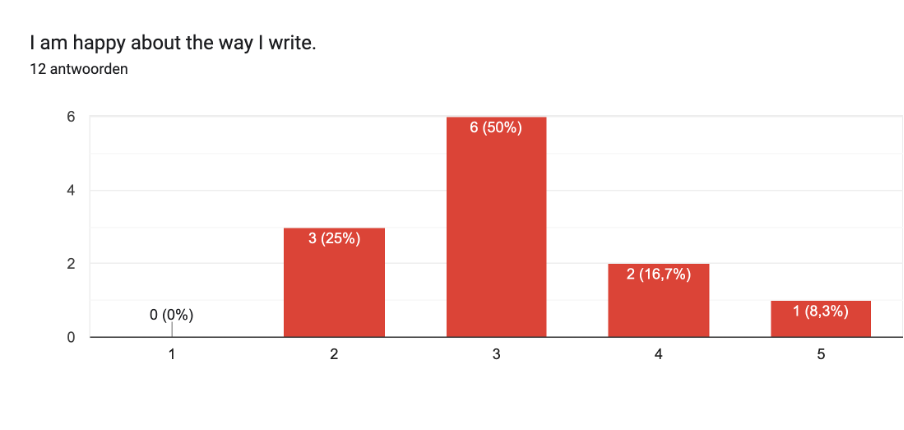
Around 3/4 of respondents are not very happy about how much they write, although most are at least moderately satisfied with how they write. The numbers on writer’s block are pretty spread out, although those who experience a lot of writer’s block also, unsurprisingly, report lots of dread around writing.
What are our writing techniques and processes?
I was curious about the strategies my colleagues used to get their writing done, and the steps they followed to structure the writing process. Many people mentioned that hot beverages, isolation and frequent exercise were key to getting them writing. The Pomodoro Method, where you alternate between 25-minute writing sprints and short breaks, was praised twice for boosting productivity.4
I was happy to see that I’m not the only one who feels like successful writing requires some kind of ritual to get you into the appropriate mindset. Someone reports that they need to:
block a whole day at a time (otherwise no way of getting into the ‘mood’)
Another respondent uses music to set the right atmosphere:
I have a playlist that is always the same so that I don’t REALLY hear it. I sometimes alternate music styles because the rhythm of the beat impacts the way that I think and write.
Many respondents say it can feel intimidating to start writing. For one writer, Word feels too ‘official’ and so writing on paper in the initial stages is a good way to lower the threshold. Interestingly, they also describe a Google Doc as less intimidating than a Word document.
Outlining is also mentioned as a good way to get rid of the empty page, and someone reports:
I tend to “trick” myself and write pieces in bits and bobs.
When it comes to the best order for writing and revising, responses are mixed. Some people write their texts from beginning to end, saying:
[I] can only move on to the next section of text if all earlier paragraphs are as complete and finished as I can make them.
Other people write the conclusion first, or write from beginning to end except for the introduction, which they save for last. Some people do not adhere to a linear order at all during writing. One piece of advice I particularly like is the idea to see the structuring of a text and its writing as carried out by two separate entities:
With pieces that I find really difficult to write I will write an outline where I briefly state which point I want to make in each paragraph so that I separate the role of opdrachtgever and uitvoerder of my own writing: I first write myself an outline, and then I pretend that I’m just the writer who was hired to execute it wether they agree or not.
This quote also touches on the next question I asked: Do you view writing and research as separate tasks? Most people answered yes to this question, although there were a couple of firm ‘no’s’ – like the person who says: “Writing is thinking. Writing is research” – and some people were unsure. Personally, I like this view:
Writing is about communicating results, not about creating results.
This separation lets us see the craft of writing as a separate academic skill, which I find valuable. Another respondent explains:
[Research and writing are] not neatly separated in time: once I start trying to write a final text I’ll discover along the way that I need research for specific steps in my thought process. So in practice they may seem to blend, but I regard them as separate sometimes very quickly alternating activities. Also: my experience is that writer block is what happens when you lose control over the difference between research, thinking and writing, and between writing and editing. It is, in my personal practice, important to be able to write horrible first drafts.
So the separation of writing and research seems productive to many. Nonetheless, I find it useful to think of writing as the material process through which scholarly research comes into being, especially in the humanities. That idea is described elegantly by one of the respondents who says no, writing and research are not separate:
my keyboard is my laboratory, this is where I atomise my data and pour them in textual flasks to see which ingredients react under which conditions.
Writing Advice: the Best and the Worst
Finally, I asked respondents about the best and worst writing advice they ever received. Most good advice mentioned the discipline to write every day, and a variety of methods for lowering the threshold on writing, so that writing every day became easier. Those tips included, for example: outlining first, lowering one’s own expectations about the quality and elegance of the first draft, starting to write at whatever point in the text is already clear to you. Similar advice is communicated in motto’s like “Done is better than perfect.” and “The best PhD is the Submitted PhD.” In other words: the perfect is the enemy of the good.
There’s one more piece of advice that I really like, and might write on a sticky note to keep by my desk:
Some of my most productive writing has been when I felt the joy of making discoveries and communicating my findings. Keep the joy!
Overall, what people mentioned as bad advice was often the inverse of what they considered good advice: perfectionism, especially. But some core values about the societal role of academic writing also came out in response to this question:
Writing styles are not neutral choices – they also communicate an intent and what I dare call a “vibe”. We are trying to communicate and collaborate – I’m not a fan of taking writers who’s style is hermetic or hostile towards more naïve readers as role models. Also, writing may seem like a solo activity, but I believe that at it’s core academic writing is a deeply social and collective activity: we write it down for others to take apart and re-use. (…) as academic writers we are pretty much valuable precisely to the extent that we make ourselves available to being cited and re-purposed for someone else’s research. So any advice that places to much emphasis on writing as the work of a Lone Genius Having Ideas does not make sense to me.
In a similar vein, someone observes:
Worst advice: writing is is method to order your own thoughts. It isn’t. It is a method to order the readers’ thoughts.
To conclude: in this piece, I’ve tried to order my own thoughts about the writing processes of my colleagues, and in the process I hope I have also helped you order yours. I’m going to experiment with writing academic texts in a different order, and I wish you all happy writing!
Full disclosure: I myself am one of the 12 respondents. ↩︎
Authors credited with this advice include Ray Bradbury, Stephen King, Graham Greene and Eric Hayot, the author of The Elements of Academic Style whose insights on academic writing inspired me to create this survey. ↩︎
I removed one respondent from the dataset here, who reported 12.500 pages. That must have been a typo, or maybe they meant words instead of pages. Otherwise it would be 3.125.000 words. For comparison, depending on the translation, War & Peace is between 560.000 and 587.000 words. I don’t think anyone is writing 5.5 copies of War and Peace per year, but if you’re the respondent and this is actually accurate, let me know. I’d love to interview you. ↩︎
The Pomodoro Method was invented by Francesco Cirillo. ↩︎
We are the makers of the short documentary ‘Borrel’ – Emily Hölz and Riikka Toropainen, Bachelor students at Radboud University from Germany and Finland. In 2021, we both came to the Netherlands for our studies and experienced many cultural differences when trying to settle in. Thus, when we had the chance to make our own documentary, in the second-year course ‘Moving Documentaries,’ we wanted to approach a topic that was familiar both to us and many like us. Thereby, our aim was to feel more at home, and integrated into the Dutch culture and lifestyle, whereby we hope to evoke this also in other internationals, who might feel lost in a city far away from home. Lastly, we hope that this documentary is interesting to Dutch people too, who might be curious about how internationals interact with and reinterpret their personal Culture and Pride.
Content Warning: mentions traumatic events relating to death.
Trauma often refers to something unspeakable, something that cannot be named. It constitutes an “event outside the range of human experience”, per the definition of the American Psychological Association (1987: 250, through Brown). Trauma disrupts, invades, alienates, haunts. It poses a threat: the fearful anticipation of losing control, for example over personal safety; and has an immense impact on everyday life, relationships, and self-image. Vulnerable or affected people, therefore, might try to hold onto the few fragments that offer to counter this threat, and might even use coping mechanisms that are, upon first look, detrimental to well-being (maladaptive). Furthermore, it is quite common to obsess about means to take back control, for example by utilizing a self-written narrative that re-establishes boundaries (Caruth 1995, King 2000). To help manage overwhelming emotional experiences, people might also regress into ‘safe spaces’ that can take on many different forms: holding on to fictional narratives that allow an escape from the present reality might be one of them.
This essay explores a text from popular culture that fits into the space of specifically female trauma, pain, and the attempt to rebuild a life’s narrative: Marvel Studios’ WandaVision (2021). Its main protagonist Wanda Maximoff, situated in the American town Westview, is forced to deal with her violence- and grief-related trauma. The narrative of the series plays out in the space of the American suburb and is furthermore anchored onto popular culture sitcom narratives ranging from the 1950s up until 2010. This text investigates the following: With the help of superpowers (telekinesis, energy projection, hypnosis) that Wanda possesses, she equipped her environment with an array of fictional narratives and is, therefore, the driving force behind it. This enables her to act out a safety fantasy that is assumed to be related to the traumatic events that she endured. Trauma, and especially female trauma, is rarely part of the popular media discourse (Ahmed 2004, Brown 1995). Yet, it is pertinent to WandaVision. This TV series is situated in the Marvel Cinematic Universe (a superhero film franchise that is from here on abbreviated as MCU). MCU films usually follow a strict formula of fast-paced action and are centred around influential male characters. Conflicts that obstruct a character’s happiness and their eventual solution are often paired with at least one epic fight scene. WandaVision, while somewhat relying on previous MCU material, now takes a different route. The focus on a female heroine makes space for the portrayal of a narrative that relies on the female sphere.
WandaVision takes place in a constructed sphere can be assessed from two perspectives: the inside and the outside. Within the diegesis of the series, a certain sense of reality is established and the outside space only serves to call attention to the indeed “constructed fictional space” of Westview. The inside is characterized by its suburban space and sitcom narrative, which draw heavily upon cultural intertexts. As the series’ narrative progresses, it is made clear that the environment is protected from threatening outside forces through a boundary force field. The ‘living’ characters appearing in this space consist of the members of Wanda’s little family: her husband The Vision who also appeared as her partner in previous MCU material, and in later episodes their two children. Some recurring ‘neighbourhood characters’ also appear. While the former drive the series’ narrative forward, the latter only appear to fill up the suburban space to establish and resemble a form of reality. Throughout the series, it is revealed that Wanda is in fact in control of the boundary and the environment. She furthermore is in full control of the actors in the space; she can manipulate their emotions, thoughts, and actions. In the constructed fictional space of Westview, Wanda can live happily and peacefully in the bubble of a suburban home with her husband The Vision. They both have the desire to live out the full range of human experience, and to “grow old together” (Episode 8 “Previously On”). While in the past her time with The Vision had always been restricted by time and outside responsibilities (see Infinity War 2018), Wanda deliberately adds another component to the constructed space that allows for an illusion of time passing: the sitcom narrative, embedded in the suburban environment.
In some contemporary cultural media texts, suburbia is far more than a setting or backdrop but rather emphasized so much that it becomes the subject of the story” (Coon 2014, Huq 2013). Coon formulates suburbia as “a concrete spatial arrangement that shapes the everyday lives of the majority of Americans and expresses many of the hopes and fears embedded within American society.” Furthermore, the idea of a perfect suburban life exists in the collective imagination of millions of Americans. With the trauma that Wanda endured in the past, it seems likely that this space might serve as a means to re-establish boundaries in the fight of managing overwhelming emotional experiences. It finds social recognition, is made stable through all sorts of rules that govern behaviour, and outlines a certain way of living, which is described by Betty Friedan in her feminist work The Feminine Mystique (1963). Friedan talks about the restricted lives of women living in the domestic space of suburban homes: having to give up on personal dreams and careers to serve their husbands and bear children, and getting married early. While being occupied all day, every day with various tasks to be done around the house, the unhappiness of women comes from a place of unfulfillment. This, however, creates a stable narrative for Wanda. Her mental space that is desperate for stability and a peaceful, strictly regulated environment, can thrive in the strict role that she assumes, simply because it does not require her to make independent decisions. Wanda only needs to follow rules, without a Self to maintain. Furthermore, Wanda with her ‘superhero’ powers and her synthezoid husband need to fit into Westview’s society. Revealing their ‘outside-ness’ is not only a cause for concern, but the consequential pressure that comes from having to fit in becomes a recurrent theme throughout the series – which can only be countered with strict adherence to established norms and the alignment with the shared values and identities of their community (Coon 104, 109). When Wanda seals herself into this mind-numbing, but safe space, she can disavow and reject all negative and traumatic thoughts (Caruth, King). Which is exactly what Wanda longs for.
“When episode 1 begins we’re immediately thrown straight into WandaVision’s sitcom format. Therefore, as the audience, we’re completely sealed into this world as if the rest of the MCU doesn’t exist” (ScreenCrush 2021). This quote points towards the stylistic break with previous MCU material, but also towards WandaVision’s exceptional intertextual layers that contribute to its immersive power. The narrative of (almost) every episode grafts onto sitcom narratives that have been part of popular culture (Black 2021, Dalton and Linder 2005). Together with the characters, the audience travels through a history of sitcoms on the screen, starting in episode 1 with the 1950s sitcoms Leave It To Beaver (1957-63) and I Love Lucy (1951-57), up until sitcoms like The Office (2005-2013) and Modern Family (2009-2020). The inspiration of these shifting sitcom intertexts is reflected in every episode in a distinct vibe and narrative style. It also serves to show Wanda’s environment as being constantly in flux: characters have diverse fashion styles, the living environment varies, and most notably there are profound changes to the stylistic mise-en-scene that includes framing and colour. | In the past, television was often considered to offer escapism from the shackles and troubles of everyday life, while also reflecting on prevalent social norms. The portrayal of a specific image about gender roles, for example, consolidated it into a social practice (in this instance, Haralovich describes the female ‘homemaker’ of the 1950s). Therefore, similar to the suburban discourse adhering to the “reality of the illusion”, one must once again follow the rules and consequently give away control. As the form of the narrative changes in each episode, characters gain different agencies. Most visible is the process of our heroine from being the constricted housewife to openly talking in an interview format similar to Modern Family about themes like depression and relationship troubles. As alluded to in a previous paragraph, the sitcom narrative also serves as the illusion of time passing. Over the course of nine episodes, the characters are made to live through seven decades, which are indicated by the sitcom narratives.
The typically American core substance of the series brings an interesting angle to Wanda’s persona. Episode 8, for example, reveals that Wanda has a deep emotional connection to sitcoms. During her childhood in the fictional country Sokovia, she and her family would often watch American sitcoms together to improve their English-speaking skills, before a bombing destroyed their home and resulted in the death of the parents. By anchoring her constructed environment of Westview onto sitcoms, Wanda allows herself to look back to a time and place where she felt safe and loved, and finds comfort in that place of the past. She imagines, and from there on, creates the utopian world where she is safe, protected, and reunited with deceased loved ones, such as her husband. In the land of sitcom narratives, where, no matter what, episodes end happily, every confrontation or conflict is resolved peacefully, and there are no major threats, Wanda has the ability to construct her peace. As she says herself as a child: “At the end of the episode, you realize it was all a bad dream. None of it was real” (Episode 8).
In the almost Lacanian imaginary of Wanda’s safety fantasy where she shuts out reality to avoid facing her trauma, the audience is curious about pulling away the curtains to reveal the coherent picture behind. In the eighth episode (“Previously On”), Wanda is forced to work through her memories by an outside threat, and has to relive her trauma. While the series is already saturated with cracks that disrupt the illusion, there are two instances with significant, intended shock moments for both Wanda and the knowing audience that serve as painful reminders of past traumatic deaths of her loved ones. This episode then delves even deeper and allows an intense perspective into the pain and grief upon losing the people closest to her. Wanda suffers from Post-Traumatic Stress Disorder (PTSD), the psychiatric syndrome that arises out of the experience of trauma. She experienced the death of her loved ones: both of her parents, later her twin brother Pietro (Avengers: Age of Ultron, 2015), her husband The Vision (Avengers: Infinity War, 2018); and she is also responsible for multiple deaths due to not being able to handle her incredibly intense powers (Captain America: Civil War, 2016). Her husband was there for her when she was working through the grief caused by her brother’s death. But after the Vision was murdered, Wanda has nothing and no one, except the massive wound caused by her many losses.
The testimony that is embedded in the series’ narrative is situated in a feminine sphere, as WandaVision’s story is told from her point of view. The immersive atmosphere of the series itself and the “show” Wanda puts on, allows for the engagement of the audience with her trauma and even creates a space for self-identification and self-insertion.The whole series is saturated with Wanda’s pain. In Ahmed and Stacey’s text about Testimonial Cultures (2001), they describe a recent trend or even a “desire to testify (that) now pervades contemporary culture”, that the series follows. This includes the desire of wanting pain to be recognized, even felt by others. Elaine Scarry, furthermore, suggests that pain is a bodily trauma that resists or even ‘shatters’ language and communication. Recalling trauma’s disruptive nature that was mentioned in the introduction, the moments of impact and its consequences are painfully inscribed on the body (Ahmed 23). In the last episode, it indeed becomes visible that the inhabitants of the suburban sphere (that act out desired scenarios), experienced Wanda’s pain with her. This pain literally haunts their thoughts (Caruth, Brown).
The series’ narrative, however, also demonstrates that Wanda’s pain and trauma act as agents and motivation of her extraordinary abilities. Precisely because of the trauma she experiences, and having no one to help her with the “endless nothingness” that she feels, she finally exerts control over her powerful abilities that cause harm to people before. The fact that Wanda’s control over her powers apparently grows stronger through the traumatic events that are inflicted upon her but that she manages to live through, suggests that one can grow stronger and more resilient despite traumatic events. One might find something positive in a world that otherwise seemed hopeless and empty. While WandaVision is part of popular culture – therefore, its narrative is clearly dramatized for the sake of entertainment – it still might give hope and power to trauma survivors.
The original version of this essay was handed in for the course American Popular Culture that is part of the BA-Programme of Arts and Culture Studies.
References
Ahmed, Sara. “Introduction: Feel Your Way.” The Cultural Politics of Emotion, Edinburg UP Ltd, 2004, pp. 1-20.
Ahmed, Sara. “The Contingency of Pain.” The Cultural Politics of Emotion, Edinburg UP Ltd, 2004, pp. 20-41.
Ahmed, Sara, and Jackie Stacey. “Testimonial cultures: An introduction.” Cultural Values, Vol. 5, No. 1, January 2001, pp. 1-6.
Avengers: Age of Ultron. Directed by Joss Whedon, Marvel Studios, performance by Elizabeth Olsen, 2015. Film.
Avengers: Infinity War. Directed by Joe Russo and Anthony Russo, performance by Elizabeth Olsen, Marvel Studios, 2018. Film.
Brown, Laura S. “Not Outside The Range: One Feminist Perspective on Psychic Trauma.” Trauma: Explorations in Memory, edited by Cathy Caruth, The John Hopkins UP, 1995, pp. 100-112.
Carlson, Eve B., et al. “Chapter 7: Relationships Between Traumatic Experiences and Symptoms of Posttraumatic Stress, Dissociation, and Amnesia.” Trauma, Memory, and Dissociation, edited by J. Douglas Bremner, and Charles R. Marmar, American Psychiatric Press, Inc., 1998.
Caruth, Cathy. “Trauma and Experience: Introduction.” Trauma: Explorations in Memory, edited by Cathy Caruth, The John Hopkins UP, 1995, pp. 3-12.
Caruth, Cathy. “Recapturing the Past: Introduction.” Trauma: Explorations in Memory, edited by Cathy Caruth, The John Hopkins UP, 1995, pp. 151-157.
Captain America: Civil War. Directed by Joe Russo and Anthony Russo, Marvel Studios, 2018. Film.
Coon, David R. Look Closer: Suburban Narratives and America Values in Film and Television. Rutgers UP, 2014.
Dalton, Mary M. and Laura R. Linder, editors. The Sitcom Reader: America Viewed and Skewed. State U of New York P, 2005.
Gottdiener, Mark. The Theming Of America – American Dreams, Media Fantasies, and Themed Environments. Westview Press, 2nd Edition, 2001.
Haralovich, Mary Beth. “Sitcoms and Suburbs: Positioning the 1950s Homemaker.” Quar. Rev. of Film & Video, Harwood Academic Publishers, Vol. 11, 1989, pp. 61-83.
Huq, Rupa. “Women on the Edge? Representations of the Post-War Suburban Woman in Popular Culture to the Present Day.” Making Sense of Suburbia through Popular Culture, London: Bloomsbury Academic, 2013, pp. 133–159.
Rodin Gary, et al. “Chapter 5: Trauma, Dissociation, and Somatization.” Trauma, Memory, and Dissociation, edited by J. Douglas Bremner and Charles R. Marmar, American Psychiatric Press, Inc., 1998.
ScreenCrush. “WandaVision: What’s the Point?: Everything Explained + Full Marvel Series Breakdown.” YouTube, 16 March 2021, https://www.youtube.com/watch?v=Kr_ChCww4SU. Last accessed 10 June 2021.
WandaVision. Created by Jac Schaeffer, Marvel Studios, 2021. Television series.
The Black Panther Party for Self-Defense and the Black Panther figure of Marvel’s comic book universe were both created in 1966. There was no direct link, however, between the political organization that Bobby Seale and Huey P. Newton launched in October that year and the introduction of the first superhero character of African descent a few months earlier in May, in an issue of Fantastic Four (vol. 1, no. 52), which was authored by Stan Lee and Jack Kirby (see Figure 1).
Figure 1. Introducing the Black Panther in Fantastic Four, no. 52 (Marvel Comics, 1966).
As Lee states in a 2009 interview:
It was a strange coincidence because, at the time I did the Black Panther, there was a political party in the country— mostly Black people— and they were called The Black Panthers. And I didn’t think of that at all! It had nothing to do with our character, although a lot of people thought there was some tie- in. And I was really sorry— maybe if I had to do it over again, I’d given him another name, because I hate that confusion to be caused. But it really had nothing to do with the then-existing Black Panthers (cited in Clark 2018).
The 2018 film Black Panther directed by Ryan Coogler also does not make explicit reference to the Black Panther Party. But the film’s promotional materials do indirectly invoke the historical reality in which both Black Panthers appeared in the late 1960s cultural air. One of the film’s promotional posters depicts T’Challa— the reigning Black Panther— in visual citation of the iconic 1967 portrait of Huey P. Newton, seated on a throne, a rifle in one hand, a spear in the other (a photo that in turn was a mockery of colonialist portraiture). Moreover, one of the film’s trailers contains remixed samples of Gil Scott- Heron’s “The Revolution Will Not Be Televized,” a track from 1970, which is also the year Black Panther Party membership reached a peak. In this trailer, as the Black Panther flies across the screen, a male voice- over cites the following, tuned to the beat of Vince Staples’s “BagBak” (2017):
You will not be able to stay home, brother. You will not be able to plug in, turn on, and cop out. . . .
The revolution will not be televised. . . . The revolution will be live.
Marvel thus links its Black Panther universe to the long history of African American struggle. These offhand gestures beg the question of how Black Panther’s mainstream Afrofuturism holds up to the political activism it invokes. Does the film merely commodify revolutionary discourse, and wouldn’t such commodification prevent the film from constituting an “act of civic imagination,” as Henry Jenkins has called the film? (Jenkins 2018) Doesn’t Black Panther’s production by Marvel, a subsidiary of Disney, by definition preempt the film from its claim to politics— especially when recalling the imperative of turn-of-the-1970s Third Cinema that a political film must also be made politically? And how to square Black Panther’s imagination of a never-colonized Black nation with Achille Mbembe’s analysis of “Blackness” as a discursive product of colonization?
Addressing these questions, it is important to acknowledge the wide acclaim Black Panther has received from within the African American community. During a special event in Harlem’s Apollo Theater, Ta-Nehisi Coates described the film as “Star Wars for Black People,” sharing with the audience that he “didn’t realize how much [he] needed the film, a hunger for a myth that [addressed] feeling separated and feeling reconnected [to Africa]” (cited in Beta 2018). Similarly, Tre Johnson writes that Black Panther’s greatest legacy is that Black viewers find “a cultural oasis that feels like nothing we’ve seen before” (cited in Johnson 2018). And as Jenkins observes, Black Panther offered “a shared myth desperately needed in the age of Trump: the film inspired many different forms of participatory culture . . . as people fused its iconography into their personal and social identity” (Jenkins 2018).
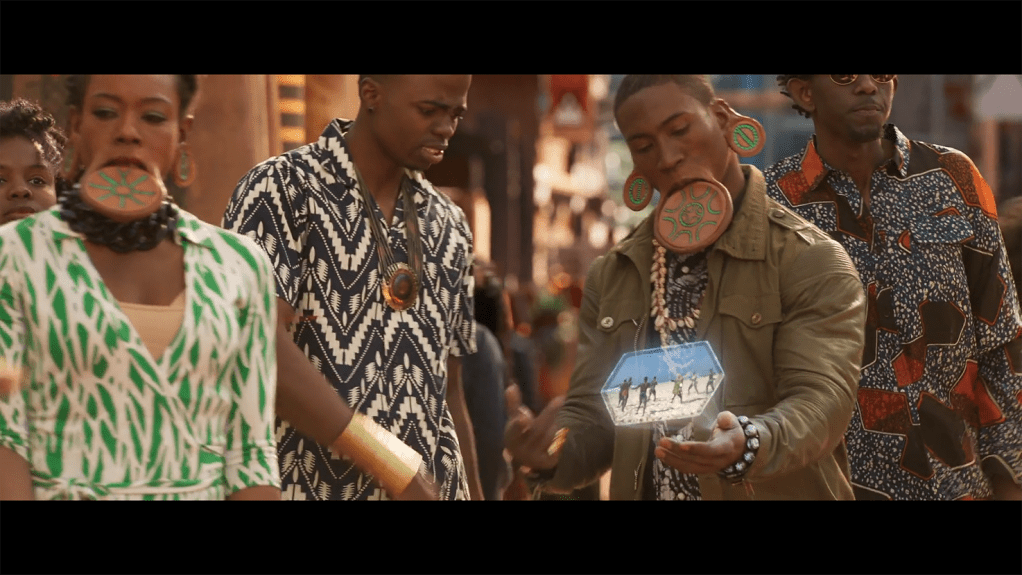
So yes, following its release, Black Panther has undeniably manifested itself as a political-cultural event, but this does not, of course, prevent a critical reading of the film. That critique is the gravitational point of this essay. I argue that, taken on its own, the Black Panther film only marginally integrates its offhand promotional references to the history of African American resistance. Despite its multiracial cast and strong female characters, Black Panther at the end of the day is built on a conventional Hollywood logic, while its plot purports an anthropocentric American Dream narrative in which humanity masters nature through technology. (Figure 2)
Figure 2. Technology as second nature in Black Panther (Marvel Studios, 2018).
Yet the film cannot just be considered on its own. The film emerges out of and inscribes itself into a transmedia franchise that in recent decades has evolved as a platform for rethinking African American identity in the post–civil rights era. This has been the case under the authorship of Christopher Priest (who wrote the 1998 Black Panther comics volume on which the movie was largely based), Coates (who picked up the comics’ authorship in 2016, starting with A Nation Under Our Feet), and Kendrick Lamar (who cocurated the film’s soundtrack, including the hit single “All the Stars,” performed with the American singer SZA). As Coates writes elsewhere, in Between the World and Me (2015), the dreamed synergy between nature and technology at the heart of the American Dream is an all-too-human construction torching the planet, socially and literally (Coates 2015).
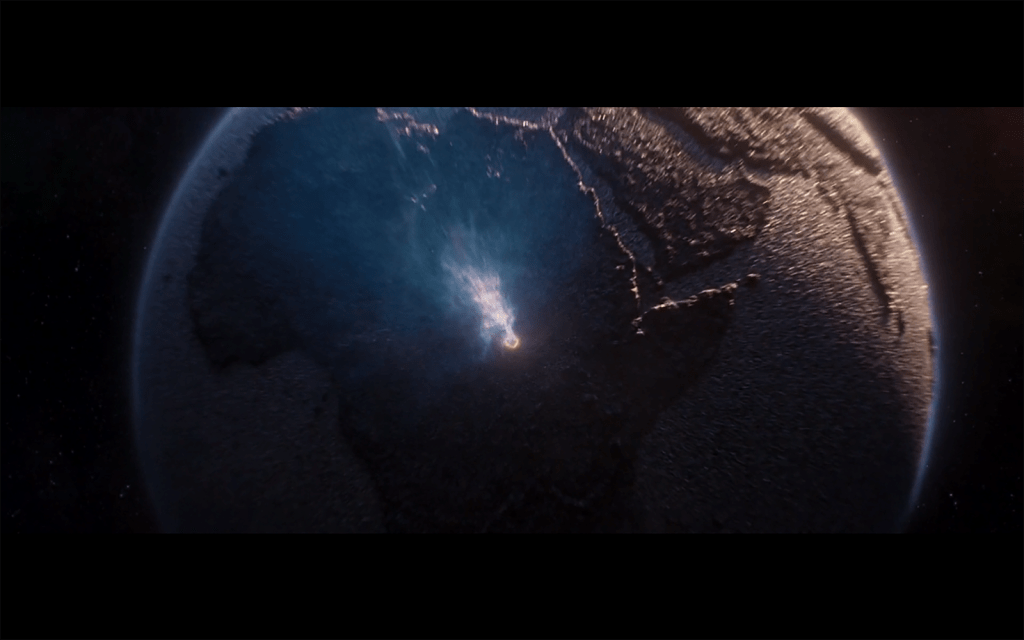
Figure 3. Black Panther’s science fiction of a nation shielded from global heating.
The Black Panther film revels in such phantasmagoric synergy, telling a fairy tale of an extractive utopia, while it has no sight for the exploitation of bodies and ecosystems that marks the reality of every mining economy (Figure 3). In that light Black Panther is like, say, Apple’s new American Dream, in which technology is posited as second nature and which was equally designed in California. Only when the film is considered in the light of its broader transmedia universe does its superhero texture open to the speculative potential that Michael Gillespie and others have embraced as central to film Blackness. As I will argue in the final section, “The Fire in the Sky,” at those moments Black Panther invites its transmedia traveler to think through what Mbembe calls the “Becoming Black of the world” (Mbembe 2017).
Niels Niessen is a Researcher in the Arts & Culture department.
For the full article and bibliographic references see:
This article has been part of the ‘Women On The Timeline‘ protect, initiated by Anouk Wolkotte and Charlotte Hermanns.
Daniëlle[1], an 18-year-old mother, speaks of becoming a mother: “It really doesn’t matter whether you are young or old. It’s all new and will be hard at times.”Young mothers continuously need to prove that they are great moms, successful and that they deserve respect like any other woman/mother/youngster. They often need to fight stigmas and stereotypes of being incapable of raising children, being a moral and socioeconomic problem and a risk to themselves and their children.
The ‘problem’ of young motherhood (under the age of 24 years) in the Netherlands seems not so big, considering the low numbers of young mothers in the country. Teenage fertility rates in the Netherlands are the second lowest in Europe, and among the 10 lowest in the world. In Dutch society in the 1950s, young motherhood was common. The mean childbearing age for women has risen from 24 years (1970) to 30 years (2019). Nowadays, young motherhood is uncommon and undesirable.
Until 1955, women were legally ‘incompetent’ and could be laid off from civil service once they married. Equal pay for equal work was legalised in that year. Since then, norms about women’s economic independence have started to change. From the late 1980s, women have entered the labour market in large numbers, leading to current high labour market participation of women. Unfortunately, women still receive unequal pay for equal work, experience an unequal gender and age bias in selection for and promotion at work (‘glass ceiling’), and face discriminatory practices at work due to pregnancy. Expectations for women have not changed much in terms of work-care balance and the gender division of labour. Women are commonly expected to become mothers.
Dutch norms on motherhood, education and employment constitute a motherhood ideology of viewing women as child carers and men as breadwinners. This means that mothers should be the main carers, should always be present for their children, and should focus primarily on their children’s needs. Unlike in most European countries, heterosexual couples in the Netherlands commonly conform to the 1.5 wage earner model, according to which men usually work full-time and women part-time in so-called ‘mother contracts’ of work during children’s school hours. Women generally perform the unpaid care and household tasks, even when they also have full-time paid employment. Formally, parental leave days have increased for fathers in paid employment. However, in reality are men reluctant to take leave, because of traditional role patterns at home, because work culture does not facilitate it and because of a lack of role models.
Young mothers are caught in the middle of such stereotypical, dominant gender patterns and norms around motherhood, care and employment. On the one hand, as youngsters they are expected to be in school and continue with paid employment. On the other hand, as mothers they are expected to stay at home and care for the children. You are a good mother if you take care of your child yourself and are there for your child. Young people are expected to complete the highest possible education, after which they find a job at that level and in that sector. After that they can settle down with their partner and have children.
Such dilemmas and norms regarding the socioeconomic independence of young mothers were the focus of my PhD study, for which I spend time with young mothers. Daniëlle (quoted above) explains that any first-time parent experiences difficulties and struggles with new responsibilities and structure in daily life. Femke explains how lack of support from a partner made raising her child difficult, because she could not share the responsibility with someone else: “I had to rely on myself and have been sacrificing my own needs”. Manon and Agnes say that combining school and work with caring for children is hard, since their parents cannot babysit (they have their own jobs) and day-care is too expensive or does not match their working hours on weekends and evenings as a nurse. Their stories illustrate that it is not their young age, but circumstances such as being a new mom, a single parent or working parent that led to problems in their lives.
Attending education or going to work is often a practical puzzle for many young mothers, especially single ones. Manon says: “I had a night shift at my work, and when I came back, I made my child his sandwiches, took my child to school and then his teacher said: ‘You look bad.’ And I said, ‘I haven’t slept yet.’ That was hard.” Some women say that they do not have children to have them cared for by day-care or relatives. They feel a strong need and pressure from people around them to be present for their child, instead of completing their education or working. Floor wants to be a role model to her child, which is expected of her from a motherhood perspective. However, this is ‘bad’ from a motherhood ideal, because working and earning wages means she cannot take care of her child herself all day. Even with policies and subsidies in place, young mothers still face contradicting norms. Studying and working parents can receive subsidies for day-care, but schools and the state do not offer free childcare facilities, so young parents have to pay for private childcare services. Policies and organisational structures that are supposed to increase young people’s socioeconomic independence are, in reality, counterproductive.
Schools, particularly, are not used to students with children. Daphne says: “I was lucky to give birth during Christmas holiday, so I could go back to school two weeks later.” Other student-mothers are lucky to have a teacher that gives extensions for deadlines or extra assignments when the women had to stay home, because their children were ill. However, schools are usually not very flexible in assignments and attendance, and do not provide for maternity leave. Student-mothers do not want any study delay, because that means that they will have to pay back their student grant. Getting into debt because of an education is not a pleasant prospect.
Student grants together with fears of not completing the education within the time limit required for the grant, make young mothers often choose for a practical vocational study (BBL) (instead of theoretical vocational, Bachelor’s or Master’s studies). “I’m smart enough to do a Bachelor’s degree, but my child will be two and I want another child. Combining a Bachelor and a child is harder than doing vocational studies with a child, and vocational is fine too for a job and raising two children” says Valerie.
Young mothers like her are more likely to opt for the practical vocational education (BBL), because at the short term it provides them with work experience, job guarantee and wages they need to provide for their children. For better long-term opportunities, it is, once having started to work, hard for young mothers to get back to school after a few years when their children have reached the school-age of four years. This means they get stuck in a low paid job in which they can hardly plan their own working hours and have to work weekend and night shifts. A low paid job also means that they need to pay all their earnings to the day-care centre. Furthermore, the jobs young mothers end up with when doing a practical vocational study are often jobs in health care of elderly care, affirming traditional gender roles of women as carers.
Despite the developments since the fifties and the policies and subsidies that are in place, these young mother’s stories show the ongoing need to contest gender and age stereotypes leading to inequalities. We need to recognise different values and experiences. Even though young mothers exert agency, this is not enough to reconcile conflicting norms on their own and solve structural problems individually. Dominant norms should not stand in the way of people who walk different pathways than what is commonly expected. This column is based on the results of the study Acknowledging the agency of young mothers: A qualitative study into young, motherhood and socioeconomic independence by Marijke Sniekers






 Culture Weekly