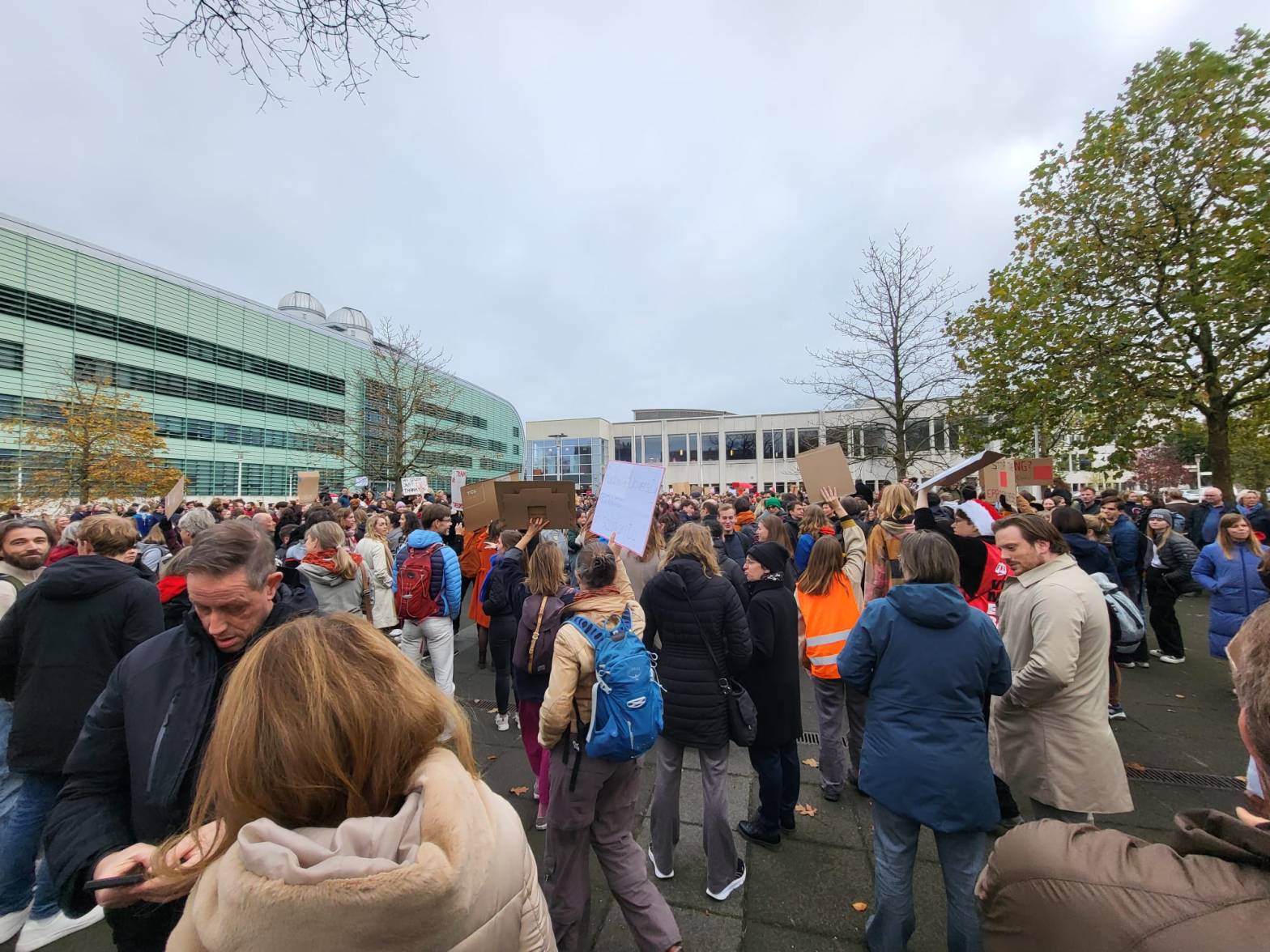
Woensdagochtend. Treinreis richting Nijmegen. Bij Utrecht stappen ze op. Een vrouw van middelbare leeftijd, een jongen, een hond. “Geen aandacht geven!” maant ze de jongen. “Anders denkt hij dat hij belangrijk is.” Dat is hij blijkbaar niet. “Hou op! Niet zo vervelend zijn,” roept ze naar het arme dier dat er allemaal ook niks aan kan doen. Ongemakkelijk zit de hond tussen haar benen. Hij mag niet naar links kijken, niet naar rechts kijken, als hij opkijkt krijgt hij een mep, als hij omlaag kijkt een ruk aan zijn halsband. En maar schelden. Hij is ook maar een hond.
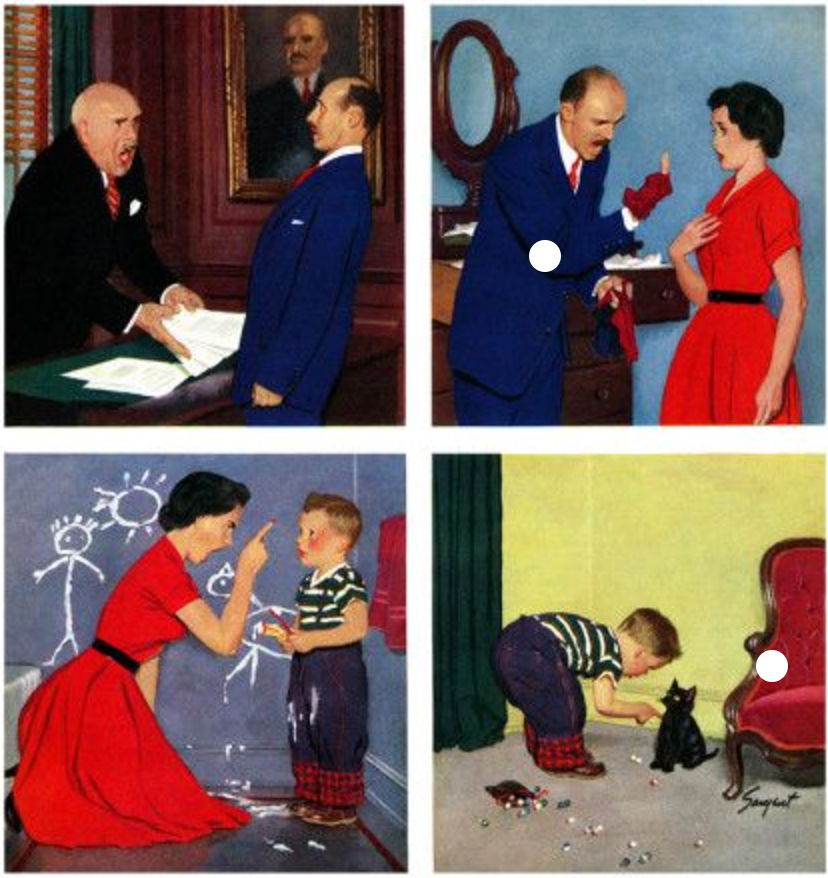
Het doet me denken aan een plaatje dat ik tijdens mijn studie psychologie tegenkwam, van een man die wordt uitgescholden door zijn werkgever. Thuisgekomen scheldt hij daarop zijn vrouw uit, die tegen het kind uitvalt, die tegen de kat begint te krijsen. Zo reageren we agressie op de volgende (onderliggende) trede in de sociale hiërarchie af. Wie onderaan staat krijgt de meeste klappen, in dit geval een (kat of) hond. En waar moet die het laten? Zou die vals geworden zijn en ook enkel weten hoe van zich af te bijten? Of zou die maar depressief in zijn mandje gaan liggen tot het ophoudt? En hoeveel agressie heeft die vrouw te verduren gehad? Van wie? Waar begint het en waar houdt het op?
Ik kijk naar buiten. Een drinkwaterbedrijf prijst sterke dijken en schoon water aan. O ja, ons drinkwater. Daar blijkt steeds meer PFAS en andere rommel in te zitten, lees ik in het nieuws. We drinken continu forever chemicals en andere troep, de hele dag, een creditcard per week, zeggen ze. Het is overal, in ons voedsel, in de lucht die we inademen, in onze ongeboren baby’s. We kunnen niet ontkomen. Dit ís niet houdbaar, dit kán niet goed gaan, het gaat niet zo. Ik sluit mijn ogen. De wereld voelt de laatste tijd zwaar, gebukt onder ontelbare vormen van geweld. Plastic, genocide, een vrouw, een hond. Ik voel me machteloos en huil naar het landschap. Ik weet niet waar het ophoudt.
Wat is mijn rol in dit alles? Wat doe ik?
Ik ben onderweg naar een werkgroep Academische Vaardigheden. Het vormt de basis van het academische werk van de studenten. Het is een belangrijk vak, waarin we nadenken over wat een tekst wetenschappelijk maakt, hoe we weten of een bron betrouwbaar is of niet, en hoe we een academische stijl kunnen toepassen in schrift en woord. Het is belangrijk, ja, maar het voelt tegelijkertijd nogal futiel. Wat maken punten en komma’s eigenlijk uit? Enkele of dubbele aanhalingstekens, schuingedrukt of Hoofdletter, punt, puntkomma, who cares? Ik vermoed dat mijn studenten wel grotere zorgen hebben dan de uitlijning van een word-document. Zoveel problemen in de wereld en wij zetten een punt op een i.
En toch, het maakt uit. We lijken steeds meer in een cultuur te leven waarin we er maar gewoon op los mogen slaan als ons iets niet zint. Een grote bek en niet zo moeilijk doen, is het motto. Gewoon afreageren op de volgende in de hiërarchie. Lekker beuken op een hond. Misschien is nauwkeurigheid en accuraat werken met taal juist extra belangrijk, als geweldloos tegenwicht.
De vrouw stapt uit, en met haar de jongen en de hond. Ik kom aan in Nijmegen en bereid me voor op mijn les. Wat kan ik mijn studenten meegeven? Hoe beleven zij dit alles?
Wat ik hoop is dat we er op de universiteit in slagen om niet onze eigen frustraties en pijn op anderen uit te leven. Dat wij ze, zoals Freud het noemde, kunnen sublimeren; dus ze om kunnen zetten in kunst(-analyses), in het collectief organiseren van bijvoorbeeld een protest, en in andere vormen die bijdragen in plaats van afbreuk doen. Dat we agressie kunnen gebruiken voor iets anders, in ons eigen kleine kunnen, gewapend met vaardigheid in komma’s, punten, puntkomma’s, en i’s. Onze macht als geesteswetenschappers is beperkt, maar wat we doen, kunnen we goed doen, zo volledig mogelijk en volgens de academische standaarden die we in de loop der jaren hebben ontwikkeld. Omdat het zo hoort, zo hebben we het afgesproken, het is iets. Het geweld houdt niet op, maar wij zetten door.
By Amber van Driel, student in Arts and Culture Studies
As an Arts and Culture Studies student, it is impossible to avoid the city of Paris. One of the ways we encounter it is through the words of Ernest Hemingway in his memoir A Moveable Feast. In one of our courses, we watched Woody Allen’s Midnight in Paris, which was based on the book. This interplay between the works inspired me to read the memoir, and I fell in love with it. When Frederik van Dam gave us the opportunity to create our own transmedial work in the new course Intertextuality and Intermediality, I had my eyes set on this story from the beginning. The result became the board game The Lost Generation.
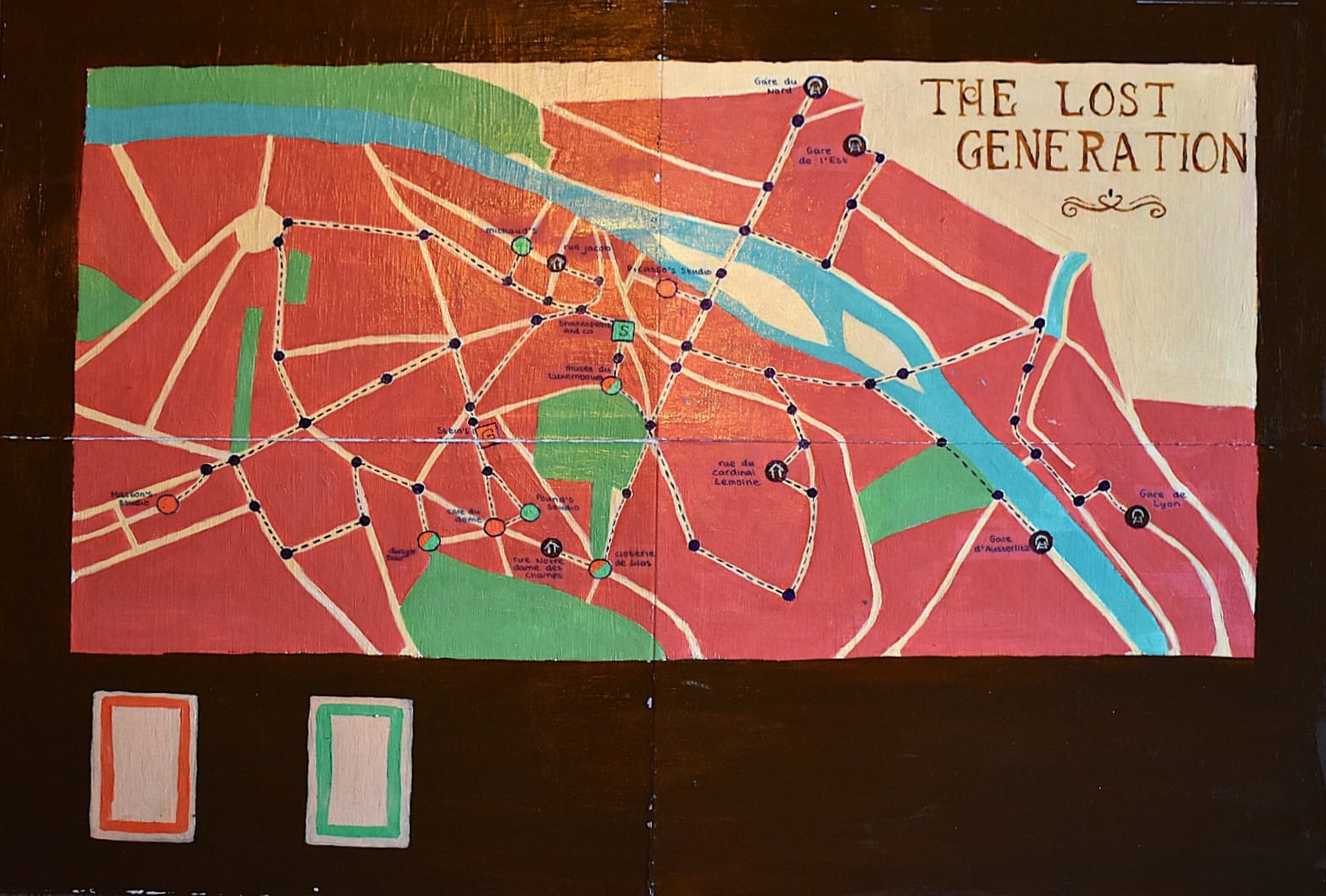
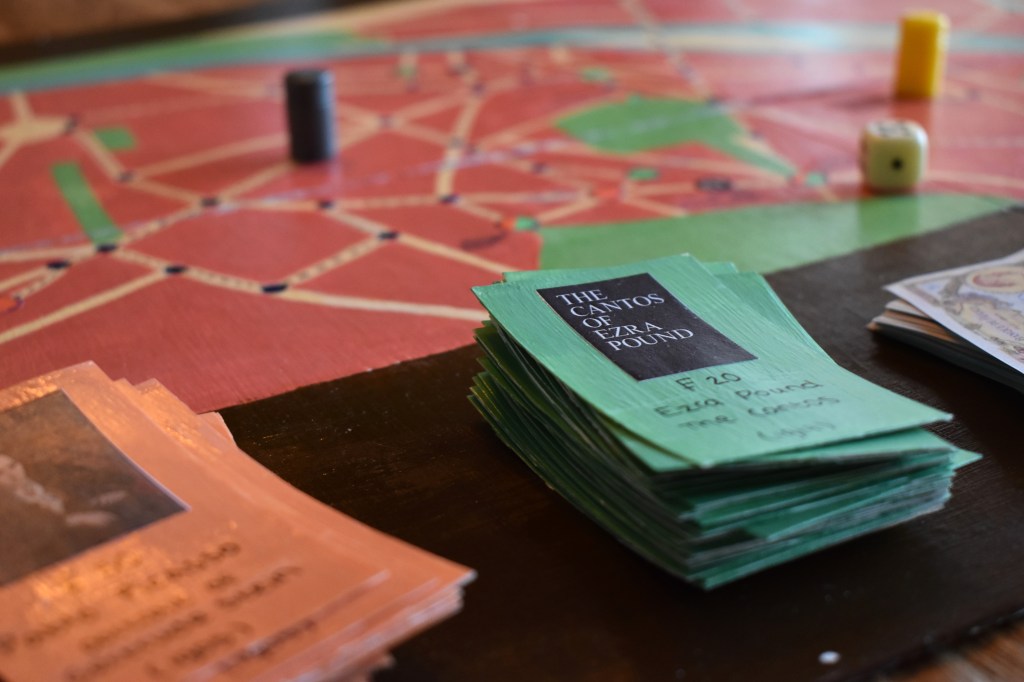
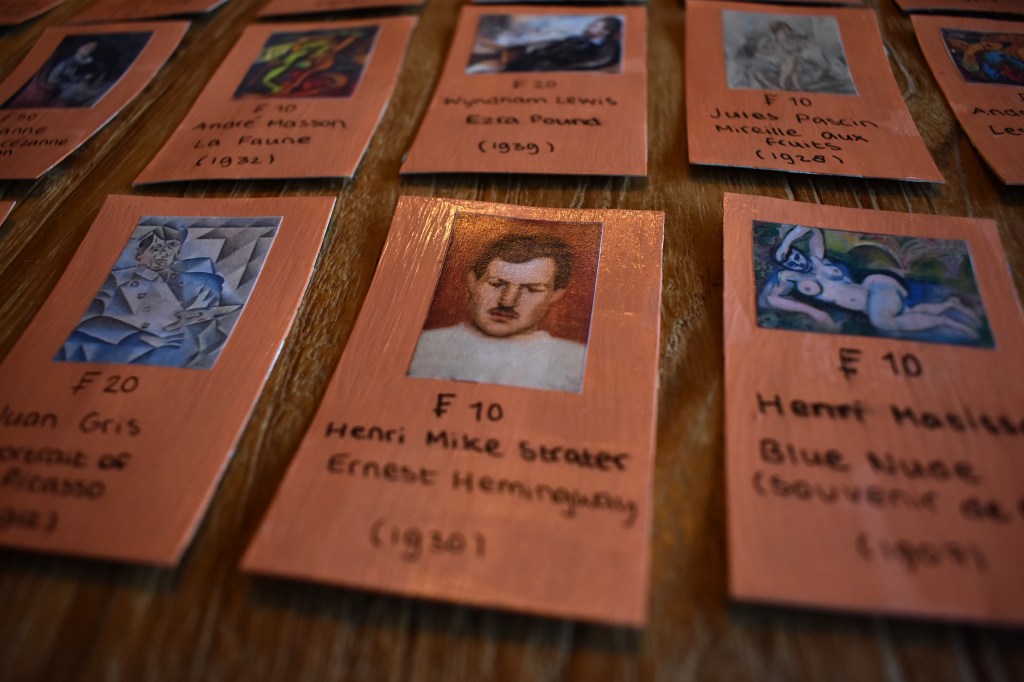
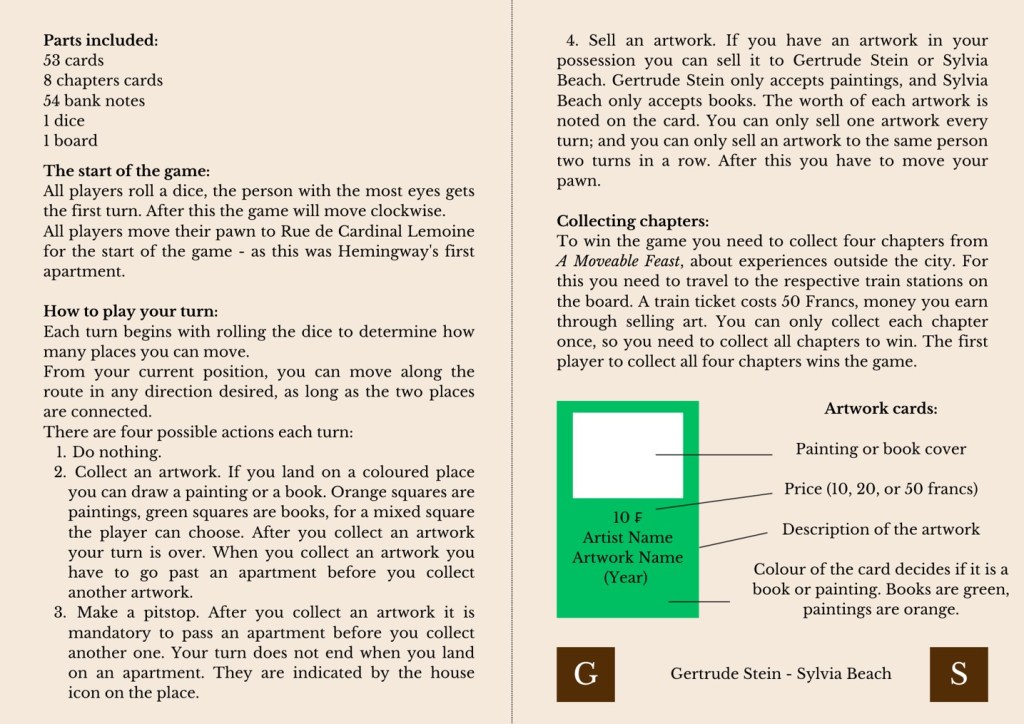
Essentially, the board game is an adaptation of Hemingway’s A Moveable Feast. The board game is an interdisciplinary work that engages with the source-text. To guide me in the process of adaptation, Linda Hutcheon’s theory proved very useful. The main theme, persistent in both the book and the game, is of course the characters – all real-life artists. The game is centred around interactions with these artists: the goal of The Lost Generation is to ‘write’ chapters of Hemingway’s memoir, while collecting the art of his friends. When landing on specific places on the board, players receive cards with artworks on them – either literature or paintings. The players can sell these artworks to Gertrude Stein and Sylvia Beach, to earn enough Francs to buy train tickets. Each train station corresponds with a chapter from A Moveable Feast. These connections are historically and geographically accurate.
Both Gertrude Stein and Sylvia Beach are often mentioned by Hemingway, and are perhaps some of the most influential ‘characters’ in the book. Because of this, and because I needed some feminine power in this male-dominated book, I centred most of the game around them.
Gertrude Stein was an American author and art collector who moved to Paris in the twentieth century. She is known for the famous salon she hosted in the city, which Hemingway frequently visited. This salon functioned as a meeting space, where many of the important modernist artist’s met each other. Players can thus sell all of their paintings to her, which differ in value.
Sylvia Beach, also an American, was a publisher who lived in Paris. Her bookstore Shakespeare and Company is quite famous, and was described by Hemingway in A Moveable Feast. He also wrote about Sylvia Beach’s publication of James Joyce’s Ulysses, which was a significant moment for the modernist literature field. It comes to no surprise, then, that players can sell works of literature to Sylvia Beach in the game.
I developed the process of the gameplay according to Roger Caillois’ game theory. He distinguishes four different types of games: Agôn, Alea, Mimicry, and Ilinx. These four types each describe a quality that a game can have, and naturally I wanted to incorporate as many as possible, to create ‘the ultimate game.’ Caillois describes Agôn as competition. It is important that there is a complete equality of opportunity for everyone, so the players’ talent becomes the deciding factor. In the case of board games, this talent is usually the strategy they choose. Alea is the element of chance. In board games this is often incorporated as dice rolling, with The Lost Generation being no exception. Additionally, the artwork-cards have different values and are drawn blindly, increasing the role of chance in the game. Caillois defines Mimicry as imitation. Essentially, Mimicry is a form of roleplaying: the player becomes a fictional character and behaves like them. I associate this with a sense of escapism. Woody Allen captured that escapism perfectly in Midnight in Paris: every generation longs for a different time (or even a different place). The entire board game is based around this desire, with some additional creative liberty. Ilinx refers to a feeling of vertigo. Interpreted literally, this is quite impossible to achieve within a board game. Though one could argue that a radically different perspective on a familiar work from history – A Moveable Feast – can cause disorientation as well. Three – possibly four – out of the four checkboxes ticked off should be the recipe to a perfect board game, right?
To me, the most important and most enjoyable part of the process was designing the board. Because of A Moveable Feast’s strong geographical quality, it felt obvious that the board should be some variation of a map. In the course we encountered narrative cartography through Marie-Laure-Ryan, who categorizes different kinds of intertextual maps. In the case of The Lost Generation, the map is an annotation of a real-world map, as an interpretation of the original text by Hemingway. In this part of the process I took some creative liberty – after some frustrating dead-ends – and used a map provided by Google Maps, of which I altered the scale slightly. Throughout the research, it surfaced that the majority of the book takes places in the Montparnasse neighbourhood, while all the train stations are located much farther away. So I altered the scale, and then ‘annotated’ this map with routes and locations.
Eventually, all this research resulted in a hand painted board game: The Lost Generation. The game is far from perfect, but that was not the point of this research. I learned so much about the process of creating a board game, and a lot about transmedial storytelling. It was fun to actively engage with the theory we encountered in the course, and to expand this fictional ‘franchise’ that I have come to love a little further.
By Erik Hovenga, Holly van Zoggel and Talin de Jeu, with the help of Saskia Kroonenberg and Doro Wiese
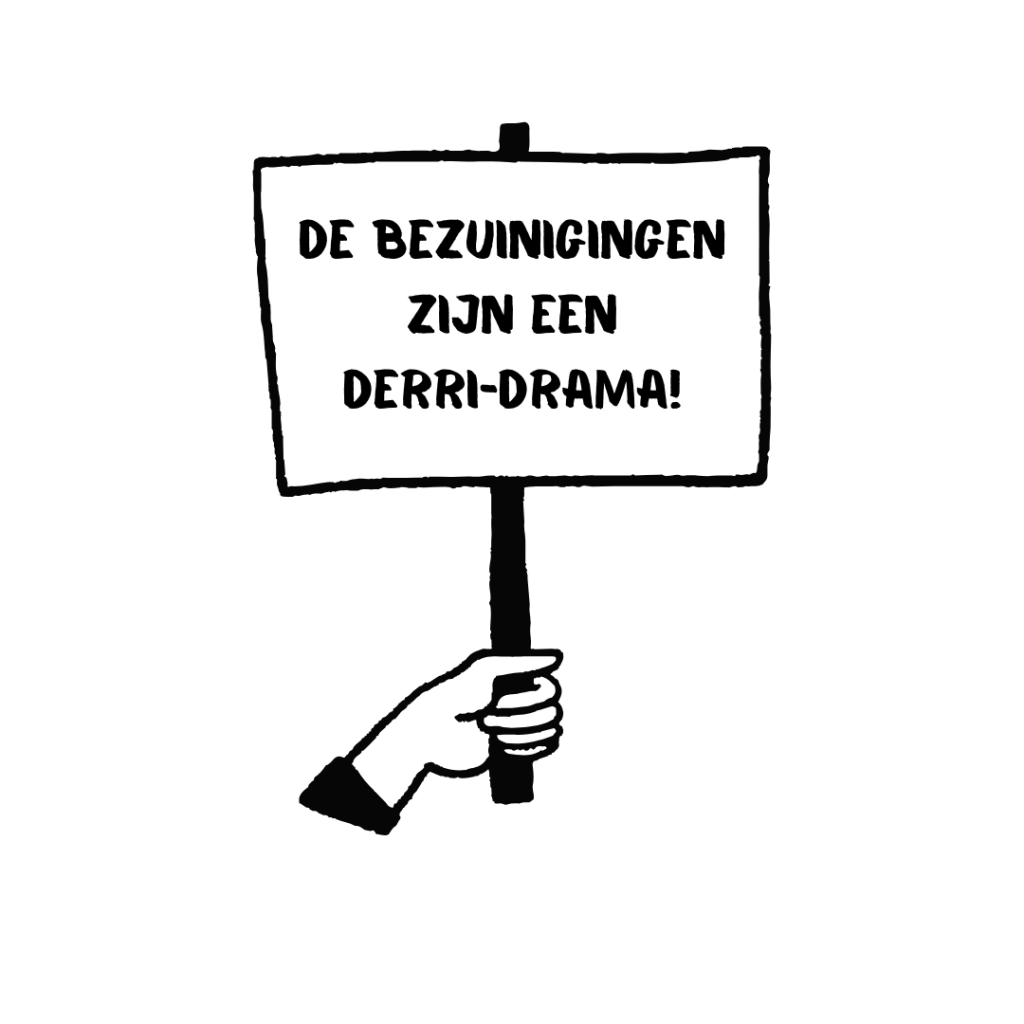
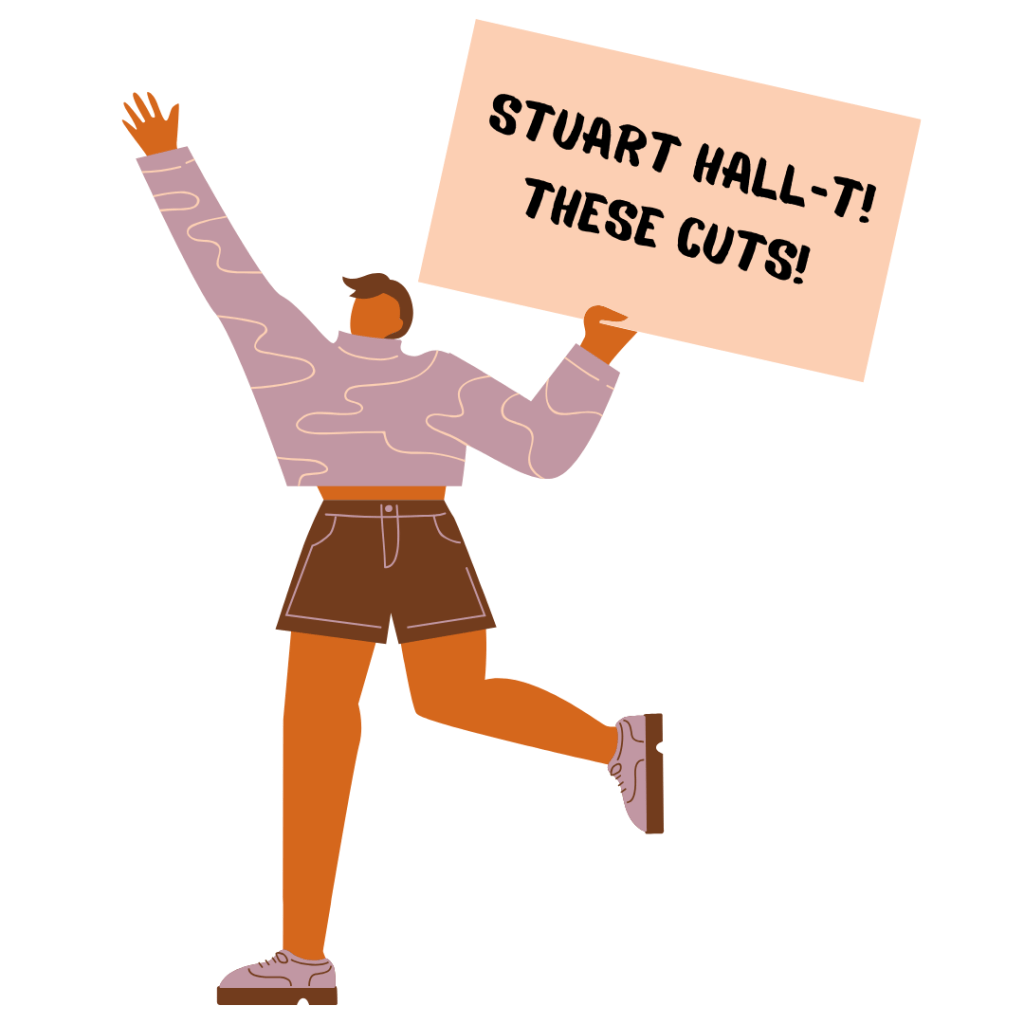
On November 25th, amongst the thousands of protesters, a small group of students and teachers in the streets of The Hague. Brought together by the protest against the budget cuts in higher education, they sought ways to combat the impending changes in creative ways. This amalgamation of frustration towards the government and love for their field, resulted in protest slogans inspired by iconic cultural scholars. During the march through The Hague, what started as a simple joke grew to a shared mission — resulting in a spitfire of protest slogans quicker than we could write down. This project did not stop after the protest was over, instead it followed us back to Nijmegen and stayed the topic of our conversations in the days following. Rather than keeping this to ourselves, we would like to present to you the fruits of this labour.
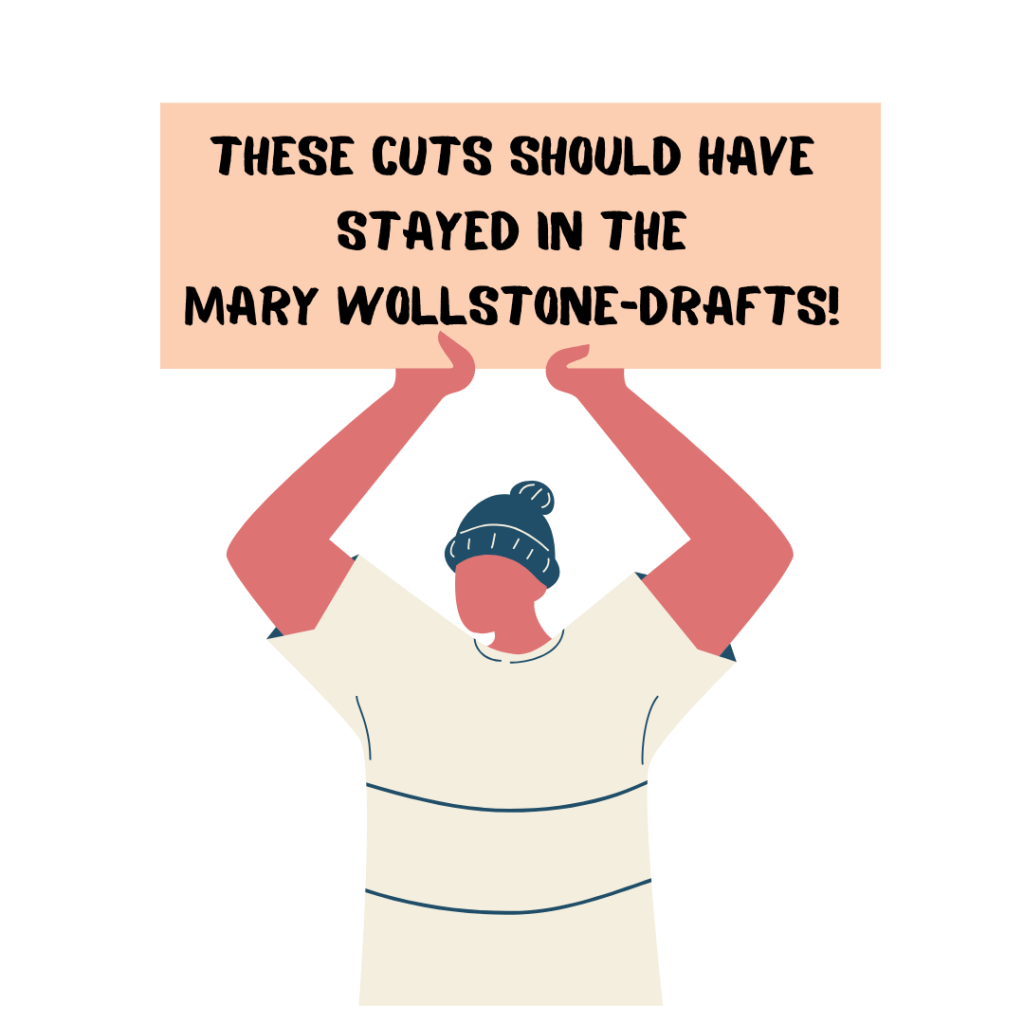
These cuts should have stayed in the Mary Wollstone-drafts!
Budget cuts? Camust you do this?
Stuart Hall-t! These Cuts!
Budget cuts are Rolando Vaz-questionable!
This is a Kriste-fucking bad idea!
Make education Adrienne Rich again!
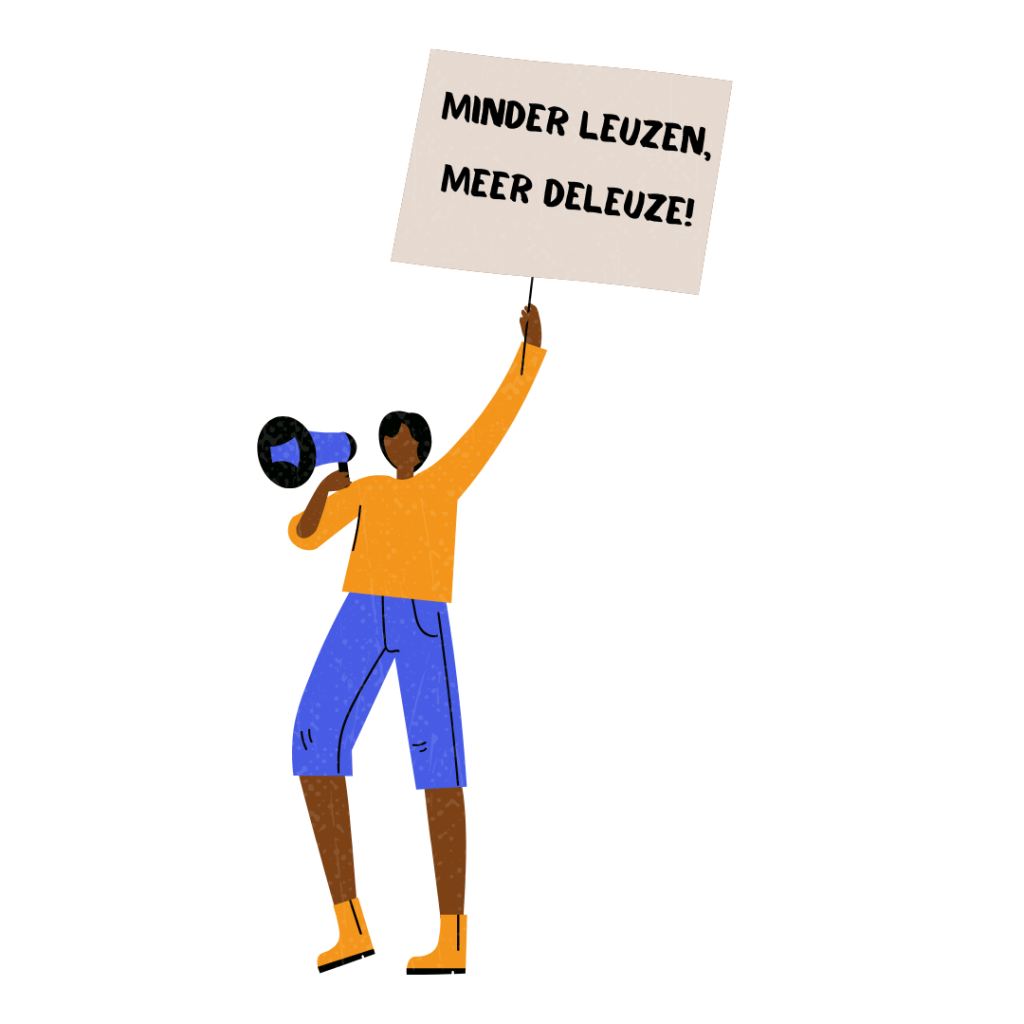
Minder leuzen, meer Deleuze!
Ik zeg Donna Hara-nee tegen de bezuinigingen!
Wij willen Judith But-leren!
Dit gaat de verkeerde Immanuel Kant op!
Zo haal je alle Freud-e uit het onderwijs!
Onderwijs? Het kabinet heeft er Lac An!
Doe het Edward Sa-niet!
Ik heb hier een Hegel aan!
Zeg maar “au De Beauvoir” tegen kennis!
Het hele onderwijs gaat op zijn Plaat-o!
Ik wil nog een Gayatri Spi-vak kunnen leren!
Bezuinigingen? Derri-dat is een slecht idee!
Ik word hier Virginia Woo-dend van!
Maak de goede Herbert Mar-keuze!
Dit is zo Ferdinand de Sau-zuur!
Wij willen geld voor Aristote-les!
Bezuinigingen? Roland BAH-rthes!
We willen nog Beaudri-jaren educatie genieten!
Het onderwijs Bruno Lat-hoort erbij!
Leren over Braidotti maakt je een hotty!
Ik word hier Grams-ziek van!
Er zitten veel bell hooks en ogen aan dit beleid!
De bezuinigingen zijn een Derri-drama!
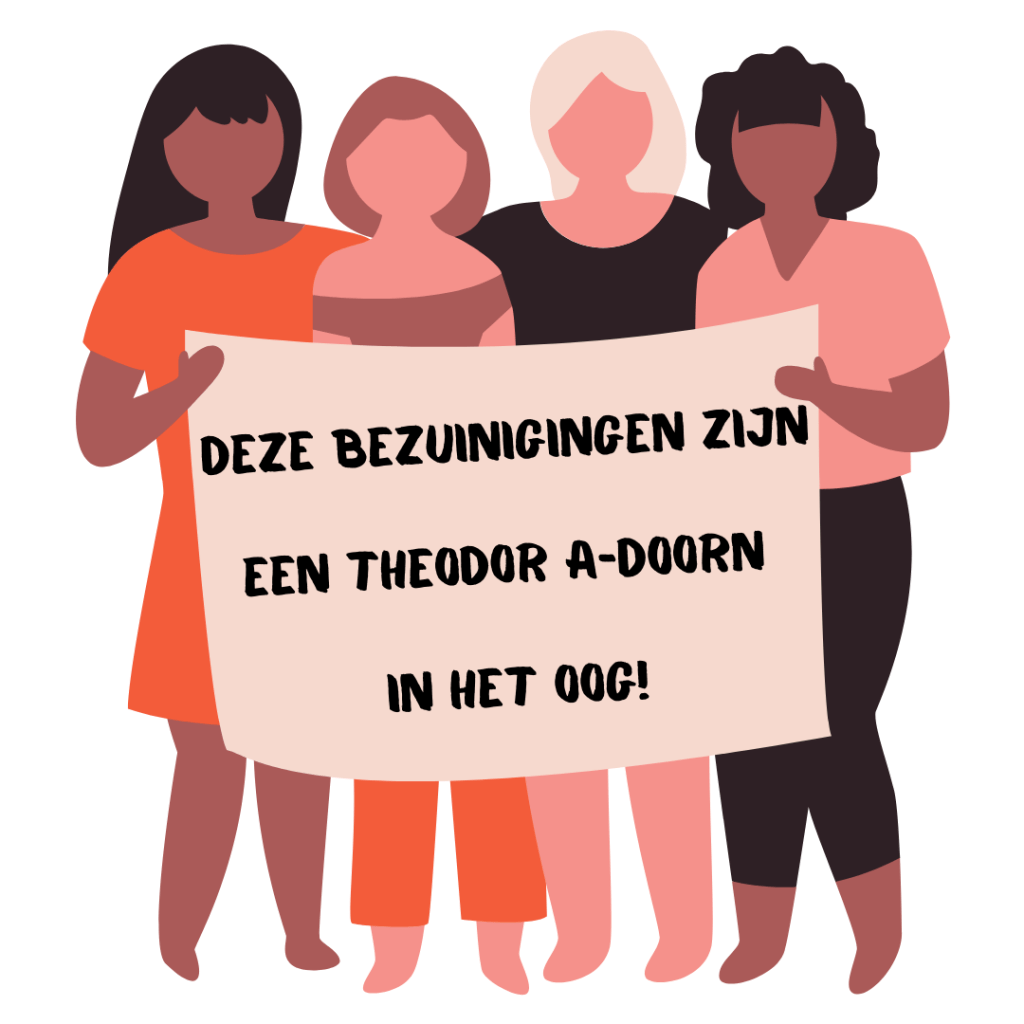
Deze bezuinigingen zijn een Theodor A-doorn in het oog!
Zeg maar Susan Son-dag tegen de kenniseconomie!
Slavoj Zi-zet de studenten voorop!
Recht op Frantz Fan-onderwijs!
Stop Sara Ah-met bezuinigen!
Bezuinigingen? Homi Bha-bagger!
Melanie Klein beetje jammer dit!
Hélène Ci-zoek het maar uit met je bezuinigingen!
Bezuinigingen: Nietz-je beste idee!
Deze bezuinigingen zijn niet Gram-sjiek!
Wij gaan ge-Edmund Burkt onder de bezuinigingen!
Spino-zak er maar in!
Ik Hei-denk er anders over!
De regering Dipesh Chakra-bakt er niks van!
Zonder onderwijs spreken we straks allemaal Homi Brabbeltaal!
By Talin de Jeu, Miriam Stuefer and Holly van Zoggel
Het Heet Thee originated from a shared interest in tea, gender, and the intersections of the two. With this documentary, we aim to dissect how mythologies surrounding tea and femininity are created and kept alive. By shooting images of the tea habits of ourselves and the people surrounding us, by filming artworks and china, and by collecting additional photographic footage from local archives and movie scenes, we search for intersecting and contradicting aspects of the personal, political and historical.
The documentary roughly follows the making process of tea: starting with ingredients, how they are grown and harvested, moving to the making of tea and the china it is consumed from, followed by the social aspects of drinking tea, and lastly its dregs. The focus on our own hands, shot on handheld phone cameras, emphasises our closeness to the subject but also the situatedness of our narrative. These images are intertwined with different types of archival material. This way, we wanted to underline the vast history and the physical and cultural contexts that all boil down into a single cup of tea. The images in the first chapter show people – predominantly women – working on tea plantations. Even though tea is strongly connected to femininity, the power still lies with men, as they are the ones judging the tea’s quality. We visualised this dichotomy between femininity and masculinity in our tea-culture with the two humorously named teas Decollethee and Theetosteron.
Although we do question the myths through our documentary, the style and nature of the film is subtler than if we had used a voiceover to explain our ideas. We chose this approach because we did not want to teach the viewer how gender(roles) and tea are intertwined. Instead, the documentary is a search for the parallels that constitute the myth, formalized in a way similar to the way myths circulate in our society: with subtlety but ever-present in its details.
The documentary Het Heet Thee was created in the BA course Moving Documentaries.
By Fenne van Beek, Jildou de Jong, Niko Oussoren, and Puck Gregoor
We, Fenne van Beek, Jildou de Jong, Niko Oussoren, and Puck Gregoor, are excited to present to you our short documentary, Banden met Barrels. It is a documentary created for the second-year course ‘Moving Documentaries’ as part of our bachelor’s program in Art and Cultural Studies at Radboud University. As four Dutch students, we wanted to shed light on bicycles, particularly student bicycles. Because where would the average student actually be without their bike? It may seem like a simple, ordinary object, and it is, but the bicycle is also a significant cultural phenomenon whose importance we often overlook. Bicycles are essential in Dutch student life for their practicality and reliability, despite their worn-out appearance. As will become evident in this documentary, the student bicycle can serve as a starting point for many conversations and two-wheeled journeys. We hope Banden met Barrels sparks nostalgia and prompts audiences to pause and appreciate the humble bicycle as more than just a mode of transportation, but as a symbol of freedom, community, and adventure.
The documentary Banden met Barrels was created in the BA course Moving Documentaries.
By Rosa Floris, Lotte Lammers, Marta Ora, Laury van de Ven and Tim Wiesner
In Dutch, the word ‘knuffels’ holds a charming dual meaning, referring to both plush toys and hugs, and thus embodying a sense of comfort and care in a single term. Etymologically rooted in ‘knuffen’, meaning to bump or shove, the term ‘knuffels’ connotes a form of affection that entails both a gentle embrace and a playful nudge, driving home the idea of a push-and-pull, perpetually dynamic bond. This bond is at the center of our documentary, Knuffels, and explored through various interviews with Arts and Culture students of Radboud University. Knuffels pertains to the ambiguity of affection towards plush toys, and attempts to formulate an answer to the question: how do individuals attribute meaning to plushies within the context of ownership, and what psychological, emotional, and symbolic significance do these objects hold for their owners?
Knuffels aims to show truths; the audience is shown small aspects of the documentary’s construction, but not enough to betray the true extent of our involvement or to problematize the notion of truth. Instead, these few elements of construction work to disarm suspicion in the viewer and therefore aid in framing the contents of the documentary as truthful. The presentation of several voices, which at times contradict each other, serves this purpose. Subsequently, we have chosen to make fabric the common denominator in all shots and scenes, which vitalizes a soft aesthetic that fits, frames and harmonizes these oftentimes nostalgic sentiments expressed in the interviews.
As for the documentary in its entirety, the viewer could consider the footage a tapestry that we have carefully woven in collaboration with the interviewees, and from which we later cut and sewed together different pieces to make our final product – the visuals do not fabricate, the fabrics merely visualise. As a result, Knuffels quite literally embraces a storytelling predicated on multiplicity, be it in terms of lived experiences, perspectives, or the very essence of affection itself.
The documentary Knuffels was created in the BA course Moving Documentaries.
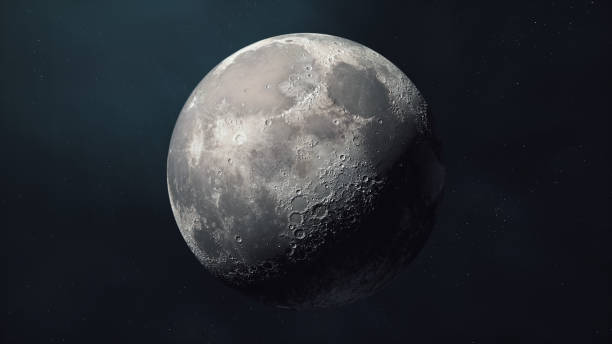
On my recent journey to Suriname, I have been thinking something that I have thought many times before, every time I am separated from a loved one. I see the moon and I am comforted by the fact that, however far away the other person, the same moon shines on both of us. And I am not the only one with this thought. As an historian of travel, I come across it again and again.
This is the thought: However many miles are between us, and however many hours of travel, however many obstacles – sometimes even the bend of the globe prevents us from seeing one another – we are nonetheless united by a single glance at the moon in the sky. We only need to look up and we see the same, very real, physical thing, at the same time.
I am not the first to think this. In my work, I come across many historical travellers with similar experiences. In 1877, German lady’s maid Auguste Schlüter travelled with her British employers to Ireland.
It is Sunday night, the moon sends her silvery light across the ocean, and carries me far away, home to my dear ones and to my dear Hawarden home, and to another spot on earth which I need not name, for Thou knowest all my thoughts.1
In Ireland, the moon reminded Schlüter of her loved ones in Germany and Britain, and of a mysterious unnamed person – her lover? So, what I am finding in my work about nineteenth-century Europeans is that, because the moon was visible from very different locations at same time, it made travellers feel connected to their (other) homes and their beloved. The moon took away the distance for a moment. Sometimes, this was followed immediately by a sense of even greater distance because of the contrast between the moon that seemed so close as to be touchable, and the loved one who was both out of sight and out of touch.
Now, as an historian, I am trained to focus on historical and cultural differences. I am asked to describe how people in the nineteenth century were different from ourselves, for example. But sometimes, I cannot help but espy similarities. Between myself and someone in the nineteenth century. Or someone in a vastly different time and place.
This same moon hangs over Fu-chou. Alone, she’ll lean out her window to watch it.2
So begins one of the famous melancholy poems by Tu Fu about travel, migration and separation. Tu Fu was a Tang-dynasty poet living thirteen centuries ago in what is now central China. In his poem, he describes two protagonists united by the same moon, but yet watching it alone.
It looks like this magical property of the moon to annihilate distances – and then to emphasise them – has been felt across the globe and across the millennia.
These examples are about the moon. I have found travel writing in which the sun accomplishes the same, particularly at special events such as a solar eclipse. And other travellers who talk about the stars. More down-to-earth phenomena also did the same for many: long rivers, for example, and the ocean.
Rivers and the ocean did this in a slightly different way from the moon. Not by enabling distant ones to see one relatively small point at the same time, but by offering the vastness and connectedness of one body of water to both individuals at the same time. The Atlantic Ocean, the Indian Ocean and the Pacific Ocean connected one coast to a completely different one. And so, in the mid-nineteenth-century, the Russian writer Ivan Goncharov was on the island of Madeira in the Atlantic Ocean and seems to have felt connected to Russia through the Madeiran flowers he threw into the water and that might in theory reach Russia.3
Dare I propose that we are dealing with the same experience in every one of these instances?
And dare I propose also, therefore, that the moon brings together Tu Fu, Auguste Schlüter, and myself?
Immediately we have to admit that the story is not that neat. In Suriname, I sadly missed the opportunity of looking at the moon when it was full and when I knew certain people far away would also be looking at it. The rainy season covered up the moon. A week or so later, I saw a vivid bright waning moon. The same moon as was visible at the other side of the world, yes, but also a different one. While in Europe, my waning moon is balancing on its point. In Suriname, I see a calmly lying moon. In the same way, Tu Fu’s moon, Schlüter’s, and mine will have looked slightly different, because of our different positions on earth. What is more, our moons will have looked different because the moon has aged. The craters and seas on its surface may be a little worse for wear now compared to more than a thousand years ago, and there’s certainly been more human impact in recent years. My point is that the idea that we are looking at the same thing is perhaps a little bit of an illusion. But an influential and comforting illusion nonetheless.
Recently, while attending a PhD writing retreat I connected with my peers about our hobbies outside of academia. I told my colleagues that in my free time I, of course, like to do bird watching. I was faced with curiosity and interest: “Oh really? Did you start it during Covid? It was a big trend back then.” Some friends also commented on it being a retired peoples’ hobby. I was utterly confused – doesn’t everyone casually birdwatch? What does it have to do with being old? Aren’t we all curious about identifying the species around us in the natural world? After receiving three bird books for my birthday, I am now in the acceptance phase of realising that maybe it’s a bit of a nerdy niche to birdwatch in your 20’s. But it’s one that I highly recommend.
I did not start bird watching during the pandemic. In fact, I was indoctrinated from a young age by my parents. Growing up in South-Eastern Finland, the forest is your backyard, quite literally. Our father would play us bird sound cassettes and test our knowledge on nature walks. Not only birds, but we were expected to learn how to identify mushrooms, plants, berries, species of trees – everything in the natural world around us. It was part of being one with and respecting nature, and also to learn what was safe to gather for eating.
However, I was only moderately enthusiastic about birds, until I moved abroad and realised how different the species were in other countries, even within Europe. The storks, grey herons and meerkoets that are so common in the Dutch landscapes were more of a rarity back home. And while most species are the same, they have different cycles. My internal clock was quite baffled hearing some birds singing in February in Nijmegen that mark the beginning of summer in Finland, or seeing the Egyptian geese with little goslings (yes, that’s geese babies) as early as April. Naturally, I reported all these Western European wonders back to my family in the arctic tundra.
On a more cultural level, this pastime is relatively young in its current form. Interest in birds was much more destructive up until 100 years ago. In the 18th and 19th century it was still common to kill and collect birds, as well as other wildlife, for studying their biology or merely displaying them in curiosity cabinets.1 The development of binoculars as well as advocacy of ornithologists Edmund Selous impacted the hobby. In his diary entry from 1898, Selous had an awakening when he displayed remorse for the past killing of birds and urged people to put down their guns, and observe the birds in their natural habitat instead.2 Several decades later, birdwatching was boosted during the Second World War following the 1940 publication of Watching Birds by James Fishers. Surprisingly, (as much as I tried to steer away from my research topic of Heritage on Nazi Persecution) birdwatching was also practised on German Prisoner of War Camps: for instance British PoWs led by John Buxton started their own ornithological society, tracking and illustrating birds and distributing weekly bulletins on the camp’s ‘nature news’.3 Birdwatching offered a welcome distraction to the prisoners, perhaps releasing stress, and a connection to the outside world during their entrapment.
Especially now, during the high intensity period of working on my PhD research, I find a lot of comfort in going out to Ooijpolder with my binoculars. It gives an incentive to go on a walk outdoors and quiets down my brain in the process. I enjoy pretending to be a 19th century ornithologist while studying the features of birds, trying to trace some elements of their dinosaur ancestors in their movements and sounds (if you have seen videos of the East-African shoebill, you know what I am talking about). I use Smart BirdID to note down the species I see and it gives me a cool sticker to my collection for each new bird – kind of like catching Pokémon, or creating a digital (and much more ethical) cabinet of curiosities.
A sticker collection of some of my identified birds on BirdID
Recently, I received news from my (bird-crazy) family that there is a rather rare osprey couple nesting on an island at our summer house. This was not a coincidence, but an effort of nature conservators who built a man-made nesting platform last autumn. Now our weekly phone calls go: “How are you doing? And how are the ospreys? Have their eggs hatched yet?” Things even took a dramatic turn resulting in a boat chase: as my stepfather saw a boat lingering around the nesting island he jumped onto his boat and chased down the unaware fishermen. I was not there, but I imagine it looked like something out of Baywatch. Once the fishers spotted him, they started drifting away with their boat, but he caught up and ordered them to turn off their motor. The frightened Russian fishers immediately offered their fishing licences. “I don’t care about your licences, but could you please let the ospreys nest in peace?” my stepfather pleaded. They took the hint and left for calmer waters. All was well again in the osprey paradise.
The famous nesting ospreys at our summer house in Torsansalo, Finland.
Regardless, if sitting still for hours with a pair of binoculars is a bit too hardcore for you, you can also sit still on the comfort of your couch for 51 minutes while watching Dancing with the Birdson Netflix or watch a live-camera stream of a bird’s nest. I simply encourage you to take a moment to appreciate the wonderful range of species and nature around us that we often take for granted.
By Eva Schellingerhout, student in Arts and Culture Studies
I got introduced to the cut-throat world of copyright and intellectual property at the tender age of eleven, watching a mini-documentary series with my father, called The Toys That Made Us. The series, in its attempt to follow the genealogy of famous childhood toys, exposed the bureaucratic slap-fight that occurred in the 70s and 80s over the merchandising rights to the latest Star Wars or He-Man. Corporate espionage, stolen trademarks, leaked product designs — it was a wild, dangerous world that endlessly intrigued me. This interest resurfaced when I was tasked with making my own transmedia story — I was going to create my own slap-fight, a company that would have competed with the likes of Kenner and Mattel at the heights of this ‘Toy War’. In the end, it became less a company, and more of a living, breathing person: David Kerr, a fictional toy product developer in the 70s, is contracted by a franchise to create a toy line, to accompany their upcoming film and collects his mementos of the work project in an archive box, where they sit, forgotten, for decades. The objects in the box are myriad: through advertisement blurbs, communication between the product designer and the client company, editor notes and sketches, the failings of a bled-dry franchise can be pieced together, alongside details about David’s personal life.
The archive brings two different branches of intermedial storytelling together: the ‘classical’ model of intermediality, Jenkin’s spatial transmedia “commercial franchise” and David Kerr’s personal life, which interacts with thing theory, archives and personal memory (Ryan 4).
Following Heersmink’s model, my archive functions as an ‘autopography’, a “network of evocative objects” which “provides stability and continuity for … autobiographical memory and narrative self” and through interacting with these objects “we construct … our personal identity” or the “narrative self” (1846; 1830). I.e. by interacting with the evocative objects in the storage box, we construct a narrative for the product developer. During the process, the viewer endows objects with autobiographical meaning, imagining the relation between human actor and object. To promote this ‘endowing’ I aged the objects, scrunched up and tore the complaint letter and left out specific information. On a larger scale, how the ‘viewer’ chooses to construct the narratives they find in the box, whether this is the first or second branch or a combination of both, can be seen as cryptographic narratives being at play. The cryptographic narrative was conceptualised for video games that obscure a secondary, parallel story in their text not necessary for game completion, which can only be accessed through dedicated effort (Paklons and Tratseart 168). Because my project is also interactive and deals with constructing narratives out of “disparate plot points”, in a co-creation process between author and viewer, but also never confirms whether the constructed narrative is ‘correct’, the cryptographic narrative is a useful framework (Paklons and Tratseart 170).
Superficially, the storage box forms two branches of theory, or rather, invites two different modes of interaction, as I suggested earlier: the viewer can either connect with the commercial franchise, in the form of adverts and film posters, or with David Kerr, via grocery lists and sticky notes. In practice, this is a crude simplification of the inner workings of the box. Naturally, I cannot dictate which ‘story’ the viewer will find interesting. In essence, all objects can become a part of an infinite number of theoretical cryptographic narratives, at the whims of the viewer, since there exists no hierarchy, or even true division, between plot elements. The theory, therefore, that I outlined above, can be applied to all objects: the two branches exist simultaneously, it all depends on how the viewer interacts with the objects. Does the viewer acknowledge the constructed nature of the archive box and therefore treat the ‘personal memories’ of the product developer as clues instead of real memories, taking a cryptographic approach? Does the viewer see the representations of the commercial franchise as an extension of the narrative self of the product designer? And so on and so forth.
For the actual contents of the box, I compared archival documents, like old Star Wars, Transformers, Marvel, He-Man and Mattel adverts, and how they constructed their brand identity across multiple media (see the first image below this paragraph). For the poster, I drew from 80s fantasy films, like The Dark Crystal,The Labyrinth and The NeverEnding Story (see images 2 and 3). Once I started researching 70s and 80s idiosyncrasies, it became near compulsory to check each detail. It began with googling 1980s travel brochures — at this point my itinerary was much more ambitious — and ended with frantically searching for the computer standard typeface for word processors in the 1970s. It’s Helvetica, for those curious (image 4). All of this was endlessly fascinating to me, but I’ll stop myself, before I start waxing poetry about film poster composition, gauche colouring and standard 70s printing practices. Essentially, the viewer should be able to deduce a vague time estimate based on typography, colour, texture, ‘style’, and composition (image 5).
The biggest problem was verisimilitude — breaking the contract, stepping past David Kerr and inserting emphasis where none would have existed, proclaiming “Yes! This is what you should be looking at!”. An over-reliance on the cryptographic elements would train the viewer to only engage with the objects as potential clues, which would limit their engagement to a very narrow range of emotional investment (images below this paragraph).
The toys, especially, formed a roadblock. I was not just trying to create appealing designs — they would have to fit 70s sensibilities, while also reflecting the restraints David Kerr would have battled with, like time, budget and investor desires (images below this paragraph). When I went back to theory, I was able to put my worries to rest. Wolf writes, “Adaptation into a physical playset [or toy] … involves not so much the adaptation of a narrative, but rather the settings, objects, vehicles, and characters from which a narrative can be interactively recreated by the user” (169). Flattening these characters was integral to making a toy, I realized, which is a great narrative tool for my project at large.
Then, it was just a matter of shackling myself to my desk until my eyes went red and David Kerr had substantially come to life.
There is so much more I could mention about this project. How I arranged the objects in the box, how I re-folded and un-folded paper, the intricacies of all the scrapped product designs and rejected archive objects, how the Namdor logo is made from five typefaces and took an entire day (see image) — but alas.
The Namdor Archive box now rests behind my curtain, buried by a few sunhats, pillows and a children’s microscope. It has ironically, become a truer archive than it had ever previously been — the papers have bent beneath their own weight and some knickknacks from 2024 have found their final resting place inside. The box has already begun to fade from memory. I wait for someone to rediscover Me and David Kerr inside.
Works Cited
Heersmink, Richard. “The Narrative Self, Distributed Memory, and Evocative Objects.” Philosophical Studies: An International Journal for Philosophy in the Analytic Tradition, vol. 175, no. 8, 2018, pp. 1829–49. JSTOR, www.jstor.org/stable/45094122.
Hescox, Richard. “The Dark Crystal.” N.d., Pinterest, pin.it/5AYWXOEcU.
Paklons, Ana and An-Sofie Tratsaert. “The Cryptographic Narrative in Video Games: The Player as Detective.” Mediating Vulnerability: Comparative Approaches and Questions of Genre, edited by Anneleen Masschelein et al., UCL Press, 2021, pp. 168–84. JSTOR, doi.org/10.2307/j.ctv1nnwhjt.14.
Ryan, Marie-Laure. “Transmedia Storytelling: Industry Buzzword or New Narrative Experience?” Storyworlds: A Journal of Narrative Studies, vol. 7, no. 2, 2015, pp. 1–19. JSTOR, doi.org/10.5250/storyworlds.7.2.0001.
Wolf, Mark J. P. “Adapting the Death Star into LEGO: The Case of LEGO Set #10188.” Star Wars and the History of Transmedia Storytelling, edited by Sean Guynes and Dan Hassler-Forest, Amsterdam UP, 2018, pp. 169–86. JSTOR, doi.org/10.2307/j.ctt207g5dd.16.
With summer vacation having started for many and drawing closer for others, we thought it would be a good time to ask our staff in Arts and Culture Studies about the cultural things they’ll be enjoying this vacation. If you’re on the lookout for a book, a podcast, an album or an activity to spend your summertime on, look no further, because ACW has some suggestions for you!
Podcast: People I (Mostly) Admire by Steven D. Levitt Episode: Maya Shankar Is Changing People’s Behavior — and Her Own I love listening to behavioral scientists and how their tiniest intervention can make a change in social systems. This episode talks about different ways in which behavioral economics was applied to increase voter’s turnout (among other fascinating examples) and how as people, embracing change can be daunting but is quite necessary. The entire podcast has a stellar guestlist, and its my cooking companion! Apoorva Nanjangud, Postdoctoral researcher, MTC
Graphic Novel: My Favorite Thing is Monsters – Emil Ferris This two-volume graphic novel is a mind-blowing read about a monster-like girl growing up in the vibrant and violent city life of Chicago in the 1960s. The book is one of those rare cases where excellent script writing and intricate graphic storytelling come together. It is also the debut of a 50+ American writer who has spent over two decades working on it. Maarten de Pourcq
Novel: Julia – Sandra Newman It takes great courage to re-write a classic novel like Orwell’s 1984, and Newman pulls it off. This retelling of the story from the perspective of Julia is fantastic, especially where dialogues from the original have been copied literally and still manage to twist the original plot. Edwin van Meerkerk
Poems: Doe het toch maar – Babs Gons, and a novel: Jaguarman – Raoul de Jong Bookworms who have turned their hobby into their job have a problem: as children, they tried to make each book last as long as possible, but now that reading is their work, the tower of texts that must be read seems to rise in direct proportion to their falling quality, which makes speedy reading both necessary and desired. Not with these two books. Their optimistic realism and real mystique made me want to stay with them. Anna Geurts, teacher in cultural studies and historian of Dutch and Surinamese travel.
Novel: The Swan Book – Alexis Wright I would like to recommend this energetic as well as poetic novel from 2013 by the Nobel Prize-worthy Indigenous Australian author Alexis Wright. It has just been translated to Dutch as Het boek van de zwaan, presumably because of its highly topical theme. It’s a sci-fi story about climate change and the injustices inflicted upon Aboriginal people (and how the two are related). I will be reading Praiseworthy, Wright’s latest novel, this summer myself. Or I will try, as it’s 800 pages long! The Swan Book is easier to read on the train to the beach or in your tent in the woods. I wouldn’t exactly call it light reading, but it’s a great reminder of the power of literature and that’s always welcome – in any location. Dennis Kersten, Lecturer Arts and Culture Studies/ Algemene Cultuurwetenschappen
The Emerald Podcast For the past few years, I’ve been diving deep into ancient myths, and last year I stumbled upon a podcast that has completely captivated me since. The Emerald podcast is a mesmerising blend of myth, story, music, and imagination, creating an immersive experience (best described as a “sonic journey”) that hooked me from the first episode. This podcast reminds us of the importance of reviving the imaginative and poetic essence of human experience, celebrated by cultures for thousands of years, to address today’s unprecedented challenges. Britt Broekhaus, project coordinator
Film: Petite Maman, a 2021 French fantasy drama, written and directed by Céline Sciamma Why I would recommend it: always wished you could have met your parents when they were much younger – or even the same age as you? The film follows a young girl who experiences just that. She copes with the death of her maternal grandmother by bonding with her mother – who she meets in the woods, and who is eight years old, just like she is. It does not take long before she quietly realizes that this stranger is actually her mother in a much younger version. The film is beautifully shot, lovely to look at, thought-provoking, psychologically well constructed and (somehow) strangely credible. It stayed with me for weeks after I saw it. Petite Maman is available on Pathé Thuis. Helleke van den Braber
Novel: The Book of Love – Kelly Link I recommend The Book of Love because it is captivatingly strange. I spent the first half of the book having my expectations defied and wondering where on earth the plot was going, and the second half deeply impressed with the way all these widely diverging threads of plot were woven into a coherent whole. This is a book for people who enjoy magical realism, interpersonal drama, and carefully wrought prose. Julia Neugarten, PhD candidate
Album: ‘The Shape of Fluidity’ – DOOL This album was put into the world in April 2024 and since then I have been loving it, as it touched something in me. As the artists themselves say: “The theme of the album pitches the concept of identity against the backdrop of a world in constant flux, and deals with change. […] We have to be as fluid as water to navigate ourselves through this ocean of possibilities and uncertainties – and make peace with chaos and impermanence.” Demi Storm, PhD candidate
TV Program: Rutger en de Nationalisten (2023) In case your summer is too relaxing, and you are afraid of getting too optimistic about the future, I’d recommend the NPO series Rutger en de Nationalisten (2023). In this series, Rutger Castricum (PowNed) follows a number of nationalists of different flavours in their daily lives and work – from anti-vaxx conspiracist, farmer, politician, or local neighbourhood watch to student association and Friesian car mechanic. The series gives a good and disconcerting insight into a world that might seem far away, but that surrounds us every day. Happy watching! Anonymous Contributor
Novella: Open Water – Caleb Azumah Nelson Both intimate and brutal, Open Water is a beautifully written novella that has made a great impact on me despite its short length. At first glance, it is mostly a love story between a photographer and dancer in London, but unfolds into careful examinations of Black artistry, racial injustice, police brutality and mental health. I love the lyrical prose and musical influence, and have re-read many passages since my first read; it’s the perfect slow read for summer! Joy Koopman, PhD candidate
TV Program: B&B Vol Liefde Ja kijk, ik kan nu heel cultureel verantwoord gaan doen, maar we willen deze zomer gewoon allemaal B&B Vol Liefde kijken toch? De afgelopen 3 zomers was dit dé zomerbesteding. Ik was oprecht verdrietig op vakantie omdat ik toen 10 dagen moest missen. Het is super wholesome hoe al die mensen met elkaar omgaan, er zijn vaak mooie natuurbeelden, er komen iconische memes uit en de afleveringen zijn ook lekker lang (ongeveer een uur en dat dan 5x per week) dus dat is perfect. Lekker met je hoofd voor de ventilator als het snikheet is, wijntje erbij. Maaike van Leendert, lecturer
Exhibition: Spot On – Hairytales in museum Kunstpalast, Düsseldorf This exhibition is just a small room in a large museum, but it showcases a particularly interesting subject. The way that hair is styled tells us something about social status and belonging to societal groups. Cuts and hairdos expose notions of gender and body image of their time. They reflect norms and are an expression of political protest and resistance. “Hairytales” opens up perspectives on this intimate, symbolic material. Jeanine Belger, Teacher in Residence
Novel: Zeno’s Conscience by Italo Svevo At the moment I am (re)reading this classic and I’m just smiling and crying and applauding all the time. Originally published in Italy in 1923 (as La coscienza di Zeno), this novel hasn’t lost anything of its power and ingenuity. Memorable protagonist, a continuous embarassing self-analysis. Every sentence is to be savoured. Natascha Veldhorst
Concert on September 26/27: Nick Cave & the Bad Seeds “The Wild God Tour” in Amsterdam’s Ziggo Dome. The 26th is already sold out but there are still tickets available for the 27th. Cave’s approach to culture and literature has been an inspiration to me as a student and later as a teacher. Rarely do I come across a band or a song where music and lyrics so powerfully transform one another, yielding layers of meaning that are as much scary as they are uplifting, often bordering on the sublime. I always enjoy coming back to his art, which is why recommend this upcoming concert. Laszlo Muntean, assistant professor of visual culture and some other stuff
Novel: The Wall (Die Wand) – Marlen Haushofer (1963) My recommendation is one of my favorite novels of all time: The Wall by Austrian writer Marlen Haushofer. This is an ecofeminist novel about a woman who wakes up in a cabin in the woods to realize she is separated from the rest of the world by a transparent wall. The forest and a few animals are her only companions, creating difficult conditions for survival, but also stimulating her to document her daily activities and thoughts about being the only human among nonhumans. The world the book creates is, despite its dystopian elements, a wonderful place to immerse oneself in during a summer break. After reading, you can also enjoy the film adaption (Pösler, 2012), but I would recommend you to first imagine the world this moving book creates by yourself. Rianne Riemens, PhD candidate
The header image for this blogpost was created by Courtney McGough and shared on Flickr under a CC BY-NC-ND 2.0 license.