The Role of Museum Storyteller in The Age of Social Media, AI, and Its New Approach of Writing

By Reza Zefanya Mulia

A. Museum Storyteller: Now 

In the current cultural context, storytelling about a museum’s collections or ongoing exhibitions goes beyond simply providing object details such as title, materials, date of origin, and historical descriptions. For social media posts, storytelling is also not merely a supplement to fulfil the institution’s marketing strategy. Rather, it has become an extension, and arguably a central aspect, of the museum’s mission to share knowledge with the public. Writing stories — whether for object labels within a gallery or digital content for a museum’s social media — no longer rests solely with the curator. As museums’ educational objectives evolve, the narratives accompanying objects extend beyond wall text and labels to include digitised formats for distribution across digital platforms such as social media, video streaming services, websites, and newsletters. 

With this new objective, museums come up with new professional role in order to develop their narrative matters: the storyteller — a position that could be under curatorial and interpretation or education and learning department. Museums possess a unique opportunity to establish trusted spaces, both physical and digital, for shared learning and development. Through the creation of dynamic spaces and the use of personalised storytelling strategies, museums can cultivate the same level of audience trust online as they achieve in their physical spaces. Timothy (2011) wrote that by enlivening the past and enabling personal resonance, visitors can establish a deeper connection with the sites they explore.  

A fundamental goal of interpretive programmes should be to provoke active engagement, encouraging visitors to participate in conservation, education, volunteering, or fostering an enduring appreciation for heritage across future generations. The interpretation of objects and the narrative framework used to present them to audiences are central to the storyteller’s role. The primary objective of interpretation is not merely to instruct or convey facts, but rather to stimulate constructive action among visitors. Effective narrative should inspire by offering new insights, rather than solely factual content.  

Storytellers must recognise the diversity of individual experiences, ensuring that the interpretive process fosters meaningful engagement by revealing knowledge beyond basic data associated with objects. This paper will examine the challenges faced by museum storytellers in navigating current technological advancements, while exploring practical examples that highlight the application of new writing approaches to enhance storytelling engagement. 

B. Navigating AI in Museum Storytelling: Challenges, Strategies, and the Importance of Human-Centred Narratives 

With the rapid advancement of online channels and content development tools, storytellers within cultural institutions face a challenge similar to copywriters in the broader creative industry: the potential of being replaced by artificial intelligence in terms of content production. Since late 2022, media coverage and public discussions on AI have surged, with generative AI, particularly ChatGPT, at the forefront. AI has not only become a trending topic, but expectations regarding its future potential have significantly heightened.  

From this, some have argued that generative AI will replace certain jobs, while others have highlighted that it could enhance work in various professions and even create new roles. The transformative potential and risks of artificial intelligence have dominated public debate across many countries in recent years, sparking a range of visions, expectations, and uncertainties. A considerable part of this exaggerated discourse has centred on the possible effects of generative AI on labour markets, covering a wide spectrum of occupations, including those involved in text production, such as copywriters (Vicsek et al., 2024).  

This discourse opens up to more focused conversation related to the role of creative industry practitioners in a museum environment, especially their content writer who might be at threat of job replacement due to AI growth. Though different in tone of voice and writing approach, storytelling in museums could be rooted in the same spectrum of copywriting in marketing. Both are involved in developing a strategy for the writing that encourages people (or museum visitors) to take action, using a creative combination that aids in delivering the message effectively (Hernández, 2017).  

Furthermore, Hernández wrote that crafting a message through copy involves establishing a tone of how the writers want their message to resonate in the minds of their audience. There are specific structures in writing copy and storytelling that create a framework for how these pieces will engage the public — to prompt a response in the form of thoughts, words, or actions. The storytelling component in museums originates from and is directed towards interpretation: the storyteller observes an object and composes a narrative based on their interpretation, which is subsequently presented to the audience in order to stimulate their own interpretive response. 

Public’s interpretation, on the other hand, needs more effort in order to take shape as a knowledge. Knowledge acquisition through interpretation requires understanding in the visitor’s backgrounds, one’s own bias, and contexts (Langer, 2022). Nevertheless, the knowledge distribution through storytelling is unique and cannot be using a one-size-fits-all approach. Whilst there are recommended structures in writing, to know who we speak to in terms of understanding our audiences through in-depth research is still an important aspect before starting to write a copy. 

In a study exploring the anticipated replacement of creative writing by AI and its potential consequences, Vicsek, Pinter, and Bauer (2024) conducted research seeking insights from creative writers. This investigation employed the framework of the sociology of (technological) expectations, which highlights the crucial role of anticipatory beliefs in shaping technological developments within modern capitalist societies, as outlined by Borup et al. (2006). 

This research builds upon previous studies by Beckett (2019), Ellekrog (2022), and Mackova and Marik (2023), which indicate that creative writers, including journalists, believe that AI will not replace their creative outputs, as the process still requires human creativity to imbue the work with a “human touch.” On the contrary, a survey by Breen (2020) revealed that 23% of US marketing experts believed AI could replace copywriting. Rajan, Venkatesan, and Lecinski (2019) come with an optimistic state that throughout their research, they find the actors in the marketing sector (i.e., creative workers) acknowledged that AI is transforming the field by enhancing analytics, personalising messages, improving campaign efficiency, and boosting productivity. 

Furthermore, the creative boost that AI may offer includes increased efficiency in tasks such as automatically transcribing oral interviews and speeding up the retrieval of background information. Hence, the usage of AI will be more likely to become only tools in speeding up the work process, rather than a complete dismissal of a writer’s job in building a narrative. An example can be drawn from the role of copywriters, who rely on their own observations and experiences to engage in an imagined dialogue with an internalised audience, the “implied reader” of advertising texts (Kover, 1995).  

A writer’s unique social background will also shape how they construct their narrative. McLeod, O’Donohoe, and Townley (2009) argued that diversity in social backgrounds may become increasingly significant in sustaining this productive tension. In addition to interacting with imagined others, writers also engage in dialogue with their work partners. The generation of creative ideas involves both partners in a dynamic exchange as they work together to craft messages that connect products with members of a target market (Hackley and Kover in McLeod et al., 2009). 

Most specifically, museum storytellers — whose role extends beyond merely writing stories — could benefit from AI to streamline their workload. Although the storytellers still need to conduct research, examine real objects to develop narratives through field inspections (for example, looking at sculptures and their textures could trigger sensory experience that inspire writers to write their story), and engage with relevant individuals for the essential “human touch,” AI could assist with time-consuming tasks such as proofreading for typographical errors, transcribing interviews, or finding alternatives for condensing paragraphs to meet object label word limits. 

The discourse on how a museum’s narrative through object labels or curatorial notes should be presented has been started with an argument that a didactic approach shall not be present anymore. In the age of meaning-making, a human touch is essential in the 21st century museum visit experience. In his article “The Why, What, And How Of The Best Storytelling In Museum Exhibitions”, Filene (2022) emphasised that museums must find ways to connect with visitors by relating to their experiences. Personal connection is crucial for successful museum learning, and emotional engagement — an integral part of effective storytelling — is not a distraction but a powerful tool for fostering exploration and meaning-making. As previously mentioned through an example of object observation in a way of building a solid writing, this act of human touch could trigger emotional engagement and empathy — something that has yet to be replaced by the presence of AI. 
 

C. New Approach: Learning How The Burrell Collection Tells Their Story 

The Burrell Collection is part of Glasgow Life Museums, located in the southside part of Glasgow. The museum hosts 9.000 objects, including collections of Chinese art, mediaeval treasures such as stained glass, arms and armour, tapestries, and paintings by renowned French artists such as Manet, Cézanne, and Degas. They reopened on 29 March 2022 following a major six-year refurbishment and redisplay. One of the most highly praised aspects of the renovation is the introduction of new interactive and immersive experiences for visitors of all ages. This transformation contributed to the museum winning the prestigious Art Fund Museum of the Year award in 2023. 

The technological aspects that The Burrell Collection use to present their collections are just tools and methods — one important element that binds them all is the storytelling. In her report for The Art Newspaper, Joanna Moorhead (2023) noted that the museum’s approach on their object label for Mary Magdalene limestone sculpture wasn’t about Renaissance craftworks nor about the history of the object. Instead, it asks “How do you think she’s feeling?” 

The Burrell Collection’s object labels have been reinterpreted for all-comers — from regular tourists, local visitors, academics, historians, and many others. They believe that a story that is generally relatable to the mass public will make it easier for them to connect with the objects. Hence, a prior knowledge of art history or specialised training in some subject matters are not necessary for one to read and understand the labels, as Moorhead mentioned. 

Figure 1: The Burrell Collection staff member working with the local community to write a narrative regarding the future object label. Photo courtesy of The Burrell Collection. 

Before developing their storytelling approach, The Burrell Collection conducted interviews, focus groups, surveys, workshops, and design testing involving local communities to ensure the displays reflected stories relevant to both new and returning visitors. This collaborative process provided local residents with the opportunity to express what matters to them and see it represented within the museum. This collaboration has significantly shaped the design of the displays, the stories featured, and the tone in which they are told. For instance, the curators collaborated with the local Iranian community to develop interpretations of objects from Persia and with the LGBTQ+ community regarding the porcelain figure of Guanyin. Visitor feedback has been overwhelmingly positive, with 97% of those surveyed indicating that it was a good experience. 

This new approach, while highly experimental and innovative, has faced criticism, particularly from historians who accuse the museum of undermining the essential historical narratives of certain objects. They argue that the museum has adopted “wokism” (or a state of being woke, associated with behaviours in social justice discourse) within its institution. One critic, a follower of Buddhism, expressed offence at the portrayal of Guanyin as a trans figure.  

As Langer (2022) noted in her book, the most effective stories are those that are highly specific — focused on particular individuals, and grounded in a distinct time and place. A simple yet compelling illustration of the power of specificity can be seen in an exhibition on Sami culture, as discussed in one of the chapters. This exhibition presents the personal narratives of two Sami individuals, interviewed at three distinct stages of their lives, offering a more intimate perspective, rather than relying on generalised portrayals of indigenous traditions and broad claims about the resilience of their culture.  

Langer also added that when we incorporate experimentation into our storytelling approach with a commitment to listening and responding to how our audiences engage with our efforts, “storytelling” can evolve beyond a postmodern metaphor. It can serve as a guiding principle in our endeavour to make museums the relevant, transformative gathering spaces. While The Burrell Collection cannot meet the expectations of all visitors, and many perspectives exist on which narrative best represents the exhibited objects, their efforts to engage visitors with themes relevant to people’s daily lives deserve appreciation in opening up this experimental and cutting edge approach in storytelling. 

D. Diversifying Stories Through Digital Channels 

With the increasing shift towards distance learning and digital storytelling, a trend that has intensified since the COVID-19 pandemic, it is more crucial than ever for museums to dedicate significant time and resources to enhancing their digital presence (Carlisle, 2022) as Akker’s opinion (2016) on the state of digital technology that should serve to enhance and expand the museum experience and its functions, rather than replacing them with an alternative. John Stack, former Digital Director of Tate, noted that new technologies and online services, alongside the widespread availability of high-speed internet and mobile connectivity, have significantly transformed the web in recent years (Stevens, 2016). However, how do these technological advancements enable museums to better serve their audiences? This same question was raised by Bautista (2014), who critiqued the reliance on technology in museums, questioning its effectiveness in fostering meaningful engagement with their communities. 

One museum that has successfully created engaging storytelling content through its digital presence is Tate (Britain, Modern, Liverpool, St. Ives) in the United Kingdom. Tate utilises a range of social media platforms, each with distinct strategies, tones of voice, and narratives, aligning with Akker and Legêne’s (2016) argument that museums should employ different narrative models for their on-site and online engagements. Furthermore, Carlisle (2022) wrote that by creating dynamic digital spaces and implementing one-to-one storytelling strategies, museums can successfully foster the same audience trust online as they do in their physical spaces. 
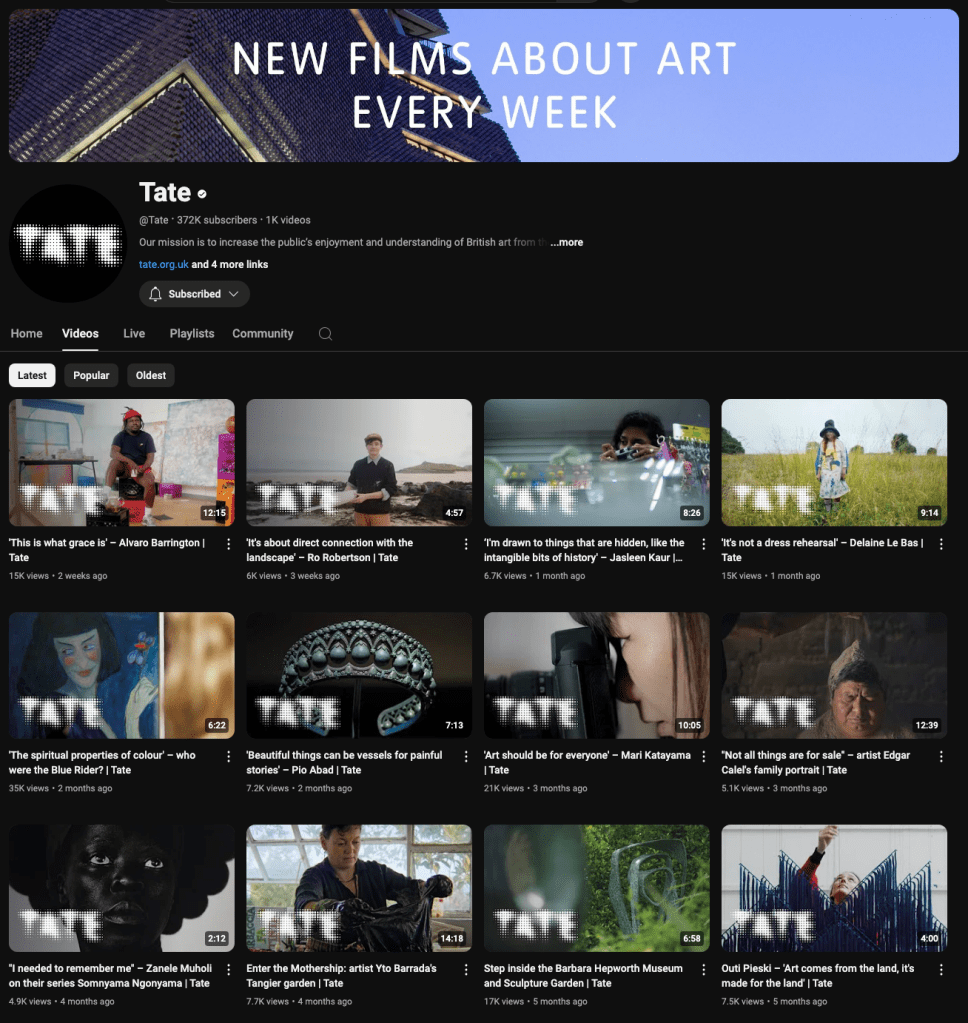
Figure 2: Tate’s YouTube Channel — branding itself to be up-to-date every week with new films about art. Signalling the productive efforts in launching the video-based story. 

While each of Tate’s physical museum spaces focuses on displaying world-class artworks within pristine white walls, its digital marketing team employs digital storytelling by tailoring each platform to its unique narrative. For instance, their YouTube channel centres on in-depth interviews with artists and curators, alongside tutorials inspired by other artworks—all professionally produced with scripts, camera work, and high production values. In contrast, their Instagram Reels feature more spontaneous, phone-recorded content, such as inviting visitors to share their thoughts on particular exhibitions. 

While storytelling naturally fits longer, more structured videos like those on Tate’s YouTube channel, how does it function in shorter, more candid formats, such as on Instagram? By creating dynamic digital spaces and adopting one-to-one storytelling approaches, museums can establish audience trust online, mirroring the trust cultivated in their physical spaces (Carlisle, 2022). Visitor responses about their exhibition experiences may seem like simple testimonials, yet these responses are storytelling in their own right. 

Figure 3: One of Tate’s Reels videos. Highlighting on a visitor’s thoughts from their visit. 

The most impactful stories forge connections: exhibition stories can encourage personal reflection and connection — among family members and occasionally among strangers. Story-sharing often becomes part of the exhibition experience itself (Langer, 2022). This storytelling emerges after visitors have engaged with the narratives conveyed through object labels on the museum’s walls, embodying a personal perspective that can be shared with future visitors or accessed by learners via mobile devices. In the age of internet and social media, museum storytellers incorporate their approach not as merely passive writings, but fostering a possibility of making an active participation in creating an open-ended version of story that keeps on growing. 

In addressing these digital-age transformations impacting museums, Bautista (2014) introduced the concept of “modern museology,” advocating for a deeper understanding of this shift — specifically by examining four core constructs closely interconnected in the digital age: place, community, culture, and technology. These elements converge in an increasing awareness that personal mobile technology has become an extension of art institutions, enabling visitors to engage with the museum experience wherever and whenever they wish. For storytellers crafting narratives specifically for online platforms, understanding the unique user base of each platform is essential — emphasising that writing a story involves more than focusing solely on the object itself. It requires awareness of the context in which the story will be presented, the target audience, and the appropriate approach for effective engagement. 

E. Conclusion 

The role of the museum storyteller has emerged as a vital function within the broader creative industry, occupying a unique position at the intersection of cultural heritage, technological innovation, and audience engagement. In the current museum landscape, storytelling has expanded well beyond the confines of traditional object labels, aligning with practices in fields such as copywriting, content development, and digital marketing. This alignment highlights the storyteller’s role as one that not only imparts knowledge but also inspires and fosters personal connections with heritage. In doing so, museum storytellers operate similarly to brand strategists, crafting narratives that resonate on a deeply emotional and individual level, engaging visitors in ways that simple factual recounting cannot achieve. 

With advancements in technology, especially in areas like generative AI, museum storytellers encounter both potential benefits and challenges. While AI can optimise certain tasks, such as generating text or synthesising information, it often lacks the nuanced understanding of cultural context and personal insight required for meaningful storytelling. For instance, institutions like The Burrell Collection demonstrate how the museum storyteller’s approach goes beyond mere description, employing empathy and audience-centred narratives that invite emotional engagement and contribute to a more holistic and accessible interpretation of cultural heritage. 

In an increasingly digital environment, museum storytellers must embrace skills widely shared within the creative industry, such as developing personalised content and adapting style and tone to suit various platforms, from social media to on-site displays. However, the human element remains irreplaceable, as it ensures that storytelling is rooted in cultural sensitivity and an awareness of audience diversity. This human-centred approach reinforces the museum’s educational mission, ensuring that storytelling remains an essential and transformative force within the digital age, where museums act not only as repositories of objects but as facilitators of meaningful cultural dialogue. Through this integration, museum storytelling asserts its role as an influential practice within the evolving landscape of the creative industry.  

Reference List 

  • Akker, van den C. & Legêne, S. 2016, Museums in a Digital Culture: How Art and Heritage Become Meaningful in Akker, van den C. & Legêne, S. (eds), Museums in a Digital Culture. Amsterdam: Amsterdam University Press, pp. 7-1. 
  • Barker, R. 2019, “Creatives talk technology: exploring the role and influence of digital media in the creative process of advertising art directors and copywriters”, Media Practice and Education, vol. 20, no. 3, pp. 244-259. 
  • Bautista, S.S. 2014, Museums in the Digital Age: Changing Meanings of Place, Community, and Culture, Altamira Press, Lanham, Maryland; Plymouth, England. 
  • Hernández, E. & SpringerLink (Online service) 2017, Leading Creative Teams: Management Career Paths for Designers, Developers, and Copywriters, Apress, Berkeley, CA. 
  • Langer, A. & American Alliance of Museums 2022, Storytelling in Museums, Rowman & Littlefield, Lanham. 
  • McLeod, C., O’Donohoe, S. & Townley, B. 2009, “The elephant in the room? Class and creative careers in British advertising agencies”, Human Relations, vol. 62, no. 7, pp. 1011-1039. 
  • Moorhead, J. 2023, “The Burrell Collection: the recently reopened Glasgow museum is asking fresh questions of its objects and its audience”, The Art Newspaper. Available at: https://www.theartnewspaper.com/2023/07/10/the-burrell-collection-the-recently-reopened-glasgow-museum-is-asking-fresh-questions-of-its-objects-and-its-audience (Accessed 12 October 2024). 
  • The Burrell Collection, 2023. Community Involvement. Available at: https://burrellcollection.com/burrell-project-stories/community-involvement/ (Accessed 12 October 2024). 
  • Timothy, D.J. 2021, Cultural Heritage and Tourism: An Introduction, second edition, Channel View Publications, Bristol; Blue Ridge Summit. 
  • Vicsek, L., Pinter, R. & Bauer, Z. 2024, “Shifting job expectations in the era of generative AI hype – perspectives of journalists and copywriters”, International Journal of Sociology and Social Policy

Trending Tunes: How TikTok’s Platform Economy is Reshaping the Music Industry

By Sofieke de Loos

Introduction 

Music is a crucial aspect of human life, capable of reaching and touching us in various ways. You might hear a song on the radio, in the supermarket, at a festival, or as a recommendation from a friend, and it may become your new favorite song. With the rise of social media over the past decade, people are confronted with music almost every moment of every day. Every video, reel, or snippet contains a song, and while scrolling on your phone all evening, you might hear 50 different songs. This is particularly evident with the social media app TikTok, which experienced a significant rise in popularity during the 2020 pandemic. A core characteristic of this app is the use of music, either as background music or as the focal point of the video. Users of the app often sing along with the lyrics to convey a certain meaning or think of a silly little dance that fits the song. These trends get repeated over and over again until everybody seems to know the song. This raises the question of how the app may have transformed the music industry. In this research paper, I aim to investigate the consumer behavior of TikTok users and how this phenomenon has changed the marketing of music by labels. The most popular hits of our time seem to be determined by platforms such as TikTok, rather than solely by record labels, especially when reviewing how nearly all popular songs are trending on the app. This paper will explore the history of TikTok and how digitalization has led to the creation of this platform of creativity, where consumers play a bigger role in music marketing. It intends to analyze these developments using concepts such as the platform economy and prosumers to answer the following research question: How has TikTok’s platform economy reshaped the marketing strategies and creative processes within the Western music industry? 

History of TikTok 

TikTok is a social media platform that allows users to create and share short videos. It offers easy-to-use editing tools that allow anyone to engage in video editing. TikTok has a large database of licensed songs and sounds that people integrate in their videos. This short-form videos originally got popular in 2013 on a similar social media app called Vine, that allowed users to create 6-seconds videos (Britannica). This app, not unlike their video style, was short-lived. Just a year later, a new app became popular. Musical.ly took over the torch from Vine that allowed users to make longer videos and mostly focused on lip-synching and dancing on popular songs. The app was bought by ByteDance, who merged content and user accounts to the newest app TikTok in 2018, what would quickly take over the world. Like its predecessors, TikTok is a social media platform where users dance and lip-sync to songs. However, it also functions as a platform for comedic and even educational videos. The app was being used worldwide, which led to the creation of an intercultural space where people can form opinions together about popular or social events and therefore also music. Opinions and ratings indicate what works will be accepted in the public discourse. Therefore, consumption and communication on TikTok leads to taste formation that will determine ratings of the music. TikTok, thus, became a community where people from all over the world come together. It has algorithms that creates a specific ‘For You Page’ (FYP) where users receive videos that fits their interest and ideological standpoints. Because of this, it also creates smaller communities within the app with like-minded people. This powerful algorithm fosters an addictive quality to the app, which may explain its widespread popularity (Radovanović 52). The content that you get is catered to the you and you alone based on your interests and favorite topics. The FYP endlessly recommends new content, and the app is set up for viewers to keep on scrolling, causing them to constantly interact with new content (Kaye 61). These algorithms have been proven useful for record labels, because the knowledge of the customers was limited before the app, which means that the marketing strategies of labels have been lacking a personal aspect. However, according to Salo, Lankinen and Mäntym, “Due to the digitization of music, emergence of social media technologies, and popularity of social media, marketers can now reach potential music consumers via social networks.” (24). The algorithm of social media apps, such as TikTok, has made it easier for labels to deliberately target audiences to promote music using discovered data.  

On the other hand, traditional intermediaries of creative products such as record labels have suffered in the rise of the platform economy. Platforms could rapidly replace them, as they grow exponentially faster than traditional intermediaries (Jewell). Platforms do this by accumulating data about what kind of content consumers want and anticipate on this found data. According to David Hesmondhalgh, the internet is inherently democratizing with a liberating effect that allows for more participation and control by users, which is at the expense of professional institutional businesses (qtd. in Nordgård 36). This means that digital networks allow for more control, creativity and participation of non-professionals, which is a threat to corporate power. An important term within music networks on platforms is ‘connectivity’ between companies and their audiences. According to Wikström, “Traditional music networks had a low level of connectivity, where the music companies could control the flow of information to the audiences” (qtd. in Tandberg 5). This means that the important of the internet in modern society had led to an information flow in the online network, which causes a decrease of control for music companies. Hesmondhalgh elaborates by arguing how the power of institutionalized cultural production is eroding, which leads to a more decentralized, democratic system of communication that could change the cultural industries (263). This is mainly the cause of the rise of digital networks that is breaking down the boundary between producers and consumers that highlights ‘user-generated content’ in cultural production (Hesmondhalgh 264). Platform and information-based economies has put the consumer forward into the process of production. This leads to a new form of communication called ‘produsage’, which is a combination of the terms production and usage.  

TikTok utilizes the concept of ‘produsage’ or ‘prosumerism,’ which refers to participation in online environments that transcends the divide between passive consumption and active content creation (Radovanović 52). Social media engages with a greater involvement of fans in how music is being distributed, promoted and consumed. Therefore, the line between intermediaries, corporate institution and fans have been blurred which makes it more difficult to categorize who is a producer or consumer, leading the path to the new function of the ‘prosumer’ (Nordgård 10). The digital atmosphere of the app is created by the users, or ‘TikTokers’. The users both create and engage with other people on this app. This is mainly done using functions such as ‘stitch’ or ‘duet’ videos, which encourages collaboration and creativity. These types of participatory cultures were already present on digital platforms like YouTube through “vernacular creativity, mundane participation as a means of collective cultural participation (Burgess 2006) and produsage, collaborative and continuous building and extending existing content” (Kaye 60). As a result, anyone can engage in creative activities, as they exist beyond traditional cultural value systems or high art. Instead, creativity operates as a collaborative endeavour within a platform that has evolved into a new form of economy. 

The Power of Platform Economies 

The developments in the music industry have been rapidly changing due to the developments in technology, that offers new affordances. These developments all began with the launch from Web 1.0 to 2.0, which has made revolutionary changes for digitalization and the use of technologies (Vizcaíno-Verdú, de-Casas Moreno and Tirocchi 152). Since then, technology has played a huge role in the creation of music and the creative industries as a whole. Especially talking about the relation between the consumers and the entertainment industry. This ultimately resulted in the development of TikTok, which features elements like the For You Page (FYP) and algorithms designed to rapidly spread a song to a wide audience. According to Hesmondhalgh who uses the definition by Oxford English Dictionary, an algorithm is ‘a process or set of rules to be followed in solving a problem, especially by a computer’ and he calls upon the importance of these algorithms as they influence the knowledge, information and entertainment users are exposed to (268). The platform of TikTok affords for a quicker distribution of music and allows the creative class to form connections that will form a greater network in the rise of platform economies. This is a new kind of market strategy in accordance with the rise of social media. According to Sangeet Choundary, who is the leading expert in platform economies, “Platforms are fundamentally changing the economics of content creation and the assumptions that go into determining what content will succeed and what will not.” (Choudary qtd. in Jewell).  

TikTok is an example of a platform economy, which is an economy that emerged as response to the rise of the internet and the movement of algorithms. This, then, created an infrastructure on which platform-based markets can operate (Kenney and Zysman 61). Thus, this economy is facilitated by digital platforms that is based on the connection between the consumer and supplier of cultural goods. TikTok utilizes a platform economy that enables consumers on the platform to impact the market. Jewell explains this in her article about the interconnectedness of consumers on the app and how they produce creative content themselves. She writes, “the companies that create a platform to organize the content market occupy the most powerful position in the content market today. In effect, they determine what content is shown and to whom” (Jewell). Thus, the app itself is in control of the dissemination of music and becomes a system of recommendations 

Platforms can create a lot of value by making use of the content market as they make use of the infrastructure of networks on a social media app (Jewell). Contemporary platforms, such as TikTok, are “reconfiguring the production, distribution, and monetization of cultural content in staggeringly complex ways” (Duffy, Poell and et all 1). Therefore, platforms become new intermediaries in the music industry that influence the creation and the consumption of music. Platforms make use of the network effect, which means that they push forward a self-reinforcing cycle where creators attract consumers, and consumers attract creators (Jewell). Thus, the users of the app contribute to the growth of the network and platform of TikTok and become part of content-creation, instead of watching it from the sidelines as a passive consumer. Vizcaíno-Verdú, de-Casas Moreno and Tirocchi elaborate on this development by calling upon the concept of cultural convergence in their article that have emerged from popular and mass culture. They explain it as followed, “a phenomenon that combines markets and consumers through the media and Internet, providing a set of platforms that have created new opportunities for user-generated content or UGC” (qtd. By Jami-Pour 151). This means that social media has changed the way how information is produced and consumed providing a place for User-Generated Content (UGC). As consequence to this social phenomenon of platformization of cultural production, digital platforms affect the creative industries from an institutional perspective (Duffy, Poell and all 2). This new role that platforms play in the market can afford new forms of creativity and production. TikTok is currently a popular platform with rich cultural content. So, how exactly does TikTok make use of the platform economy to use it for marketing strategies? 

TikTok As Market Place 

In the last couple of years, we have seen a significant growth of the influence of TikTok on music charts. There seems to be a correlation between what songs become popular on the social media app and which songs rests on the top of any music charts. As most of the top songs can be recognized as songs that trended on TikTok. Due to the digital developments that constituted to the creation of the cultural relevance of the app, it has become a cultural industry itself. Collie and Wilso-Barnao elaborate on this by concluding how, “TikTok, on the other hand, operates as a digital enclosure (Andrejevic, 2007) designed to capture and transform creative play into a promotional apparatus and form of digital labor, with algorithms as the organising force” (Collie and Wilson-Barnao 18). Therefore, these features of the app foster an environment of creativity and community. An important factor that should be named, in the question how the music industry could have changed so drastically because of this social media app, is the COVID-19 pandemic. The lockdown caused the world to be locked up in their own house. Many musicians were forced to put their careers on hold. The making of music is an inherent collaborative activity. Especially if we are talking about the recording of music. Many factors are important to consider, such as the musicians specialized in different instruments, sound engineers, producers, marketing, and so much more. Thus, when forced to stay at home, musicians like many others, had to think outside the box to be able to still do their job. The digital space seemed to be the answer and a platform like TikTok could fill the void to still collaborate with other musicians. For example, the Duet function, where creators could pair or chain other videos to create new music while staying at home (Kaye 59). This has caused an acceleration in the popularity of the app and situating it as a platform of creativity and labor. This environment then evolves into a space for marketing and labor, as community is vital for cultivating creativity. Richard Florida argues that in modern society, this is most effective when the community consists of weak ties rather than a close-knit group (5). Social media inherently carries a sense of anonymity, lacking personal, real-life connections. Thus, TikTok serves as an excellent platform for creativity, functioning as a community built on weak ties.  

The app can even serve as a platform for small artists to kick-start their careers and create their networks. Radovanović explains in her article how “Successful (self-)promotion on TikTok leads musicians into the arms of the readily available and ever-watching eye of the music industry.” (63) The journalists Estelle Caswell and Matt Daniels researched the ‘TikTok-to-Spotify pipeline’ and what happened to artists after going viral on TikTok. They concluded after researching this phenomenon, in relation to the networks in the music industry, how these new developments on TikTok has caused fundamental changes to the music business. The journalists discovered how a quarter of the 200 new Spotify artists found their rise through TikTok with many receiving a record deal based on a viral moment on the app (Radovanović 63). Thus, TikTok is now being used as tool to start a music career as it provides opportunities for independent artist to do their own marketing. This phenomenon started at the peak of digital optimism in the early 2000s where it became more common for artist to achieve success via the web, like YouTube, without the needing to be in the inner circle of the music industry (Hesmondhalgh 298). However, the idea of going viral and obtaining success in the music industry on the internet as exponentially grown due to the rise of social media platforms, especially in combination with the affordances of TikTok. TikTok has provided new ways to be discovered. This is mostly due to the FYP function, which is a network that connects all users that participate on the app. As creator you can choose to post your video for only friends or to go on the FYP. In this case according to Collie and Wilson-Barnao, “content can go viral without a user having many followers, which introduces a democratizing effect to the app, no matter how illusionary this might be, given the aggressive algorithmic management engineered into the process” (180). Thus, through the affordances of TikTok, it becomes easier and easier to start your music career from your bedroom.  

Platformization influences the nature of creative labor as they incite to find new routes to audiences and visibility. It could be argued that the social media app is used by labels as marketing tool, as users of the app seems to do their work for them. An artist themselves can use the app to find a like-minded community of fans who would be interested in listening to their music. They can do this by sharing details about the creative process, creatively presenting their music on the app, and engaging in the comment sections (Radovanović 62). Artists seemed to have noticed the appeal of the consumer on TikTok, and they actively engage with their fans on the platform. This new element of personal relation has seemed to bring the musical artist and fan closer. This increase in connectivity and an easier access in the music industry on this app enables fans to remix, create and engage with their idol’s content, which is not something that has been seen before on a social media app (Tandberg 5). Thus, TikTok creates a space where fans can be creative as well. Another strategy could be to share a ‘snippets’ of a song and ask influencers to engage with it (Radovanović 62). A snippet is a certain section of song of about 15 seconds with the intent to share it prematurely on the internet to peak interest. This snippet could then be used by influencers on the app to create a viral dance challenge or trend with the song, boosting the song’s popularity. An example of this would be the promotion of the album Brat by Charlie XCX, who’s song “Apple” was popularized due to a viral TikTok Dance. The app is used to create and remix already existing sounds, which means it promotes imitation performance as form of collaboration (Vizcaíno-Verdú, de-Casas Moreno and Tirocchi 154). This then also creates ‘trends’ by the repeated use of sounds and the attached creative idea that fills the ‘for you page’ (FYP) of users. TikTok can, therefore, be seen as an app for great exposure. This marketing strategy, thus, makes use of the participatory culture and the produsage within communities on TikTok to promote music.  

Conclusion 

In this research paper, we have explored how musical artists use the social media app for marketing, as the app operates as part of a platform economy. The affordances of this app, like the FYP and Duet function, help musical content creators find their target audience and establish genuine connections that lead to community building, without the need for the traditional music industry. The platform encourages participatory behavior, blurring the lines between users and producers. The rise of the ‘produser’ on the app has prompted changes in the music industry that could lead to the erosion of traditional intermediaries, like record labels. TikTok is a space for community building, heavily influenced by algorithms that bring like-minded people together. This community fosters creativity, strengthened by the existence of weak ties among users on the platform. The app facilitates quicker distribution of music, where the connection between artist and fan becomes closer, as both contribute to content creation. The contemporary infrastructure of the app, based on platform economies, has paved the way for new strategies in music creation and promotion. Artists leverage the connectivity and information flow provided by the app to enhance or launch their careers, potentially eliminating the need for traditional intermediaries. Thus, TikTok, as a rising platform economy, has significantly shifted the structure of the Western music industry, using its affordances to foster a creative community 

Bibliography 

Youth Participation in the Creative Industries in Ghana; Motivation and Barriers

By Isaac Anim Ntiri

ABSTRACT

This research investigates the motivations and barriers to youth participation in the creative industries in Ghana. Using Expectancy-Value Theory, the research concludes that intrinsic motivation such as passion, and belief in abilities are the main drivers of youth participation, while financial constraints, limited mentorship, societal stigma, and lack of support impede it. The study proposes the need for targeted interventions, including financial assistance, mentorship programs, and policy reforms, to create a thriving creative ecosystem for young creatives in Ghana.

Keywords: creative industries, Ghana, youth participation, motivations, barriers, Expectancy-Value Theory

1.0.    INTRODUCTION

The Department for Digital, Culture, Media & Sport, DCMS (2001) define creative industries are “those industries which have their origin in individual creativity, skill, and talent and which have a potential for wealth and job creation through the generation and exploitation of intellectual property.” These industries may include, but not limited to music, literature, movie, publications, arts, and crafts, etc. Ghana, like many countries in the global south have witnessed a boom in participation in the creative industries. This surge, has particularly been significant in disciplines such as music, theatre and mainstream acting, User-Generated Content creation (UGC), contemporary arts, craftsmanship, literature, and other cultural expressions which are positively impacting the economy of Ghana. Hennessy and Amabile (2010) contend that creativity is important for civilization development. While this resurgence in participation is a welcome development for the country, the extent of youth participation in Ghana’s growing creative industry continuous to remain a subject of inquiry. The rationale behind this research to interrogate the motivations and the potential barriers that impact the participation of Ghanaian youth in the creative industries in Ghana.

The creative industries in Ghana has been a breeding ground for personal fulfilment and expression, a means of economic sustainability, cultural expression, skills development, and contributing to social cohesion and harmonious living in the country. Additionally, Agoralumiere (2009) makes a claim that the creative industries have changed into one of the most dynamic sectors of the global economy. In the face of globalization, and digitalization, the creative industries continuous to be a source of employment for different groups of people.

In the face of these potentials, issues such as lack of financial support, little or non-existent mentorship schemes, logistics, societal expectations, lack of recognition for crafts, and professionalization, cultural norms and stereotypes continue to be a barrier to youth participation in creative industries in Ghana, discouraging them from committing a full-time profession in this sector.

In order to ascertain the extent of youth participation in Ghana, with focus on the barriers and motivations in the creative industries, this paper will draw on existing literature and data gathered from a survey through purposive sampling to buttress arguments and claims in this paper.

1.1. AIM OF THE RESEARCH

This research paper seeks to contribute to the deeper understanding of the dynamic nature of the creative industries in the broader sense, by focusing on the motivations and the unique systemic barriers the Ghanaian youth encounter in their quest of professionalizing their creativity.

1.2. RESEARCH QUESTIONS

  • What are the intrinsic and extrinsic motivations that influence the participation of Ghanaian youth in the creative industries?
  • What are the barriers to youth participation in the creative industries in Ghana and how do they interact with the motivations?

2.0. LITERATURE REVIEW

A growing body of literature have provided a headway into understanding the challenges, and motivations in the creative industries. For an up-to-date insights into the motivations and challenges faced by the youth in the creative industries, this research relied on recent publications to identify knowledge already existing in this field of study in order to establish the gaps for future research. The literature review has been written in thematic clusters such as: Motivations for participation, and barriers in the creative industries.

2.1. Motivations

Cnossen et al. (2019) in their article discusses the main motivations of people who are committing or have committed careers in the creative and cultural industries (CCI) by using the self-determination theory which was developed by Ryan and Deci. The theory emphasizes the role of intrinsic motivation in psychological fulfilment. In their research, issues such as self-perceived competence (confidence in their abilities) were highlighted. They also find intrinsic factors more central than extrinsic motivation such as monetary gains. The study also brings to the fore, the importance of the psychological needs that serve as impetus for individuals to forge on in a competitive landscape of the creative and cultural industries.

In addition, An (2019) also strengthens this argument by interrogating the role of intrinsic motivation (IM) among creative labour (CL) in South Korea. Her study particularly focused on media production in South Korea. The study highlighted the role of intrinsic motivation in passion in navigating a challenging work environment with unfavourable working conditions. An raises an important question: Can initial passion wane as creative work becomes routine? Most importantly, the study contributes to understand how intrinsic motivation-passion, serves as a driver for creative labourers and the potential influence of intrinsic motivation on their quality of life. This further calls for a deeper research into the motivations of creatives in other contexts.

Building on these insights Reid et al. (2016) introduces the concept of “calling” as a source of motivation for creatives. According to the respondents in this research, they consider their

careers as creative as a form of calling-naturally innate which is equally an intrinsic form of motivation. Reid et al. (2016) clustered this form of motivation under what they termed “elements of worth” These elements of worth highlight the importance of both intrinsic and extrinsic factors in situating the motivation of creatives, and their importance to society and culture.

2.2.   Barriers

Studies done by Campbell (2018), Kilu et al. (2024), and Olanrewaju (2024) reveal a worrying state of creatives in different geographical contexts. With focus on Canada, Ghana, and Nigeria, and diverse creative disciplines such as crafts, and performing arts, they establish a network of related barriers that can potentially stifle the growth of young creatives in the industry.

In documenting the challenges young people face in the creative industries, Campbell (2018) adds a new dimension to the discourse, revealing the multi-faceted nature of the challenges that hinder the potential of young creatives. The author arrived at this through interviews, and online surveys. Apart from mundane challenges in terms of finances and lack of social support, the research reveals the issue of exploitation, diversity and equality as some challenges young people face in the creative industries. She argued that young people from marginalized communities such as sexual and gender minorities, likewise People of Colour (POCs) face representational challenges in the creative industries. The study also highlights gender disparity and the precarity of the creative landscape.

Kilu et al. (2024), in their work “Spirituality in the Creative Arts: How crafts entrepreneurs cope with precarity”, the authors discuss the challenges faced by creative workers, particularly those in the crafts discipline in Ghana. Through their research, it becomes evident that issues such as precarity of the industry, which is as a result of unstable financial conditions, gender disparity due to spiritual beliefs in Ghana, unstable market, informal working sector, and lack of recognition continue to be a barrier for entrepreneurs in the crafts industry in Ghana. Highlighting the interplay of the economy, spirituality, and social expectations that characterize creative work in Ghana)

In addition, Olanrewaju (2024) discusses the challenges of the creative industries in Nigeria, with focus on the performing arts through a desktop research. In her research, the author makes a claim that, creatives in the performing arts industry in Nigeria face several challenges such as piracy, infrastructural deficiencies, inadequate funding, and limited mentorship opportunities. Due to similar social, economic, and cultural contexts, these challenges are also experienced by creatives in Ghana, as established by Kilu et al. (2024). These shared hurdles gives insights into the barriers to youth participation in the creative industries in Ghana from an empirical perspective.

Much of the discussed articles above focus on western contexts in the creative industries. Apart from this, there is a focus on the creative industry as a whole with little or no prioritization of youth motivation and participation. There may be specific challenges the youth are encountering. These include lack of mentorship, societal stereotypes, lack of financial support, just to mention a few. There is the need for a study that focuses on the unique social, economic, and political challenges the youth face in their participation in the creative industries in Ghana

3.0.THEORETICAL FRAMEWORK

Expectancy Value Theory

Expectancy-Value Theory (EVT) developed Jacquelyn Eccles, cited in Eccles and Wigfield (2000), provides a practical framework for understanding the motivation and barriers to youth participation in the creative industries in Ghana. The theory asserts that the motivation of an individual to participate in a given task is influenced by a belief to be successful in that endeavour (expectancy) and the importance of the endeavour (value). This theory has the potential to provide practical insights into the pull and the push factors of youth participation in the creative industries in Ghana

3.1.Theory Application

In this paper, expectancy has been situated in the belief young people have in whether or not they have the talent to have a successful career in the industry. According to the theory, people with low self-esteem in their skills and talent are less likely to pursue a career in that regard. Conversely, those with high self-efficacy are more likely to be motivated to engage in creative activities. Value refers to the perceived importance of the creative industries in Ghana. Do the youth consider it a fulfilling industry? Worthy of commitment? Will it provide the necessary satisfaction, financial stability, and the recognition they so desire? Just like ‘expectancy’ if young people perceive the creative industries as valuable, it would translate into heightened motivations to participate in the industry

EVT will provide the necessary framework to contextualize motivations and barriers to youth participation in the creative industries in Ghana. For example, low expectancy could be as a result of limited training opportunities as that could potentially be a dent on the confidence of such people to succeed. In addition, if the industry is not considered as a respectable career option in a traditional Ghanaian society, the perceived value for the industry will be low. Furthermore, socio-cultural factors such as stereotypes, poverty, and lack of opportunities can adversely expectancy and value in the creative industries. By centering this theory on youth participation in the creative industries in Ghana, we gain a comprehensive insights into the motivations and barriers among the youth. This will be very imperative in developing targeted policies to promote greater youth participation in the creative sector.

4.0. METHODOLOGY

4.1. Sampling Strategy

In order to ascertain that the participants in this study have the relevant knowledge and insights into the creative industries in Ghana, the research employed the use of purposive sampling in recruiting the participants. Purposive sampling according to Oliver (2015), is a type of non-probabilistic sampling in which decisions concerning the individuals to be included in the sample are taken by the researcher, based upon a variety of criteria which may include knowledge of the research issue, and willingness to participate. To be specific, the researcher recruited twenty (20) young people in Ghana who are within the ages of 18-35 years and have some experience of working in the creative industries in disciplines such as music, theatre, literature, arts, and crafts. This sampling strategy made it possible to gather insights from Ghanaian youth who have informed opinions of the work environment in the creative landscape in Ghana through their individual experiences.

4.2.   Mixed Methods: Quantitative and Qualitative Survey

For a nuanced understanding into the motivations and barriers faced by Ghanaian youth in their participation in the creative sector, the research also employed a concurrent mixed method survey through administering a survey to the participants of the research. Tashakkori and Creswell (2007; p. 4) defines mixed method as ‘research in which the investigator collects and analyses data, integrates the findings and draws inferences using both qualitative and quantitative approaches or methods in a single study’ The survey had quantitative questions in the form of multiple choice questions, complimented by qualitative questions through open-ended questions.

4.3.   Limitations to Research Design

A significant challenge to purposive sampling technique is the researcher bias which manifests indirectly in the process of recruiting the participants through their subjective judgements. This limits the generalizability of the study. Going forward, the sample size poses a restriction on the ability to draw definitive conclusions on the youthful population of Ghana. While influenced by experiences, there could be discrepancies in the data reported by participants and the reality on grounds. Finally, mixed-method design can be challenging for researchers with limited time and resources as established by Johnson and Onwuegbuzie (2004; cited in Doyle et al. 2009; pp. 183)

5.0   FINDINGS

The survey utilized qualitative and quantitative questions to gather the relevant information on participants’ demographics, motivations, perceived challenges, experiences, societal expectations, and belief in their abilities. The results, providing valuable insights into the motivations and barriers Ghanaian youth face in their participation in the creative industries are presented as follows:

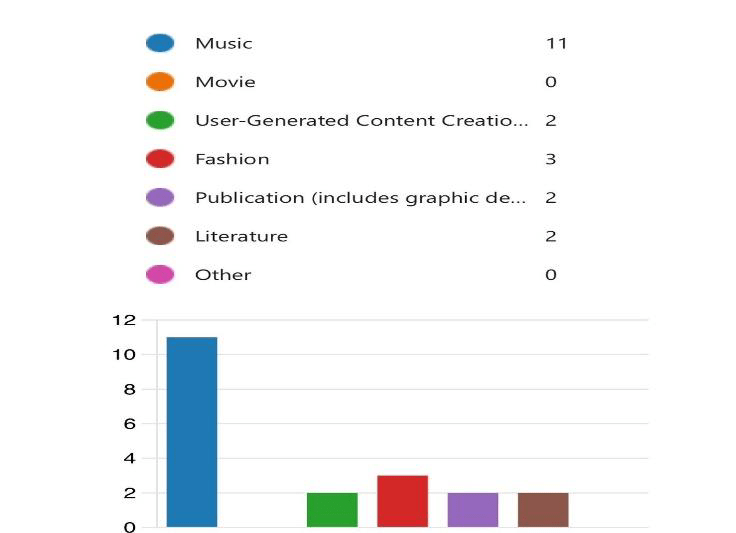
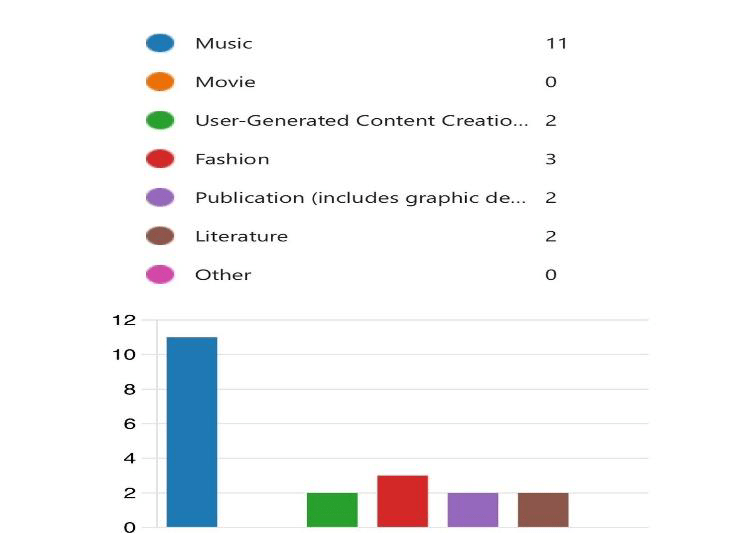
When asked about the discipline in the creative industries they are likely to succeed, eleven participants, representing a majority (55%) chose music, this was followed by the fashion industry, preferred by three participants (15%), while User-Generated Content Creation (UGC), literature and publication had each 10% each. Surprisingly, none of the participants expressed optimism about the likelihood to succeed in the movie industry in Ghana. Music appears to be very popular among the participants and an inspirational field for most young creatives. This reflects the pool of talents, the market demand, and perceived opportunities in the music industry in Ghana.

Figure 1: Preferred discipline of the creative industries, survey 2024, online.

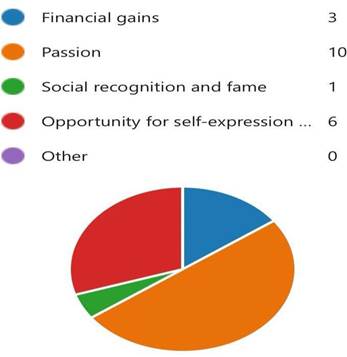
When interrogating the primary motivations driving young people in Ghana to participate actively in the creative industries, passion appeared to be a common motivator for most of the participants. Ten of the participants are motivated by their passion for creativity. This represents 50% of the sample size. Following closely is the desire for self-expression as expressed by six participants (30%). It appears financial reward is not a major source of motivation for young creatives, however surprising this appears, only 15% of the sample size consider finances as a motivation for participation. This reveals the diverse levels of motivation among young people in the creative industries in Ghana.

Figure 2: Motivation for participation, survey 2024, online.

Several key challenges were identified when asked about the challenges to participation. When asked about their top three barriers to participation, Financial constraints were highlighted among all the participants, indicating the importance of availability of capital in the industry. The other barriers include limited mentorship opportunities, societal stigma and stereotypes, lack of family support, and limited access to education and training facilities. These challenges expressed by the participants indicate the systemic and the multi-faceted nature of challenges young people face in their participation in the creative industries. These challenges call for targeted interventions to curb the menace.

Figure 3: Barriers to youth participation, survey 2024, online.

Other notable findings were also highlighted through the survey. An overwhelming majority, 60% of the participants agreed that personal connections and networks are crucial for success in the creative industries in Ghana. Additionally, only nine participants (45%) expressed some level of confidence in their abilities and skills while 20% mentioned they have supportive families in their work as creatives. Majority, as expected identified government policies as crucial to addressing the above-mentioned challenges. This information underscores the essence social capital and institutional support in establishing a booming creative landscape.

6.0   DISCUSSION

The study explored the motivations and barriers to youth participation in the creative industries in Ghana by situating it in the Expectancy Value Theory (EVT) as the theoretical framework. The theory, as already discussed posits that the motivation of individuals is influenced by the belief in their ability to succeed (expectancy), and the perceptions about the value of the task.

6.1. Motivation

Pinder, (1984, p. 8) defines motivation as “a set of energetic forces that originate both within, as well as beyond, an individual’s being, to initiate work-related behavior and to determine its form, direction, intensity, and duration”. The study highlights the importance of both expectancy and value and how they influence individual motivations to participate in the creative industries. This aligns with the EVT. Expectancy is evidenced in the survey through the majority of the participants expressing some level of confidence in their abilities and skills. This is an important driver which cannot be overlooked. For instance, belief in musical talents and its potential for young creatives is expressed by an overwhelming preference for the music industry as illustrated in figure 1. “Value” is also measured by the perceived significance of the creative industries as a rewarding industry. The dominance of “passion” as a main motivator for Ghanaian youth also indicates that the participants consider the creative industries as intrinsically rewarding and fulfilling. In Richard Florida’s (2002) concept of “creative class”, he highlights the need for passion in driving innovation, and economic growth.

Vickery (2012) also highlights the relevance of considering socio-cultural structures in assessing the motivations in the creative industries in different contexts. While the survey do not put financial rewards on the apex of the pedestal of motivation, it could be as a result of the societal perceptions about the creative industries in Ghana and other cultural norms. As a result of cultural norms and societal expectations in Ghana prioritize conventional career paths, such as medicine, law, and teaching over “non-conventional” careers such as the creative industries. A study done by Kissi-Abrokwah et al. (2023) also concluded that students in Ghana preferred careers that are considered to be of high societal value.

6.2. Barriers

The complex nature of the challenges faced by young people in their participation of the creative industries in Ghana is also highlighted in the research. Even though financial rewards are not the primary motivation for young creatives, the lack of capital to start a compelling career in the creative industry appears to be a major challenge among most of the participants. This adds up to the previous research on the challenges of the creative industries in developing countries as established by Kilu et al. (2024). Additionally, the limited mentorship opportunities, likewise the societal stereotypes adversely impacts the expectancy of the youth towards the creative industries. This is as a result of the fact that it casts a dent on the perceived value of the industry. Furthermore, the lack of family support, and limited mentorship and educational opportunities further compound these challenges. The above- mentioned factors hinder the ability of the youth to develop and thrive in a competitive industry such as Ghana’s creative scene.

6.3. The Role of Social Capital and Institutional Support

Florida (2002) emphasizes the role of the creative clusters and social networks in fostering economic growth and innovation in the creative industry. This findings of the study confirms this position by Richard Florida, highlighting the essence of social capital and institutional support. From the survey, it appears personal networks are crucial for a successful carrier in the creative industries in Ghana. Institutional interventions through state agencies and ministries are equally relevant in addressing the challenges faced by the youth in their participation in the creative industries. Policies such as capital provision in the form of soft loans, educational and mentorship opportunities, relevant logistics and infrastructure will create an enabling environment for young creatives to thrive in expressing their creativity. Of course, Governments in the past have taken some steps to advance the interest of creatives in the country such as establishing the Creative Arts Council, National Film Authority, Ghana Union of Visual Arts, and other legislations such as the Copyrights Regulations, 2010 (L.I 1962) to safeguard the interests of creatives against piracy and plagiarism. A renewed commitment will the desired from the government in order to implement already existing policies for the creative industries in Ghana. Additionally, the educational curriculum from the basic schools in the country needs to be enhanced in order for students to appreciate creativity and also curb the public stereotypes against the sector in the country.

7.0   CONCLUSION

The research has provided data-driven insights into the motivations and barriers faced by young people in the Ghanaian creative industries. Through the study, it becomes obvious that despite the importance of financial rewards, young creatives prioritize intrinsic motivations such as passion, and the opportunity for self expression. These appear to be the main drivers of motivation for Ghanaian youth in the creative industries. Through the Expectancy-Value Theory, we have gained a nuanced understanding into the complex nature of the factors that influence youth participation in the creative industries in Ghana. The results shows the importance of intrinsic motivation, social capital, and institutional support in establishing a supportive creative ecosystem that enables young creatives to thrive. Addressing the identified challenges through targeted interventions is crucial for empowering young people and unlocking the full potential of the Ghanaian creative industries.

An, C,. (2019).‘The content and role of intrinsic motivation in creative work: the importance of seeking “enjoyment”. in Creativity Studies, 12(2), 280-290.

REFERENCES

Figures

Figure 1: Preferred discipline of the Creative Industries, Survey 2024, online. Figure 2: Motivations for Participation in the Creative Industries, Survey 2024, online. Figure 3: Barriers to Participation in the Creative Industries, Survey 2

Humanitarianism and Activism in the Music Industry: Bandcamp Gaza Fundraisers as a Case Study 

By Hana Arshid

Introduction 

Prior to the World Wide Web boom, the music industry engaged in media-driven activism and humanitarian aid through broadcasted concerts and tours, exemplified by the high-profile Band Aid and Live Aid events of the 1980s, which raised millions for Ethiopian famine relief. These celebrity-driven initiatives were criticised by both Müller (2013) and Jones (2017), who argue that celebrity humanitarianism feeds a form of marketised philanthropy that oversimplifies complex socio-political issues. They contend that Band Aid and Live Aid, through media-driven activism, employed neocolonial representations of Africa to evoke emotional responses by focusing on pity, rather than addressing the structural causes of crises (Müller, 2013; Jones, 2017). This approach advanced a depoliticised narrative, which transformed activism into what Douzinas (2007) calls “a consumer spectacle” centred on mass appeal and individual donations, ultimately reinforcing neoliberal ideals. These efforts sustained global power dynamics that perpetuated existing inequalities rather than propelling systemic change.  

The advent of music platformisation has altered the industry’s approach to humanitarian and advocacy efforts. While celebrity-driven humanitarianism remains prevalent, platforms like Bandcamp—described by Hesmondhalgh et al. (2019) as quasi-platforms—give musicians both a way to sustain their careers and a direct avenue to engage in advocacy through the sale of digital and physical music, as well as merchandise. This sets it apart from massive conglomerates like Spotify, and larger platforms such as SoundCloud, which is gradually embracing the economic model of streaming giants. Suárez (2012) maintains that smaller entities are more likely to advocate for social justice and lend legitimacy to nonprofits working for social change. Bandcamp’s model reflects this perspective, with independent musicians and labels collaborating with relief NGOs to raise funds for humanitarian crises and show solidarity. 

Several characteristics render Bandcamp particularly well suited to these endeavours, foremost among which is its commitment to an independent ethos. This resonates with independent musicians who seek to distance themselves from the corporate frameworks that dominate the mainstream music industry—a sector notorious for failing to adequately compensate artists for their labour. The producer-oriented platform endorses a moral economy, where consumer interests converge with musicians’ welfare (Hesmondhalgh et al., 2019; Rogès, 2024), thus appealing more to niche audiences than to the mass market. Appadurai’s (2012) theory of “the social life of commodities” is relevant here: a commodity’s value arises from the social interactions and exchanges that shape it. In the context of Bandcamp fundraisers, the value of music as a commodity is not solely anchored in the artistic work itself but extends to the causes that it endorses and the bonds it establishes between audiences and humanitarian initiatives. 

Since October 2023, there has been a notable proliferation of art- and music-based fundraisers for Gaza, with strong engagement from the Bandcamp community, in response to the escalating humanitarian crisis precipitated by the large-scale Israeli bombardment and the total siege of the territory. This essay explores how cultural production through fundraising on Bandcamp creates social and economic value within the digital platform economy, amidst the complexities of digital activism and humanitarianism, and the commodification of suffering. Using distant reading and sentiment analysis, the study examines the rhetorical appeals in 30 record-label fundraisers published between October 2023 and October 2024. It also probes the degree to which these fundraisers reinforce traditional media-driven humanitarian paradigms akin to those epitomised by Band Aid, and where they challenge and deconstruct these established traditions.  

Methodology 

The study integrates quantitative research methods with qualitative analysis of the derived data. It implements a distant reading algorithm, written in Python, to process textual data from 30 Bandcamp record-label pages, utilising the Natural Language Toolkit (NLTK) library, which offers a suite of tools for natural language processing (NLP). This statistical approach corresponds well with the complex and manifold nature of the fundraisers’ discourses (advocacy, promotion, genre-specific language). It enables the exploration of the corpus through a more ecologically valid lens that provides an objective measure of key metrics and minimises the impact of human intuition and subjectivity (Allen et al., 2020: 5), thus enhancing data reliability. 

NLP facilitates the extraction of insights from large text datasets, like Bandcamp fundraisers, through techniques such as sentiment analysis, topic detection, and recognition of named entities and relationships within texts (Kibble, 2013). The algorithm tokenises the text into individual words, removes common stopwords, and counts word frequencies. With the NLTK library as a foundation, additional algorithms were devised to conduct bigram analysis, identifying word correlations through the detection of frequently co-occurring word pairs, in addition to sentiment analysis.  

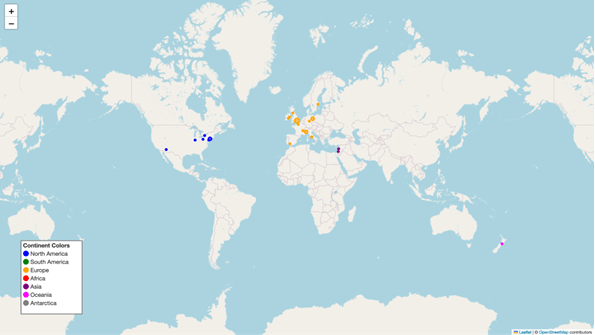
Charts and maps serve as the primary visualisation methods. Knowledge visualisation effectively communicates research to the public, supports integrated learning on complex problems, and nurtures relational perception (Boehnert, 2016). Python code is used to map the locations of record labels involved in fundraising for Gaza by assigning geographic coordinates and continent-based colours. The data is dynamically visualised on a Folium map to display location frequencies, while word frequencies, bigrams, and sentiment analysis are visualised through bar charts generated by Matplotlib. 

As for the selection criteria for the 30 Bandcamp fundraisers, they include those launched between October 2023 and October 2024, appearing in the top results for the keywords “Gaza” and “fundraise,” and containing a clear statement of purpose beyond just the use of keywords in the title. 

Political Consumerism and the Appeal for Credibility  

Bandcamp fundraisers motivate record-label fans to leverage their purchasing power as a form of political engagement in the digital sphere. George and Leidner (2019) categorise digital political engagement into three tiers—spectator, transitional, and gladiatorial—based on Milbrath’s (1981) hierarchy of political participation. Bandcamp fundraisers fit into medium-effort political engagement, as they involve two types of transitional activities: political consumerism and e-funding (George and Leidner, 2019; Ward and Vreese, 2011). These activities, unlike minimal-effort spectator activities, require greater resource allocation and financial contributions from participants. Purchases of music records, framed as contributions to relief and advocacy efforts for Gaza, is an example of political consumerism, which Ward and Vreese (2011: 402) define as an individualised collective action where “consumer choice of producers and products is based on their alignment with personal, political or ethical considerations.” 

Political consumerism on Bandcamp manifests through diverse forms of e-funding. For instance, the Moot Tapes label fundraiser in Ireland promotes what George and Leidner (2019) refer to as “e-funding through direct donations” to a partner on-the-ground relief NGO. Consumers who provide proof of donation receive free access to the label’s album, which was created specifically for fundraising. Alternatively, the label offers a “name your price” option, allowing supporters to purchase the album without necessarily donating to the partner NGO. Whether or not the album purchase supports NGOs in Gaza, its value and circulation as a commodity are shaped by politics and an association with relief efforts. The music album operates within what Appadurai (2012) terms “regimes of value,” the cultural, social, and historical frameworks that regulate the classification and exchange of such commodities (Appadurai, 2012: 83-84). 

Figure 1: Top 20 Relief-Related Bigrams (Arshid, 2024) 

Bandcamp fundraisers cultivate political consumerism through a complex interplay of trust-building mechanisms. Neilson and Paxton (2010) found a negative correlation between political consumerism and trust in institutions and official bodies; it is, meanwhile, positively linked to generalised trust, that is, societal trust, including in grassroots and independent initiatives. The collaboration between independent musicians and humanitarian institutions enhances the credibility of the fundraisers, particularly at a time when, as Sharma (2017) argues, humanitarian organisations, now functioning as brands, struggle to maintain moral authority due to their perception as commercial entities. 

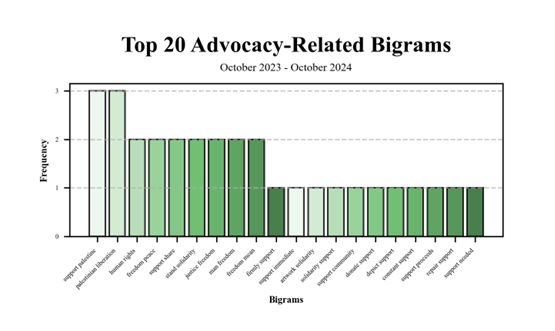
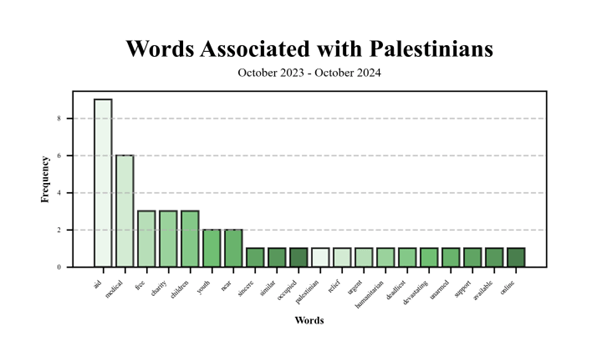
An additional pillar of trust-establishment is the use of rhetorical devices intended to boost credibility. The distant reading of the fundraiser statements indicates a merger of immediate humanitarian aid with long-term advocacy discourse to form a dual-purpose appeal. Figures 1 and 2 illustrate that advocacy terms such as “liberation,” “human rights,” “solidarity,” “freedom,” and “justice” do not dominate the frequency counts to the same extent as the terms directly associated with relief. Thus, fundraisers achieve their appeal for credibility primarily by showcasing direct, short-term impact and addressing urgent needs. To enhance legitimacy for this appeal, the fundraisers align themselves with broader justice-oriented demands by drawing on terminology rooted in universally recognised values, in a bid to evoke emotional and moral responses from supporters. The advocacy-related bigrams likewise highlight the overarching theme of collective action. This “collective identity,” stemming from a “shared sense of ‘we-ness’ and ‘collective agency’” (Snow, 2001: 2212), is a strong emotional motivator for participation in donations. The blend of ethos and pathos in the fundraiser discourse aims to engineer consent (Herman and Chomsky, 1988) from supporters by reassuring them that their buy-in will generate sustainable justice, in addition to providing urgently needed relief. 

Figure 2: Top 20 Advocacy-Related Bigrams (Arshid, 2024) 

Notably, the moral sentiments underpinning classical humanitarian discourse, such as compassion and empathy, are not explicitly invoked as rhetorical devices within the fundraisers. However, terms like “children relief” carry an implicit emotional appeal, as they suggest helping vulnerable populations, evoking feelings of compassion and empathy. Sharma (2017: 3-4) proposes that these sentiments are “asymmetrical feelings” that may reinforce social and geopolitical hierarchies between benefactors (in the global North) and recipients (in the global South). The emotional and moral appeal of the Bandcamp fundraisers is not rooted in mere sympathy evocation; rather, it situates advocacy within the discourse of human rights and global solidarity, potentially generating another form of asymmetrical sentiment. This approach positions victims as subjects of universal human rights narratives, rather than individuals grounded in their specific geographic or cultural contexts (Nayar, 2009).  

The Geopolitics of Humanitarianism and the Music Industry  

Figure 3: Record Label Location Frequency Map (Arshid, 2024)  
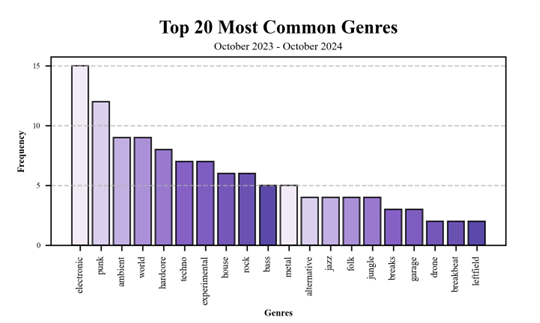
Interactive map link: https://hanairs91.github.io/Bandcamp-Gaza-Fundraisers—Distant-Reading-and-Visualisation/  

The algorithmically generated map (Figure 3) reveals a marked concentration of Bandcamp fundraisers by record labels based in Europe and North America, a phenomenon that resonates with a deep-rooted Western tradition of conceptualising humanitarianism as the political bedrock of global solidarity. The data also corroborates the view that humanitarian fundraising, as a political mechanism in response to crises, is significantly less prevalent in the Global South. Originally envisioned as a neutral, apolitical initiative with the establishment of the International Red Cross in the mid-19th century, humanitarianism has gradually morphed into a more politicised mode of global solidarity, particularly in the aftermath of World War II and the ascension of the liberal world order (Douzinas, 2007; Lawrence and Tavernor, 2019; Hopgood, 2019). This transformation, as noted by Lawrence and Tavernor (2019), gave rise to the notion of “mediated humanitarianism,” wherein media culture—spanning television, cinema, and music—became inextricably linked with humanitarian outreach and community formation, moulding and refracting efforts toward global solidarity from the mid-20th century onward. Chouliaraki (2010) further contends that contemporary media has catalysed the emergence of “post-humanitarianism,” which encourages politically ambivalent engagement and reduces humanitarian action to commodified, superficial acts of “playful consumerism.” The politicisation and mediation of humanitarianism have transformed it into what Douzinas (2007: 12) calls the “ultimate political ideology,” wherein Western well-being is intertwined with the hardships of the Global South. 

Additionally, the dominance of Western record labels in Bandcamp fundraising efforts offers context for the tendency to prioritise universalist human rights discourse, with “Palestinian liberation” standing out as an exceptional case of a context-bound, relativist approach in the advocacy-related language (see Figure 2). The link between humanitarianism and universal human rights, two distinct manifestations of social activism (Hopgood, 2019), is deeply entrenched in Western tradition. Spivak (2023) and Douzinas (2007) maintain that NGO and relief efforts frequently serve to propagate Western neoliberal democracy under the guise of “human rights,” shaping social movements to conform to capitalist interests. While ostensibly framed as acts of solidarity, Western involvement in global crises can perpetuate imperialist sentiments and reinforce the dichotomy between the “rescuers” (those in the West) and the “suffering populations” (those in the Global South). Spivak’s (2023) radical rejection of philanthropic “giving” as a normative practice stems from her understanding that such gestures often obscure the complex historical and political realities of the situations they aim to address. Universal human rights, framed as a moral obligation, can undermine the agency of subaltern populations and  place Western intervention at the centre (Spivak’s 2023; Douzinas, 2007). While Bandcamp fundraisers are organised by independent artists and labels, rather than large relief institutions, they still replicate some of the tropes of hegemonic structures from which they declare independence.  

Distant reading of the tags labelling the albums and compilations sold to raise funds for Gaza shows that the highly contested category of “world music” ranks among the top four genres, following punk, a genre often associated with political protest and disobedience. Connell and Gibson (2004: 346) describe world music as a commercial construct that emerged in 1987 as a marketing strategy rather than an authentic genre tied to specific places. Historically, it served as a vague label for non-European and marginalised music, creating a division from other genres (Van Klyton, 2012). This divide enables Western corporations to profit by exoticising non-Western sounds and packaging them for global consumption (Connell and Gibson, 2004; Van Klyton, 2012). At its core, world music reflects the impact of globalised markets, where cultural products are detached from their geographic origins and recontextualised for Western audiences, which reinforces a Eurocentric framing of diverse cultural expressions and identities.  

Figure 4: Top 20 Most Common Genres (Arshid, 2024) 

Representation and the Commodification of Suffering  

The distant reading results regarding words associated with Palestinians expose the power imbalances embedded in the narrative about the suffering of Global South populations (Ziberi et al., 2024) and humanitarian advocacy within the independent music community on Bandcamp. The most frequent terms linked to Palestinians predominantly revolve around the need for external help, casting Palestinians as passive beneficiaries of aid. The prominence of “charity” among the top four terms highlights that a segment of the fundraisers corresponds with Tullock’s (1971) definition of charity: where the affluent leverage their position to offer gifts to the less fortunate, with the quantity and nature of aid left at the benefactor’s discretion, as Buchanan (1987) suggests. Ethical theory distinctly separates charity from justice. While charity excludes the recipients from the process of planning systemic change, justice guarantees an entitlement to aid, rather than leaving it to the benevolence of others (Coss, 2019; Fang, 2021). 

The above finding is further substantiated by an emphasis on vulnerable groups. The prevalence of terms like “children” and “youth” as demographic categories indicates that younger populations are significant in the discourse surrounding Palestinians. Such emphasis is further spurred by the facts outlined by international human rights organisations, such as Save the Children (2024), which ranked the occupied Palestinian territory as the most dangerous place in the world for children as of 10 October, 2024. However, this focus also resonates with the portrayal of children as inherently vulnerable in Western narratives, as Sergi (2021) argues, and is therefore designed to elicit maximum empathy for the Palestinian cause. 

Figures 2 and 5 illustrate how immediacy and urgency are deployed as persuasion techniques within the fundraisers’ discourse. It is undeniable that swift action is urgently required in response to the crisis in Gaza. From a discourse perspective, however, urgency rhetoric also functions as an “attention economy” mechanism (Ziberi et al., 2024), a key principle in commodity theory, particularly relevant in the age of digital platforms. In this context, human attention is treated as a scarce and highly valuable resource in an oversaturated informational landscape. To facilitate the transactional process, i.e.,”buy this album, contribute to relief efforts in Gaza,” urgency transforms passive viewers into active contributors on the digital platform. Nayar (2009) explains that transforming struggles into a consumable public domain is a form of commodification that not only stirs empathy but is also intertwined with global media industries that profit from such representations (Nayar, 2009: 151-153). This raises important discussions around the ethics of representation and the asymmetries that are entrenched within them. 

Figure 5: Words Associated with Palestinians (Arshid, 2024) 

Supporter Engagement 

Bandcamp’s resistance to platformised aesthetics, with its focus on materiality, permanence, and insularity (Hesmondhalgh et al., 2019), comes with practical limitations regarding the data available about supporters who purchase releases. Bandcamp uses a basic application programming interface (API) that offers simple functionalities for accessing and managing data. While it provides some metrics similar to those on social media platforms, the quantity of music purchasers is not displayed numerically. Instead, users are shown a collection of supporter avatars and comments. This basic API is intentional, contributing to the creation of “symbolic meaning” (Davies and Sigthorsson, 2013) around the music artefacts and their detachment from capitalist modes of production and circulation. However, it restricts insight into supporter behaviour to the analysis of comments on the record labels’ pages. 

Reactions rooted in anger, fear, outrage, and sadness are typical crisis response stimuli (Ziberi et al., 2024), but sentiment analysis of Bandcamp fundraiser supporters’ comments reveals that positive sentiments dominate. Positive words appear 8 times more frequently than negative ones, with 4.5 times more overall occurrences, indicating a clear bias towards positive emotions despite some strong negative sentiment (see Figure 6). The word “favourite” is the most frequent, as many comments reference supporters’ favourite tracks from the albums. This demonstrates a pronounced interest in the record label’s music and reflects a transactional approach, with an emphasis on personal choice. Chouliaraki (2010) suggests that post-humanitarian communication has shifted towards individualised engagement, in which personal choice and spectator “reflexivity” assume a central role. Contemporary campaigns “technologise action” by reducing participation to quick, simplified clicks—such as online donations—that favour convenience over long-term moral and emotional commitment (Boltanski, 1999; Chouliaraki, 2010). This model of humanitarianism increasingly follows a consumption-based logic, where global solidarity is reduced to transactional gestures that give the impression of action while alleviating guilt (Hopgood, 2019). 

Figure 6: Sentiment Analysis of Bandcamp Fundraiser Supporters’ Comments (Arshid, 2024) 

Negative sentiment words contain strong language that is tinged with the gravity of the underlying geopolitical crisis and reflective of anger, hardship, and oppression. Pity-related terminology is conspicuously absent from the comments, which reflects a trend in contemporary humanitarian discourse to move away from the notion of a “crisis of pity,” where humanitarian appeals relying on grand emotions like guilt have lost their potency in galvanising sustained public action (Boltanski, 1999). As Douzinas (2007) and Müller (2013) note, pity is often a paternalistic emotion directed by the West towards the Global South to legitimise existing inequalities. While platform-based music fundraisers differ from the pity-driven humanitarianism that tainted antecedents such as Band Aid, they still operate within a marketised humanitarianism, marked by low emotional intensity and short-term engagement.  

Concluding Thoughts  

The distant reading of Bandcamp fundraisers for Gaza uncovers the complex power dynamics within digital humanitarianism, particularly in the independent music sector. Although the platform facilitates grassroots relief and advocacy initiatives, much of the engagement is transactional, centred on immediate relief efforts rather than addressing deeper structural issues. The prominence of consumer-driven activism, where music purchases are framed as acts of humanitarian support, exemplifies the commodification of suffering. This underscores longstanding patterns in Western humanitarianism, which often portray Palestinians as passive recipients of aid rather than active participants in their own liberation. 

Further highlighting the dominance of Western narratives in sculpting humanitarian discourse is the geographic concentration of fundraisers in the Global North. The emphasis on vulnerable groups, especially children, evokes empathy, yet reinforces familiar tropes of victimhood. Urgency is frequently deployed as a persuasive device, reflecting the “attention economy” where immediate action is prioritised over sustained, critical engagement. 

Sentiment analysis of supporter comments indicates a predominance of positive emotional responses, with relatively minimal engagement in negative or critical discourse. This suggests that supporters are primarily motivated by personal connection to the music or to the idea of contributing to a cause, rather than by the deeper political complexities of the Gaza crisis. While this reflects a shift away from pity-driven humanitarianism in the music industry, it also points to the limits of Bandcamp fundraisers as means for advocating long-term engagement with issues of structural inequality and injustice. 

This study emphasises the imperative for further exploration of the visual and sonic rhetoric utilised in music industry fundraisers associated with the Gaza crisis. Such research has the potential to yield a more nuanced understanding of the independent music industry’s contributions to digital humanitarianism and activism. 

Reference list:  

  • Allen, L.K., Creer, S.D. and Poulos, M.C. (2021) ‘Natural language processing as a technique for conducting text-based research’, Language and Linguistics Compass, e12433. https://doi.org/10.1111/lnc3.12433  
  • Appadurai, A., 2012. Commodities and the politics of value. In Interpreting objects and collections. Routledge, pp.76-91. 
  • Boehnert, J., 2016. Data visualisation does political things. DRS2016: Design+ research+ society: Future-focused thinking
  • Boltanski, L., 1999. Distant Suffering: Morality, Media and Politics. Translated by G. Burchell. Cambridge: Cambridge University Press. 
  • Buchanan, A., 1987. Justice and charity. Ethics, 97(3), pp.558-575. 
  • Chouliaraki, L., 2010. Post-humanitarianism: Humanitarian communication beyond a politics of pity. International Journal of Cultural Studies, 13(2), pp.107-126. Available at: <https://doi.org/10.1177/1367877909356720&gt;. 
  • Connell, J. and Gibson, C., 2004. World music: Deterritorializing place and identity. Progress in Human Geography, 28(3), pp.342-361. 
  • Coss, S., 2019. Confronting the NGO: Struggling for Agency and Approximating Freedom through the Works of Michel Foucault and Gayatri Chakravorty Spivak. Pitzer Senior Theses. Available at: https://scholarship.claremont.edu/pitzer_theses/102 [Accessed 2 October 2024].  
  • Davies, R. and Sigthorsson, G., 2013. Introducing the Creative Industries. SAGE, pp.1-21. 
  • Douzinas, C., 2007. The many faces of humanitarianism. Parrhesia, 2(1), pp.1-28. 
  • Fang, V., 2021. From charity to justice: how NGOs can revolutionise our response to extreme poverty. Palgrave Macmillan, Singapore. 
  • Herman, E. and Chomsky, N., 1988. Manufacturing Consent: The Political Economy of the Mass Media. New York: Pantheon. 
  • Hopgood, S., 2019. When the music stops: Humanitarianism in a post-liberal world order. Journal of Humanitarian Affairs, 1(1), pp.4-14. 
  • Jones, A., 2017. Band Aid revisited: Humanitarianism, consumption and philanthropy in the 1980s. Contemporary British History, 31(2), pp.189-209. 
  • Kibble, R., 2013. Introduction to natural language processing. University of London. Available at: www.londoninternational.ac.uk [Accessed 2 October 2024]. 
  • Lawrence, M. and Tavernor, R., 2019. Introduction: Global humanitarianism and media culture. In Global Humanitarianism and Media Culture, pp.1-12. 
  • Milbrath, L.W., 1981. Political participation. In The Handbook of Political Behavior: Volume 4. Boston, MA: Springer US, pp.197-240. 
  • Nayar, P.K., 2009. Scar cultures: Media, spectacle, suffering. Journal of Creative Communications, 4(3), pp.147-162.  
  • Neilson, L.A. and Paxton, P., 2010. Social capital and political consumerism: A multilevel analysis. Social Problems, 57(1), pp.5-24. 
  • Obad, O., 2011. Framing a friendly dictator: US newsmagazine coverage of Pakistani President Musharraf. Journal of Communication, 9 (11), p.2. 
  • Snow, D.A., 2001. Collective identity and expressive forms. In: N.J. Smelser and P.B. Baltes, eds. International Encyclopedia of the Social and Behavioral Sciences, Oxford: Pergamon Press, pp.2212-2219. Available at: <https://doi.org/10.1016/B0-08-043076-7/04094-8&gt;. 
  • Spivak, G.C., 2023. Death of a Discipline. Columbia University Press. 
  • Suárez, D.F., 2012. Grant making as advocacy: The emergence of social justice philanthropy. Nonprofit Management and Leadership, 22(3), pp.259-280. 
  • Tullock, G., 1971. The charity of the uncharitable. Economic Inquiry, 9(4), p.379. 
  • Ward, J. and de Vreese, C., 2011. Political consumerism, young citizens and the Internet. Media, Culture & Society, 33(3), pp.399-413. Available at: <https://doi.org/10.1177/0163443710394900&gt; [Accessed 4 October 2024]. 

Appendices 

Appendix 1: Bandcamp Fundraisers Textual Data 

https://github.com/HanaIrs91/Bandcamp-Gaza-Fundraisers—Distant-Reading-and-Visualisation/blob/main/Textual%20Data%20-%20BC%20Gaza%20Fundraisers%20-%20Final.xlsx

Appendix 2: Python Code Developed for Data Analysis and Visualisation 

Appendix 3: Github Repository of the Research Project 

https://github.com/HanaIrs91/Bandcamp-Gaza-Fundraisers—Distant-Reading-and-Visualisation

Preface to the Radboud Creative Industries Journal

Creative industries as a field and as an academic discipline has taken a pivotal turn in the last decades. The study of creative industries celebrates the intersection of multiple areas ranging from music, craft, fashion, technology, tourism, to placemaking, to name a few. Interestingly, these form only the tip of the iceberg.

Creative industries as an area was originally conceived towards revenue generation, creating employment and overall economic revitalization. However, the more we understand the creative industries, the closer we reach towards valuing them beyond simply an economic revitalization model. Creative industries serve as a great example to call attention to nuances that every researcher can individually bring- for instance, the questions of indigenous communities and technology is a fascinating example of how two diverse worlds can intersect. Understanding creative industries through its various players, processes and points of view can uncover various interesting facets therein. Thus, by focusing on creativity along with various intersections such as culture, diaspora, mobilities, gender and so on, the application of creativity and creative industries can be endless.

This was my first observation as students of MA Creative Industries Core Course discussed various topics that only kept broadening the scope of the subject and in-class discussions. This in-house e-journal, The Radboud Creative Industries Journal, brings together the articles of students of a Masters level course at Radboud University Nijmegen, the Netherlands (LET-ACWME0000 core course in creative industries). Students conceptualized interesting questions for discussion that were unique to their positionality, adopting a critical cultural studies perspective. The articles that resulted from these conversations in class, and a double blinded peer-review exercise are presented in this e-journal.

The angle of this e-journal celebrates creative industries from a global perspective. In this edition, we explore diverse topics ranging from youth participation in the creative industries in Ghana to Pakistani truck art’s cultural relevance, from the evolution of socially committed art, to understanding the role of platforms such as TikTok or Vinted in contemporary societies. Taking relevant strides towards social relevance of creative industries, this edition touches upon AI and storytelling in museums, and also activism in the music industry underpinning Bandcamp Gaza fundraisers as a case study.

This e-journal came into being with limited resources and no funding, but with the pure intent of making enriching creative industries conversations that take place in classroom more accessible to a wider audience. This idea resulted in this collection of essays. We are grateful for the support of Culture Weekly for housing this initiative and we hope this e-journal sees many more years of collaborative efforts to add depth and richness to creative industries in general. I particularly want to thank MA students Merel Visser and Julia Leijzer for their enthusiasm in supporting this e-journal with their great editorial assistance. We hope you enjoy reading along!

Apoorva Nanjangud      Merel Visser                      Julia Leijzer

Editor                                Editorial Assistant         Editorial Assistant

Nijmegen,

April 2025

Fanfiction: Shared Universes

By Julia Neugarten and Rūta Tidriķe

PhD-candidate Julia Neugarten and third-year BA student Rūta Tidriķe look back on the Creative Culture Talk they organized last year at film theatre LUX, titled Fanfiction: Shared Universes. The evening included presentations and discussion with two guest speakers: Nicolle Lamerichs, a senior lecturer and team lead at Creative Business, HU University of Applied Sciences in Utrecht, and Roderick Leeuwenhart, a writer of science fiction and winner of the prestigious Harland Award for speculative fiction.

“Raise your hand if you have ever read fanfiction.”

Some of the people at LUX looked around uncertainly, but others raised their hands with confidence. After a few moments, more than half of the audience had their hands up.

“Now raise your hand if you have ever written fanfiction.”

More than half of the hands went down.

None of this was surprising. Apart from the fact that fanfiction-afficionados are probably more likely to attend an event about fanfiction than other people, the largest English-language fanfiction-website today has over 8 million users.1 Fanfiction is a huge and ever-growing online phenomenon – you probably know people who read and write it, especially if you’re under 30 years old.

To tell us more about fanfiction and the fan culture it emerges from, Dr. Nicolle Lamerichs kicked off the evening with a presentation. She explained that fans are typically emotionally invested audiences. Fans are often active in communities – which they call fandoms. Finally, fans are often creative. They express their emotional attachment to popular culture through creations such as art, costumes, and fanfiction.

Picture by Aliisa Råmark

Fanfiction often explores alternate interpretations or elements of a storyworld from popular culture. It is often written in close collaboration with the rest of the fan community – the so-called fanon (fan-canon) is constantly changing and developing. And, lastly, fanfiction is often transformative – while some fanfiction endlessly produces more of a certain popular thing, fans also use it to get more from beloved stories – more representation, more nuanced storylines, more answers to their questions, more emotional fulfillment.2 Fanfiction’s capacity for transformation can encompass the exploration of commonly underrepresented identities, but it can also mean trying out different plot scenarios or changing the fundamental ideological underpinnings of a story.

We were then introduced to the work of Dutch science fiction writer Roderick Leeuwenhart. Roderick also surveyed the similarities between fanfiction and science fiction. For example, both types of stories share a preoccupation with hypothetical scenarios, with asking ‘what if?’ Roderick also reflected on his experience contributing to De Zwijgende Aarde (The Silent Earth), a series of science fiction novels by different authors that are all situated in the same narrative universe. This collaborative mode of authorship is not unlike the process of fanfiction production.

Picture by Aliisa Råmark

In the panel discussion that followed, we discussed the differences and similarities between fanfiction and published fiction, including differing modes of production and distribution, differences in content, and different reading experiences for audiences. Here, Rūta made an interesting observation: in their life, fanfiction-reading has a very different role from reading published fiction or other types of texts. Indeed, to them there is a certain comfort and ease that comes with reading fanfiction as the characters and/or the worlds they inhabit are already well known. This is different to starting a new original fiction book or series, where the reader must learn and familiarize themselves with the new story world. Ultimately, for them, reading fanfiction comes with a certain level of comfortable familiarity.

Picture by Ida Bassenge

Roderick then read his short story Bacteriophages for us, about a futuristic medical treatment that had some unexpected side-effects. The story, we reflected, was speculative in regard to some culturally dominant ideas about medicine and the human body. Through humor and defamiliarization, it let us think through these topics. We discussed the distinction proposed by Francesca Coppa, that science fiction tends to be speculative about (story)worlds, whereas fanfiction tends to be speculative about characters instead.3 These distinct types of writing may thus lend themselves to different types of speculations.

What are these different types of speculation? When are they useful? When do they fall short? We talked about the possibility that fanfiction, like some science fiction, could be politically powerful by allowing people to imagine, and therefore strive for, a different, better world. We also discussed some of the ways that fan culture can be reactionary rather than idealistic. In the end, real-world political viewpoints can limit the transformative possibilities of (fan)fiction.

So where will fanfiction go in the future? During discussions, we agreed that in recent years, especially when people were forced to spend time inside during the pandemic, there was a noticeable influx of new people in fandom communities, who were previously unfamiliar with how these spaces worked. This shift brought up old discussions and spurred new ones, especially as new practices emerged.

Picture by Trine Linke

Online fan communities that revolve around fanfiction seem to just keep growing, and technological developments like AI are also making new kinds of online fan-activity possible, such as interactive fan experiences with AI chatbots. Although these developments may also mean a tendency for fan culture to become more focused on profit, we hope that fandoms can maintain their curious, critical, and sometimes silly sides as well.

The evening was produced in collaboration with Karlijn Scheffers of LUX and with the assistance of Sofia Dovianus, a student-assistant at the Radboud. The Creative Culture Talk was made possible by Helleke van den Braber, formerly of Radboud University’s Art and Culture Studies and now affiliated with Utrecht University. Header image by Ida Bassenge.

Footnotes

  1. This site is Archive of Our Own: https://archiveofourown.org/, consulted March 27th 2025. ↩︎
  2. This distinction between more of and more from originates from The Democratic Genre: Fan Fiction in a Literary Context, by Sheenagh Pugh (2005). ↩︎
  3. Coppa, Francesca, editor. The Fanfiction Reader: Folk Tales for the Digital Age. University of Michigan Press, 2017. ↩︎

Ithaca: The Return – The Cost of War and the Power of Penelope’s Silence

By Ketty Iannantuono, Postdoctoral researcher at Radboud Institute for Culture & History

After many years of absence, a man returns home, carrying with him the trauma of war. His wife has patiently waited for him, never losing hope but struggling to keep their home from falling apart. Their distraught son has lived in his father’s myth. Now, they must all come to terms with the less-than-heroic return of an old man: he has survived, but at an extremely high cost. This could easily be a story set in the present, yet it is based on a tale written over three thousand years ago. This is Homer’s Odyssey, as reimagined by Uberto Pasolini in his new film, Ithaca: The Return.

Rather than recounting the epic of Odysseus’ great journey – the kind of story previously adapted for the screen in Camerini’s and Bava’s Ulysses (1954), Rossi’s Odissea (1968), the Coen brothers’ O Brother, Where Art Thou? (2000), or the forthcoming Christopher Nolan blockbuster The Odyssey (set for release in summer 2026) – Pasolini’s Ithaca: The Return opts for an intimate retelling of the classic myth, focusing solely on the last books of the poem (Od. XIII-XXIII). The story is stripped of all the adventures, nymphs, monsters, and gods, and this absence feels strikingly deliberate.

The narrative centers on Odysseus’ (Ralph Fiennes) νόστος – his return to his homeland, where he arrives shipwrecked and naked, one ordinary day. More than a hero, he is a veteran, burdened with the guilt of having lost all his comrades in war. His many years of wandering are only hinted at, not as challenges to be overcome by craftiness and deception or as persecutions inflicted by envious gods, but as the result of his profound alienation and his inability to reclaim control over his life after the absurdity of the Trojan War, which, like every other war – then and now – upends the meaning of all things. For much of the film, Fiennes’ Odysseus is helpless: he barely speaks, hides in the shadows, and witnesses the devastation of his home and family. Meanwhile, his wife Penelope (Juliette Binoche) and son Telemachus (Charlie Plummer) are left with the burden of defending his throne from suitors who are pressuring the queen to remarry. As in the original text, Penelope stalls them by claiming she will choose a suitor only once she has completed the shroud she is knitting for her ailing father-in-law. In reality, she secretly spends her nights unraveling the shroud, buying Odysseus more time to return.

A fundamental theme of the film is the struggle to reconstruct one’s identity, a quintessential Odyssean topos: that of becoming “Nobody.” Returning home with clear signs of grappling with PTSD – at the premiere of the movie in Milan, Pasolini has mentioned reading Vietnam War veterans’ diaries while writing the script – Odysseus struggles to fit back into his old life. Yet, those closest to him recognize him almost immediately: Eumaeus (Claudio Santamaria), who soon understands who the old beggar is; the dog Argos, who has waited twenty years, only to die upon his master’s return; Euriclea (Angela Molina), who recognizes him by his scar; but above all, Penelope, who only needs a glance at the stranger to know that her husband has returned. She doesn’t need any further confirmation of his identity and devises the challenge of the bow not to test the stranger facing her but to push her husband to piece together the fragments of his existence and reclaim his role.

Seemingly in contrast to the Homeric poem (though I can’t help but think of the verses in Book 1, where Odysseus’ son expresses frustration and uncertainty about his identity, unsure of who his father really is despite what others say; cf. Od. I, 200-210), Telemachus refuses to accept that the veteran is his long-lost father. The man before him bears no resemblance to the hero he has heard about since childhood, evoking conflicting feelings of hatred, resentment, and humiliation. But when Telemachus finally sees Odysseus fighting mercilessly and resolutely in the palace hall, violently exterminating the suitors as per the script, he “finds” him again – and in doing so, finds himself and his place in the world.

The Absence of Gods and the Focus on Human Responsibility

In Ithaca: The Return, we are faced with a plausible story, set in a convincingly reconstructed Homeric society that parachutes us into believable Hellenistic Middle Ages, where the aristocracy is in turmoil and power struggles are violent. The film is marked by intense performances –especially from Fiennes and Binoche, who communicate deeply through their tormented yet powerful silences – and a visually striking atmosphere. The exterior shots, often set in rugged locations – shot in Corfu and in the Peloponnese – create a sense of isolation and mystery, contrasted with the claustrophobic palace scenes, which represent a prison-like environment for the protagonists. In almost every frame, both exterior and interior, the sea remains visible, reminding us of the island setting. This serves as a powerful metaphor for the deep isolation experienced by all the characters. Each man (and woman) is an island, bearing the consequences of their actions alone.

In Pasolini’s film, there are no gods swooping in to resolve conflicts. This decision transforms the film from a simple retelling of an ancient myth into a poignant commentary on the human cost of violence and war. With the gods entirely absent, the film places the full weight of Odysseus’ choices squarely on his shoulders. The consequences are real, personal, and deeply felt by everyone involved.

Penelope: More Than Just the Waiting Wife

In the original poem, Penelope is primarily a symbol of patience and fidelity, waiting for Odysseus’ return. While her devotion is admirable, it often reduces her to a secondary character defined solely by her relationship to him.

Feminist scholarship on the Odyssey emerged in the 1990s, shedding light on Penelope’s agency and intelligence. Scholars like Helene Foley (1978), John Winkler (1990), Nancy Felson (1994) and Barbara Clayton (2004), have pointed to Penelope’s role as a clever counterpart to Odysseus. After all, she manipulates the suitors, “weaves her shroud,” and subtly collaborates with her husband’s plot. On the other hand, other feminist scholars have examined the extent to which the Odyssey truly highlights, empowers, or praises women. Lillian Doherty (1995) argues that while the epic’s strong female characters may engage female audiences, they lack significant agency within a male-centered narrative. Sheila Murnaghan (1986; 1995) and Ingrid Holmberg (1995) have contended that Penelope is essentially powerless, her actions controlled by Odysseus and the goddess Athena, who is associated with male power. Other scholars, such as Marilyn Katz (1991), Victoria Wohl (1993), Seth Schein (1995), and Froma Zeitlin (1995), have noted that the Odyssey often challenges the concept of female virtue, particularly through Penelope’s potentially ambiguous actions toward both the suitors and Odysseus. Rachel Lesser (2017; 2018) argues that Penelope’s combination of disempowerment and subjectivity – autonomous yet devoted to her husband – reinforces the Odyssey’s patriarchal ideology.

Pasolini’s adaptation offers a fresh perspective. Penelope is presented as a central character in her own right, with her struggles, strengths, and complexities. She not only waits but also manages the household – handling finances, making key decisions, and defending her home from suitors. She controls her own destiny and even has a say in whether she will accept the veteran as her husband again. Such a take feels much needed, especially in the cinema, where, borrowing the words of Edith Hall (2013), until now “Penelope has still waited”. The situation is more diverse in contemporary literature: it suffices to mention Margaret Atwood’s The Penelopiad: The Myth of Penelope and Odysseus (2005) as an example of a counter-narrative to the traditional Odyssey’s patriarchal tone. Similarly, by giving Penelope more depth – and in this case even more agency in determinig Odysseus’ final destiny – Ithaca: The Return offers a powerful commentary on gender roles and the way history has traditionally sidelined female voices.

Presented at the 2024 Rome Film Festival and the 2025 Toronto Film Festival, Ithaca: The Return hit theaters in the Netherlands on March 27, 2025.

References

– Atwood, Margaret. 2005. The Penelopiad: The Myth of Penelope and Odysseus. Toronto: Village Canada.

– Clayton, Barbara. 2004. A Penelopean Poetics: Reweaving the Feminine in Homer’s Odyssey. Oxford: Lexington Books.

– Cohen, Beth. 1995. The Distaff Side: Representing the Female in Homer’s Odyssey. New York: Oxford University Press.

– Doherty, Lillian Eileen. 1995. Siren Songs: Gender, Audiences, and Narrators in the Odyssey. Ann Arbor: University of Michigan Press.

– Felson, Nancy. 1994. Regarding Penelope: From Character to Poetics. Princeton: Princeton University Press.

– Hall, Edith. 2013. “Why Penelope is Still Waiting? The Missing Feminist Reappraisal of the Odyssey in Cinema, 1963-2007”, in Ancient Greek Women in Film, edited by Konstantinos P. Nikolouzos: 163–185. Oxford: Oxford University Press.

– Foley, Helene. P. 1978. “‘Reverse Similes’ and Sex Roles in the Odyssey”, Arethusa 11: 7–26.

– Holmberg, Ingrid E. 1995. “The Odyssey and Female Subjectivity”, Helios 22 (2): 103–22.

– Katz, Marylin A. 1991. Penelope’s Renown: Meaning and Indeterminacy in the Odyssey. Princeton: Princeton University Press.

– Lesser, Rachel. 2017. “The Pandareids and Pandora: Dening Penelope’s Subjectivity in the Odyssey”, Helios 44 (2): 101–132.

– Id. 2019. “Female Ethics and Epic Rivalry: Helen in the Iliad and Penelope in the Odyssey”, The American Journal of Philology, 140, 2: 189–226.

– Murnaghan, Sheila. 1986. “Penelope’s Agnoia: Knowledge, Power, and Gender in the Odyssey”, Helios 13: 103–15.

– Id. 1995. “The Plan of Athena”, in Cohen 1995: 61–80.

– Schein, Seth L. 1995. “Female Representations and Interpreting the Odyssey”, in Cohen 1995: 17–27.

– Winkler, John. 1990. “Penelope’s Cunning and Homer’s.” In The Constraints of Desire, 129–61. New York: Routledge.

– Wohl, Victoria. 1993. “Standing by the Stathmos: The Creation of Sexual Ideology in the Odyssey”, Arethusa 26: 19–50.

– Zeitlin, Froma. 1995. “Figuring Fidelity in Homer’s Odyssey”, in Cohen 1995: 117–52.

*

Header illustration by Adolfo de CarolisImmagini, from: Odissea, trad. Ettore Romagnoli, Bologna: Zanichelli, 1927.

Elmer bezoekt huizenhoge hoogtes in Platland

Dit stuk is geschreven door Jill Moser in het kader van het vak Kunstkritiek

Door middel van een allesinnemende, sensorische reis neemt Elmer haar publiek mee om al rappend, stampend en dansend in haar Platland-clubtour benauwende constructen af te breken om hun vervolgens de mogelijkheid te bieden vanuit muzikale hoop weer iets op te bouwen.

De frontvrouw van het voorprogramma Maria Iskariot vouwt zich uit de foetushouding vanuit waar ze eerder machtig en grollend zong voordat de bandleden hun halfuur durende set besluiten en ze het podium verlaten. Vooraan in het publiek hervormt een enkele bubbel aan onhandig tegen elkaar opspringende mensen zich tot keurig gevormde, braaf wachtende rijen en terwijl de laatste klanken nagalmen in de kleine zaal van De Effenaar zoek ik schuifelend door de menigte een plek.

Eenmaal net-niet-achteraan staande zie ik over een gevarieerd landschap van mensen het decor van de act waarop we allemaal wachten vlug opgebouwd worden. Op het podium verschijnen verschillende lagen aan kartonnen kunstwerken in het halfdonker voordat Elmerde planken beklimt.

Elmer, alter-ego van Merel Pauw, is een Nederlands rapper, muzikant, producent, theatermaker en acteur. De artiest debuteerde in 2021 met de obscene hit Je Vader en verwierf daarmee al snel een bescheiden (internet)succes. Sindsdien bracht ze drie EP’s en een dubbele single uit en trad ze op verschillende vooraanstaande poppodia en festivals op. In 2024 werd Elmers debuutalbum platland uitgebracht waarop afgelopen najaar een clubtour door Nederland en België volgde.

Op beats van drumcomputers met doorgaans dreunende, soms swingende bassen, die doen denken aan genres als electrofunk en miami bass, rapt Elmer provocerende doch kwetsbare teksten. In haar muziek en met het gebruik van haar alter-ego (dat geïnspireerd lijkt door eerder belichaamde alter-ego’s als David Bowies Ziggy Stardust en Eminems Slim Shady) lijkt Merel Pauw te willen spelen en breken met heersende verwachtingen van en structuren rondom het zijn van een mens, een vrouw en het zijn van een vrouwelijk artiest.

In de inmiddels volledig donkere zaal verschijnt Elmer, gedrapeerd in een grote zwarte cape en tovenaarshoed, samen met dansers Semna Segal en Sjaid Foncé, op het podium. De setlist wordt afgetrapt met de doordringende riff, diepe bas en strakke raps van Sorry waardoor Elmer met haar kundigheid en toewijding vanaf moment één haar publiek laat dansen, springen, rappen en gillen – of op z’n minst met hun hoofden op de maat van de muziek laat knikken.

Na een denderend applaus circuleert Elmers aansporende boodschap ‘Laten we vanavond vieren dat we allemaal rare losers zijn!’ luid en duidelijk door de zaal voordat ze continueert met het muzikaal aanstekelijke nummer Ik Weiger, dat tekstueel scherpe kritiek levert op de heersende gendernormen en de daaruit volgende beperkingen in genderuiting. Het handjevol mensen dat eerder nog niet danste lijkt Elmer in dit nummer wel mee te krijgen en terwijl ook ik mijn lichaam meebeweeg op de muziek kan ik het niet laten mezelf af te vragen of Merel Pauw gendertheorieën van Butler zou hebben gelezen. Het nummer komt tot een einde door het herhaaldelijk uitkrijten van ‘Ik weiger!’ en het zicht van een aantal jonge mensen die dit uit volle borst meeschreeuwen ontroert me; voelend dat het voor hen veel meer betekent dan een simpele declaratieve zin.

De machtige kreten doven uit en Elmer trekt de grote zwarte cape en tovenaarshoed waarmee ze op het podium verscheen uit. Onder de cape verschijnt een donkerblauw schort over witte onderkleding en onder de tovenaarshoed verschijnt een witte hul: een kostuum dat veel wegheeft van traditionele Volendamse klederdracht. Gedurende deze onthulling horen we het eerste nummer intro van Elmers nieuwe album waarin we in door een klein koor onheilspellende versregels als ‘Kijk dat landschap / Wat een vakmanschap / Wie bedacht dat / Rechte lijnen / Schuine daken / En de weides / Zijn net lakens’ over Nederland worden toegezongen. Het nu sterker verlichte decor laat in het midden een groots, cartoonachtig, kartonnen draaiorgel zien.

In haar debuutalbum platland onderzoekt Elmer haar ingewikkelde relatie met het land waarin ze werd geboren en opgroeide. Daarmee lijkt de artiest met dit album ook automatisch een onderzoek naar de relatie met haarzelf te doorwerken. Met de overwinning van Wilders en de PVV was Elmer in eigen woorden ‘zo boos dat [ze] dit album moest maken’. De tien nummers van platland zijn zowel een ode aan en een afbranding van Nederland, als een bevraging van waarom we Nederland zo verdedigen en afsnauwen.

Terwijl de eerste tonen van het nummer platland al luid klinken stelt de alleskunstenaar haar publiek voor ‘een kringverjaardag te maken!’, ‘met kaasblokjes of zo!’ en enkele seconden later zie ik vooraan een mensenmenigte hun best doen een circlepitte maken. Moeite wordt beloond, want terwijl de dreunende bas en de door Elmer strak gerapte regels ‘Stamp dit land plat / Dit land is plat / Nat de grond / Land is plat / Wereld rond / Dit land is plat / Van karton / Pak het vast / Draai het om’ in de zaal doorklinken ontstaat in een bubbel van mensen vooraan de meest chaotische maar gezelligste kringverjaardag die ik heb gezien. Naast dat dit nummer een geniale live-ervaring is, zit het inhoudelijk ook goed in elkaar. De doffe (en soms incomplete) grammaticale structuur van de versregels ondersteunt de constatering van ‘het vlakke land’. Een constatering die uiteraard niet alleen het fysieke landschap beschrijft, maar ook als vehikel wordt gebruikt voor de doorgaans afgestompte mentaliteit van Nederland(ers). Tegelijkertijd communiceert de liedtekst door het noemen van karton hier ook met de performance, die veel gebruikmaakt van een kartonnen decor en attributen.

Voor het nummer Politiek Statement deelt Elmer het publiek op in twee delen: een linkerhelft, die ze vraagt tijdens aangewezen regels in het nummer ‘Ja’ te schreeuwen, en een rechterhelft, die ze vraagt ‘Nee’ te schreeuwen. In de tekst wordt gespeeld met kritiek op de toenemende maatschappelijke polarisatie en terwijl de verdeelde menigte op de muziek luidkeels ‘Nee’ en ‘Ja’ naar elkaar schreeuwen weerspiegelt de publieksparticipatie dit. Er verschijnt een glimlach op mijn gezicht terwijl ik me voorstel dat Wagner wellicht wel trots zou zijn op Elmers show, die nu al dicht in de buurt komt van een allesintegrerend gesamtkunstwerk.

Al dansend, brekend, zingend, rappend, grinnikend en lachend, sommigen jankend, verstrijkt de reis door Elmers Platland. Ze nam ons allemaal mee, hangend aan haar lippen, in een van begin tot eind in alles doordachte en met enthousiaste toewijding opgevoerde show. Als publiek verdwenen we in de belevenis van een landschap van krachtige muziek en even krachtige teksten, geniaal decor en kostuums, prachtige lichtshows en daadkrachtige dans. In hoogtes en in dalen maakte Elmer van haar concert een kunstwerk dat allesbehalve plat was.

Music for mental health… it’s BRAT

By Just Celebrities: Sjoerd Baas, Ana Cabrian, Julia Leijzer, Rik Pastoor and Aimée Walkate

Yeah, I don’t know if you like me

Sometimes I think you might hate me

Sometimes I think I might hate you

Maybe you just wanna be me

– Charli XCX in Girl, so confusing featuring Lorde

Meet Charlotte Emma Aitchison; a singer- songwriter from Great-Britain. You probably know her by her stage name Charli XCX. A name drawing from her MSN Messenger-phase, which she used when she was younger and still out of the limelight. Charli first gained attention in the early 2010s and has since become a key figure in modern pop. After several albums, with popular songs like “I love it”, “Speed Drive” and “Apple”, 2024 has seen her being transported into the mainstream as a big artist and global public figure.

She (co)writes most of her own songs wherein she handles subjects like hedonism and love. Musically, her style has been perceived as dark wave, witch house, gothic pop, synth pop, pop punk, avant-pop, although she states that she does “not identify with music genres.”1 Instead, in each of her album-cycles, she is known to adopt a different aesthetic altogether. Most recently, the world became acquainted with BRAT; the bright green in-your-face vibe of the summer.

It’s BRAT?

With the release of the BRAT album, on the 7th of June 2024, Charli XCX concluded months’ worth of build-up and anticipation for one of her most ambitious projects to date. However, this moment right at the start of the summer marked only the beginning of much bigger hype. Not only did the songs of the album – which topped charts around the world – garner massive appeal, but BRAT became a way of life.2 In line with the hedonistic attitude that Charli XCX professed on earlier work, the singer now delved further into the introspective aspects that come with her fame and party girl-attitude. Being a brat is about being a complex character; you can admit your flaws and recognize what makes you human, but you can also do whatever you want, however you want it.

Central to the appeal of BRAT is its relatability. Throughout her lyrics, Charli XCX shares insights into her emotional state-of-mind, often coming across as vulnerable, but always in control and empowering. She preaches partying, simultaneously as a way of escapism and embracing self-doubt. One of the central themes on BRATis Charli’s complicated relationship with other women. She sings about “perfect” girls and questions her friendship with other pop artists, most notably New Zealand singer and contemporary, Lorde.

It’s so confusing sometimes to be a girl

Roughly two-thirds into BRAT, Charli delves headfirst into a comparison of herself with one of her contemporaries, specifically, someone who she has always been compared with throughout her career. This sparked debates among fans, and eventually agreement, on who Charli was talking about.

People say we’re alike

They say we’ve got the same hair

We talk about making music

But I don’t know if it’s honest

Can’t tell if you wanna see me

Falling over and failing

And you can’t tell what you’re feeling

I think I know how you feel

Because of their synchronous rise through the ranks of the international pop music scene, around the early 2010s, Charli XCX and Lorde have always been subject of comparisons. From something as seemingly innocent as their style of hairdo, to more serious judgements on musical style and aesthetics, both artists could not escape the forced associations with the other. Central to the song is the anxiety and social stress that comes along for artists when the media forces them in competition with their peers.

Then the remix of the song came out. A near-identical version of the song, but with an added verse in which Lorde reacts to Charli XCX. This provided the invested fandom with a much-needed discourse on the insecurities both females shared towards each other. Hence the title “Girl, so confusing” which underlines the way both artists struggle to come to terms with how they should relate to each other in light of the media and their careers.

Charli on Mental Health

Charli XCX has been publicly open about her mental health struggles. She has spoken openly about experiencing anxiety, stress, and the pressures that come with being in the music industry. She does this in the lyrics of her songs, but also via social media and interviews.

Much like the conversational struggle with Lorde on “Girl, so confusing”, the insecurity Charli XCX experiences in regard to other women is reflected through the song “Sympathy is a knife”. She opens up about her feelings when she sings about a woman who triggers feelings of doubt and insecurity in herself. The sentence “This one girl taps my insecurities, don’t know if it’s real or if I’m spiraling” emphasizes this.

The theme of the song is about the internal struggle of constantly comparing oneself to other women. The lyrics of the song give an exploration of Charli’s own feelings, the words explore the complex feelings of self-perception, insecurity, and the impact of seeking validation from others.

Cause I couldn’t even be her if I tried
I’m opposite, I’m on the other side
I feel all these feelings I can’t control
Oh no, don’t know why
All this sympathy is just a knife
Why I can’t even grit my teeth and lie?
I feel all these feelings I can’t control
Oh no, don’t know

The metaphor of sympathy being a knife suggests that seeking validation from others can sometimes backfire, deepening emotional wounds. In trying to gain empathy, Charli XCX sings about ending up feeling more vulnerable, as the sympathy can worsen their pain.

For many fans, Charli XCX’s openness about her mental health struggles is perceived as inspiring. Reactions from fans seeing a pop artist opening up about her emotional well-being helped them feel less alone in their own mental health.

Meet Ella Marija Yellich-O’Connor, a singer from New-Zealand, who is better known under her stage name Lorde. This reflects her fascination with royalty and aristocracy.  Her music style has been described as indie-pop and alt-pop.

Lorde

Similarly to Charli XCX, Lorde also opened up about her mental health. In 2023 Lorde wrote a letter to fans in which she talks about her loneliness and heartbreak. “I eat chocolate to try and manipulate the endorphins, bring back the sweet happiness of Easter morning. I sit in the time machine and wait for it to move, but it hasn’t been invented yet.”3

These mental health struggles are also apparent in the song “Liability”. “Liability” is a song from Lorde’s second album (Melodrama). In this second album, she shifts from the collective “we” of her first album (Pure Heroin) to a more personal “I” perspective. In an interview with Vogue, Lorde explained how the first album was more about her and her peers, while the second album was more about her personal experience.4

I’m a liability

In the song “Liability”, Lorde talks about how she feels like a burden to the people around her.

 The truth is I am a toy that people enjoy
 ‘Til all of the tricks don’t work anymore
 And then they are bored of m
e

In these lyrics, for instance, she mentions how she is afraid that people are going to find out they would rather not spend so much time with her.5

Lorde explained in an interview with 60 minutes Australia how the song “Liability” surprised her: “it really appealed to a lot of young people […] people say to me: that’s exactly how I felt during high school […] even though I am in this quite specific situation myself, other young people can relate to what it is that I’m feeling”.

Mental Health, Consciousness-Raising and Feminist Standpoint Theory

Music and mental health have been proven to positively affect one another. Some people with mental illness can have trouble expressing themselves with words. Thus, music is used in therapy to help the patients express their emotions and create a relaxed mental state.6 It is even used by psychiatrists for treating people with depression.7 On the other hand, music can be used to improve one’s mental state outside of therapy as well. Just listening to music everyday reduces stress and anxiety. Research by psychiatrist Lavinia Rebecchini shows that listening to music decreases the levels of, among other things, stress hormone and adrenaline.8 She even argues that due to these decreased levels of stress and adrenaline, the immune system might improve. This ties in with the Sustainable Development Goal number three: Good Health and Well-Being, as mental health is an important part, if not the most important part, of good health and wellbeing.

Moreover, the artists themselves also play a major role in helping with mental health. They can reduce stigma by singing or talking about their own mental health issues. When artists discuss mental health, they can increase knowledge of symptoms, treatments and services.9 Lyrics that discuss mental health issues can help the individual create more self-awareness and physical/psychological relaxation.10 However, not every celebrity is equally impactful. There are three different kinds of celebrities: the traditional celebrity, the social media celebrity and the microcelebrity.11 Originally, microcelebrities were most impactful in reducing stigma, because they are regional celebrities, and their fans have a personal connection to them. Therefore, traditional celebrities, like Lorde and Charli XCX, were least relatable to the fans, as they are not connected to every-day life anymore. This has changed since the invention of social media, as all celebrities can easily have direct connections to their fans, creating this relationship between the fans and the celebrity.12 Social media has given traditional celebrities a way to talk directly to their fans about mental health, which reduces the stigma surrounding mental health issues.13

Furthermore, music itself is an important vehicle for social change and songs can be used as platforms through which certain messages can be spread to a wider audience. In other words, music can be used as a tool for consciousness-raising. This refers to works that are created in a way that will draw people’s attention to a certain social issue and increase their understanding of it, as well as how the issue has an impact on their personal life.14 This understanding will then hopefully encourage people to contribute to solving the issue. As mentioned above, one such problem is the stigma surrounding the concept of mental health. Consciousness-raising songs can serve as a way of raising awareness about mental health issues by addressing topics of emotional well-being, such as anxiety, depression or any other mental health related concerns. As a consequence, these songs can help normalize conversations about mental health and reduce the stigma around it, as well as potentially motivate individuals to look for help. Therefore, consciousness-raising songs can challenge societal norms and advocate for social change, in this case, how mental health is perceived and treated. Celebrities, such as Charli XCX or Lorde, that use their music to speak up about their personal experiences with mental health struggles, can increase knowledge and help change the public perception of mental health.

What is more, the aforementioned case studies of artists Charli XCX and Lorde exemplify feminist standpoint theory. This is used with the purpose of placing women’s stories and experiences at the center of the research.15 To elaborate, feminist standpoint theory wishes to identify and challenge cultural values and power dynamics that contribute to the subordination of particular groups, specifically women, as well as highlighting the distinct knowledge that can be obtained from a female perspective.16 Individuals indicate a standpoint when they portray and are critical of the power relations that are present in a society, as well as the consequences of those power relations for members of different groups.17 Lorde’s song “Liability”and Charli XCX’s album BRAT reflect marginalized perspectives, namely those of women, and challenge dominant structures surrounding emotional vulnerability, self-worth and other mental health struggles. Both of these artists use personal emotional well-being experiences to critique societal expectations and power structures that surround femininity, emotional expression and mental health. By shedding light on the experiences of the marginalized group, these songs can capture the attention of listeners that share similar struggles, consequently creating a space in which awareness can be brought to conversations about how mental health is perceived by a broader social system.


Footnotes

  1. Charli XCX, “I do not identify with music genres”, Twitter, tweet, published at 22-07-2022, 20:43. https://x.com/charli_xcx/status/1286008932377350144. ↩︎
  2. “BRAT, by Charli XCX”, Official Charts, accessed October 27, 2024https://www.officialcharts.com/albums/charli-xcx-brat-0/. ↩︎
  3. Lorde, “How I’ve Been; Revised”, Tumblr, email, September 20, 2023, https://lordeemailarchive.tumblr.com/. ↩︎
  4. Lorde, “73 Questions with Lorde | Vogue”, Vogue July 27, 2021, video, 12:51, at 2:20, https://www.youtube.com/watch?v=MSRBV9udKi8&t=234s. ↩︎
  5. Lorde, “Extra Minutes | Lorde Opens Up on the Meaning of her Hit Song “Liability””, 60 Minutes Australia, video, 3:10, at 0:40, https://www.youtube.com/watch?v=M70iz2UjQyI. ↩︎
  6. L. Rebeshi, “Music, Mental Health, and Immunity”, Brain, Behavior, and Immunity – Health vol. 18, no. 1 (2018): 1-6, at 2, doi: https://doi.org/10.1016/j.bbih.2021.100374. ↩︎
  7. Ibid. ↩︎
  8. Ibid., 3. ↩︎
  9. P. C. Gronholm and G. Thornicroft, “Impact of Celebrity Disclosure on Mental Health-Related Stigma”, Epidemiology and Psychiatric Science vol. 31, no. 62 (2022): 1-5, at 2. ↩︎
  10. C. Stephensen and F. Baker, “Music Therapy and Mental Health Recovery: What is the Evidence?”, in: P. Nielsen, R. King and F. Baker, Creative Arts in Counceling and Mental Health (Thousand Oakes, SAGE: 2016): 95-107, at 97. ↩︎
  11. Ibid., 3. ↩︎
  12. Ibid. ↩︎
  13. Ibid., 4 ↩︎
  14. A. Trier-Bieniek and A. Pullum, “From Lady Gaga to Consciousness Rap: The Impact of Music on Gender and Social Activism”, in: A. Trier-Bieniek et.al. (eds.), Gender & Pop Culture (Leiden: Sense Publicity, 2014): 81-102, at 85. ↩︎
  15. Ibid., 88. ↩︎
  16. J. T. Wood, “Feminist Standpoint Theory”, Encyclopedia of Communication Theory (Thousand Oakes: SAGE, 2009): 397-399, at 397.  ↩︎
  17. Ibid., 398.  ↩︎

Bibliography

“BRAT, by Charli XCX”, Official Charts, accessed October 27, 2024https://www.officialcharts.com/albums/charli-xcx-brat-0/.

Charli XCX, “I do not identify with music genres”, Twitter, tweet, published at 22-07-2022, 20:43. https://x.com/charli_xcx/status/1286008932377350144.

Gronholm, P. C.,  and G. Thornicroft, “Impact of Celebrity Disclosure on Mental Health-Related Stigma”, Epidemiology and Psychiatric Science vol. 31, no. 62 (2022): 1-5.

Lorde, “73 Questions with Lorde | Vogue”, Vogue July 27, 2021, video, 12:51, at 2:20, https://www.youtube.com/watch?v=MSRBV9udKi8&t=234s.

Lorde, “How I’ve Been; Revised”, Tumblr, email, September 20, 2023, https://lordeemailarchive.tumblr.com/.

Lorde, “Extra Minutes | Lorde Opens Up on the Meaning of her Hit Song “Liability’’”, 60 Minutes Australia, video, 3:10, at 0:40, https://www.youtube.com/watch?v=M70iz2UjQyI.

Rebeshi, L., “Music, Mental Health, and Immunity”, Brain, Behavior, and Immunity – Health vol. 18, no. 1 (2018): 1-6, at 2, doi: https://doi.org/10.1016/j.bbih.2021.100374.

Stephensen, S.,  and F. Baker, “Music Therapy and Mental Health Recovery: What is the Evidence?”, in: P. Nielsen, R. King and F. Baker, Creative Arts in Counceling and Mental Health (Thousand Oakes, SAGE: 2016): 95-107.

Trier-Bieniek, A.,  and A. Pullum, “From Lady Gaga to Consciousness Rap: The Impact of Music on Gender and Social Activism”, in: A. Trier-Bieniek et.al. (eds.), Gender & Pop Culture (Leiden: Sense Publicity, 2014): 81-102.

Wood, J. T., “Feminist Standpoint Theory”, Encyclopedia of Communication Theory (Thousand Oakes: SAGE, 2009): 397-399.

Confronting Gender Inequality in the Music Industry: Reflections on the personal approach to research

By Farijn Janssen, Eline Klaessens, Sofieke de Loos and Zsófia Szigetvari

After a day of putting up and handing out pamphlets, our group of young academics – lovingly named “The Gender Groupies (Don’t Be Sexist!)” – were absolutely ecstatic. We had designed these pamphlets to spark conversation about gender inequality in the music industry. We were filled with many emotions: determination, joy and a certain pensiveness…or perhaps reflectiveness. We hadn’t expected many responses or insights from the strangers we had approached to discuss our topic, because it can be intimidating to talk to students about societal issues and we didn’t want to disturb anyone’s peaceful day. However, to our surprise, a receptionist, a festival organiser, a barman and one of his regulars in a cafe took the topic seriously and were enthusiastic to talk about it with us, sparking interesting discussions. Trying to create change in the face of a systemic issue like gender inequality in the music industry, we were starting to see how a personal approach affected others.

This year’s rise of women at the top of pop music shows artists like Chappell Roan, Sabrina Carpenter and Charli XCX establishing themselves in the Billboard Hot 100 all summer long. Alongside this, this decade’s climb from 20.2% women in the Billboard 100 Year-End Charts in 2020 to 35% in 2023 shows a clear increase in the representation of women in the position of music artist. While the on-stage presence of women is more present, this isn’t the case for women “off-stage”, in the studio: producers and songwriters. The USC Annenberg Inclusion Initiative, an organisation that studies diversity, inclusion, and representation in entertainment and media industries, published their research regarding gender inequality in the recording studio. They found that as of 2022, there still were 3.5 men present in the industry for every woman. When it comes to their specific professions, women made up 30% of artists, 14% of songwriters, 3.4% of producers, and comprised 15.2% of Grammy nominees (Smith et al).1 Even though more women have been entering the music industry over the years, these numbers show that men still make up the large majority of the workforce.

If you’re thinking “this must be better in the Dutch music industry”, you’re going to be disappointed. Researchers Pauwke Berkers, Eefje Smeulders, and Michaël Berghman found that women only made up 13% of BumaStemra members, a Dutch collective society for songwriters, composers, and music producers. In the case of Sena, an organisation concerned with collecting rights for performing artists, the percentage of female members was at 19% (Berkers et al. 28).2 In the live music industry, women are more likely to hold positions in hospitality and marketing, compared to programming, directing and tech work in the Netherlands, according to the Cultuur Monitor, which creates an overview of the most important figures in the Dutch creative sector (Swartjes).3 It’s evident that the Dutch music industry, too, is male dominated.

We started to wonder how our research could actually change something in music, realising we had limited time and resources to do so. After listening to Ani diFranco’s feminist rendition of “Which Side Are You On?” and reading Adrienne Trier-Bieniek & Amanda Pullum’s chapter in Gender & Pop Culture, we thought about consciousness-raising and the role of personal narrative in social movements. Trier-Bieniek and Pullum emphasise that consciousness-raising as a feminist tool for change came from 1970s activism, describing the term as follows:

work done to draw people’s attention to a social problem, increase their understanding of it including how it personally impacts them, and hopefully motivate them to help solve the problem. (85)4

Feminist researchers using feminist standpoint theory have the same perspective. We read the work of Ratna Huirem, Kathiresan Lognathan and Priyanka Patowari, who wrote on feminist standpoint theory in the Journal of Social Work Education and Practice last year. We found it fascinating that this method focuses on centering the experiences of women, mainly by treating women and the testimonies of women more as subjects, rather than objects of study. Feminist researchers often befriend those who partake in their research. They do this in order to give them the safety and freedom to speak openly about their experiences living in the patriarchy. They also encourage their participants to come up with their own suggestions on how to move forward (48-50).5 This approach felt intuitive to us as we reached out to a group of friendly acquaintances we knew working in the industry to carry out a survey of their experiences. This would eventually prompt us to design the pamphlets we mentioned earlier in this blog. We decided to ask them how their gender affected the way they were treated within the industry and asked them to offer advice to those who aspire to follow in their footsteps. Our approach was friendly. We were sending them individual, often personally tailored emails. While we didn’t have the time to delve too deep, we remained understanding of our participants’ individual circumstances, and sent emails to update them on our process long after the surveys had been filled out. We’re even sending them this blog!

We decided to go into the city with the pamphlets made from the responses of the survey to talk to people working at creative places. We were told that our effort to raise consciousness about societal issues is an effective way to achieve change on a greater scale. This further encouraged us to visit as many places as possible. This was our attempt to take our personal approach to institutions, visiting the public library, the Lindenberg Theatre, the Festivalhuis and Cafe De Opstand, among others. Even though we stayed in Nijmegen and only spoke to specific bars and institutions who were already helping women gain visibility and equality, our initiative was still appreciated. We were still able to share our newly-acquired insights and connect them to the general, wide-spread problem. The personal stories that we printed out on our pamphlets resonated with the broader audience (especially with women), who understood the importance of our intervention and wanted to expand our possibilities to raise awareness.

We were offered the opportunity to organise a workshop in the theatre, specifically for women who are already making music (both backstage and onstage). We thought that it would be a great opportunity to present our research to those who should take part in it. There, they could even add to our research project. By creating a safe environment, where women can share their stories without being questioned or judged, it can strengthen the sense of community in them. We would like to empower them with knowledge from our research and advice from those who came before them. This way, they can break away from the stereotypes, – about things like female technicians – and embrace their skills.

It’s sad to see that many talented young girls would rather not pursue a career in music, because they don’t see themselves in those positions. We know that our topic triggers difficult feelings about societal issues of gender, but it’s important to have these discussions in the public sphere. It seems only fitting to us that music should become the vehicle to empower marginalised people, because of how deeply it’s intertwined with social movements.

After our own findings, we looked into Playing for Change: Music and Musicians in the Service of Social Movements by Rosenthal and Flacks to enlighten ourselves on how these personal approaches to music can lead to social change. This work analyses the dynamic role that music plays in social movements, and how music can, intentionally or not, inspire social change. Rosenthal and Flacks argue that music can serve as a tool for mobilisation and as a form of expression to build group identity. Music and social action have always been interconnected; however, the effectiveness of music as a revolutionary tool has often been debated, and the authors of this book argue in favour of its effectiveness. They support this idea by explaining that there is a democratisation of music in movements, which allows anyone to create and adapt songs to reflect their own experiences — a form of grassroots activism. This highlights the importance of looking at individual experiences related to music.  Ultimately, music can play a crucial role in shaping and supporting a social call for action due to its emotional resonance and its ability to share values and goals.

When music and activism are combined, they can fight for social change. Rosenthal and Flacks argue that music is not just a reflection of society, but it can also impact social life.  So, we need to look at the people who are creating the music and if they are representing the people listening. They quote, “Art is not a mirror held up to reality, but a hammer with which to shape it” (Brecht qtd. in Rosenthal and Flacks 13).6 This leads us to our question of how changes in the music industry can affect human action in the case of gender inequality. The relationship between music and society is dialectical, as it can help to “create, sustain, and alter social reality as well as reflect it” (14).  For example, music can be used to maintain values of patriotism, as its ideals are often expressed in songs routinely taught in schools, performed at rituals and celebrated in traditions. This makes sense, if most writers and producers are men. Music can therefore be used to affirm loyalty and guide the behaviour of members of established institutions. Because of this, music can reinforce the hierarchy inherent to a social structure (15). Thus, music can serve to both maintain and disrupt a society and is therefore an essential part of social life. So who is making our music?

“Musicking” is the act of participating in musical experiences in some way (Rosenthal and Flacks 30). This participation can be seen as a political activity as it reflects existing practices. According to C. Wright Mills, political music engenders the “sociological imagination,” which helps listeners to see the social roots in songs, which otherwise might have seemed like individual stories of problems. In this way, music reinforces a collective and structural arrangement of power dynamics (30). This means that music has the potential to change society, as it not only reflects social structures but also contributes to identity expression. It holds power, and through grassroots movements and personal experiences, music can guide us in addressing gender inequality. Thus, to make a change, we need to start at a grassroots level, to make the music industry more female-oriented. So, the way music is made by musicians and experienced by listeners can create a new social order where women are more included in the music scene.

Our personal approach to research has made us feel differently about our function as researchers, as we were much closer to our “subjects” than we had ever been, also considering the feelings of those affected by what we write. We also had to be activistic in our approach. We weren’t just looking on, analysing this phenomenon from afar, but in the middle of it. The result was not just a growing passion on our part, but also on the part of those affected by and able to affect change with us.

Footnotes

  1. Smith, Stacy L., et al. “Inclusion in the Recording Studio? Gender and Race/Ethnicity of Artists, Songwriters & Producers across 1,100 Popular Songs from 2012 to 2022.” Annenberg Inclusion Initiative, 2023, assets.uscannenberg.org/docs/aii-inclusion-recording-studio-jan2023.pdf. ↩︎
  2. Berkers, Pauwke, et al. “Music Creators and Gender Inequality in the Dutch Music Sector.” Tijdschrift Voor Genderstudies, vol. 22, no. 1, May 2019, pp. 27–44. https://doi.org/10.5117/tvgn2019.1.003.berk. ↩︎
  3. Swartjes, Britt. “Domein Muziek: 2. Trends en Ontwikkelingen.” Cultuur Monitor, 11 April 2024, https://www.cultuurmonitor.nl/domein/muziek/. ↩︎
  4. Trier-Bieniek, Adrienne and Amanda Pullum. “From Lady Gaga to Consciousness Rap: The Impact of Music on Gender and Social Activism.” Gender & Pop Culture, Sense Publishers, 2014, pp. 81–102. ↩︎
  5. Huirem, Ratna et al. “Feminist Standpoint Theory and Its Importance in Feminist Research.” Journal of Social Work Education and Practice, vol. 5, no. 2, 2023, pp. 46-55. ↩︎
  6. Rosenthal, Rob and Richard Flacks. “An Introduction to the Music-Movement Link”, Playing for Change: Music and Musicians in the Service of Social Movements. London, Routledge, 2011, pp. 1-36. ↩︎