Why Vinyl Recycling Should Be Made Possible Again
By Marije Makken, Imke Kuijpers, Jildou de Jong and Daan Verhaegh
Introduction and the Sustainable Development Goal
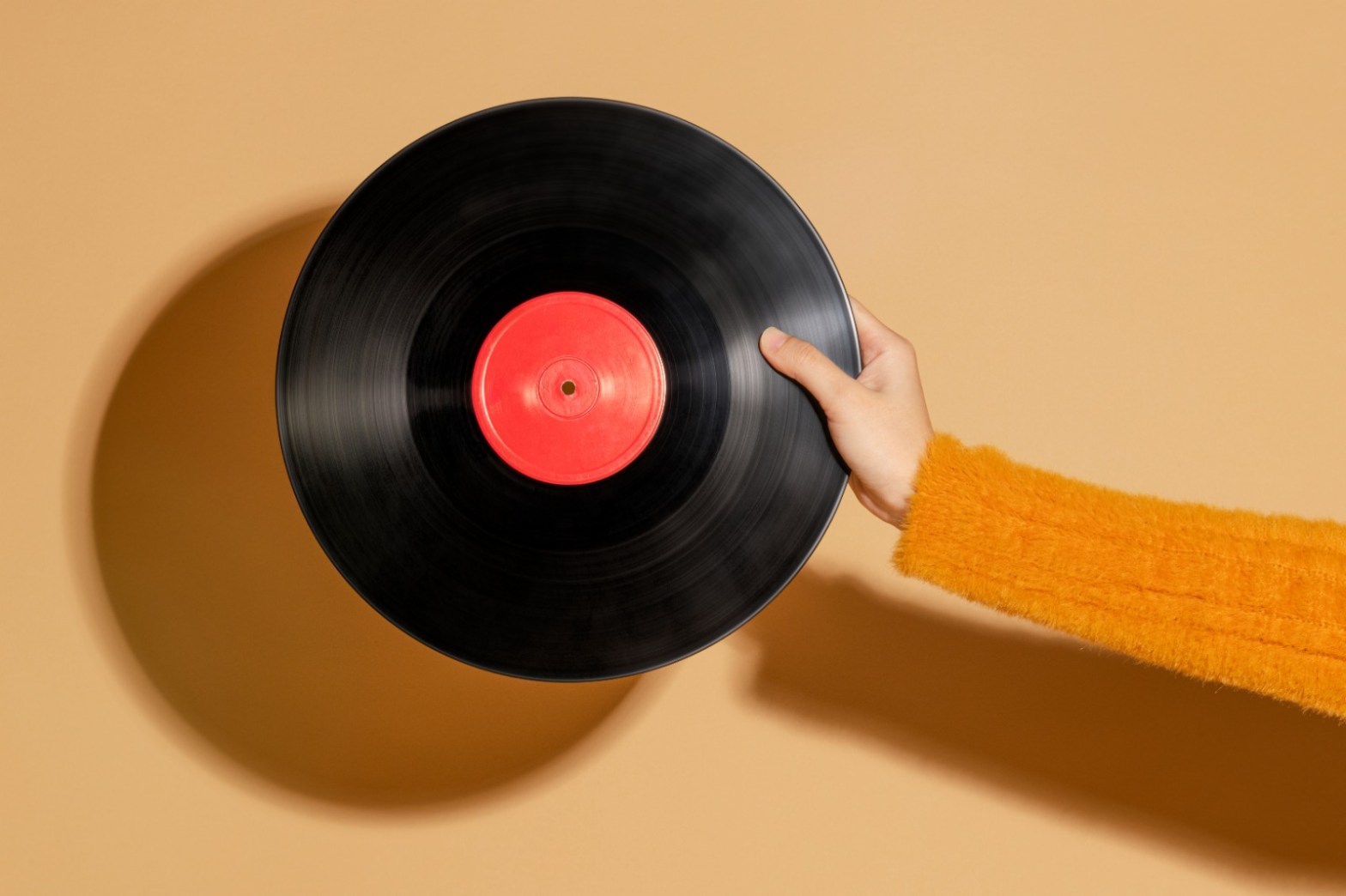
In recent years, vinyl records have made a surprising comeback. What was once considered an outdated format is now celebrated again by music lovers around the world. This “vinyl revival” makes record stores flourish again and contributes to a growing sense of nostalgia and authenticity in listening habits (Hendricks 2016, Calamar and Gallo 2009). Record collecting has become a cultural practice that brings people together, allowing them to connect with music in a tangible way.
However, behind this renewed passion lies a pressing environmental issue that receives little attention: the production and disposal of vinyl records are far from sustainable. Vinyl, or polyvinyl chloride (PVC) is a non-degradable plastic material that can be recycled, but often is not (ECVM, 2025). This issue directly goes against the core principles of the United Nations Sustainable Development Goal 12: Responsible Consumption and Production. This goal includes the need to reduce waste, reuse materials, and make consumption systems more circular (United Nations 2025). Yet the current structure of vinyl production and disposal disrupts this cycle rather than supporting it. Vinyl records that could have been recycled and repurposed end up burnt [DV1] in waste facilities. This process recovers some energy but contributes to pollution and the loss of valuable materials (Milieucentrale[JN2] [DV3] ). Besides that, a vinyl record wasted is a music album wasted.
To explore this tension, we conducted research into vinyl’s sustainability in the Dutch context. We attended public panels with experts from major music companies, visited local record shops in Nijmegen, and contacted large waste processors to collect different perspectives on the subject and to create an intervention in which we could try to attract more attention to the topic of vinyl recycling.
Intervention: the research
In our research on vinyl and its sustainability in the Dutch context, we came across some very interesting matters. To begin with, we attended a public panel during The Haarlem Vinyl Festival called “This Is How We Do It – The Path To More Sustainable Record Manufacturing”. Speakers on sustainable vinyl production were in attendance from different fields and countries of vinyl record manufacturing companies, such as Warner Music Group and Republic of Music. In this panel we learned that the return of vinyl has become a trend and is even called the vinyl era. Although consumers are willing to pay a lot for non-sustainable vinyl, they are less willing to pay a little more for sustainable options (Emanuel et al. 2025). In his book Wax Trash and Vinyl Treasures, Roy Shuker describes this as a “hunt”, there is “value to the process of gathering music more than the actual possession of it” (Shuker 2010, 110). In the panel talk however, we learned how music collecting can be done in a sustainable manner.
In this panel talk, we also learned that there is a lot of unsaid or insider information on the sustainability of vinyl production. That reminded us of Paula Serafini’s 2020 paper “A rapist in your path”, where she describes how performance art addresses pressing topics such as gender violence or femicide. Art activism, Serafini writes, becomes a practice that tries to achieve political transformation (2020, 293). This is exactly what we set out to do in our intervention; exposing the unsaid about vinyl sustainability.
We found that focussing on the role of the consumer is not the right angle. In talking to record store owners and vinyl record lovers, we learned that vinyl records simply do not have a sustainable affordance, or sustainable qualities to them. It is up to the artists to make the decision of releasing their music on bio-vinyl (Emanuel et al. 2025). A great example is the band Coldplay, who did an eco-release and printed records on recycled plastic: nine plastic PET- bottles make one record. These plastic bottles come from Boyan Slat’s ocean cleanup initiative (De Machine 2024). Vinyl record production is mostly not sustainable (Devine 2019), a difficult- to-accept fact which is a bit of a taboo among vinyl lovers. This concealed fact made it difficult for us to intervene, since we did not want to step on the toes of people who do not bear the brunt of the responsibility – consumers largely do not have the agency to address the issue. The vinyl revival renewed the practice of hunting for vinyl, loving and ‘consuming’ vinyl, but also printing and selling vinyl records (Hendricks 2016; Gallo and Calamar 2009; Bartmanski and Woodward 2020; Shuker 2010). We consider all of these practices a form of musicking (Hess 2019). Musicking, or participating in any music practice can (or should) be done sustainably, we believe. Re-selling dusted vinyl records is the most sustainable practice when it comes to records. Re-using and reselling them ensures their first cause, which is to be played and listened to. To know more about our local situation surrounding vinyl, we visited record stores in Nijmegen. Rob Berbee, owner of the vinyl record store Vinylarchief in Nijmegen told us that he regularly welcomes crates filled with records that were previously collecting dust in people’s homes. Record stores such as Waaghals, Discords, Kroese, and Vinylarchief also currently bring their unsellable records to the Dar, the local residual waste management company, simply because they are unaware of any facility that recycles vinyl. The store owners expressed that they would gladly participate in recycling initiatives, as they prefer not to throw their vinyl records away with the regular waste.
To make vinyl recycling more accessible for consumers and store owners, our original intervention plan consisted of a recycling bin with two compartments, one for the vinyl and one for the cover. This recycling bin would be placed in vinyl stores and used to collect the vinyl that could be distributed to vinyl recycling companies. We had our eyes on a collaboration with Vinylrecycling, a recycling company in Lelystad, the Netherlands. Unfortunately, we were disappointed to find out that the company had gone bankrupt in 2024. The company was turning PVC – the biggest ingredient in vinyl – into raw material to make new products and distributing this to other companies. In an article by Lelystad News we read that the ‘Inspectie van Leefomgeving en Transport’ (ILT) decided that this raw material was waste. ILT is an inspection service from the Rijksoverheid in the Netherlands that maintains law regulations. And since it is not allowed to export waste to other countries, it became impossible to continue the recycling of vinyl.
The formal CEO of Vinylrecycling, Ivo Besselsen, stated that the company had to bring 20.000 to 30.000 tons of raw material to a landfill where it will be burned (Kunststof Magazine). And their company was not the only one: there are six more recycling companies that have gone bankrupt since the regulation of ILT in 2022 (Thole 2024). The regulation comes from the Dutch government (Rijksoverheid) and is focused on single use plastics, including vinyl. The regulation that caused the bankruptcy of among others Vinylrecycling is the ‘Beleidsregel bestuursrechtelijke handhaving verontreinigd papier-, kunststof-, en metaalafval 2022’ (wetten.nl). Part of this regulation is the enforcement of the export of waste and what is considered waste. In this case the product that comes out of the recycling of vinyls (granulate grains) is considered waste instead of raw material. We can conclude that the regulation the ILT enforced on these companies works against a circular and sustainable environment. This regulation makes it impossible for good initiatives, such as Vinylrecycling, to endure.
This results in shops, like Rob’s Vinylarchief, as well as consumers, not being able to sustainably get rid of their records, since vinyl recycling companies are bankrupt. Reviving vinyl by re-use is sustainable and environmentally friendly, letting it be wasted is much less sustainable. This realization became the foundation of our intervention. Having vinyl records recycled is preventing them from becoming a pollutant, and grants them a new purpose as a recycled raw material. If the system prevents recycling, awareness and policy change may offer the only route forward. Our project seeks to highlight this issue, connect the conversation to SDG 12, and advocate for a more circular and sustainable future for vinyl.
Intervention: the execution
We were left with no other choice than to dive even deeper into the discontinued recycling processes of vinyls. We contacted lots of other waste companies, but quickly discovered that absolutely none of them process vinyl materials in any other way than burning them with the rest of the waste, which is seen as a recovery of energy. The only way we could help the vinyl stores recycle the records they throw away, is if there are companies offering a recycling process to connect with. This meant that we decided to focus our intervention on trying to restore or change the regulation that ended these companies and ask for attention on this matter.
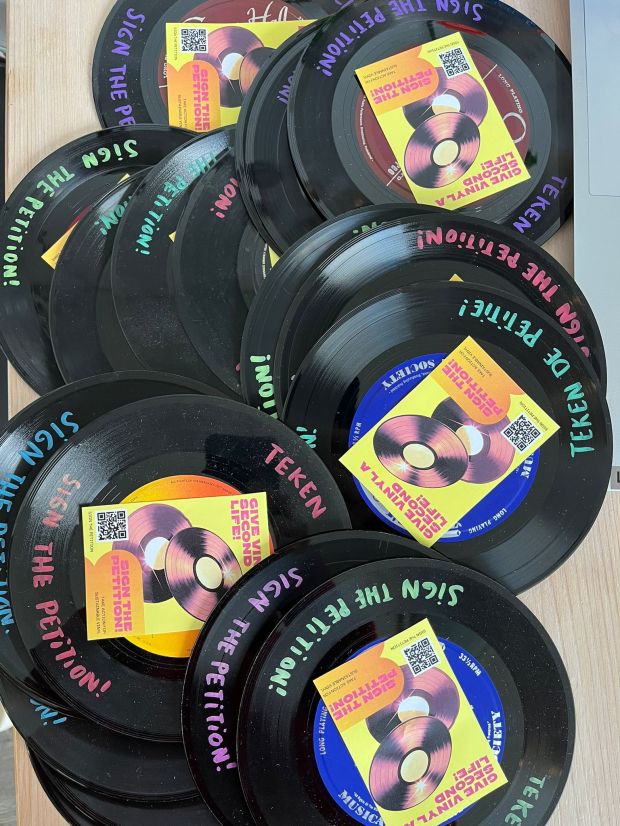
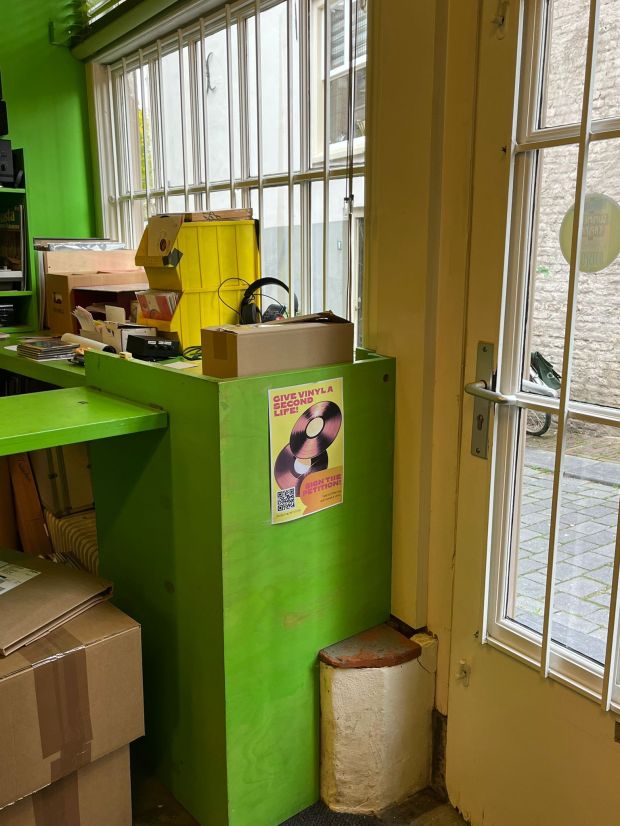
This is how our intervention turned into a petition, in which we ask for a change in the regulation, so the recycled PVC materials are not seen as waste but as new raw materials, and to make the recycling of vinyl records possible again. We set up a petition online and shared it with as many people as we could. We also created posters and flyers with a QR code to the petition, and asked the vinyl stores in Nijmegen that we visited previously to put them up. Kroese was, unfortunately, not interested in doing so, but Waaghals and Vinylarchief were very enthusiastic and hung up our posters in their stores. We hope that the people visiting these stores will notice and look up our petition, and this way we are able to include the vinyl consumers in gaining knowledge on the process of vinyl record production and to think about their sustainability. Hopefully we will keep receiving more signatures, but raising awareness on the issue is our main goal.
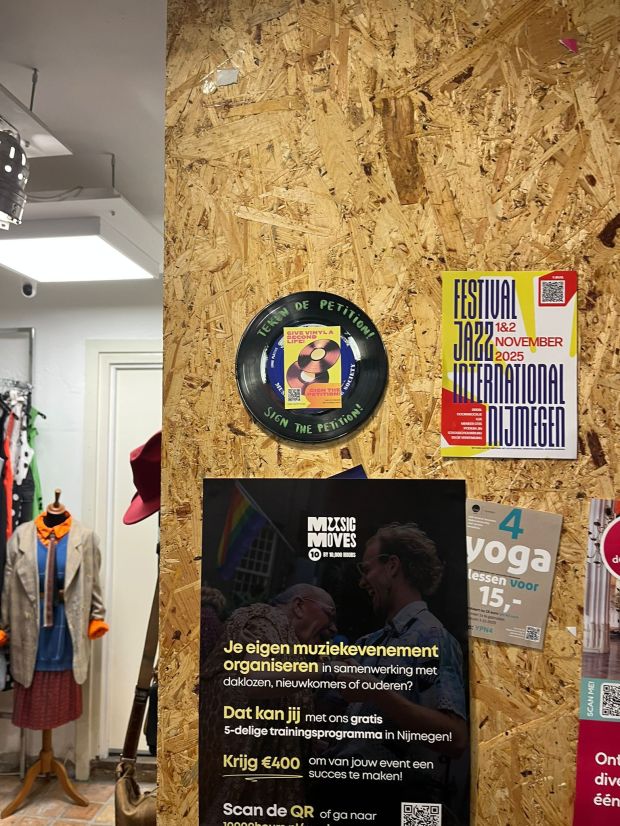
Lastly, we received a box of old records from our teacher Melanie Schiller that she was going to throw away. We put our flyers on the records and walked around the Nijmegen city center to hand them out to people on the streets and to store owners. We chose the Lange Hezelstraat as our main area, because we wanted to raise the issue with a broad and diverse audience and there are lots of vintage and sustainable stores there as well. A few of these stores were interested in placing our records with flyers in their store to help the intervention, which was wonderful. This made it possible to talk to people and to explain why we were doing this. Even though it was difficult to engage in conversation, as people quickly assume you want to sell them something, handing people a record was an effective way to make them see our intentions were about something else. Everyone we talked to was surprised that vinyl is not being recycled at all, so we noticed that this is an unknown topic among the general public. Most people were definitely interested in our case and happy to take a record from us, so it did feel like a successful attempt to instill some more knowledge and attention on the subject of sustainable vinyl and vinyl recycling.
Conclusion
Unless we receive a lot of signatures and we can send the matter to the Dutch government, our intervention will be a small occurrence. We are proud of it, nonetheless. The subject of sustainability of vinyl records and vinyl recycling turned out to be a much more complicated matter than we thought. Therefore, to really gain all the knowledge necessary on this topic, to make an exceptionally strong case for change and to set up a much larger intervention, we would need a lot more time to execute a deep dive into the matter. The best possible scenario would be that the regulation is changed and that the vinyl recycling companies are able to continue their recycling processes. We have heard from Vinylrecycling that the court case is still in progress, which is unfortunately why they themselves could not share much information with us. You never know what will happen, and we are rooting for the recycling companies. Once the recycling of vinyl records is possible again, we would be able to execute our plans of connecting the vinyl stores to the recycling companies and setting up a collaboration. Hopefully we can help the recycling companies in a way with our intervention.
So far, we have received 40 signatures on our petition, which we are proud of. We feel that we have raised awareness on this issue in some way. Of course, we hope to keep receiving signatures. The petition can be found here: https://petities.nl/petitions/maak-vinylrecycling-weer-mogelijk?locale=nl.
Bibliography
Bartmanski, Dominik, and Ian Woodward. 2020. Vinyl: The Analogue Record in the Digital Age. Bloomsbury Academic.
De Machine, “De eco-release van Coldplay,” 2024, in 3voor12.
Devine, Kyle. 2019. Decomposed: The Political Ecology of Music. The MIT Press.
Devine, Kyle. 2020. “Nightmares on wax: the environmental impact of the vinyl revival.” The Guardian, 2020. https://www.theguardian.com/music/2020/jan/28/vinyl-record-revival-environmental-impact-music-industry-streaming.
Emanuel, Karen, Peter Runge, Vladimir Visek, Miriam Lessar, and James Stafford. 2025. Public Panel: The Path to More Sustainable Record Manufacturing – This Is How We Do It. Haarlem Vinyl Festival.
Gallo, Phil, and Gary Calamar. 2009. Record Store Days – From Vinyl to Digital and Back Again. Edited by Scott Calamar. Sterling Publishing Co., Inc.
Hendricks, Jerome M. 2016. “Curating Value in Changing Markets: Independent Record Stores and the Vinyl Record Reviva.” Sociological Perspectives 59, no. 2: 479-497.
Hess, Judith (2019). Singing our own song: Navigating identity politics through activism in music. Research Studies in Music Education, 41(1), 61-8.
Kunststof Magazine. 19 november 2024. “Vinylrecycling failliet: geen uitstel tot uitspraak RvS.”
LelystadNieuws.nl. 7 dec 2024. “Innovatieve PVC recycler met grote ambities failliet.”
Shuker, Roy. 2010. Wax Trash and Vinyl Treasures: Record Collecting as a Social Practice. Ashgate Publishing Limited.
Serafini, Paula (2020). ‘A rapist in your path’: Transnational feminist protest and why (and how) performance matters. European Journal of Cultural Studies, 23(2), 290-295.
Thole, Herwin. 22 nov 2024. “Weer een plastic recyclingbedrijf failliet – Northvolt vraagt surseance aan in VS.” Mtsprout.nl, geraadpleegd op 16 okt 2025.
wetten.nl. Regeling – Beleidsregel bestuursrechtelijke handhaving verontreinigd papier-, kunststof-, en metaalafval 2022 – BWBR0046496. 1 Apr. 2022, wetten.overheid.nl/BWBR0046496/2022-04-01#Artikel3. Geraadpleegd 28 oktober 2025.

 Culture Weekly