By Constanza Lobos Campusano
This essay was written as part of the course Struggles of Identity in the Hispanic World, a second-year BA course at Radboud University.
To articulate my life, I found the right words in the works of Gloria Anzaldúa and Silvia Rivera Cusicanqui. I narrate mi experiencia personal following Anzaldúa’s discursive mode “auto-historia” that comes from merging and blurring personal narratives with theoretical discourse by “inventing and making knowledge, meaning, and identity through self-inscriptions” (“Light in the Dark/Luz En Lo Oscuro” 6). Therefore, I will switch codes from English and Spanish with the aim of uncovering what it means to write myself into existence como un yo indefinido y contradictorio that does (not) belong to one space.
I was born in Viña del Mar, Chile, and my arrival to the Netherlands was por pura suerte. I came here through a partnership visa that involved passing different forms of cultural assimilation such as integration language exams and complying with Dutch cultural norms and values. My Chilean was kept in a shoebox inside my mind since my everyday life involved traducirme a mí misma in English and bits of Dutch. Furthermore, after being asked hundreds of times where I was from, I realized that I was trying to make people understand my background as a way of seeking validation for my existence in this new context. From then, I decided to let people guess and make them face their own preconceptions when it comes to placing someone ethnically ambiguous as myself. Indeed, phenotypically, I have been able to pass as European and avoid being racialized against my own will.
As I mentioned earlier, this creative attempt follows the theoretical framework of decolonial thought because it aligns with my background as a queer immigrant from Latin America living in Europe. I take decoloniality as a lens that speaks about the struggle and survival of colonized and racialized subjects against Western rationality by decentring its hegemonic ways of being and of producing knowledge (Mignolo & Walsh 17). Moreover, being in a constant state of transition relates to the crossings that people from the Global South must go through when moving to a new setting in the Global North. Thus, this displacement is porous; it involves a shift and transformation of fronteras emocionales y físicas beyond countries (Alvarez 2).
Ser Latinx and finding myself in this context, both personal and cultural, produced a constant flux of crisis that gave way to a new (unfinished) identity. This ongoing process is what writer Gloria Anzaldúa in her book Borderlands / La Frontera: The New Mestiza discusses, she conceptualizes the Borderlands as a space where cultures and languages clash and mix with each other, thus creating something new, emerging from the crosspollination (Anzaldúa 9). These borderlands can be psychological, and physically present because they permeate everything around people who live in los márgenes de places and/or themselves. Moreover, it embodies the movement and shifts from desarmar one’s identity to fit in with a new landscape hoping to survive the strangeness until it becomes—not quite—like home (Anzaldúa 8). Living in my own borderlands pushed me to look for ways to explore quién soy by navigating and negotiating my transformation under these new circumstances.
In the search for a new language and way of being, I found in Silvia Rivera Cusicanqui’s Ch’ixinakax utxiwa: A Reflection on the Practices and Discourses of Decolonization the notion of ch’ixi. She describes it as a colour that emerges from juxtaposition, such as combining two opposing colours like black and white, yet the resulting colour is never fully the mixture of the two, in other words, it reflects the “idea of something that is and is not at the same time” (Cusicanqui 105). Framing myself as ch’ixi involves the recognition of a third space that Cusicanqui describes by haciendo espacio for the identities and landscapes that seem to antagonize and complement each other. Therefore, it gives birth to a new culture influenced by the confluir of my values and worldviews (Anzaldúa 71).
Going back to my arrival to the Netherlands, during my first month here I started a ten-week course of throwing clay on the potter’s wheel. Once a week, I found myself surrounded by the conversations of Dutch women from different ages. The teacher couldn’t speak English extensively, so I focused as much as I could on observing the movements of the hands of my instructor while I moved mine in sync, this is how I learned to create pieces en movimiento. My relationship with pottery became un refugio from the constant need to traducirme to be understood by others. Furthermore, it also required a different approach to the practice of making art since it displaced my sight as the main tool by forcing myself to pay attention to mi sentido del tacto. Hence, the act of immigrating and throwing clay on the wheel became permanently entrelazadas en mi vida.
In Lina Bravo Mora’s Desentierros/Unearthings: A Dirty and Migratory Text on Clay, Soil, Land, Sculpture, and Poetry as Territorial, Somatic, and Healing Practices, she explores working with clay as an act that can be a transformative practice, allowing us to deeply connect to ourselves and the shifting landscapes that surrounds us. I decided to create a piece while challenging myself to close my eyes and focus on mi capacidad para sentir y escuchar to the clay. As a student of Arts and Culture, I have been taught that the way we prize the sense of sight, as the main way to interact with art, is part of a legacy that stems from modern/colonial roots. Likewise, echoing the words of Rolando Vázques Melken on decolonial aesthesis; it is decolonial to attempt to overcome the aesthetics dominated by the gaze that has become the equivalent of power over representation (Wevers 4-5).
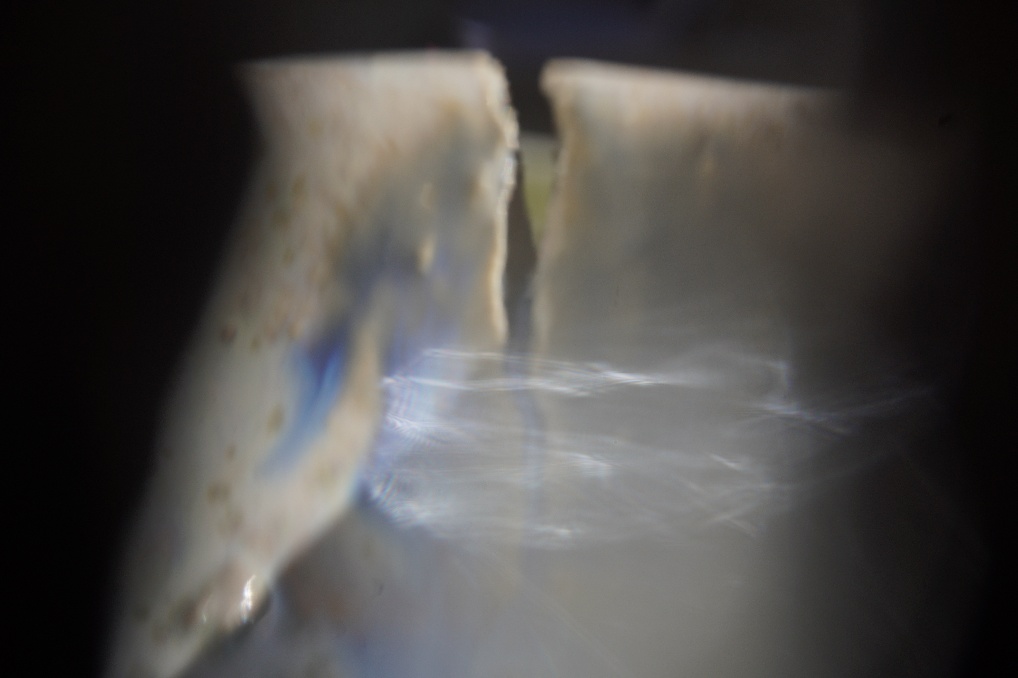
Creating a clay piece starts with a different perception of time, it requires a slowness and patience that does not align with the way I carry my life outside the pottery workshop. The moment I sit down in front of the wheel I can feel that my body knows naturally how to move without waiting for my thoughts to catch up. There is a magnetism towards shutting the outside world from the moment I held a ball of clay. Moreover, my first reaction is to move my hands, as I mould it, by carefully taking out bubbles of air that might be inside, for it not to explode in the kiln. My relationship with clay is through sensation and not by theory or written explanation, it demands a different approach based on the interface of touch (Bravo Mora 36). For me, pottery is a decolonial practice that creates sentido through praxis before any theoretical framework, it’s a doing-thinking act that goes against Western modern thoughts (Mignolo & Walsh 19).
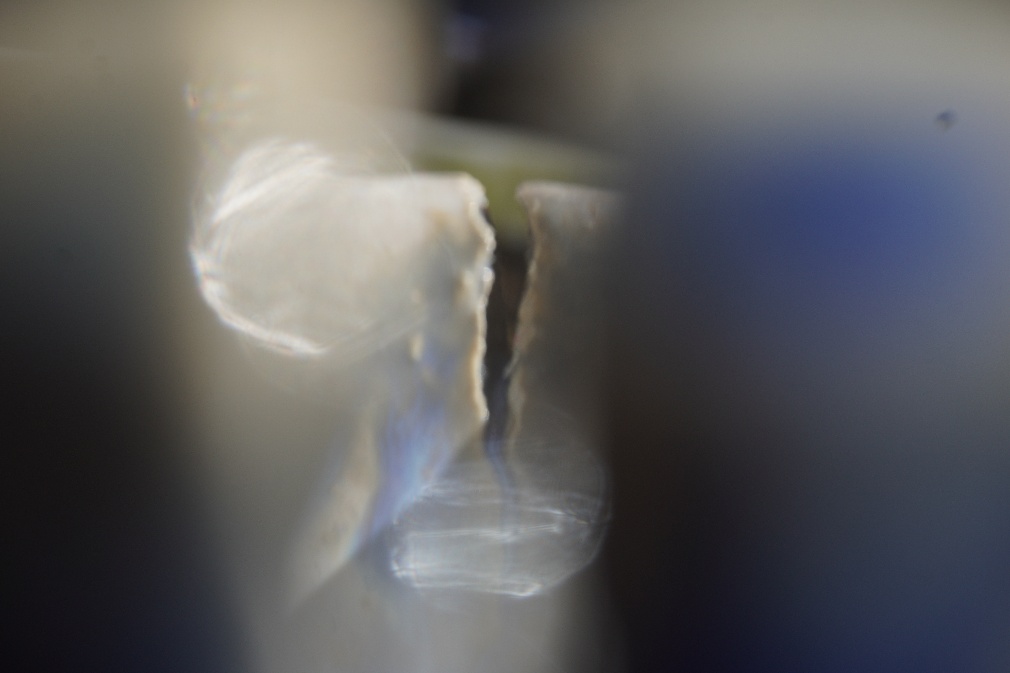
After a few minutes, I have made a small ball of clay that I need to throw against the round wood board on top of the wheel platform. Once the clay is set, I take a small sponge that has been soaking inside a bucket with warm water. The wheel start turning as my hands move back and forth between water and clay, feeling my skin be micro-sanded by it as I experience the plasticity and possibilities of the material (Bravo Mora 36). It’s during these moments that I’m fully captivated by the act of creating as I find myself unravelling in the process of it. Having my eyes closed allows me to deeply engage with the materiality of the clay as the abundance or lack of water influences what will become of it. If I can imagine myself as the piece that is forming and unforming, neither Chilean nor an immigrant in the Netherlands, maybe I can embody ch’ixi.
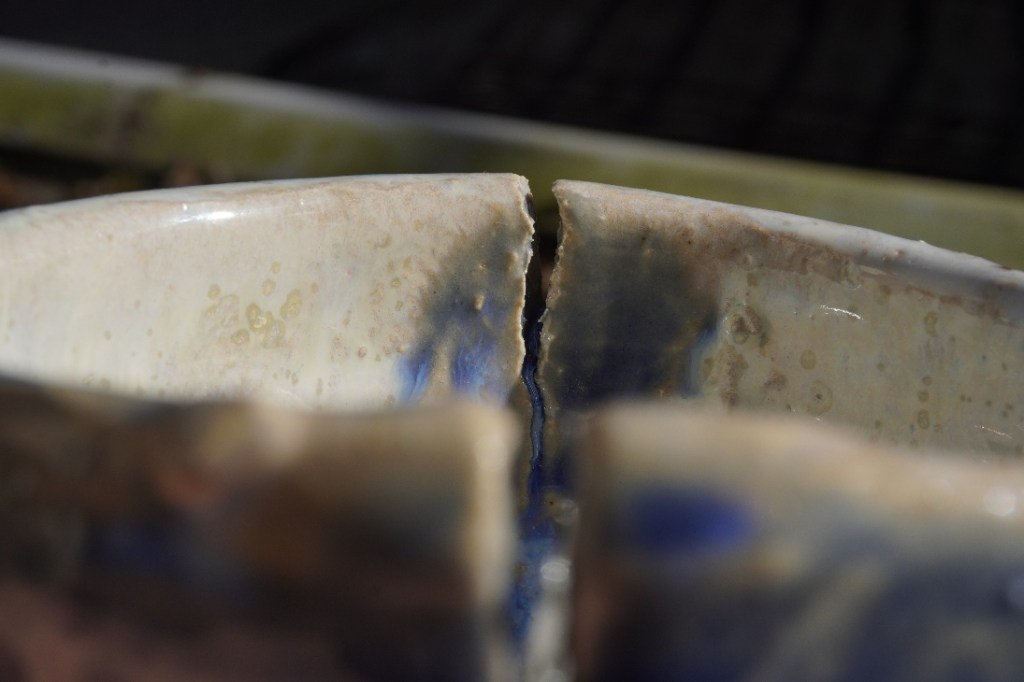
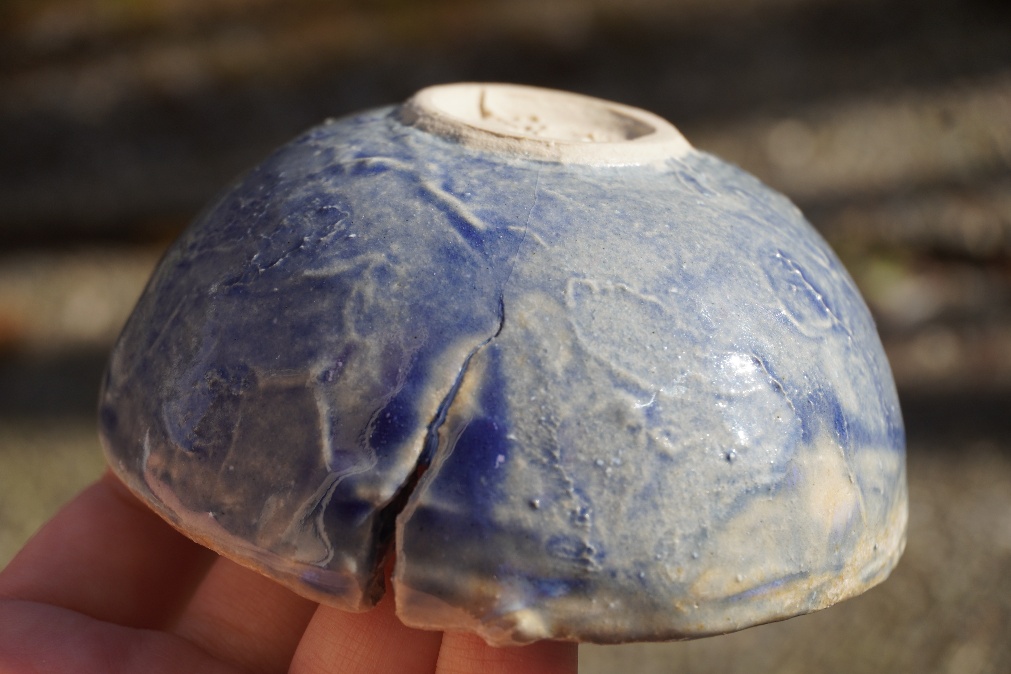
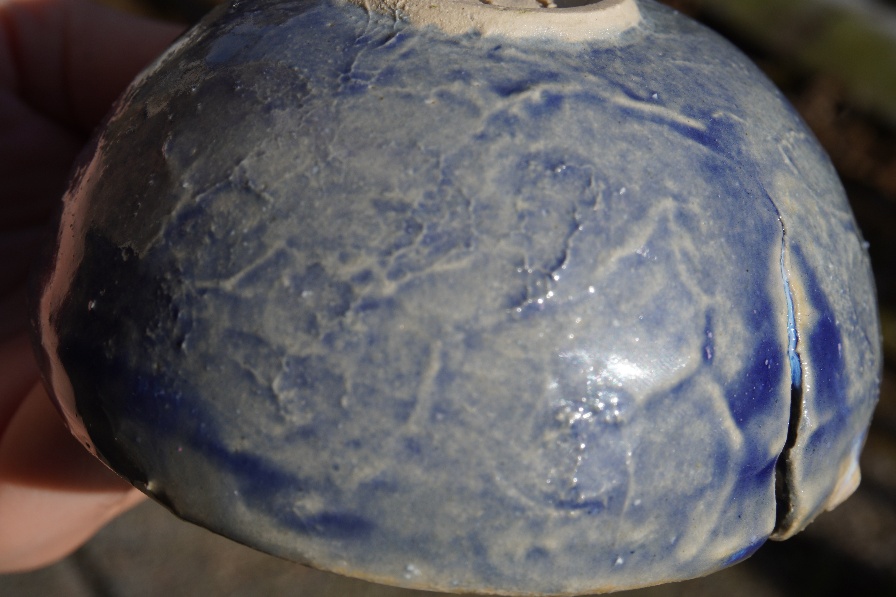
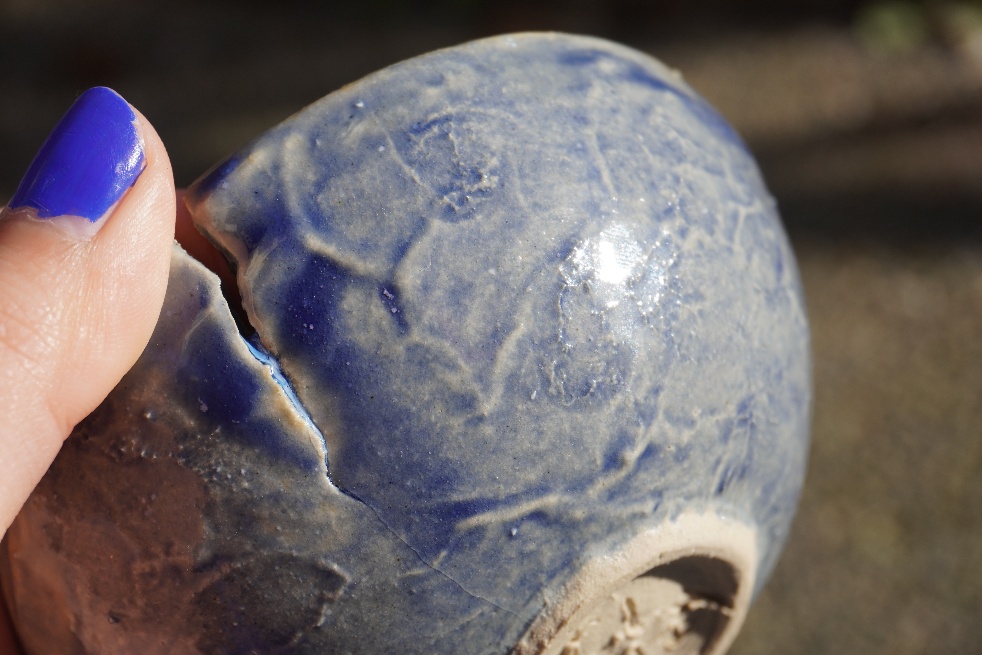
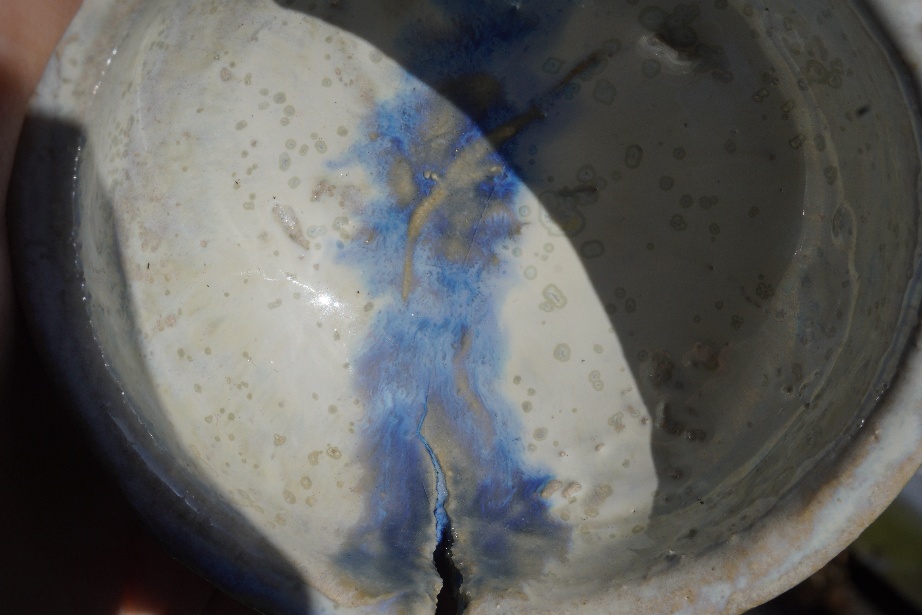
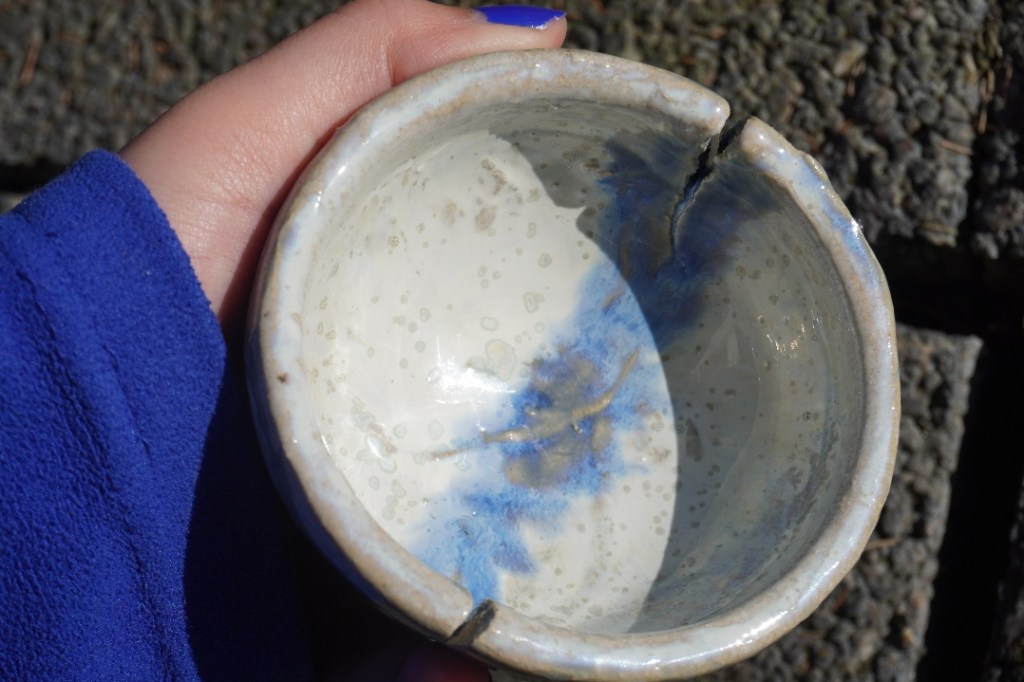
I stop the wheel as my eyes open and see what I have been imagining in my mind. I pass a wire under it to separate it from the wood base. After that, I take it with my hands to look at it and by accident I make a crack on one side by pressing too hard with my fingers. My first instinct is to go to the bucket of wet clay to soak my hands and try to fix it. But as I watch myself trying to restore my error, I realize my disregard for the whole purpose of this experiment. Thus, abracé la grieta, and a new one appeares on its other side. This new accident help me return to a perspective that seeks to make visible a stance that displaces the Western positionality and rationality as “the only framework and possibility of existence, analysis, and thought” (Mignolo & Walsh 28). A través de las grietas, I can appreciate the decolonizing thinking that, according to Cusicanqui, allows us to affirm ch’ixi by creating new ways of knowing and being (107).
As I hold the clay piece, I let it rest for some time, until dry enough to be trimmed. Trimming involves shaving or removing layers of material by pressuring different tools to the piece as it keeps moving on the wheel. Before coming to the Netherlands, I had seen friends moving abroad and looking for ways to reconnect with their culture. In my case, I never felt Chilenx or Latin American while living in my country, but it changed brutally when I had to pack up my life in two suitcases and became unable to escape the immigrant feeling de no pertenecer nunca del todo. Migrating means to become a crossroads, as Anzaldúa says, and the borderlands permeate all the aspects of your life; it is also the place for contradiction, pain, mourning, and grief of what has been left behind. Trimming and letting go of the layers of ourselves causes erosion on multiple levels. Thus, after “movement and traveling, those migratory sediments settle to form new landscapes, deltas, clays” (Bravo Mora 34).
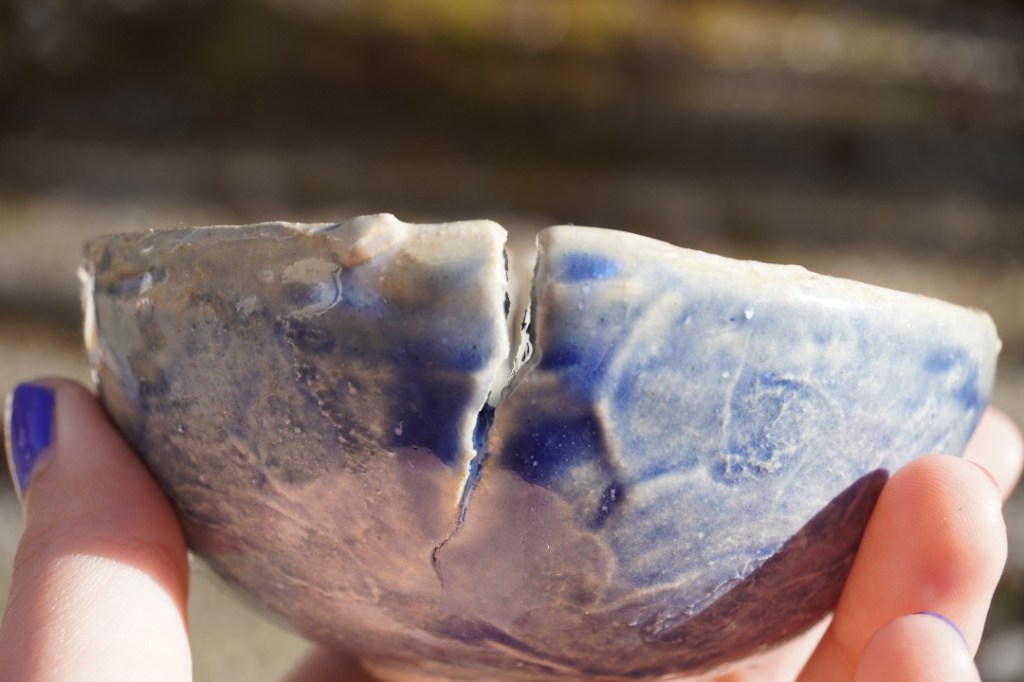
The final stages of creating this piece involve placing it inside the kiln to be burned and using glazes to paint it. When choosing the colours for this piece, I selected a pearl white which is the colour of the first landscape that I see whenever I take a plane to Chile or whenever someone asks me about how my country looks. I’m referring to la Cordillera de Los Andes, the so-called columna vertebral de Chile. It unites the north and the south in its more than 8500 kilometres in length. Its snowy peaks and fractured geography, in my opinion, reflects what it means to be Chilean and find oneself at the end of the world. The other colour that I chose was blue since my imagery of the country involves the Pacific Ocean and its myriads of deep blue tones. I spent most of my life going to the sea because I was born in Viña del Mar, which translates to Vineyard of the Sea. Since I moved to the Netherlands, I have looked at the sea, lakes, and rivers of this country searching for las mismas tonalidades de azul, as well as its smells.
The way I approached this creative project could not have been possible without Anzaldúa’s ‘auto-historia’ as seen in her book Light in the Dark/Luz En Lo Oscuro: Rewriting Identity, Spirituality, Reality. The Chicana, queer, feminist scholar describes her storytelling methodology which illustrates my efforts in following her example:
Soy la que escribe y se escribe/ I am the one who writes and who is being written. Últimamente es el escribir que me escribe / It is the writing that “writes” me. I “read” and “speak” myself into being. Writing is the site where I critique reality, identity, language, and dominant culture’s representation and ideological control (3)
By finding a safe space to articulate my life, I uncovered mi identidad fracturada y sin raíces by creating art through clay. At the same time, dibujé paralelos between academic writing and storytelling by following the works of Gloria Anzaldúa and Silvia Rivera Cusicanqui. The lived experience of existing in the Borderlands while embodying ch’ixi has showed me how the process of immigrating requires a never-ending (de)construction de mi identidad. These words hope to show how praxis and theoretical knowledge can join towards a new decolonial way of doing-thinking.
Works Cited
Alvarez, Sonia E., et al., editors. Translocalities/Translocalidades: Feminist Politics of Translation in the Latin/a Américas. Duke University Press, 2014. JSTOR, doi.org/10.2307/j.ctv120qs7g.
Anzaldúa, Gloria E. Light in the Dark/Luz En Lo Oscuro: Rewriting Identity, Spirituality, Reality. Edited by Analouise Keating, Duke University Press, 2015. JSTOR, doi.org/10.2307/j.ctv1220hmq.
Anzaldúa, Gloria. Borderlands / La Frontera: The New Mestiza. 5th ed., Aunt Lute Books, 2022.
Bravo Mora, Lina. “Desentierros/Unearthings: A Dirty and Migratory Text on Clay, Soil, Land, Sculpture, and Poetry as Territorial, Somatic, and Healing Practices.” Simulacrum Magazine, edited by Niels Noot, vol. 32, no. 4, 2024, pp. 29–41.
Cusicanqui, Silvia Rivera. “Ch’ixinakax utxiwa: A Reflection on the Practices and Discourses of Decolonization”. Translated by Brenda Baletti, Duke University Press. The South Atlantic Quarterly, 2012, pp. 95–109, doi.org/10.1215/00382876-1472612.
Mignolo, Walter, and Catherine E. Walsh. On Decoloniality: Concepts, Analytics, Praxis. Duke University Press, 2018.
Wevers, Rosa. “Decolonial Aesthesis and the Museum: An Interview with Rolando Vázquez Melken.” Stedelijk Studies, 11 Oct. 2023, stedelijkstudies.com/journal/decolonial-aesthesis-and-the-museum/.

 Culture Weekly