
By Isaac Anim Ntiri
ABSTRACT
This research investigates the motivations and barriers to youth participation in the creative industries in Ghana. Using Expectancy-Value Theory, the research concludes that intrinsic motivation such as passion, and belief in abilities are the main drivers of youth participation, while financial constraints, limited mentorship, societal stigma, and lack of support impede it. The study proposes the need for targeted interventions, including financial assistance, mentorship programs, and policy reforms, to create a thriving creative ecosystem for young creatives in Ghana.
Keywords: creative industries, Ghana, youth participation, motivations, barriers, Expectancy-Value Theory
1.0. INTRODUCTION
The Department for Digital, Culture, Media & Sport, DCMS (2001) define creative industries are “those industries which have their origin in individual creativity, skill, and talent and which have a potential for wealth and job creation through the generation and exploitation of intellectual property.” These industries may include, but not limited to music, literature, movie, publications, arts, and crafts, etc. Ghana, like many countries in the global south have witnessed a boom in participation in the creative industries. This surge, has particularly been significant in disciplines such as music, theatre and mainstream acting, User-Generated Content creation (UGC), contemporary arts, craftsmanship, literature, and other cultural expressions which are positively impacting the economy of Ghana. Hennessy and Amabile (2010) contend that creativity is important for civilization development. While this resurgence in participation is a welcome development for the country, the extent of youth participation in Ghana’s growing creative industry continuous to remain a subject of inquiry. The rationale behind this research to interrogate the motivations and the potential barriers that impact the participation of Ghanaian youth in the creative industries in Ghana.
The creative industries in Ghana has been a breeding ground for personal fulfilment and expression, a means of economic sustainability, cultural expression, skills development, and contributing to social cohesion and harmonious living in the country. Additionally, Agoralumiere (2009) makes a claim that the creative industries have changed into one of the most dynamic sectors of the global economy. In the face of globalization, and digitalization, the creative industries continuous to be a source of employment for different groups of people.
In the face of these potentials, issues such as lack of financial support, little or non-existent mentorship schemes, logistics, societal expectations, lack of recognition for crafts, and professionalization, cultural norms and stereotypes continue to be a barrier to youth participation in creative industries in Ghana, discouraging them from committing a full-time profession in this sector.
In order to ascertain the extent of youth participation in Ghana, with focus on the barriers and motivations in the creative industries, this paper will draw on existing literature and data gathered from a survey through purposive sampling to buttress arguments and claims in this paper.
1.1. AIM OF THE RESEARCH
This research paper seeks to contribute to the deeper understanding of the dynamic nature of the creative industries in the broader sense, by focusing on the motivations and the unique systemic barriers the Ghanaian youth encounter in their quest of professionalizing their creativity.
1.2. RESEARCH QUESTIONS
- What are the intrinsic and extrinsic motivations that influence the participation of Ghanaian youth in the creative industries?
- What are the barriers to youth participation in the creative industries in Ghana and how do they interact with the motivations?
2.0. LITERATURE REVIEW
A growing body of literature have provided a headway into understanding the challenges, and motivations in the creative industries. For an up-to-date insights into the motivations and challenges faced by the youth in the creative industries, this research relied on recent publications to identify knowledge already existing in this field of study in order to establish the gaps for future research. The literature review has been written in thematic clusters such as: Motivations for participation, and barriers in the creative industries.
2.1. Motivations
Cnossen et al. (2019) in their article discusses the main motivations of people who are committing or have committed careers in the creative and cultural industries (CCI) by using the self-determination theory which was developed by Ryan and Deci. The theory emphasizes the role of intrinsic motivation in psychological fulfilment. In their research, issues such as self-perceived competence (confidence in their abilities) were highlighted. They also find intrinsic factors more central than extrinsic motivation such as monetary gains. The study also brings to the fore, the importance of the psychological needs that serve as impetus for individuals to forge on in a competitive landscape of the creative and cultural industries.
In addition, An (2019) also strengthens this argument by interrogating the role of intrinsic motivation (IM) among creative labour (CL) in South Korea. Her study particularly focused on media production in South Korea. The study highlighted the role of intrinsic motivation in passion in navigating a challenging work environment with unfavourable working conditions. An raises an important question: Can initial passion wane as creative work becomes routine? Most importantly, the study contributes to understand how intrinsic motivation-passion, serves as a driver for creative labourers and the potential influence of intrinsic motivation on their quality of life. This further calls for a deeper research into the motivations of creatives in other contexts.
Building on these insights Reid et al. (2016) introduces the concept of “calling” as a source of motivation for creatives. According to the respondents in this research, they consider their
careers as creative as a form of calling-naturally innate which is equally an intrinsic form of motivation. Reid et al. (2016) clustered this form of motivation under what they termed “elements of worth” These elements of worth highlight the importance of both intrinsic and extrinsic factors in situating the motivation of creatives, and their importance to society and culture.
2.2. Barriers
Studies done by Campbell (2018), Kilu et al. (2024), and Olanrewaju (2024) reveal a worrying state of creatives in different geographical contexts. With focus on Canada, Ghana, and Nigeria, and diverse creative disciplines such as crafts, and performing arts, they establish a network of related barriers that can potentially stifle the growth of young creatives in the industry.
In documenting the challenges young people face in the creative industries, Campbell (2018) adds a new dimension to the discourse, revealing the multi-faceted nature of the challenges that hinder the potential of young creatives. The author arrived at this through interviews, and online surveys. Apart from mundane challenges in terms of finances and lack of social support, the research reveals the issue of exploitation, diversity and equality as some challenges young people face in the creative industries. She argued that young people from marginalized communities such as sexual and gender minorities, likewise People of Colour (POCs) face representational challenges in the creative industries. The study also highlights gender disparity and the precarity of the creative landscape.
Kilu et al. (2024), in their work “Spirituality in the Creative Arts: How crafts entrepreneurs cope with precarity”, the authors discuss the challenges faced by creative workers, particularly those in the crafts discipline in Ghana. Through their research, it becomes evident that issues such as precarity of the industry, which is as a result of unstable financial conditions, gender disparity due to spiritual beliefs in Ghana, unstable market, informal working sector, and lack of recognition continue to be a barrier for entrepreneurs in the crafts industry in Ghana. Highlighting the interplay of the economy, spirituality, and social expectations that characterize creative work in Ghana)
In addition, Olanrewaju (2024) discusses the challenges of the creative industries in Nigeria, with focus on the performing arts through a desktop research. In her research, the author makes a claim that, creatives in the performing arts industry in Nigeria face several challenges such as piracy, infrastructural deficiencies, inadequate funding, and limited mentorship opportunities. Due to similar social, economic, and cultural contexts, these challenges are also experienced by creatives in Ghana, as established by Kilu et al. (2024). These shared hurdles gives insights into the barriers to youth participation in the creative industries in Ghana from an empirical perspective.
Much of the discussed articles above focus on western contexts in the creative industries. Apart from this, there is a focus on the creative industry as a whole with little or no prioritization of youth motivation and participation. There may be specific challenges the youth are encountering. These include lack of mentorship, societal stereotypes, lack of financial support, just to mention a few. There is the need for a study that focuses on the unique social, economic, and political challenges the youth face in their participation in the creative industries in Ghana
3.0.THEORETICAL FRAMEWORK
Expectancy Value Theory
Expectancy-Value Theory (EVT) developed Jacquelyn Eccles, cited in Eccles and Wigfield (2000), provides a practical framework for understanding the motivation and barriers to youth participation in the creative industries in Ghana. The theory asserts that the motivation of an individual to participate in a given task is influenced by a belief to be successful in that endeavour (expectancy) and the importance of the endeavour (value). This theory has the potential to provide practical insights into the pull and the push factors of youth participation in the creative industries in Ghana
3.1.Theory Application
In this paper, expectancy has been situated in the belief young people have in whether or not they have the talent to have a successful career in the industry. According to the theory, people with low self-esteem in their skills and talent are less likely to pursue a career in that regard. Conversely, those with high self-efficacy are more likely to be motivated to engage in creative activities. Value refers to the perceived importance of the creative industries in Ghana. Do the youth consider it a fulfilling industry? Worthy of commitment? Will it provide the necessary satisfaction, financial stability, and the recognition they so desire? Just like ‘expectancy’ if young people perceive the creative industries as valuable, it would translate into heightened motivations to participate in the industry
EVT will provide the necessary framework to contextualize motivations and barriers to youth participation in the creative industries in Ghana. For example, low expectancy could be as a result of limited training opportunities as that could potentially be a dent on the confidence of such people to succeed. In addition, if the industry is not considered as a respectable career option in a traditional Ghanaian society, the perceived value for the industry will be low. Furthermore, socio-cultural factors such as stereotypes, poverty, and lack of opportunities can adversely expectancy and value in the creative industries. By centering this theory on youth participation in the creative industries in Ghana, we gain a comprehensive insights into the motivations and barriers among the youth. This will be very imperative in developing targeted policies to promote greater youth participation in the creative sector.
4.0. METHODOLOGY
4.1. Sampling Strategy
In order to ascertain that the participants in this study have the relevant knowledge and insights into the creative industries in Ghana, the research employed the use of purposive sampling in recruiting the participants. Purposive sampling according to Oliver (2015), is a type of non-probabilistic sampling in which decisions concerning the individuals to be included in the sample are taken by the researcher, based upon a variety of criteria which may include knowledge of the research issue, and willingness to participate. To be specific, the researcher recruited twenty (20) young people in Ghana who are within the ages of 18-35 years and have some experience of working in the creative industries in disciplines such as music, theatre, literature, arts, and crafts. This sampling strategy made it possible to gather insights from Ghanaian youth who have informed opinions of the work environment in the creative landscape in Ghana through their individual experiences.
4.2. Mixed Methods: Quantitative and Qualitative Survey
For a nuanced understanding into the motivations and barriers faced by Ghanaian youth in their participation in the creative sector, the research also employed a concurrent mixed method survey through administering a survey to the participants of the research. Tashakkori and Creswell (2007; p. 4) defines mixed method as ‘research in which the investigator collects and analyses data, integrates the findings and draws inferences using both qualitative and quantitative approaches or methods in a single study’ The survey had quantitative questions in the form of multiple choice questions, complimented by qualitative questions through open-ended questions.
4.3. Limitations to Research Design
A significant challenge to purposive sampling technique is the researcher bias which manifests indirectly in the process of recruiting the participants through their subjective judgements. This limits the generalizability of the study. Going forward, the sample size poses a restriction on the ability to draw definitive conclusions on the youthful population of Ghana. While influenced by experiences, there could be discrepancies in the data reported by participants and the reality on grounds. Finally, mixed-method design can be challenging for researchers with limited time and resources as established by Johnson and Onwuegbuzie (2004; cited in Doyle et al. 2009; pp. 183)
5.0 FINDINGS
The survey utilized qualitative and quantitative questions to gather the relevant information on participants’ demographics, motivations, perceived challenges, experiences, societal expectations, and belief in their abilities. The results, providing valuable insights into the motivations and barriers Ghanaian youth face in their participation in the creative industries are presented as follows:
When asked about the discipline in the creative industries they are likely to succeed, eleven participants, representing a majority (55%) chose music, this was followed by the fashion industry, preferred by three participants (15%), while User-Generated Content Creation (UGC), literature and publication had each 10% each. Surprisingly, none of the participants expressed optimism about the likelihood to succeed in the movie industry in Ghana. Music appears to be very popular among the participants and an inspirational field for most young creatives. This reflects the pool of talents, the market demand, and perceived opportunities in the music industry in Ghana.
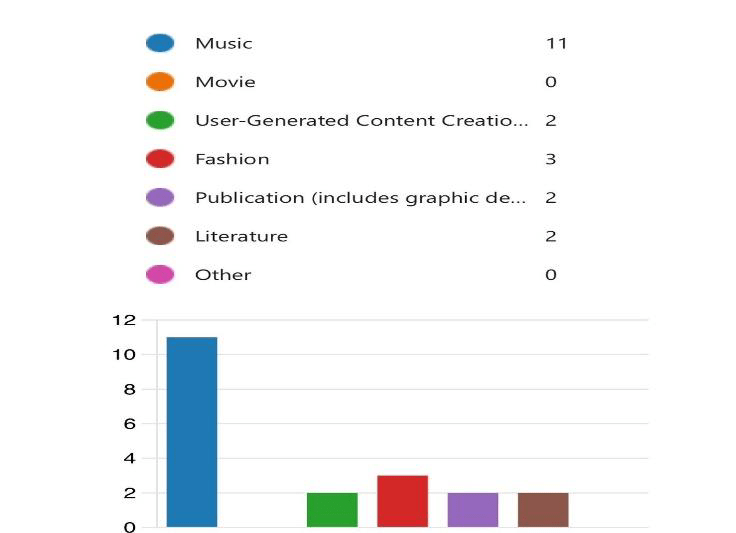
Figure 1: Preferred discipline of the creative industries, survey 2024, online.
When interrogating the primary motivations driving young people in Ghana to participate actively in the creative industries, passion appeared to be a common motivator for most of the participants. Ten of the participants are motivated by their passion for creativity. This represents 50% of the sample size. Following closely is the desire for self-expression as expressed by six participants (30%). It appears financial reward is not a major source of motivation for young creatives, however surprising this appears, only 15% of the sample size consider finances as a motivation for participation. This reveals the diverse levels of motivation among young people in the creative industries in Ghana.
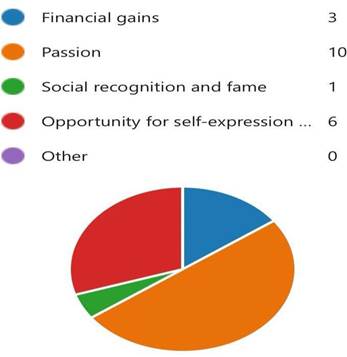
Figure 2: Motivation for participation, survey 2024, online.
Several key challenges were identified when asked about the challenges to participation. When asked about their top three barriers to participation, Financial constraints were highlighted among all the participants, indicating the importance of availability of capital in the industry. The other barriers include limited mentorship opportunities, societal stigma and stereotypes, lack of family support, and limited access to education and training facilities. These challenges expressed by the participants indicate the systemic and the multi-faceted nature of challenges young people face in their participation in the creative industries. These challenges call for targeted interventions to curb the menace.
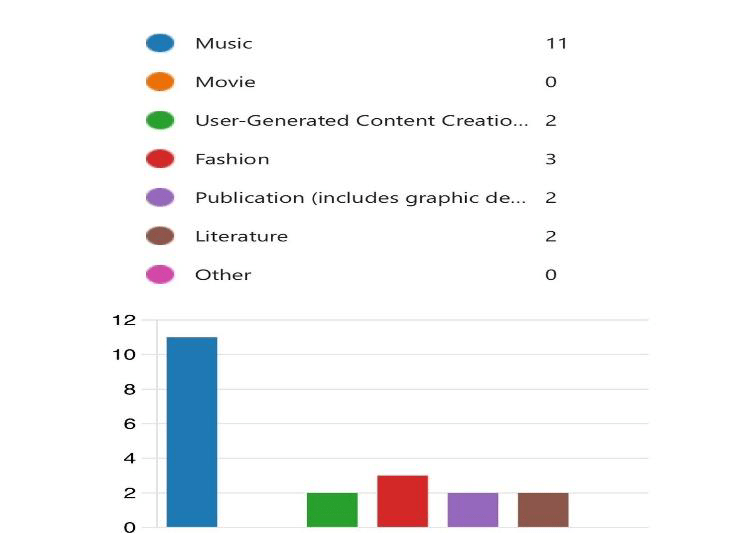
Figure 3: Barriers to youth participation, survey 2024, online.
Other notable findings were also highlighted through the survey. An overwhelming majority, 60% of the participants agreed that personal connections and networks are crucial for success in the creative industries in Ghana. Additionally, only nine participants (45%) expressed some level of confidence in their abilities and skills while 20% mentioned they have supportive families in their work as creatives. Majority, as expected identified government policies as crucial to addressing the above-mentioned challenges. This information underscores the essence social capital and institutional support in establishing a booming creative landscape.
6.0 DISCUSSION
The study explored the motivations and barriers to youth participation in the creative industries in Ghana by situating it in the Expectancy Value Theory (EVT) as the theoretical framework. The theory, as already discussed posits that the motivation of individuals is influenced by the belief in their ability to succeed (expectancy), and the perceptions about the value of the task.
6.1. Motivation
Pinder, (1984, p. 8) defines motivation as “a set of energetic forces that originate both within, as well as beyond, an individual’s being, to initiate work-related behavior and to determine its form, direction, intensity, and duration”. The study highlights the importance of both expectancy and value and how they influence individual motivations to participate in the creative industries. This aligns with the EVT. Expectancy is evidenced in the survey through the majority of the participants expressing some level of confidence in their abilities and skills. This is an important driver which cannot be overlooked. For instance, belief in musical talents and its potential for young creatives is expressed by an overwhelming preference for the music industry as illustrated in figure 1. “Value” is also measured by the perceived significance of the creative industries as a rewarding industry. The dominance of “passion” as a main motivator for Ghanaian youth also indicates that the participants consider the creative industries as intrinsically rewarding and fulfilling. In Richard Florida’s (2002) concept of “creative class”, he highlights the need for passion in driving innovation, and economic growth.
Vickery (2012) also highlights the relevance of considering socio-cultural structures in assessing the motivations in the creative industries in different contexts. While the survey do not put financial rewards on the apex of the pedestal of motivation, it could be as a result of the societal perceptions about the creative industries in Ghana and other cultural norms. As a result of cultural norms and societal expectations in Ghana prioritize conventional career paths, such as medicine, law, and teaching over “non-conventional” careers such as the creative industries. A study done by Kissi-Abrokwah et al. (2023) also concluded that students in Ghana preferred careers that are considered to be of high societal value.
6.2. Barriers
The complex nature of the challenges faced by young people in their participation of the creative industries in Ghana is also highlighted in the research. Even though financial rewards are not the primary motivation for young creatives, the lack of capital to start a compelling career in the creative industry appears to be a major challenge among most of the participants. This adds up to the previous research on the challenges of the creative industries in developing countries as established by Kilu et al. (2024). Additionally, the limited mentorship opportunities, likewise the societal stereotypes adversely impacts the expectancy of the youth towards the creative industries. This is as a result of the fact that it casts a dent on the perceived value of the industry. Furthermore, the lack of family support, and limited mentorship and educational opportunities further compound these challenges. The above- mentioned factors hinder the ability of the youth to develop and thrive in a competitive industry such as Ghana’s creative scene.
6.3. The Role of Social Capital and Institutional Support
Florida (2002) emphasizes the role of the creative clusters and social networks in fostering economic growth and innovation in the creative industry. This findings of the study confirms this position by Richard Florida, highlighting the essence of social capital and institutional support. From the survey, it appears personal networks are crucial for a successful carrier in the creative industries in Ghana. Institutional interventions through state agencies and ministries are equally relevant in addressing the challenges faced by the youth in their participation in the creative industries. Policies such as capital provision in the form of soft loans, educational and mentorship opportunities, relevant logistics and infrastructure will create an enabling environment for young creatives to thrive in expressing their creativity. Of course, Governments in the past have taken some steps to advance the interest of creatives in the country such as establishing the Creative Arts Council, National Film Authority, Ghana Union of Visual Arts, and other legislations such as the Copyrights Regulations, 2010 (L.I 1962) to safeguard the interests of creatives against piracy and plagiarism. A renewed commitment will the desired from the government in order to implement already existing policies for the creative industries in Ghana. Additionally, the educational curriculum from the basic schools in the country needs to be enhanced in order for students to appreciate creativity and also curb the public stereotypes against the sector in the country.
7.0 CONCLUSION
The research has provided data-driven insights into the motivations and barriers faced by young people in the Ghanaian creative industries. Through the study, it becomes obvious that despite the importance of financial rewards, young creatives prioritize intrinsic motivations such as passion, and the opportunity for self expression. These appear to be the main drivers of motivation for Ghanaian youth in the creative industries. Through the Expectancy-Value Theory, we have gained a nuanced understanding into the complex nature of the factors that influence youth participation in the creative industries in Ghana. The results shows the importance of intrinsic motivation, social capital, and institutional support in establishing a supportive creative ecosystem that enables young creatives to thrive. Addressing the identified challenges through targeted interventions is crucial for empowering young people and unlocking the full potential of the Ghanaian creative industries.
An, C,. (2019).‘The content and role of intrinsic motivation in creative work: the importance of seeking “enjoyment”. in Creativity Studies, 12(2), 280-290.
REFERENCES
- An, C,. (2019).‘The content and role of intrinsic motivation in creative work: the importance of seeking “enjoyment”. in Creativity Studies, 12(2), 280-290. https://doi.org/10.3846/cs.2019.6451 [Accessed 7.10.25]
- Agoralumiere. (2009). ‘Research into the Impact of Arts, Culture and Creative Industries on Africa’s Economy’. Www.Academia.Edu. https://Www.Academia.Edu/31230499/Research_into_the_impact_of_arts_culture_and_creat ive_industries_on_africas_economy
- Campbell, M., (2018). ‘‘Shit is hard, yo’: young people making a living in the creative industries’ in International Journal of Cultural Policy, 26(4), 524–543. https://doi.org/10.1080/10286632.2018.1547380
- Cnossen, B., Loots, E. and van Witteloostuijn, A.,(2019). ‘Individual motivation among entrepreneurs in the creative and cultural industries: a self‐determination perspective’. in Creativity and Innovation Management, 28(3), pp.389-402. https://doi.org/10.1111/caim.12315 [Accessed 29.9.24]
- Department for Digital, Culture, Media & Sport. (2001, April 9). ‘Creative Industries Mapping Documents;. GOV.UK https://www.gov.uk/government/publications/creativeindustries-mapping-documents-2001
- Doyle, L., Brady, A-M., & Byrne, G., (2009). ‘An overview of mixed methods research. Journal of Research in Nursing’. 14(2):175-185. doi: 10.1177/1744987108093962 . Accessed through University of Glasgow library [5.10.24]
- Florida, R.,(2002). The Rise of the Creative Class. Available at: https://rodriguez21lpol301.commons.gc.cuny.edu/files/2021/10/Richard-Florida-The-Rise-of- the-Creative-Class-Revisited-Preface-Intro.pdf [Accessed 4.10.24]
- Hennessey, B. A., & Amabile, T., M., (2010). ‘Creativity’. in Annual Review of Psychology, 61, 569–598. https://doi.org/10.1146/annurev.psych.093008.100416 [Accessed 2.10.24]
- Johnson, R. B., & Onwuegbuzie, A. J. (2004). ‘Mixed Methods Research: A Research Paradigm Whose Time Has Come’. In Educational Researcher, 33(7), 14-26. https://doi.org/10.3102/0013189X033007014
- Kilu, R., H., Alacovska, A., & Sanda, M. A. (2024). ‘Spirituality in creative work: how craft entrepreneurs in Ghana cope with precarity’. in Cultural Trends, 1–17. https://doi.org/10.1080/09548963.2024.2404627 [Accessed 20.09.24]
- Kissi-Abrokwah, B., Krog, S., Tutu-Danquah, C., Akumbuno, A., Acheampong, E., Asare, K., Seidu, A.A., Ahinkorah, B.O. and Hammond, P.N.Y.A.,(2023). ‘Determinants of First-year Students’ Career Path in Ghana’. Available at: https://www.researchsquare.com/article/rs- 3272323/v1 [Accessed 2.10.24]
- Oliver, P., (2006). ‘The SAGE dictionary of social research methods’ in Dictionary of social research methods. London: SAGE Publications.
- Olanrewaju, A., (2024). ‘Challenges of the Creative Industries in Nigeria: A Case Study of the Performing Arts Industry’. in British Journal of Mass Communication and Media Research. 4. 1-17. 10.52589/BJMCMR-RZVLSBMH
- Pinder, C. C. (1984). Work motivation: Theory, issues and applications. Glenview, IL: Scott, Foresman and Company.
- Reid, A., Petocz, P., & Bennett, D., (2016). ‘Is creative work sustainable? Understanding identity, motivation, and worth’. in Australian Journal of Career Development, 25(1), 33-41. https://doi.org/10.1177/1038416216637089 [Accessed 5.10.24]
- Tashakkori, A., & Creswell, J. W. (2007). ‘Editorial: The New Era of Mixed Methods’. In Journal of Mixed Methods Research, 1(1), 3-7. https://doi.org/10.1177/2345678906293042 [Accessed 8.10.24]
- Vickery, J., 2011. ‘Beyond the Creative City: Cultural Policy in an age of scarcity’. Birmingham: MADE Center for Placemaking. pp. 1-21 Available at: https://wrap.warwick.ac.uk/id/eprint/103919/ [Accessed 8.10.24]
- Wigfield, A., and Eccles, J.S.,(2000). ‘Expectancy–value theory of achievement motivation’. in Contemporary educational psychology, 25(1), pp.68-81. https://doi.org/10.1006/ceps.1999.1015 [Accessed 5.10.24]
Figures
Figure 1: Preferred discipline of the Creative Industries, Survey 2024, online. Figure 2: Motivations for Participation in the Creative Industries, Survey 2024, online. Figure 3: Barriers to Participation in the Creative Industries, Survey 2

 Culture Weekly