
By Julia Neugarten and Rūta Tidriķe
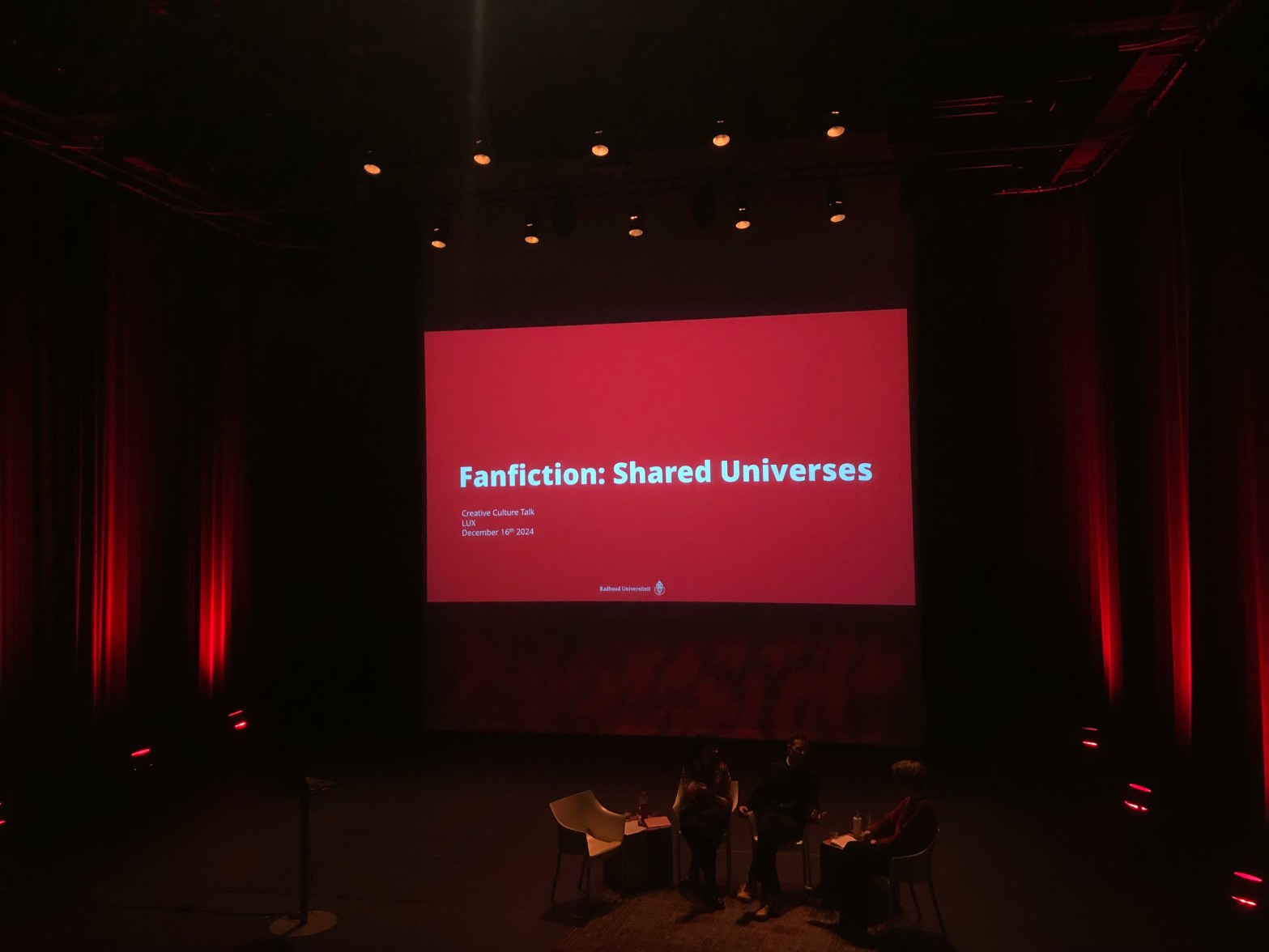
PhD-candidate Julia Neugarten and third-year BA student Rūta Tidriķe look back on the Creative Culture Talk they organized last year at film theatre LUX, titled Fanfiction: Shared Universes. The evening included presentations and discussion with two guest speakers: Nicolle Lamerichs, a senior lecturer and team lead at Creative Business, HU University of Applied Sciences in Utrecht, and Roderick Leeuwenhart, a writer of science fiction and winner of the prestigious Harland Award for speculative fiction.
“Raise your hand if you have ever read fanfiction.”
Some of the people at LUX looked around uncertainly, but others raised their hands with confidence. After a few moments, more than half of the audience had their hands up.
“Now raise your hand if you have ever written fanfiction.”
More than half of the hands went down.
None of this was surprising. Apart from the fact that fanfiction-afficionados are probably more likely to attend an event about fanfiction than other people, the largest English-language fanfiction-website today has over 8 million users.1 Fanfiction is a huge and ever-growing online phenomenon – you probably know people who read and write it, especially if you’re under 30 years old.
To tell us more about fanfiction and the fan culture it emerges from, Dr. Nicolle Lamerichs kicked off the evening with a presentation. She explained that fans are typically emotionally invested audiences. Fans are often active in communities – which they call fandoms. Finally, fans are often creative. They express their emotional attachment to popular culture through creations such as art, costumes, and fanfiction.
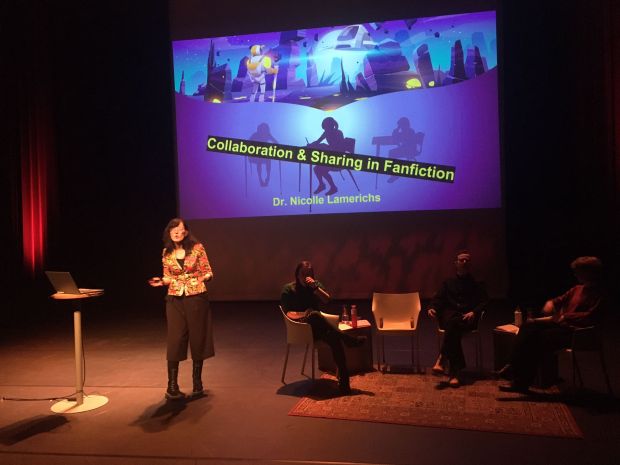
Fanfiction often explores alternate interpretations or elements of a storyworld from popular culture. It is often written in close collaboration with the rest of the fan community – the so-called fanon (fan-canon) is constantly changing and developing. And, lastly, fanfiction is often transformative – while some fanfiction endlessly produces more of a certain popular thing, fans also use it to get more from beloved stories – more representation, more nuanced storylines, more answers to their questions, more emotional fulfillment.2 Fanfiction’s capacity for transformation can encompass the exploration of commonly underrepresented identities, but it can also mean trying out different plot scenarios or changing the fundamental ideological underpinnings of a story.
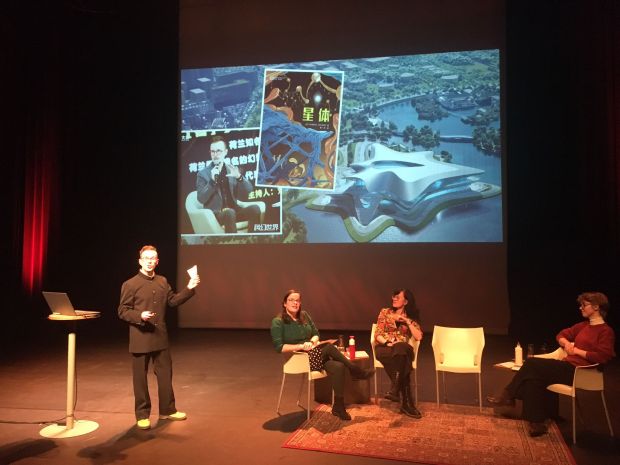
We were then introduced to the work of Dutch science fiction writer Roderick Leeuwenhart. Roderick also surveyed the similarities between fanfiction and science fiction. For example, both types of stories share a preoccupation with hypothetical scenarios, with asking ‘what if?’ Roderick also reflected on his experience contributing to De Zwijgende Aarde (The Silent Earth), a series of science fiction novels by different authors that are all situated in the same narrative universe. This collaborative mode of authorship is not unlike the process of fanfiction production.
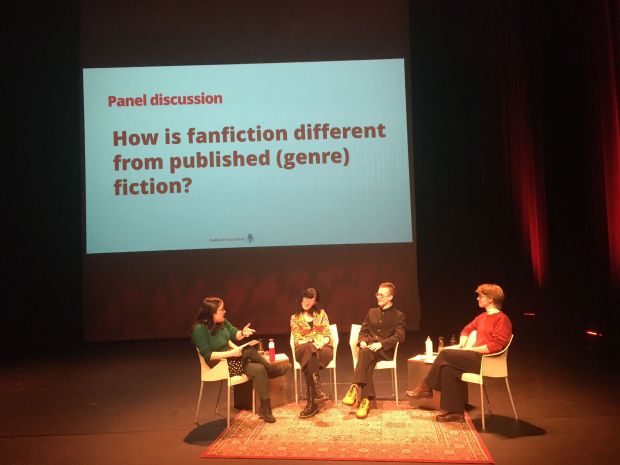
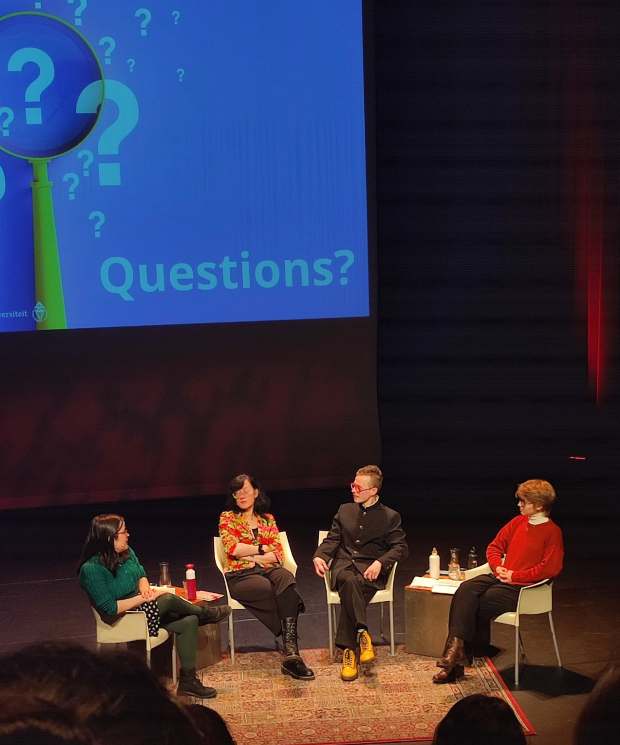
In the panel discussion that followed, we discussed the differences and similarities between fanfiction and published fiction, including differing modes of production and distribution, differences in content, and different reading experiences for audiences. Here, Rūta made an interesting observation: in their life, fanfiction-reading has a very different role from reading published fiction or other types of texts. Indeed, to them there is a certain comfort and ease that comes with reading fanfiction as the characters and/or the worlds they inhabit are already well known. This is different to starting a new original fiction book or series, where the reader must learn and familiarize themselves with the new story world. Ultimately, for them, reading fanfiction comes with a certain level of comfortable familiarity.
Roderick then read his short story Bacteriophages for us, about a futuristic medical treatment that had some unexpected side-effects. The story, we reflected, was speculative in regard to some culturally dominant ideas about medicine and the human body. Through humor and defamiliarization, it let us think through these topics. We discussed the distinction proposed by Francesca Coppa, that science fiction tends to be speculative about (story)worlds, whereas fanfiction tends to be speculative about characters instead.3 These distinct types of writing may thus lend themselves to different types of speculations.
What are these different types of speculation? When are they useful? When do they fall short? We talked about the possibility that fanfiction, like some science fiction, could be politically powerful by allowing people to imagine, and therefore strive for, a different, better world. We also discussed some of the ways that fan culture can be reactionary rather than idealistic. In the end, real-world political viewpoints can limit the transformative possibilities of (fan)fiction.
So where will fanfiction go in the future? During discussions, we agreed that in recent years, especially when people were forced to spend time inside during the pandemic, there was a noticeable influx of new people in fandom communities, who were previously unfamiliar with how these spaces worked. This shift brought up old discussions and spurred new ones, especially as new practices emerged.
Online fan communities that revolve around fanfiction seem to just keep growing, and technological developments like AI are also making new kinds of online fan-activity possible, such as interactive fan experiences with AI chatbots. Although these developments may also mean a tendency for fan culture to become more focused on profit, we hope that fandoms can maintain their curious, critical, and sometimes silly sides as well.
The evening was produced in collaboration with Karlijn Scheffers of LUX and with the assistance of Sofia Dovianus, a student-assistant at the Radboud. The Creative Culture Talk was made possible by Helleke van den Braber, formerly of Radboud University’s Art and Culture Studies and now affiliated with Utrecht University. Header image by Ida Bassenge.
Footnotes
- This site is Archive of Our Own: https://archiveofourown.org/, consulted March 27th 2025. ↩︎
- This distinction between more of and more from originates from The Democratic Genre: Fan Fiction in a Literary Context, by Sheenagh Pugh (2005). ↩︎
- Coppa, Francesca, editor. The Fanfiction Reader: Folk Tales for the Digital Age. University of Michigan Press, 2017. ↩︎

 Culture Weekly