
What popular concert culture can learn from Punk DIY Ethos in an age of consumption, social media, and sustainability.
By Sybe Kemmere, Cynthia van Mourik, Julie Nijburg, Fleur ter Horst and Caroline Couch
Concerts have always been about more than just listening to music. They serve as the intersection of artist and listener, becoming a nexus of self-expression, fan connection, and honestly – plain fun. In a post-pandemic age, mainstream pop giants have redefined the cultural zeitgeist surrounding concerts. Artists and their fans alike, through the power of social media like TikTok, have developed concerts into a cultural phenomenon at the intersection of consuming music and fashion. From the bedazzled cowboy hats of Chappell Roan’s Midwest Princess Tour to the indie-sleaze revival of Charli XCX’s Sweat Tour, pop concerts have become full-fledged fashion events. For many fans, it is no longer enough to enjoy a concert. What you wear (and post about it) matters almost as much as the show itself.
This expression alone is not a problem, rather it is that these fans turn to fast-fashion as a cheap and convenient solution to meet the expectations of this new concert culture. While at first it might just seem like “it’s just one outfit,” the numbers these pop crowds draw and the amount of social media impressions are massive, and the implications for consumption are frightening.
Taylor Swift’s tour has sold 11 million concert tickets and amassed over 105 million impressions on TikTok for The Eras Tour Outfit alone.1 Amongst these millions of attendees come millions of individual garments produced, purchased, and disposed of. These mass events of single use consumption fuel the growing issue of fast fashion’s global environmental impact, and this connection is one that we just can’t afford to ignore.
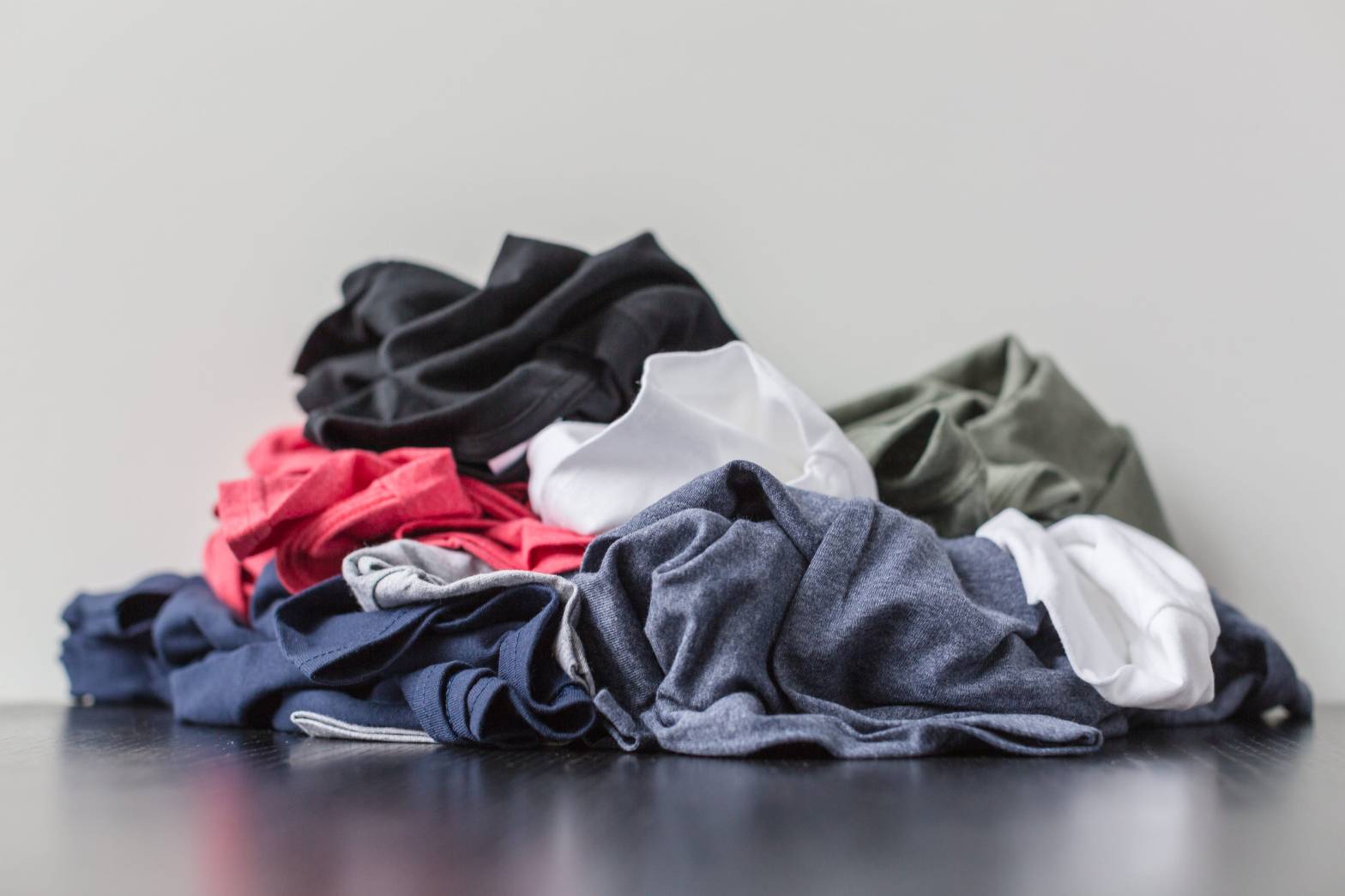
The fashion industry is one of the largest global contributors to pollution and climate change, with production alone constituting 10% of global carbon emissions.2 Quantity too has replaced quality: 60% of new clothing is created with cheap synthetic materials, leading to poor quality and limited re-wearability. Globally we produce 92 billion tonnes of textile waste yearly and the massive influx of non-biodegradable synthetic fast fashion waste clothing builds up.3
Pop concert fans are influencing fast fashion production through their consumption, as the outfits they buy often externalize their connection to the artist or maybe even gain some social media fame. However, after the tour hype is over, many of these items will end up forgotten in closets or, worse, in landfills. The solution to this issue is not telling fans to cease their fan expression through fashion, rather it is to adopt more sustainable understandings of their consumption and adopt mitigating practices.
This is where we believe the mainstream pop fans can learn a few lessons from something completely opposite from them, Punk. Particularly, how the subculture’s DIY ethos informs their consumptive habits regarding expressive acts of “fandom” identification.
While the media might sometimes frame “fandom” as only for teenage girls or geeks, it is everywhere. From sports to music, and cars to fashion brands, fans are found anywhere and anytime. Before delving into what this mainstream pop concert culture can do to reshape their fan expression, it’s important to take a moment and just see how fans not only drive consumption, but act as producers themselves.
Fans are the audience members that form lasting relationships with a phenomenon like a book or artist, and for many this emotional attachment causes fans to express their connection to the product creatively.4 The devotion crystallizes into fan projects, such as the current trend of hyper-specific concert outfits.
Social media only drives this production too, as there is now a low barrier of entry to recognition within fandom spaces for the uniqueness of the work you create or the strength of your identity as a fan. As a result, we have seen more fan output and expression than ever.
Through this creative expression, fans can connect to other fans and develop their own personal connection with their media of choice. Fandom becomes a marker of identity, howeve, even though it is an intrinsic part of the self, one’s fan identity can’t always be expressed in offline daily life. Therefore, events like these large pop concerts become sites where fans can converge, bringing a sense of belonging and safe space for fandom expression, but also a place to see and be seen.
This expression of identity often takes shape in fashion, where one’s clothing says something about one’s status: from punk concerts where everybody is wearing at least one safety pin, to classical concerts where nobody is wearing jeans.
In the mainstream pop-concert world, we have additionally seen how these outfits become aesthetic expressions of one’s fan identity, but also symbolic representations of the original media. Social media has fanned the flames of this, with the aforementioned TikTok videos surrounding the flaunting of one’s concert outfit and discussion of references visually baked into the outfit obtaining hundreds of millions of views. During The Eras Tour, fans went all-out: home-made red carpet looks, cloning Swift’s outfits, or even clothes referencing lyrics and inside jokes. During Beyoncé’s Renaissance Tour, fans wore silver, black and cowboy attire emulating the retro futuristic sonics and aesthetics of her most recent albums.
You don’t show you’re a devoted fan by knowing every lyric, you show you’re a devoted fan by wearing your devotion.
Through the intersection of fashion and concerts, pop fans express their own fan identity, find community belonging, and open the door to obtaining social capital in the quest to be seen as a “real” or “the best” fan. In the quest to obtain this social capital, outfits have become more complex. More garments are consumed and eventually disposed of, exacerbating the previously discussed issues of environmental sustainability.
So now that the issues surrounding sustainability and fan motivations have been explored, what can be done to target issues of over-consumption, while also still retaining the spirit of creative fan expression through fashion? Well, enter the Punk subculture, who adopt ‘Do It Yourself’ or DIY as an aesthetic and practiced values within their communities.
In many Punk subcultures, fashion becomes a reflection of the social realities and independent lifestyle of their movement with a strong focus on celebrating music and criticizing societal establishments. Fashion choices from haircuts to shoelaces become expressions of self-identity: visually signifying one’s identification as a member of a music scene, a punk, and even political affiliations. However, a punk doesn’t go to Shein or Temu to develop their fashion expression or purchase signifiers that will visually display themselves as “more punk.”
Rather the often anti-establishment (if not openly anti-capitalist) nature of Punk centers DIY as a rejection of mainstream expectations regarding consumption. Additionally, this DIY ethos has existed long before the modern understanding of the environmental crisis; nowadays it’s hard to ignore the political implications that pollution and climate change play in the adoption of DIY.
Specifically, The DIY culture in punk focuses strongly on independence, for example producing and distributing music without the interference of a record label. Band members as well as fans even make their own clothing, and bands also travel and perform at DIY events where they connect with their community. By being independent like this, Punks create a social network that enables Punk music and ideologies to spread.5
As for fashion, Punks will DIY their own clothing, remaking objects from waste or second-hand materials. If you want something new, you make it – paint and bleach make any piece of fabric homemade “merchandise” for your favorite band, while safety pins and dental floss stitch garments into new life. This DIY is not only about limiting consumption, but also about production outside of the present system, as Punks push reduce, reuse, repair, recycle to new creative heights.
In contrast, the mainstream pop-cultural space has its own trend of “DIY.” On social media, videos surrounding how fans “DIY’d” their outfits, by styling newly purchased pieces together, gain a following on social media. Punk DIY is not about obtaining social capital. Rather, it is a direct political challenge against mass production and consumption, promoting the creation of one’s fan identity outside of capitalism.6
Now more than ever, in the age of one and done fast fashion concert outfits, mainstream culture needs to learn from the subcultural ethos of Punk DIY.
Trickle up theory in fashion suggests that there is an avenue for the methods and aesthetics of Punk fashion into the mainstream, implying that new trends arise in subcultures on the streets subsequently “trickle up” into adoption by upper and middle classes. This can include adoption of aesthetic styles but also trends surrounding consumption. For example, “thrifting” which once was a way of low-cost clothing consumption for lower classes, has now been adopted by higher classes as an activity for leisure.
Unlike the Punks, Pop-music concert culture is more focused on expression of fandom than on expression of ideals. Absorbing the model of Punk style can provide insight in the implementation of sustainable DIY culture, not only as a method to create fan expression– but to live by. If styles relating to repurposing and identity rather than new consumption would become popular within the big concert cultures, perhaps the same symbolic dimension could make meaning for this group.
Therefore, with the right messaging, if not romanticization, the DIY ethos as both a fashion aesthetic and politicized expression can lead to a greater awareness of the fashion industry’s environmental damage and the role these fans play in driving this damage.7 The trickle up theory can thus serve as an important starting point in addressing fashion issues because the broader adoption of Punk styles can result in conversations and reflections on these issues.8
What does this messaging look like? True, intentional DIY in mainstream concert spaces needs to become trendy. Organization amongst fans need to center sustainability and DIY in the conversations, while social media can be used to redefine what social capital is gained in effort. While negative, how can social media be used to shame those who post haul after haul of cheap fast fashion?
The burden doesn’t fall on the fans alone. Mainstream pop artists too have an important role in defining the values and practices of their fans, especially as it regards DIY ethics and sustainability practice. If an artist doesn’t value or center the environment, fans likely are not going to care. While artists like Taylor Swift are famously silent about the role themselves, their music, and their fandom play on the environment, other artists, like Billie Eilish, who is currently on her global Hit Me Hard and Soft Tour, is an example of how an artist can carry out the Punk-esque sentiments of DIY ethos and politics in a more mainstream context.
At her concerts, Eilish has partnered with Reverb, a research non-profit that explores the connection between fast fashion and music through consulting, case studies, and on the ground interventions. Reverb attends each show, collecting data about fan consumption and encouraging political actions related to sustainability by connecting fans with local organizing groups, registering to vote, and taking a pledge to eat plant-based meals.
Eilish does not discourage creative fan expression, yet implores her fans to be aware of their consumption, while providing more sustainable alternatives.9 For example, she has organized clothing swaps for ticket holders of her tour, dedicated portions of ticket proceeds to climate issues, and ensured her concert merchandise is limited in scope and made from recycled materials.10 Through someone with as wide a reach as Billie Eilish, underlying messages of sustainable fashion and fan practices ideals can spread.
Fandoms are unique entities, possessing untapped power for connection and expression through music – but also a potential for environmental harm as the effects of consumptive concert culture becomes undeniable on a global scale. Now more than ever it seems the main-stream Popgirlies and their fans can learn from Punks.
Sources:
- TikTok. n.d. “The Eras Tour Outfits.” Accessed October 28, 2024. https://www.tiktok.com/discover/the-eras-tour-outfits. ↩︎
- World Economic Forum. 2020. “These Facts Show How Unsustainable the Fashion Industry Is.” World Economic Forum. https://www.weforum.org/fashion-sustainability. ↩︎
- Resnick, Brian. 2019. “More Than Ever, Our Clothes Are Made of Plastic. Just Washing Them Can Pollute the Oceans.” Vox, January 11, 2019. https://www.vox.com/the-goods/2018/9/19/17800654/clothes-plastic-pollution-polyester-washing-machine. ↩︎
- Leksmono, Desideria., & Maharani, Tarisya P. (2022). “K-Pop Fans, Climate Activism, and Participatory Culture in the New Media Era.” Unitas, 95(3): 114-135. https://doi.org/10.31944/20229503.05 ↩︎
- Moran, Ian. 2010. “Punk: The Do-It-Yourself Subculture.” Social Science Journal. https://www.semanticscholar.org/paper/Punk%3A-The-Do-It-Yourself-Subculture-Moran bf18c0f5ea7f51d9c6b975994d77b01bac82a474. ↩︎
- Triggs, Teal. 2006. “Scissors and Glue: Punk Fanzines and the Creation of a DIY Aesthetic.” Journal of Design History 19 (1): 69–83. https://doi.org/10.1093/jdh/epk006
Affuso, Elizabeth, and Suzanne Scott, eds. 2023. Sartorial Fashion: Fashion, Beauty Culture and Identity. University of Michigan Press. https://doi.org/10.3998/mpub.12315327.
Osgerby, William. 2014. “Subcultures, Popular Music, and Social Change: Theories, Issues, and Debates.” In Subcultures, Popular Music and Social Change, edited by William Osgerby. Cambridge Scholars Publishing. http://ebookcentral.proquest.com/lib/rug/detail.action?docID=1790933.. ↩︎ - Sklar, Monica, Sharon Autry, and Lauren Klas. 2021. “Fashion Cycles of Punks and the Mainstream: A US-Based Study of Symbols and Silhouettes.” Fashion Practice 13 (2): 253–74. https://doi.org/10.1080/17569370.2020.1794314. ↩︎
- Mohr, Iris, Leonora Fuxman, and Ali B. Mahmoud. 2022. “A Triple-Trickle Theory for Sustainable Fashion Adoption: The Rise of a Luxury Trend.” Journal of Fashion Marketing and Management: An International Journal 26 (4): 640–60. https://doi.org/10.1108/JFMM-03-2021-0060. ↩︎
- Havens, Lyndsey. 2024. “Why Billie Eilish Insists on Sustainability In Her Career: ‘It’s a Never-Ending F-king Fight.’” Billboard, March 28, 2024. https://www.billboard.com/music/pop/billie-eilish-sustainability-eco-friendly-initiatives-mom-1235642455/. ↩︎
- Shoaib, Maliha. 2022. “Can Billie Eilish Convince Fans to Shop More Sustainably?” Vogue Business, June 10, 2022. https://www.voguebusiness.com/sustainability/can-billie-eilish-convince-fans-to-shop-more-sustainably.
Leksmono, D., & Maharani, T. P. (2022). K-Pop Fans, Climate Activism, and Participatory Culture in the New Media Era. Unitas, 95(3), 114-135. ↩︎

 Culture Weekly