
By R.L. Benjamins · S. Gahramanlı · M.M. Ho · K. Perjési · S.G. Pol
Following the assassination of Martin Luther King Jr, James Brown’s Say It Outloud (I’m Black and I’m Proud) became a hit. Peter Gabriel’s Biko brought the story of Steve Biko (an anti-apartheid activist from South Africa) to millions in the West. Shervin Hajipour’s Baraye became the song of Iranian women’s struggle against the Iranian regime. These are three examples of instances in which music brought communities together and delivered unnoticed stories to millions. As Rosenthal explains in his work, Playing for Change: Music and Musicians in the Service of Social Movements, “songs are democratic” since almost anyone can create a melody and songs are uniquely portable. He explains that we carry a database of songs associated with memories and emotions. It is hard to say the same thing for other art forms. While not everyone is a fervent reader, and not everyone might like paintings, everybody engages with music in one way or another.
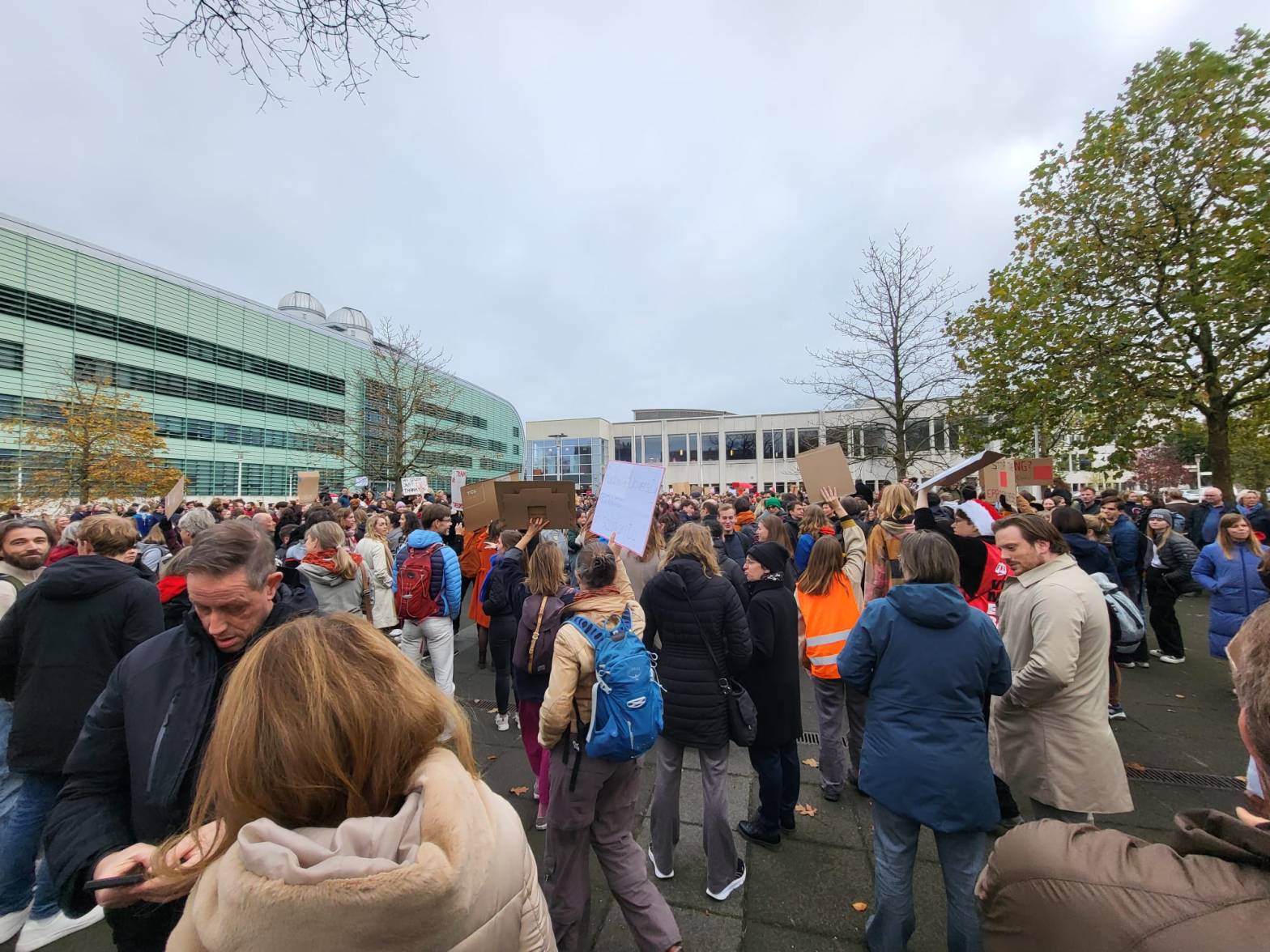
Listening to music is arguably the most accessible form of engaging with art, more accessible than reading. Thus, it is no wonder that social movements end up adopting songs. Music defies language barriers and resonates with diverse audiences, allowing people on one side of the world to sympathise with the struggles of those in other parts of the world. With the help of music, emotions behind the motives of a social movement become apparent, and the message is delivered in a more accessible format. Moreover, the integration of music into social movements serves branding purposes. Once a song becomes associated with a purpose, people will reminisce about this movement once this song plays. For instance, in the Netherlands, student protests usually involve loud music and chanting to disrupt the peace in public spaces and express their message in this way. However, with acoustemology and a planned form of the use of music, the goals of student protests may be more effectively realised. By employing the language of music as a tool, these protests can achieve a more significant following and appeal to more people. In light of the recent protests against budget cuts in higher education, we want to explain why.
A way to look at this is through acoustemology, a term created by anthropologist Steven Feld, which combines “acoustics” (the study of sound) with “epistemology” (the study of knowledge). This concept suggests that sound is more than just something we hear; it’s a powerful way to “know” and experience the world. Feld’s work, particularly with the Kaluli people of Papua New Guinea, showed that sounds held deep meanings for them. Bird calls, for example, were thought of as the voices of ancestors, weaving family, memory, and identity directly into the environment. In this way, sounds became a way to feel connected to both place and community, making sound a way of understanding the world.
In the context of protests, acoustemology offers a unique lens to understand how sounds—such as chants, music, and even the rhythm of footsteps—shape the atmosphere, participation, and overall purpose of an event. In protests, sound is a powerful tool to forge unity, assert identity, and build a sense of presence and solidarity. For instance, when groups chant, sing, or clap in rhythm, they express themselves individually and create a collective voice. This shared sonic environment amplifies the protest’s impact, making it feel more substantial, unified, and bold than if participants were to stand in silence.
The three critical components of acoustemology that we can actively examine for its insights and effectiveness are the space, the participants, where the protest activities occur, and the sounds generated during them. The usage of spaces can depend on a specific meaning held by that place concerning the protest, allow sounds to amplify better, or allow participants to interact with it.
A recent study by Hei Ting Wong on the acoustemology of Hong Kong in protest highlights how specific sounds can evoke shared histories and cultural understanding within the same cultural system. In Wong’s analysis, she suggests that understanding protestors’ demographics and cultural backgrounds can help identify which sounds will resonate most effectively. The sounds within a protest’s acoustemology carry significance, regardless of individual preferences, because they are accessible, circulated, and—most importantly—widely understood within that context. According to Wong, sound can reveal an “unseen space” of human experience, offering an alternative way to experience and interpret spaces. Acoustemology thus helps us explore how sound can alter or even challenge spatial order. It allows us to see how spaces are reclaimed through music and sound and how these elements establish meaningful connections between people and the space around them.
By focusing on the interaction between sound, space, and participants, acoustemology enables us to analyse protests through their soundscapes—the collection of sounds in places. This approach reveals how different sounds—chants, drums, or intentional silences—transform a location into a symbolic space of resistance. For example, in Hong Kong’s Anti-Extradition Law protests, the song “Glory to Hong Kong” was sung in public places, turning everyday spaces like shopping malls into sites of solidarity and defiance. As this song filled public squares, transportation hubs, and streets, these spaces became part of the movement, resonating with participants’ shared purpose and identity.
Using acoustemology to study student protests, we gain insight into how sound creates a sense of belonging and presence. For example, a protest where students chant in unison strengthens the participants’ understanding of unity and communicates a message to anyone listening. This effect can draw in bystanders, attract media attention, and make the message of the protest resonate more deeply with people who might not otherwise engage. In this way, sounds create a ripple effect, where those who hear it feel connected to the movement, even if they aren’t physically present. By carefully selecting sounds representing their goals or emotions, protesters can create a more memorable and impactful event. This makes acoustemology a valuable framework for understanding and enhancing the effectiveness of protests.
Drawing on Bill Osgerby’s subcultural theory, which suggests that music shapes group identity and reclaims spaces for marginalised voices, music can help protesters, including students and faculty of higher education, turn familiar spaces—streets, squares, and university entrances—into resonant sites of protest. By choosing acoustically favourable areas that carry sound further, students can create high-impact moments where chants and music take on a new, amplified quality. This performative reclaiming of public space isn’t just about volume; it’s about turning these spaces into meaningful places of solidarity.
Acoustemology can also be used to recognise the impact of music and sounds on the people participating. Analysing acoustemology can give us more insight into the practical relationship of sound and music with society. This is what Christian Spencer-Espinosa describes in Music and Social Change: Reflections on the Relationship between Sound and Society. He believes that because of music, a shared value and participative ethos can be communicated, and every individual’s contribution is part of the performance’s success. Therefore, understanding the participatory aspect of acoustemology is crucial for a protest or political movement to succeed. Acoustemology sees sounds as obtaining knowledge. It conveys a form of knowledge that leans toward a particular way of living, its embodied nature offering a powerful tool for increasing protest impact by shaping participants’ collective identity.
Music as a performance can invigorate a protest, making it feel dynamic and alive, capturing the attention of participants and onlookers alike. Coordinated chants, live music, and rhythmic elements like clapping and drumming transform the protest into an immersive experience that feels like a collective act of resistance. As Spencer-Espinosa explains, music naturally fosters inclusivity, allowing each individual to contribute equally, which is essential for building a unified front. Students can use synchronised chants and rhythms at the education funds protest in Utrecht to create a cohesive, powerful sound that embodies their shared stance against funding cuts. This collective sonic identity does more than amplify the protest’s message – it visually and audibly conveys solidarity, creating a powerful display that engages bystanders and draws them into the movement. When a crowd unites in rhythm, their message of solidarity becomes nearly impossible to ignore, sending a clear, resounding call for change.
In addition to this collective experience, the creative process of crafting music for the protest brings a DIY spirit that enhances a sense of ownership and individual expression within the movement. By encouraging students to contribute to chants, rhythms, or even anthems, the protest takes on a collaborative, grassroots quality where every participant’s input shapes the unique soundscape. Using accessible instruments like drums, tambourines, or even everyday objects, participants can join in without needing formal musical training. This DIY approach empowers students to contribute to the protest’s auditory identity actively, turning their voices and sounds into a communal force that is distinct, organic, and memorable. Together, these elements—the shared experience of rhythm and the personalised DIY contributions—create an inclusive, resonant protest environment, reinforcing the students’ unified call for accessible, well-funded education.
Rosenthal explains that songs are unique in how they attach to our memories and emotions, becoming almost like mental shortcuts that instantly bring back specific feelings or experiences when we hear them. Taking this, we can argue that a big speech might not be the most effective method in reminiscing a cause when attending a protest, but a chant or protest song will be more easily remembered. Creating an original anthem, specifically for the protest, is an approach that builds unity while tapping into Rosenthal’s concept of music as a “database of linked emotions.” This concept suggests that music connects us to memories and emotions, making it a lasting symbol of a cause. By crafting a song that reflects the frustration or aspirations of students facing funding cuts, the protest can create an emotional anchor for participants. A custom anthem with meaningful lyrics becomes something students carry with them emotionally, resonating long after the protest ends. Sharing the song beforehand so students can learn it reinforces a sense of shared purpose and solidarity when sung together at the protest.
To conclude, acoustemology can be essential in organising and contributing to protests. The sonic experience can be powerful to the participants and people outside the movement and create a sense of belonging. Chanting in an open or closed space could make a significant difference in the effects of the protest. In addition, it can act as an inclusive and accessible tool, maximising participation opportunities, which is crucial within social movements and the achievement of change.
The proposed bill that protested by students and faculty affects the quality of education and has long-term consequences for every individual in the Netherlands. Innovation and creativity, which the same government wants to encourage, may be in danger. We urge you, students, colleagues and readers, to stand up for what you think is right and go against what you believe is unjust. To realise every voice matters and can bring change. To instrumentalise your voice and body to make sounds, create melodies and sing out loud to achieve positive social change.
Music is an art form that reflects reality and affects the listener. But in music and acoustemology also resides power, and this power is in our hands, in our voice, and in our body. As more people muster their courage, more hands and bodies come together to stand together. The louder our presence, the more space we can reclaim. So, the individual chooses to participate and contribute to the greater movement. The individual’s power is to unify and engage with others to guarantee success. Above all, every individual has the right to express and protect their voice; through music, we make that voice resonate.
The budget cut protest discussed in this blogpost, which was to take place on November 14, 2024, was cancelled due to security concerns. An alternate protest was organised in The Hague on November 25th. Additionally, unions are currently discussing the possibility of a strike.
Sources:
Osgerby, Bill. “Subcultures, Popular Music and Social Change: Theories, Issues, and Debates.” In Subcultures, Popular Music and Social Change, edited by The Subcultures Network, 1-48.Newcastle: Cambridge Scholars Publishing, 2014.
Rosenthal, Rob and Richard Flacks. “An Introduction to the Music-Movement Link.” Playing for Change: Music and Musicians in the Service of Social Movements, 1-36. London: Routledge, 2011.
Rice, Tom. “Acoustemology.” In The International Encyclopedia of Anthropology 1, no. 1, 2018: 1-7. https://doi.org/10.1002/9781118924396.wbiea2000.
Spencer-Espinosa, Christian. “Music and Social Change. Reflections on the Relationship between Sound and Society.” International Review of the Aesthetics and Sociology of Music 53, no. 1, 2022: 57–76. https://www.jstor.org/stable/48689101.
Wong, Hei Ting. “The Acoustemology of Hong Kong in Protest: A Sonic Understanding of the Anti-Extradition Law Amendment Bill Movement.” Continuum, September, 2024: 1–18. doi:10.1080/10304312.2024.2401832.
Protests:
Student protest against high study costs in 2018: https://www.aob.nl/actueel/artikelen/driehonderd-demonstranten-tegen-hoge-studiekosten/
2024 protest against budget cuts in higher education: https://www.aob.nl/actueel/campagne/kabinetsloopthogeronderwijs/

 Culture Weekly